Self-growth
 Business & Career
 Success
 Communication
 Healing
 Relationships
 Psychology
 Happiness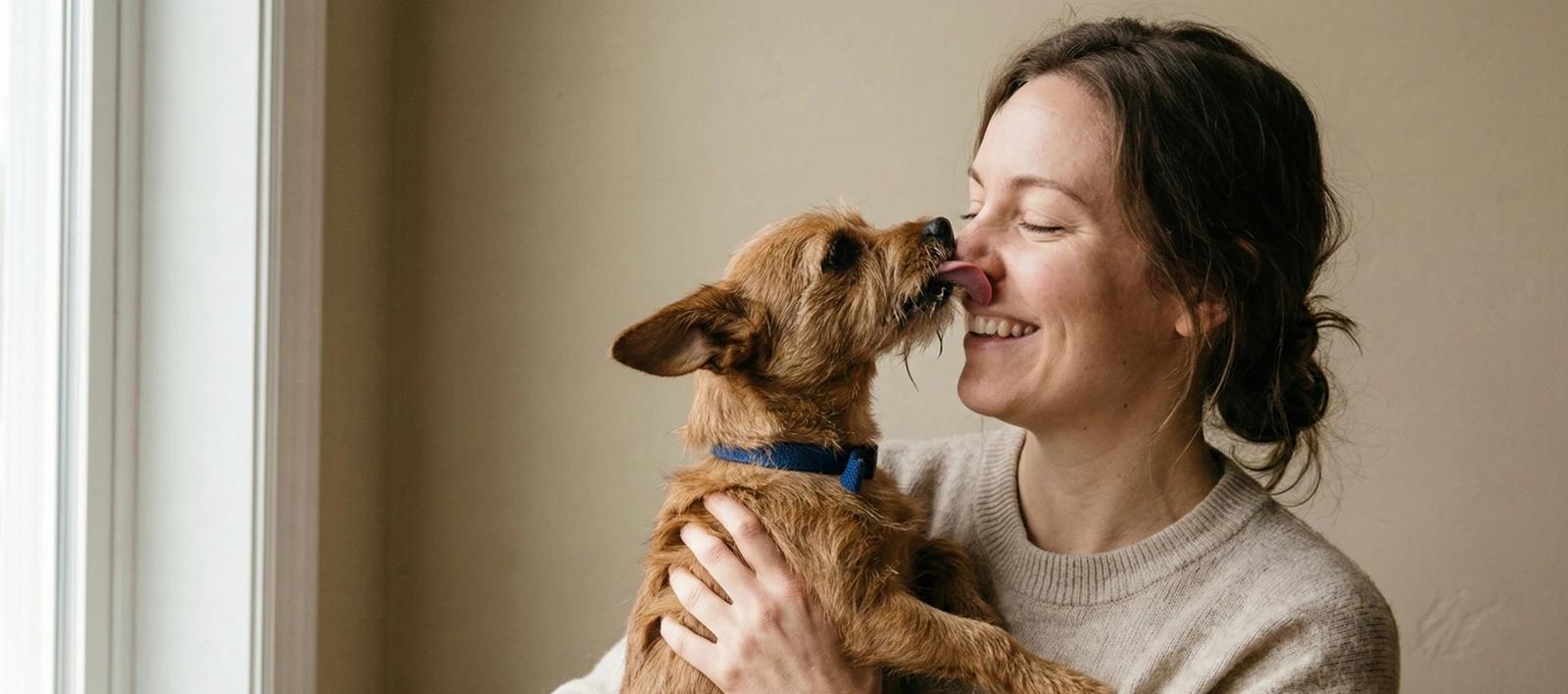
You watch your dog stare at you. They tilt their head at a certain angle — the angle that makes your heart melt — and you wonder what they're actually thinking. Are they happy? Confused? Reading your emotions like you're an open book?
For years, this was just stuff dog owners guessed about. But neuroscience has moved past guessing. Researchers are now scanning dog brains in fMRI machines, studying how dogs process human speech, and measuring exactly what happens when your dog looks at you with those soulful eyes. The gap between what we assume about our dogs and what science actually shows us is surprisingly wide.
The two books below don't just tell you what your dog is thinking — they show you how scientists figured it out. One gives you the neuroscience. The other teaches you how dogs learn. Together, they explain why your dog does the things they do.
'How Dogs Love Us' by Gregory Berns
If you've ever wondered what your dog actually feels when they look at you, this book answers that question with real science instead of sentiment.
Gregory Berns is a neuroscientist at Emory University who did something most researchers wouldn't dare try: he taught dogs to sit still inside an MRI machine so he could watch their brains light up in real time. No sedation. Just training and patience. What he found wasn't just surprising — it changed how scientists think about dog emotions.
What the brain scans actually show:
Berns discovered that when your dog looks at you, their brain releases oxytocin — the same chemical that bonds human parents to their babies. Your dog isn't just conditioned to respond to you the way Pavlov's dogs responded to bells. Your dog's brain is actually experiencing a bond that's chemically similar to love.
But here's the part that hits harder: your dog's brain lights up differently when they see you versus when they see a stranger. And it shows up in the brain regions associated with reward and emotion — not the regions associated with fear or obedience. Your dog doesn't love you because they have to. They love you because their brain rewards them for it.

Why this matters for how you understand your dog:
Most dog training is built on the idea that dogs respond to dominance, hierarchy, and commands. But Berns' research shows that dogs are actually sophisticated emotional creatures. They read your mood. They pick up on stress in your voice. They remember when you hurt them emotionally, not just when you withheld treats. The relationship between you and your dog isn't just about training — it's about bonding at a neurological level.
If you're the type of person who talks to your dog and swears they understand, the neuroscience backs you up. They do understand. Not every word, but the emotional content behind it.
The book gives you:
Real fMRI images of dog brains lighting up in response to their owners
How dogs process and remember human faces
Why some dogs are anxious and others are confident (it's not about dominance)
The science behind why your dog gets upset when you leave
It's not a training manual. It's a translation guide for how your dog's brain actually works.
'Don't Shoot the Dog!' by Karen Pryor
This book teaches you something most dog owners never learn: how your dog actually learns.
Karen Pryor spent decades training dolphins, then turned her attention to dogs. She noticed something that most dog owners get completely backwards — we think motivation works the way Hollywood told us it does. You punish bad behavior. You reward good behavior. Punishment teaches the dog not to do something. Reward teaches them to do it more.
But that's not how learning actually works in a dog's brain.
What Pryor discovered about how dogs learn:
Your dog doesn't learn from punishment the way you think they do. When you yell at your dog for jumping on guests, your dog doesn't learn "jumping is bad." Your dog learns "when guests arrive, something scary happens." They might stop jumping on those specific guests, but they've learned to associate visitors with stress — not that jumping itself was wrong.
Positive reinforcement works differently. When you reward a behavior immediately after it happens, your dog's brain makes a connection: "This action leads to something good. I should do it again." It's not about motivation or dominance. It's about making your dog's brain understand which behavior led to the reward.
Why does this change everything about training?
If your dog pulls on the leash, most trainers will tell you to use a choke collar, a shock collar, or some form of punishment. Pryor shows you why that approach creates fear — and fear doesn't eliminate the behavior, it just adds anxiety on top of it. Instead, she teaches you to identify the exact moment your dog does the thing you want and reward them immediately.
This takes patience. But it works because it's how your dog's brain actually learns.
The book gives you:
Step-by-step techniques for training without punishment
How to identify the exact moment to reward your dog
Why some training methods fail, and others succeed
How to solve common problems (jumping, leash pulling, reactivity) using science instead of force
Real examples from dog owners and trainers who've used these methods
The title sounds controversial, but Pryor spent her life proving that you don't need punishment to train effectively. You just need to understand how your dog's brain actually learns.
Start with the right book for you right now
If you want to understand what's happening in your dog's brain — the actual neuroscience of how they see you and bond with you — start with 'How Dogs Love Us'. It's fascinating, it's emotional, and it validates every good thing you've suspected about your dog.
If you're frustrated with training (pulling on the leash, jumping on guests, reactivity) and want to understand why certain methods work, and others don't, start with 'Don't Shoot the Dog!'. It gives you a completely different framework for thinking about behavior change.
But here's what happens when you actually start reading:
You learn that your dog's anxiety isn't just their problem — it's often a reflection of your own stress. You discover that the way your dog learns (immediate rewards, consistent patterns, positive reinforcement) is almost exactly how your brain learns, too. You realize that understanding your dog's emotions helps you understand your own emotions better.
Suddenly, the books about dogs become books about you.
And that's when everything shifts. You start wondering: How do I manage my own stress so I'm not passing it to my dog? Why do I struggle with consistency when I know what works? What's actually driving my frustration in these moments? The answers to these questions don't come from dog training books. They come from understanding yourself.
This is what Headway is really about. Yes, we have books on dog behavior. But we also have thousands of books on the stuff that actually matters — how you think, how you manage emotions, how you build habits, how you communicate, how you handle stress and setbacks. Because the truth is, improving your dog's life and improving your own life are connected. You can't separate them.
➡️ What is the Headway app and how does it work?
The people who see the biggest changes — with their dogs, their relationships, their work, their stress — they're not just reading about one topic. They're building a complete picture of how behavior works. How growth works. How you work.
📘 Create your personalized reading list right now with Headway. Start with your dog. Then watch where the journey actually takes you.
FAQ on understanding your dog's behavior
How do I know if my dog actually loves me or just wants food?
Your dog's brain releases oxytocin when they see you — the same bonding chemical that connects human parents to babies. That's not about food. That's about attachment. Your dog wants the food too, but the emotional bond is real.
Can I teach an old dog new tricks?
Yes. Dogs can learn at any age. The issue isn't age — it's motivation. If you're using punishment-based training, your older dog might be too wise to fall for it. Switch to reward-based training, and you'll be surprised how quickly they learn.
Why does my dog get anxious when I leave?
Your dog's brain is wired for social bonding. When you leave, their attachment system activates. They're not being dramatic — they're experiencing actual stress. The solution isn't to ignore them before you leave. It's to build their confidence that you come back.
What's the difference between a dog that's anxious and a dog that's misbehaving?
A dog that's anxious is reacting to fear. A dog that's misbehaving is choosing an action because it led to something good before. They look the same, but they need completely different solutions. Understanding which is which changes everything.
How long does it take to retrain a dog with positive methods?
It depends on the behavior. But the timeline isn't really the point. A punishment-based method might suppress a behavior faster, but it often adds anxiety on top of it. Positive reinforcement takes longer but creates lasting change without fear.