Self-growth
 Apps & Digital Tools
 Business & Career
 Success
 Growth Tools
 Psychology
 Communication
 Relationships

Malcolm Gladwell's 'Outliers' proved that success isn't just about talent. It's also about timing and the hidden factors that turn ordinary people into successful people. But why stop with one eye-opening book? If 'Outliers' was the key, the books below open the door!
We picked the ultimate nonfiction book collection to decode success, build better habits, and master decision-making. These riveting reads will transform your perspective on your own potential.
But let's be honest: Do you have time to read 10 complete books? That's why we built Headway. We take these bestseller titles — including Gladwell's 'Outliers,' Kahneman's 'Thinking, Fast and Slow,' and your other favorite books — and condense them into 15-minute summaries you can absorb during your commute or a lunch break.
Download Headway today to stop wishing for a breakthrough and start building one.
Quick list: Top five books like 'Outliers'
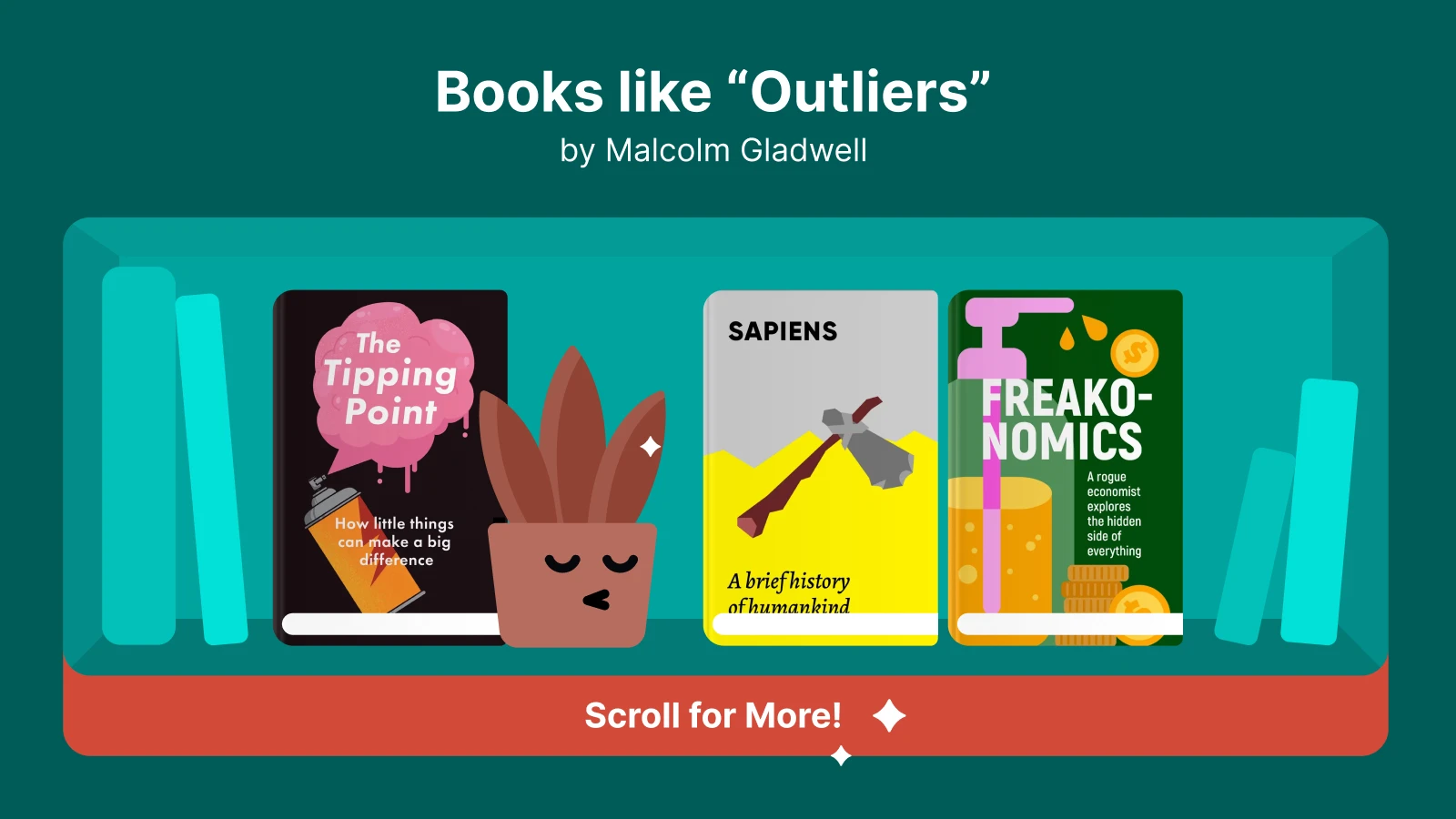
'Freakonomics' by Steven D. Levitt and Stephen J. Dubner: An economist and a journalist reveal the strange, hidden logic behind all our real-life choices.
'Thinking, Fast and Slow' by Daniel Kahneman: Learn the two ways your brain makes decisions so you can choose better.
''Mindset: The New Psychology of Success' by Carol S. Dweck: The science-backed secret to why some people seize opportunities while others stay stuck.
'Grit' by Angela Duckworth: The ultimate guide to finding the passion and stick-to-it-ness (true hard work) that beats raw talent every time.
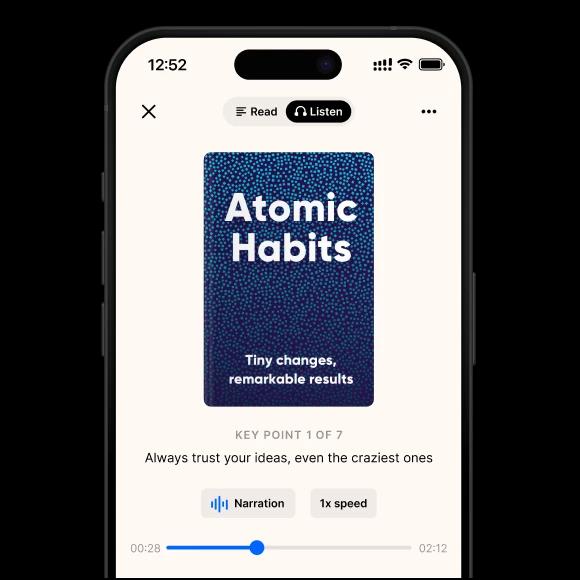
'Atomic Habits' by James Clear: Learn the simple, proven system for building good habits that actually stick.
★★★★★ 172K+ reviews
Empower yourself with the best insights and ideas!
Get the #1 most downloaded daily growth app.
Start nowThe top 10 books to unlock your potential
These compelling reads will give you the tools to stop being stuck and start seeing real-life results.
1. ''Mindset: The New Psychology of Success' by Carol S. Dweck
What separates high achievers from everyone else? Stanford psychologist Carol Dweck discovered it's not talent or IQ, it's mindset. Her groundbreaking research reveals two fundamental mindsets: the "fixed mindset" (believing your abilities are set in stone) and the "growth mindset" (believing you can develop through effort and learning).
Dweck's research perfectly complements 'Outliers.' While Gladwell shows how external factors like timing and opportunity create success, Dweck reveals the internal psychology that allows people to seize those opportunities.
The growth mindset explains why some people maximize their 10,000 hours of practice while others plateau early.
This book demonstrates that the cultural advantages Gladwell describes only matter if you have the mindset to leverage them. It's essential reading for anyone who wants to transform how they approach challenges, setbacks, and their own potential.
Similarities between the books:
Both books explain why two students with identical opportunities can achieve wildly different results based on how they view failure and effort.
Both books demonstrate that believing "I'm just not a math person" becomes a self-fulfilling prophecy that closes doors to opportunity.
📘 Want all 10 unlocked fast? Try Headway for potential-unleashing insights in under 3 hours total!
2. 'Sapiens: A Brief History of Humankind' by Yuval Noah Harari
Yuval Noah Harari's 'Sapiens' gives you the entire backstory for humanity — from early humans to now. It examines how culture, economic, and environment have shaped every part of who we are.
If 'Outliers' shows you the secret of American success, 'Sapiens' shows you the secret of human success. Harari agrees with Gladwell's idea: Success and opportunity are deeply linked to cultural and historical backgrounds. This must-read will give you a totally eye-opening new view of the world.
Similarities between the books:
Both books show why a person born in the 1500s had a different set of opportunities than a person born today.
Both books highlight why being part of one culture can give you a clear advantage over others.
3. 'Freakonomics: A Rogue Economist Explores the Hidden Side of Everything' by Steven D. Levitt and Stephen J. Dubner
'Freakonomics' is a nonfiction book that proves that nothing is what it seems. Economist Steven D. Levitt and journalist Stephen J. Dubner ask: If incentives run the world, what really controls people?
They look at strange connections, like how the legalization of abortion might have caused a drop in crime in America. This is a classic 'Outliers'-style idea: Unexpected timing and opportunity change everything. They also discuss how incentives influence everything, from sumo wrestlers to our use of social media.
Similarities between the books:
Both books demonstrate that the obvious answer is often incorrect.
Both books explain complex ideas using examples that you can immediately picture, such as a cheating scandal.
4. 'Atomic Habits: An Easy & Proven Way to Build Good Habits & Break Bad Ones' by James Clear
While 'Outliers' shows you why success happens, 'Atomic Habits' shows you how to build it. James Clear teaches that achieving just 1% improvement every day can lead to massive results. He says your hard work should focus on your system, not your goal.
The book gives you the Four Laws of Behavior Change. This focus on consistent practice aligns well with Gladwell's 10,000-hour rule. It's the ultimate self-help guide for creating the environment and developing the habits of a successful person.
Similarities between the books:
Both books explain why you will achieve more if you devote only 10 minutes a day to exercise, but every single day.
Both books demonstrate that setting up a dedicated study space is more important than simply wanting to achieve good grades.
📘 Ready to build 1% better daily? Get Headway for habit-stacking wisdom from behavior experts!
5. 'The Alchemist' by Paulo Coelho
'The Alchemist' by Paulo Coelho is a captivating, magical tale about pursuing your personal destiny. It follows Santiago, a young shepherd, on his search for treasure.
The message is clear: The journey to your dream is what really matters. It teaches you that finding the right timing, having faith, and grabbing opportunities are essential, just like the lessons in 'Outliers.'
Similarities between the books:
Both books demonstrate why quitting your day job to pursue a risky dream can sometimes lead to a much greater reward.
Both books explain how a chance encounter with a stranger can change the entire path of your life.
6. 'Factfulness: Ten Reasons We're Wrong About the World – and Why Things Are Better Than You Think' by Hans Rosling, Anna Rosling Rönnlund, and Ola Rosling
Just as 'Outliers' showed that the facts about success are often hidden, so, too, does 'Factfulness' make you rethink how success happens.
The authors use data to show that most people live in middle-income countries. This challenges the old picture of "rich vs. poor." It is vital for thinking clearly, just as 'Outliers' showed that the facts about success are often hidden.
Similarities between the books:
Both books remind you why you should always check the data before accepting the story.
Both books show why you shouldn't panic when the news reports something bad, but look at the trend over the last 50 years.
7. 'Thinking, Fast and Slow' by Daniel Kahneman
Want to master your own mind? Daniel Kahneman's 'Thinking, Fast and Slow' is your tool. This New York Times bestseller dives into two brain systems: System 1 (fast, gut feeling) and System 2 (slow, logical).
Kahneman explains cognitive biases, like why you fear losing money more than you want to earn it (loss aversion). Understanding these biases is key to better decision-making — a skill essential for any high achiever. Knowing these secrets backs up Gladwell's point: Success relies on factors you can't always see.
Similarities between the books:
Both books explain why you should slow down and count to ten before making a huge financial decision.
Both books reveal why simply being tired can cause you to make a dumb mistake, no matter how smart you are.
8. 'Grit: The Power of Passion and Perseverance' by Angela Duckworth
Is talent overrated? Angela Duckworth says yes! Her bestseller 'Grit' shows that sustained passion and perseverance matter more than natural gifts. You don't fail because you lack talent; you fail because you quit.
Duckworth's idea that mindset is everything is a powerful partner to 'Outliers.' While Gladwell shows where opportunity comes from, Duckworth shows you the inner strength needed to grab it. Hard work combined with determination is the real-life secret behind the triumph of successful people.
Similarities between the books:
Both books show why a kid with a great coach or supportive parents is more likely to succeed than one who struggles alone.
Both books expound why failing 99 times at a project doesn't mean you're a failure; it just means you're almost done.
📘 Want unshakeable perseverance? Start Headway for grit-building strategies from psychology experts!
9. 'Predictably Irrational: The Hidden Forces That Shape Our Decisions' by Dan Ariely
Why do we do things that make no sense? Dan Ariely's 'Predictably Irrational' is a funny, smart look at behavioral economics. It proves that we are not rational — we are predictably irrational.
Ariely examines how our systematic irrationality influences our choices. Just like 'Outliers,' Ariely stresses that unexpected factors change our outcomes. He shows how hidden influences often outweigh rational thought. This eye-opening book will make you question every decision-making choice you've ever made.
Similarities between the books:
Both books explore why you always spend more money when a sign says "FREE" compared to when it says "Two for $1."
Both books challenge traditional views and explain why most people choose the slightly lower-paying job with better benefits over the higher-paying, riskier one.
10. 'Quiet: The Power of Introverts in a World That Can't Stop Talking' by Susan Cain
Are you introverted? Susan Cain's 'Quiet' will change how you see yourself. She argues that society overvalues extroversion and misses the deep thinking and creativity of introverts.
Cain uses personal stories to show the massive strengths of introversion — like careful planning and focused work.
This idea connects directly to 'Outliers': the environment you are in (e.g. a noisy, open-plan office) shapes your ability to succeed.
This riveting book is a must-read for anyone who has ever felt overlooked.
Similarities between the books:
Both books illustrate why the quietest person in the room often has the best ideas.
Both books describe why some people only do their best work in a private office with the door closed.
What is 'Outliers: The Story of Success' really about?
'Outliers' is a New York Times bestseller that changed the conversation about genius. This deeply American story shows how practice, family, culture, and timing contribute to high achievement.
Gladwell explains the 10,000-hour rule — the idea that world-class skill requires massive practice. He uses clear examples: Bill Gates had special access to computers when no one else did. The Beatles famously practiced for thousands of hours in a smoky Hamburg club.
Gladwell demonstrates how factors such as having the right parents or attending an English school at the right time create unique opportunities for high achievers in America. It's a must-read nonfiction book for anyone, especially high school students, thinking about their future.



Don't grow alone. Use Headway
All of these new books give you a piece of the puzzle and prove that success is built on context, timing, and system, not just hard work.
But you need the knowledge now, and that's why we're here. We built Headway to give you the most powerful ideas from these favorite books in just 15 minutes. It's the simplest way to absorb the wisdom of the world's best high achievers.
Download Headway today. Stop wishing for a breakthrough and create it by becoming the successful person you're meant to be. We're on your team.
Frequently asked questions about books like 'Outliers'
What is 'Outliers' about?
'Outliers' delves into how factors like practice, family, and culture shape exceptional success stories. It challenges the notion that personal talent alone is the key to achieving greatness. You can find the Outliers text summary or listen to a short version as a podcast here.
How are 'The Tipping Point' and 'Outliers' similar?
'The Tipping Point' and 'Outliers' explore how context influences our behavior. Both emphasize that small actions lead to real results. They prove that success hinges on more than just talent.
What cognitive biases are discussed in 'Thinking, Fast and Slow'?
'Thinking, Fast and Slow' dives into cognitive biases like availability bias, anchoring bias, loss aversion, and overconfidence bias. It's eye-opening to see just how these biases shape our thinking and influence our choices!
What is the main theme of 'Grit' by Angela Duckworth?
The main theme of 'Grit' by Angela Duckworth is that success comes from perseverance rather than just talent. It shows us that staying determined is what really matters.
How does 'Factfulness' challenge common perceptions of the world?
'Factfulness' challenges our perceptions by revealing how cognitive biases and negative media coverage distort our view of the world. It encourages us to look at data and facts to gain a more balanced understanding.