Self-growth
 Apps & Digital Tools
 Business & Career
 Success
 Growth Tools
 Psychology
 Communication
 Relationships
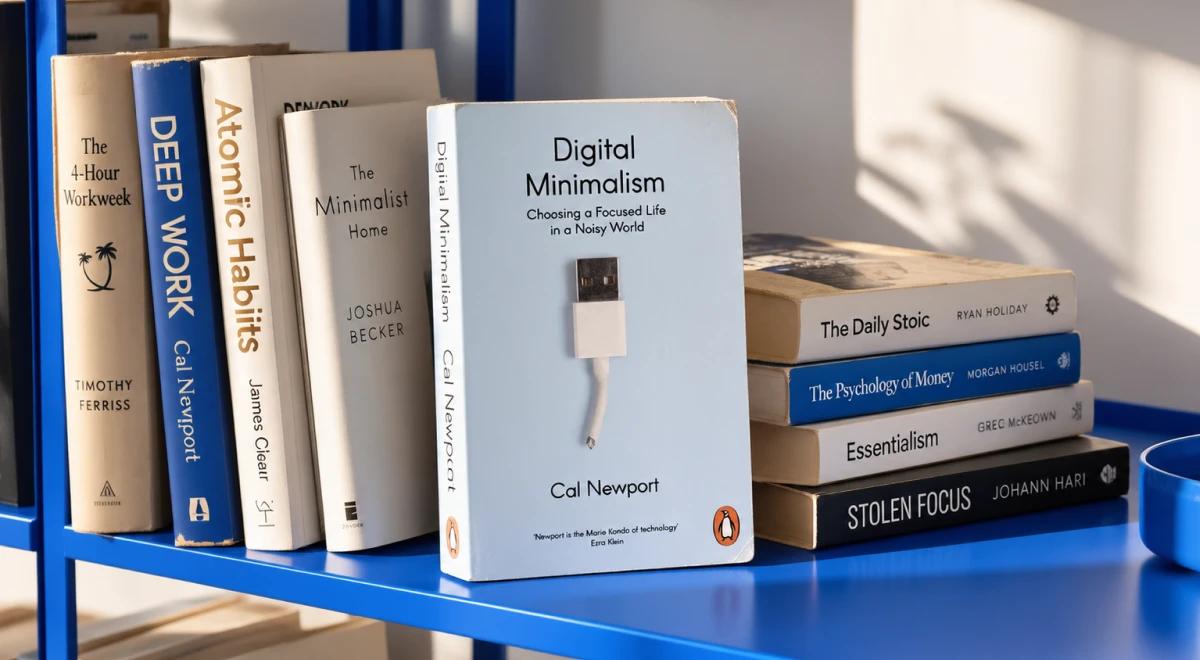

Two weeks without mobile internet improved sustained attention by about the same amount that ten years of aging takes away, according to a 2025 PNAS Nexus trial. No wonder so many people are searching for the best books on digital minimalism, a philosophy of intentional technology usage that keeps the tools serving your goals and drops the rest.
Here are the top eight books on the topic. Cal Newport's 'Digital Minimalism' anchors the list, and seven more fill in the picture: Johann Hari on attention science, Nir Eyal on habit design, Catherine Price on daily practice, and Jenny Odell on offline living.
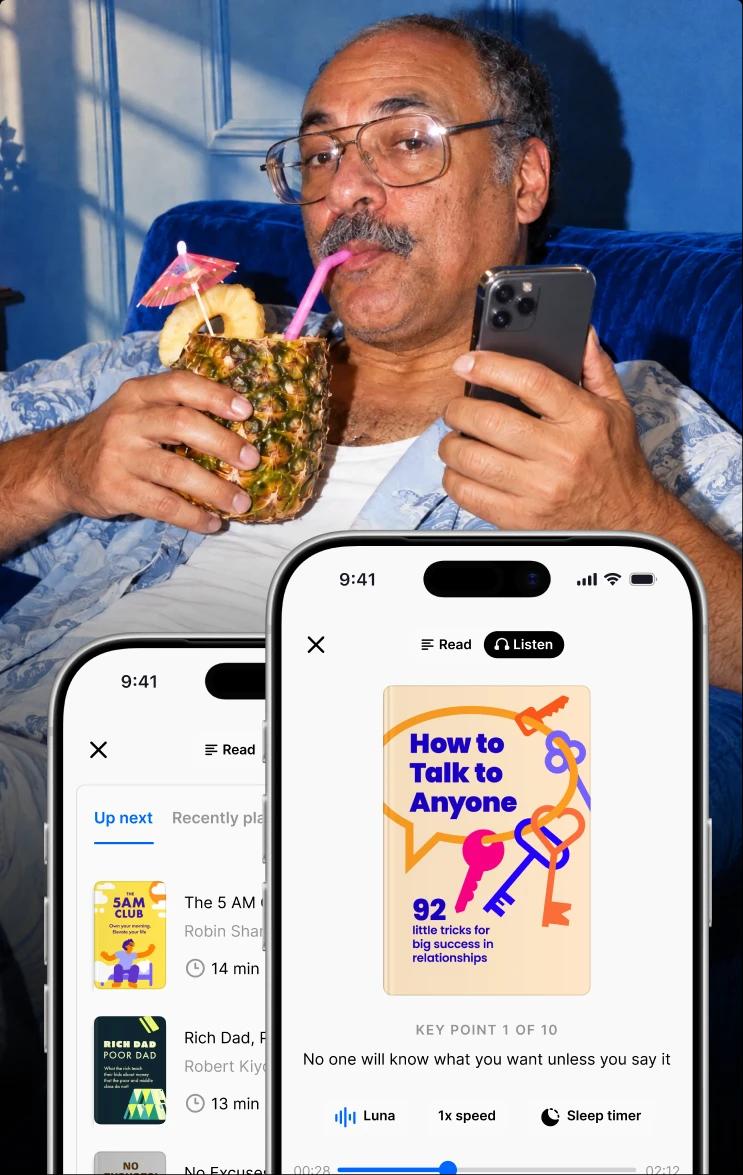
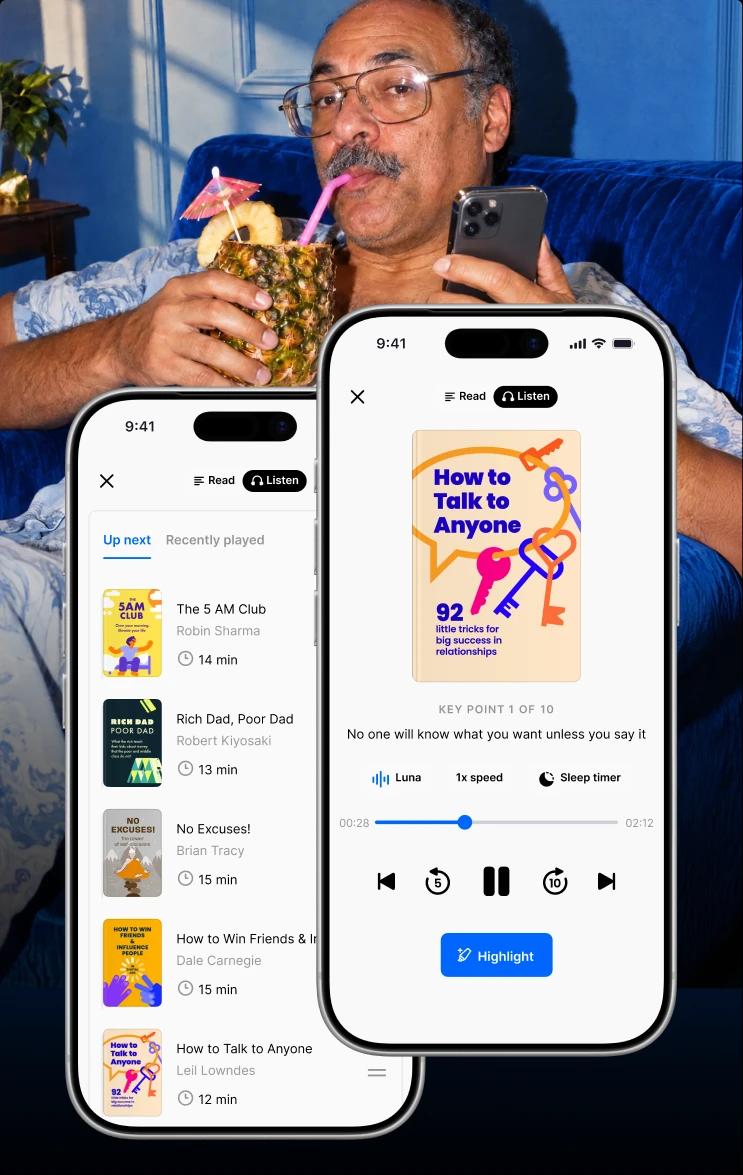
Many of them are available as summaries on the Headway app, so they lead the list. You can preview Newport, Hari, Eyal, and Price in about 15 minutes each before you commit to a full read.
Download Headway to get the key insights on digital minimalism.

Quick summary: Three best books on digital minimalism at a glance
Short on time? Here's what to know before you pick a title:
'Digital Minimalism' by Cal Newport is the best starting point.
'Deep Work' pairs with it for career-focused readers.
'Stolen Focus' explains the systemic side of shrinking attention.
Keep reading for the full list, a quick picker, and tips to try this week.
Five best books on digital minimalism in bite-sized formats
These five lead the list because you can preview every one of them in the Headway library.
1. 'Digital Minimalism' by Cal Newport
Cal Newport's 'Digital Minimalism' (Portfolio, 2019) gave a name to a quiet movement. Its followers use technology on purpose. When the book came out, Newport was an associate professor of computer science at Georgetown University. It's a New York Times, Wall Street Journal, Publishers Weekly, and USA Today bestseller.
The publisher calls it a timely and enlightening book. It draws on real-life examples from a diverse array of people. They include Amish farmers, harried parents, and Silicon Valley programmers. Newport identifies the common practices of digital minimalists. They hold long conversations without glancing at a phone, and they spend regular periods alone with their inner selves.
In his telling, digital minimalists can lose an afternoon to a woodworking project or head out on a leisurely morning run. They stay informed about the news, and they don't feel overwhelmed by it. They enjoy dinner with friends without the obsessive urge to document it.
Newport says common sense tips, like muting notifications, don't go far enough to take back control of our technological lives. He says the same about occasional rituals, like a digital sabbath. Attempts to unplug completely collide with family, friends, and work. He calls for a thoughtful method instead. He shares strategies for building one, starting with a thirty-day digital declutter.
During the declutter, you step away from optional technologies and try better activities in the offline world. Then you bring back only what earns its place. Newport also suggests a seasonal leisure plan with objectives and habits for the coming season. He recommends scheduling your low-quality leisure too, so a scroll becomes a choice.
The publisher says the philosophy has already improved countless lives. Ezra Klein of Vox compared Newport to the Marie Kondo of technology. He said Newport has an actual plan for sorting the digital pursuits worth keeping. Seth Godin called it smart advice, and novelist Naomi Alderman called it a timely and useful book.
Greg McKeown, author of 'Essentialism', called it a wonderful book. He started applying Cal's ideas to his own life immediately. Ryder Carroll, New York Times bestselling author of 'The Bullet Journal Method', said the framework is easy to act on in the digital age.
Pete Adeney, better known as Mr. Money Mustache, hopes everyone with a mobile phone reads it. He sees the same strategy working for both financial success and mental well-being. The Headway summary is a quick way to preview the declutter first.
2. 'Deep Work' by Cal Newport
Newport's earlier book (Grand Central Publishing, 2016) suits readers who care about career output. 'Deep Work' introduces a plain definition: the ability to focus without distraction on a cognitively demanding task. Newport argues this skill is rare in a tech-saturated world. He says you can train it with rules like practicing boredom and quitting social media. It was a Wall Street Journal business bestseller.
For more career reading, try the best nonfiction books of all time.
3. 'Stolen Focus' by Johann Hari
Johann Hari's 'Stolen Focus' (Crown, 2022) is a New York Times bestseller. Hari spent three years interviewing attention researchers. He found twelve factors that drain our focus, including tech companies racing to capture attention. His central worry is that continuous connectivity encourages distraction and shallow thinking.
Hari also tried a three-month break from his phone, and it didn't solve the problem for the long term. Where Newport builds a personal method, Hari looks at systems. It's also an approachable pick among the psychology books for beginners.
4. 'Indistractable' by Nir Eyal
Nir Eyal, who wrote about habit-forming products in 'Hooked', published 'Indistractable' (BenBella, 2019) as his answer to the other side of the problem. The key idea is that distraction starts with an internal trigger. That's a thought or feeling that pushes you to act, often to escape discomfort. The app is only the exit.
The book looks at the behavioral and psychological side of tech addiction. Then it hands you tools: making time for traction, hacking back email and group chat, and using pacts that lock in your choices. For more practical guides like it, see the best books for self-improvement.
5. 'How to Break Up with Your Phone' by Catherine Price
Catherine Price's 'How to Break Up with Your Phone' (Ten Speed Press, 2018) is the workbook of the group. Price is an award-winning science journalist. Her 30-day plan asks you to adjust four things: (1) your settings, (2) your apps, (3) your environment, and (4) your mindset. Moves like turning off notifications or deleting a social media app fit right in.
The goal is a long-term relationship with your phone that feels good. A revised edition arrived in 2025, and the Headway summary is a fast way to check if the plan suits you.
📘 Get the core ideas from all five titles on Headway!
Three more best books on digital minimalism worth your shelf space
These three add angles the first five only touch: quiet resistance, design psychology, and the case for quitting.
6. 'How to Do Nothing' by Jenny Odell
Jenny Odell is an artist and writer based in Oakland. Her book 'How to Do Nothing' (Melville House, 2019) argues against measuring life by productivity. She calls attention to our most precious and overdrawn resource. She treats cultivating it as a contemplative practice. She links that shift to a more meaningful sense of happiness.
7. 'Irresistible' by Adam Alter
Adam Alter is a professor of psychology and marketing at NYU. His book 'Irresistible' (Penguin Press, 2017) covers behavioral addiction, with a focus on design: companies tweak products until they're almost impossible to resist. That makes it a useful counterpart to book 4, which looks at personal triggers. Alter also suggests ways to set boundaries between work and play.
8. 'Ten Arguments for Deleting Your Social Media Accounts Right Now' by Jaron Lanier
Jaron Lanier is a virtual reality pioneer who participates in no social media. His short book (Henry Holt, 2018) makes ten direct arguments for leaving the platforms. He calls the ad-driven model BUMMER, short for Behaviors of Users Modified, and Made into an Empire for Rent. It's the most confrontational pick here, so it works well as a counterweight after book 1.
Which of these best books on digital minimalism fits your situation
Reading all eight is optional. This table matches three of them to what you want from a book.
| Book | Best for | Core method |
|---|---|---|
'Digital Minimalism' | Readers who want a full framework | Thirty-day digital declutter and a seasonal leisure plan |
'Indistractable' | Readers who want daily habit tools | Tracing distraction to its internal trigger |
'How to Do Nothing' | Readers who want a mindset shift | Treating attention as a practice you cultivate |
For a wider shelf, browse the bestselling nonfiction books list.
What digital minimalism actually means before you pick a book
Digital minimalism is a philosophy of technology use that puts your values first. Newport's version is a focused life in an increasingly noisy world. A few chosen activities get your online time. The opposite, digital maximalism, says yes to any app or device that offers a small benefit.
The key idea is that minimalism means knowing how much is just enough. Digital minimalism applies that to personal technology. Each new technology has to earn its place in your day. It also asks you to look at time spent on screens and what that time replaces.
Tech companies earn money when you stay on their apps, so their financial success depends on your attention. In this attention economy, a person's worth gets measured by productivity and online engagement. Many digital devices are built around that measure, and Jenny Odell presses this point in book 6.
Every title below answers this backdrop in the digital age. Some focus on personal habits, and others focus on how digital technology is designed. Reading one of each gives you both views.


Common-sense tips for practicing digital minimalism this week
The books ask for real changes, so here's a preview. Treat each step as a one-week trial, then keep what works.
Turn off notifications from apps that aren't urgent, so your phone stops deciding when you look.
Delete one social media app for seven days and note how your evenings change.
Replace one screen hour with an offline activity, like a walk, a hobby, or dinner with a friend.
Try a digital sabbath for one day, and decide in advance what you'll do with the hours.
Draft a seasonal leisure plan with two or three objectives and a habit or two.
Start with one or two of these, since a small trial you keep beats a big plan you drop.
In the PNAS trial, people without mobile internet spent more time seeing others in person, exercising, and being outdoors. Their mental health and well-being scores rose. The authors noted that simply cutting back may be enough. That's why mindful technology use can improve mental well-being and add value to offline life. Results vary, and the sample was mostly motivated iPhone users.
Build your own digital declutter with the Headway app
The best books on digital minimalism agree on one thing: technology works better when you decide its job. Newport gives you the framework, Hari and Odell explain what you're up against, and Eyal and Price hand you daily tools. To sample the format first, start with these free book summaries.
Each Headway summary takes about 15 minutes in text or audio. Your onboarding quiz shapes the recommendations, and streaks reward showing up on days when time is short.
Download Headway, finish one of the five summaries above today, and save your favorite idea as a highlight. Then try one tip from the list this week.
FAQs about best books on digital minimalism
What is the best book to start with on digital minimalism?
Start with 'Digital Minimalism' by Cal Newport for the full framework. It comes with real-life examples and a thirty-day declutter. Pick 'How to Break Up with Your Phone' if you'd rather follow a daily plan. Choose 'Indistractable' if you want habit tools for the moments you feel pulled toward your phone.
Is Digital Minimalism by Cal Newport worth reading in 2026?
Yes. Its core tools, a thirty-day declutter and a seasonal leisure plan, still fit today's apps. Joshua Fields Millburn of The Minimalists said it speaks to the techno-exhaustion of a digitally caffeinated culture. KJ Dell'Antonia called it a welcome invitation to rethink screen use. Daniel Levitin said its push for meaningful and engaged interactions is just what readers need.
What is the difference between digital minimalism and a digital detox?
A digital detox is a temporary break from devices. Digital minimalism is an ongoing philosophy of technology use: you choose which tools earn a place in your life and set rules for using them. Newport's thirty-day digital declutter sits between the two. It starts with a break, then asks you to bring back only what serves your values.
Do you have to delete social media to practice digital minimalism?
No. Newport suggests deleting social media apps from your phone, but you can keep the accounts that support what you value. He also recommends scheduling low-quality leisure, such as scrolling, so it becomes a choice. Jaron Lanier makes the case for quitting entirely, and his book is worth reading even if you never do.
What is a digital sabbath and how long should it last?
A digital sabbath is a set period, often one day a week, when you step away from optional screens. Newport calls it one of the occasional rituals that don't go far enough alone, much like common sense tips such as muting notifications. Start with one day, then adjust the length to fit your family and your work.
Can digital minimalism help with anxiety and focus at the same time?
Research suggests it can help both. In the 2025 PNAS Nexus trial, people blocked mobile internet for two weeks. Their mental health, well-being, and sustained attention improved, and 91% gained on at least one measure. That's one study of mostly motivated iPhone users, and it isn't medical advice. If anxiety affects daily life, talk with a professional about your mental well-being.
What is the attention economy and why does it matter here?
The attention economy is the business model behind many free apps. Tech companies earn money by capturing your time and attention, so they design products to keep you engaged. Jenny Odell argues it measures our worth by productivity and online engagement. In a tech-saturated world, digital minimalism answers that design with rules you set yourself.
Are there books on digital minimalism written for parents or teens?
Yes. 'Indistractable' has a section on raising indistractable children. Catherine Price co-wrote 'The Amazing Generation' with social psychologist Jonathan Haidt. It's a book for kids and tweens ages 9 to 12. Haidt's 'The Anxious Generation' speaks to parents about smartphones and childhood. Newport's own book also features harried parents among its real examples.