Self-growth
 Apps & Digital Tools
 Business & Career
 Success
 Growth Tools
 Psychology
 Communication
 Relationships


You know the 2 a.m. version of your brain: the one that replays a work email, rehearses a conversation that may never happen, and keeps score of everything that could go wrong tomorrow.
When your mind does that night after night, it's natural to start a search for help on a shelf. The trouble is there are hundreds of anxiety books, most of them overpromising, and the last thing an anxious brain needs is one more thing to feel behind on. Plenty of people buy a stack and read none of it — which is a shame, because the right anxiety book can genuinely help.
It gets harder at certain times of year, too. Anxiety doesn't keep a calendar, but it tends to climb in the dark stretch from October to February, when low light pulls mood down and worry and low-grade depression start feeding each other. A book won't fix the season, but the right one hands you a plan and a little hope.
So this isn't a ranked list — if you want the full lineup, our roundup of the best books for anxiety has it. This piece goes deep on one: 'The Anxiety Book: Developing Strength in the Face of Fear' by Dr. Jonathan Davidson and Henry Dreher, the single anxiety book worth reading first if you want to understand what's happening and do something about it.
After the review, you'll find six shorter titles to read alongside it, sorted by what you're dealing with — panic, overthinking, work, relationships, or a mind that won't go quiet at night.
A book only helps if you finish it, and anxiety is very good at talking you out of page 40. That's where quick summaries earn their place — you can get the key ideas of a book in about 15 minutes and start one small practice tonight instead of adding to the pile.
📘 Find your next great read on Headway.

Quick answer: 'The Anxiety Book' and six reads to pair with it
If you only have a minute: the verdict, and the shelf around it.
| Book | Author | Best for |
|---|---|---|
'The Anxiety Book: Developing Strength in the Face of Fear' | Dr. Jonathan Davidson and Henry Dreher | The one anxiety book to read first — a clinician's five-part program covering the five most common kinds of anxiety |
'Dare: The New Way to End Anxiety and Panic Attacks' | Barry McDonagh | When panic attacks are the main problem |
'Be Calm: Proven Techniques to Stop Anxiety Now' | Jill Weber | Calming symptoms in the moment |
'Hardcore Self Help: F**k Anxiety' | Robert Duff | People who hate self-help fluff |
'Anxious for Nothing: Finding Calm in a Chaotic World' | Max Lucado | A faith-based take on worry |
'Anxiety in Relationship' | Theresa Miller | Jealousy, overthinking, and the fear of being left |
'Anxiety at Work' | Adrian Gostick and Chester Elton | The anxiety that lives in your inbox and your team |
'The Anxiety Book': A psychiatrist's five-part plan for facing fear
Dr. Jonathan R. T. Davidson spent decades treating anxiety disorders and ran the Anxiety and Traumatic Stress Program at Duke University Medical Center. He wrote this with science writer Henry Dreher, and it draws on clinical practice, psychiatry, and the neuroscience of fear rather than vibes.
If you've ever wondered which anxiety books therapists recommend, this is the kind they mean — one of the best anxiety books recommended by therapists, because a leading clinician built it from real cases.
Davidson sorts chronic anxiety into five patterns, which the book calls the five faces: generalized anxiety, social anxiety, post-traumatic stress, panic disorder, and obsessive-compulsive disorder.
Self-assessment tests ask about your symptoms, your history, and your family, so you can find yours. Naming the pattern is oddly steadying — "I worry about everything" turns into something with edges you can work on, which is already a relief when your own mind feels like a blur.
From there it lays out a program in five moves. You learn to change the fearful beliefs that feed worry, which is the cognitive behavioral core; you practice exposure, facing a fear in small, planned doses instead of avoiding it; you build serenity skills like slow breathing and mindfulness, the practice of staying present; you consider medication where it's warranted; and you work the daily-life layer of diet, exercise, and sleep.
Those relaxation skills aren't soft extras, either — a Georgetown trial led by psychiatrist Dr. Elizabeth Hoge found that mindfulness meditation worked about as well as a standard anxiety medication, and the researchers saw far fewer side effects.
The book's guiding philosophy is right there in the subtitle: build strength, don't just mute symptoms. The goal isn't to erase anxiety but to get steadier in the face of fear, so panic and worry stop running the show. Davidson writes with real compassion throughout, which matters when you're the one reading at 2 a.m.
The plan rewards repetition more than willpower. A few minutes of practice most days beats one heroic weekend of trying to fix yourself — the same logic behind 'Atomic Habits', where small, repeatable actions do the heavy lifting. Anxiety tends to come down a notch at a time, not all at once.
One honest caveat. The book first came out in 2003, and its chapter on herbal remedies has aged the worst. Some of the supplements it discusses carry real risks or interact with prescription medication, so treat that section as a conversation to have with a clinician, not a shopping list. The guidance on beliefs, exposure, and daily habits has held up fine.
It's thorough rather than breezy. If you want the gentlest on-ramp, one of the lighter picks below may be the best anxiety book for beginners to start with, and this is the one to graduate to. For most adults who want to understand the anxious brain and do something structured about it, it's one of the best books for anxiety and stress you can keep within reach. It's also available on audio if you'd rather listen on a walk — one of the more complete anxiety audiobooks out there.
Six books to read alongside 'The Anxiety Book'
Your best companion depends on your main symptom. Here are six more books for managing anxiety, each sorted by the problem it solves best.
1. 'Dare' by Barry McDonagh, for panic attacks
McDonagh builds his method around a counterintuitive response to panic: instead of bracing against an attack or fleeing it, you move toward the sensation and let it burn off. Among books for anxiety and panic attacks, it's one of the clearest, and it slots neatly beside the exposure idea in Davidson's plan.
It's best for people whose central problem is panic and panic disorders, or the dread of the next attack. If your anxiety is mostly mental rather than physical, start elsewhere and keep this one in reserve.
2. 'Be Calm' by Jill Weber, for the moment it hits
Weber's book is organized so you can open it at whatever you're feeling — a racing heart, a spiral of thoughts, a situation you're dreading — and find a technique to manage symptoms right then. That makes it one of the more practical books for managing anxiety day to day, and a friendly entry point if you're new to all this.
Most of its tools come straight from CBT, so you're learning real methods, not just affirmations. Keep it somewhere you can grab it fast.
3. 'Hardcore Self Help: F**k Anxiety' by Robert Duff, for people who hate self-help
Duff is a psychologist who writes like a friend who happens to have a PhD — short, funny, a little profane, and genuinely informed. If most anxiety self-help books read as too soft or too clinical, this one gets through in an afternoon and still keeps the science straight.
It lands especially well with younger readers and anyone who wants help without the incense. There's not much hand-holding here, which is the point.
4. 'Anxious for Nothing' by Max Lucado, for a faith-based frame
Lucado writes from a Christian perspective and builds the book around a simple framework for worry — celebrate, ask, leave it, dwell on the good. If faith is part of how you cope, it will connect; if it isn't, you'll probably want one of the others on this list.
It's gentle and quotable rather than clinical, which suits readers who find comfort as useful as technique.
5. 'Anxiety in Relationship' by Theresa Miller, for love that makes you anxious
This one targets relationship anxiety head-on: the jealousy, the overthinking, the reflex to read a quiet partner as a leaving one. It stays with the patterns that show up between two people, which makes it a reasonable starting point among books for relationship anxiety and chronic worrying about where you stand.
For a human story about that same fear of the unknown inside a marriage, 'Strangers' sits with the question an anxious mind hates most — not getting an answer.
6. 'Anxiety at Work' by Adrian Gostick and Chester Elton, for the inbox and the team
Most anxiety advice is about your private mind. This one is about the office — uncertainty over your role, the pressure to perform, and the strategies managers can use to lower the temperature for a whole team. It's among the few genuinely useful books for work anxiety, and a smart read if you lead people.
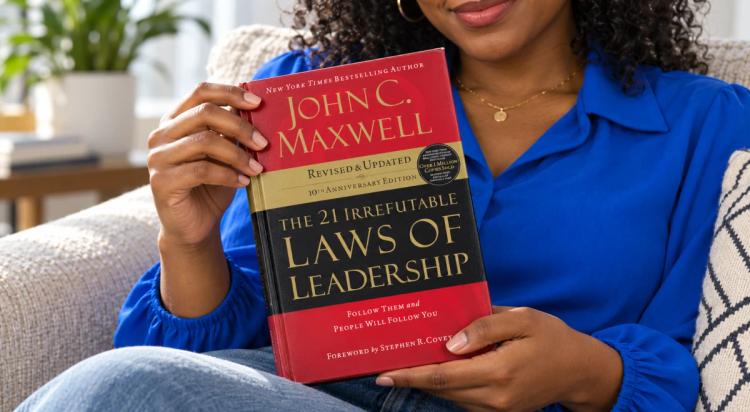
On the leadership side, it pairs with 'The 21 Irrefutable Laws of Leadership', which is largely about steadying the people who look to you when everything feels uncertain.


How to choose an anxiety book that fits
With a shelf this varied, the choice comes down to a few questions.
Start from the symptom, not the bestseller list. If it's panic, start with 'Dare'. If it's your relationship, start with Miller. If you want the full map of the anxious brain, start with Davidson. Your first book should be the one that matches the problem keeping you up, not the one with the most reviews.
Decide between a read and a workbook. A book explains; an anxiety workbook makes you do the exercises on the page. If you know you only follow through when there's a worksheet in front of you, look for an anxiety workbook for adults with practical exercises.
If you'd rather understand the problem first, a straight read like 'The Anxiety Book' — which still folds in self-assessments and exercises — will serve you better. That's the real difference in the anxiety book vs anxiety workbook question: one teaches, the other drills.
Check the method. CBT runs through most of these titles. If you're interested in the psychology underneath, look for ACT, or acceptance and commitment therapy, and mindfulness — both worth exploring if fighting your thoughts head-on has never worked for you.
Mind the time trap. Sometimes the anxiety isn't really about the thing in front of you; it's the background sense that there's never enough time, or dread about a future you can't control. If that's the knot, 'Four Thousand Weeks' reframes it far more usefully than any productivity hack.
And give yourself a break from working on yourself. Reading doesn't have to be homework. A fast, absorbing novel can do more for frayed nerves than another self-help chapter — if you want one, 'Powerless' is pure escape with just enough fear-and-resilience in it to still feel on theme.
When a book isn't enough, and when to see someone
Self-help books are effective for anxiety the way a good map is effective: they show the terrain and the routes, but they don't walk it for you. For mild-to-moderate worry, the right book plus steady practice can genuinely help.
If anxiety is running your days — frequent panic attacks, sleep you've lost for weeks, worry that leaves you unable to work or sit still — that's the point to see a clinical psychologist or doctor rather than read harder. Being diagnosed isn't a failure; it's how you get treatment that fits, often a combination of therapy and medication. Davidson argues the same thing from inside the field.
A book can also sit alongside treatment, giving you language for what you're feeling between sessions and a few tools to practice. Reading about anxiety and getting support are never rivals. And if you're ever in crisis, contact local emergency services or a crisis line — that moment calls for a person, not a paperback.
How real readers finish the books they start
The hard part is rarely choosing a book. It's getting through it when your head is already full. Three Headway readers describe that obstacle better than any sales pitch.
Israel Erick López Andrade, a freelance writer with 20 years in, got tired of pouring hours into articles, courses, and videos only to end the day with nothing he could use. Fifteen-minute summaries let him swap the noise for ideas he could apply.
Andrea Bagaglia stopped reading at 16 and spent years stuck in a doom-scrolling loop. He rebuilt a daily reading habit on structure and small wins, not willpower he didn't have.
Olena Khodos, a content marketer, used to let business books pile up unread out of a quiet dread of starting one. Pre-reading the core ideas first killed the guilt and got her through far more of them.
None of them was dealing with anxiety, exactly. But an overloaded, avoidant brain is the same obstacle whether the book in front of you is about panic or productivity — and shrinking the book to its core ideas is how you get past page 40. You're also in good company: a large community of readers uses the same trick to stay consistent.
📘 Build a calmer habit with Headway.
Pick one anxiety book and finish it with Headway
You don't need to read all seven. Pick the one that matches the brain you have at 2 a.m. and read it for real — that single finished book will do more than a shelf of hopeful purchases. Getting steadier is rarely a straight line — progress comes a notch at a time, and the right book keeps you moving toward a little more freedom from the loop.
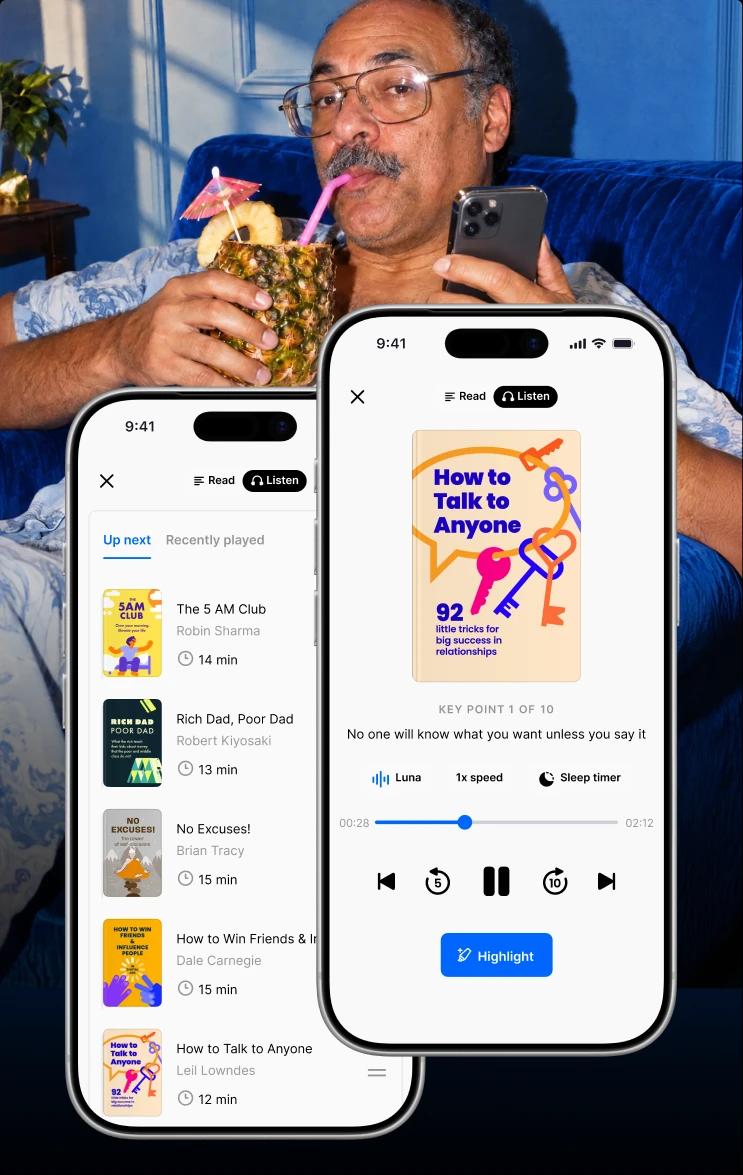
Headway gives you the key ideas from thousands of books, including anxiety titles like these, in about 15 minutes each, as text or audio. A short quiz points you to a sensible starting book, and a streak keeps the habit alive on the days anxiety would rather you quit.
Choose a low-friction way to find anxiety books, sample them, and decide which ones deserve a full copy on your nightstand.
Frequently asked questions about anxiety books
What is the best book for anxiety?
There's no single best anxiety book, because it depends on what you're facing. For a full, clinician-written overview, 'The Anxiety Book' by Dr. Jonathan Davidson is hard to beat. For panic, 'Dare' is sharper; for in-the-moment relief, 'Be Calm' is more practical. If you're a beginner, start with the one that matches your main symptom rather than the longest bestseller list.
Can reading too much about anxiety make it worse?
It can. For some people, reading book after book becomes its own kind of overthinking — a way to feel productive while avoiding the practice that helps. If researching your nerves is keeping you more wound up than calm, switch from collecting information to doing one technique, like slow breathing, and staying present with how it feels. One book you use beats ten you only highlight.
Are anxiety self-help books backed by science?
The better ones are. Methods like CBT, exposure, and mindfulness have a solid research base for anxiety, and reputable authors lean on them rather than on quick fixes. That's also why the books therapists recommend tend to name a specific method. A book can't replace a clinician's judgment, but an evidence-based one gives you techniques researchers have tested.
How long does it take for an anxiety book to help?
Expect weeks, not days. The reading is quick; the change comes from practicing the strategies, and most methods need a few weeks of near-daily repetition before they start to feel automatic. Think of it the way you'd think about fitness — a small, steady investment that pays off in the future, not a one-night fix. If nothing shifts after a couple of months of honest effort, treat that as a sign to get more support.
What's the difference between CBT and ACT for anxiety?
Both are evidence-based, but they aim at different things. CBT, the backbone of most anxiety books, teaches you to catch and test anxious thoughts. ACT — acceptance and commitment therapy — leans on acceptance and mindfulness, asking you to make room for the feeling and act on your values anyway instead of fighting it.
If arguing with your thoughts has never worked, ACT's focus on acceptance and staying present may fit you better.
Can an anxiety book help with work or relationship anxiety?
Yes, if you pick one aimed at that setting. For work anxiety — role uncertainty, performance pressure, team stress — 'Anxiety at Work' is purpose-built. For relationship anxiety, jealousy, and overthinking a partner's silence, a relationship-specific title like 'Anxiety in Relationship' fits better than a general guide. Matching the book to the situation beats any one-size-fits-all pick.