Self-growth
 Business & Career
 Success
 Communication
 Healing
 Relationships
 Psychology
 Happiness
Your bookshelf is likely full of unused advice. You buy those bestsellers, read a few chapters, and wait for your life to change. But it stays essentially the same. You're stuck in a cycle of collecting wisdom but never actually using it. Reading the best books for self-improvement isn't the same as growing.
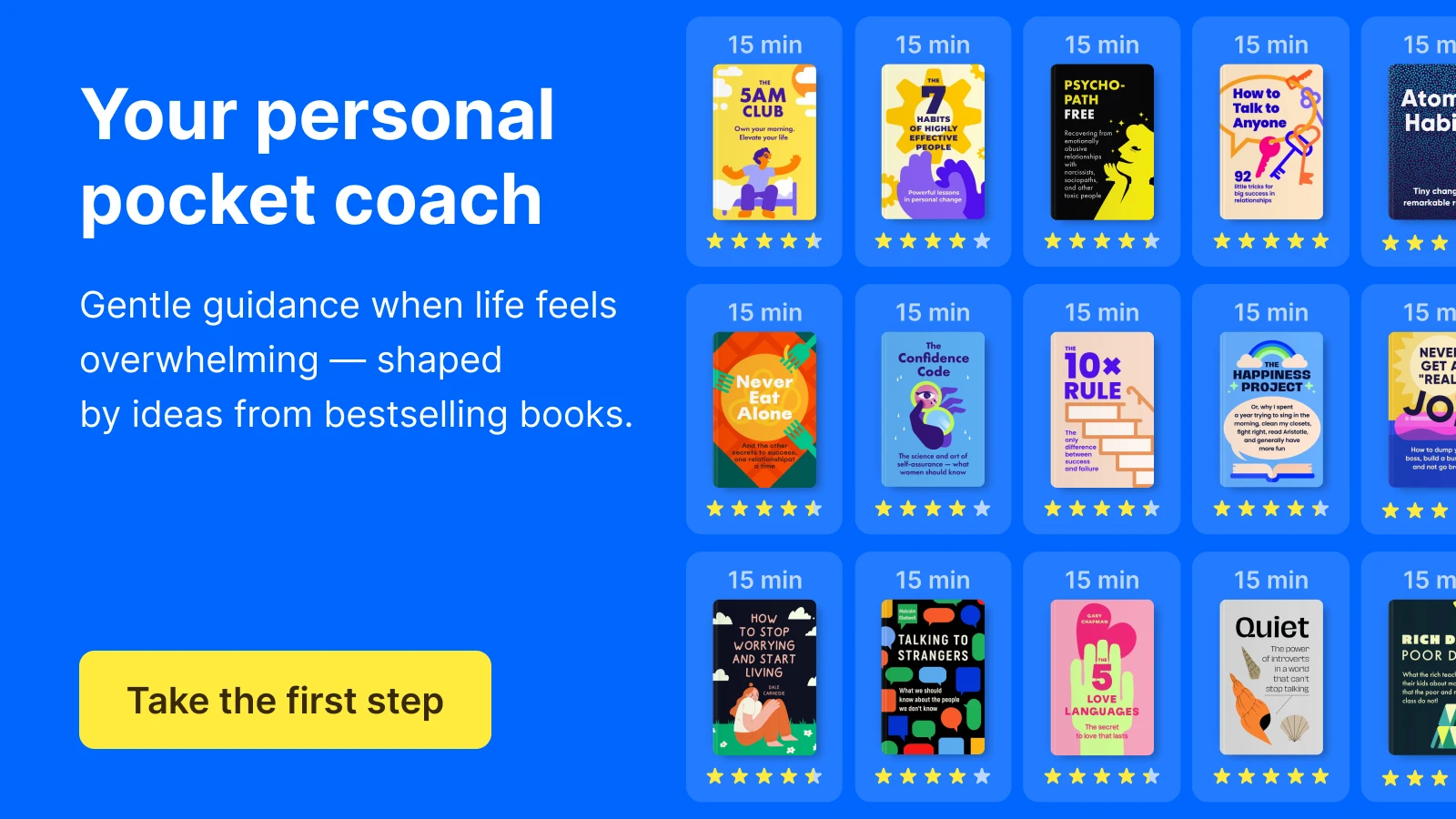
That's why 55 million people worldwide use Headway to turn these ideas into daily habits. This article isn't just a list of titles. It's the first step toward turning information into real action.
➡️ What is Headway and how does it work?
Quick answer: What are the best books for self-improvement?
Our editorial team at Headway believes the best books for self-improvement are 'Atomic Habits' by James Clear for building systems, 'Mindset' by Carol Dweck for mental growth, and 'The Psychology of Money' by Morgan Housel for financial wisdom. Yet, reading alone rarely leads to lasting change. To start applying what you learn, use a daily growth app like Headway to turn these big ideas into daily, repeatable actions.
📘 Apply lasting change with Headway.
Books on habits and systems: The foundation of growth
These self-improvement books focus on the daily actions that build your future self over time.
1. 'Atomic Habits' by James Clear
Want to change your life but feel stuck? James Clear says it's not about chasing big goals, but about building tiny systems instead. Break hard changes into very small actions so simple that you can't say no. Focusing on being just 1% better each day can make a big difference over time. And your environment should make good habits the easiest option.
Willpower fades, but smart systems don't. 'Atomic Habits' shows you how to build a new identity. You'll become the kind of person who doesn't miss the small stuff. Clear lays out this approach in four simple laws: make habits obvious, attractive, easy, and satisfying. Reading this on Headway makes it even simpler to start. No need to get through 300 pages. Just small steps you can take today.
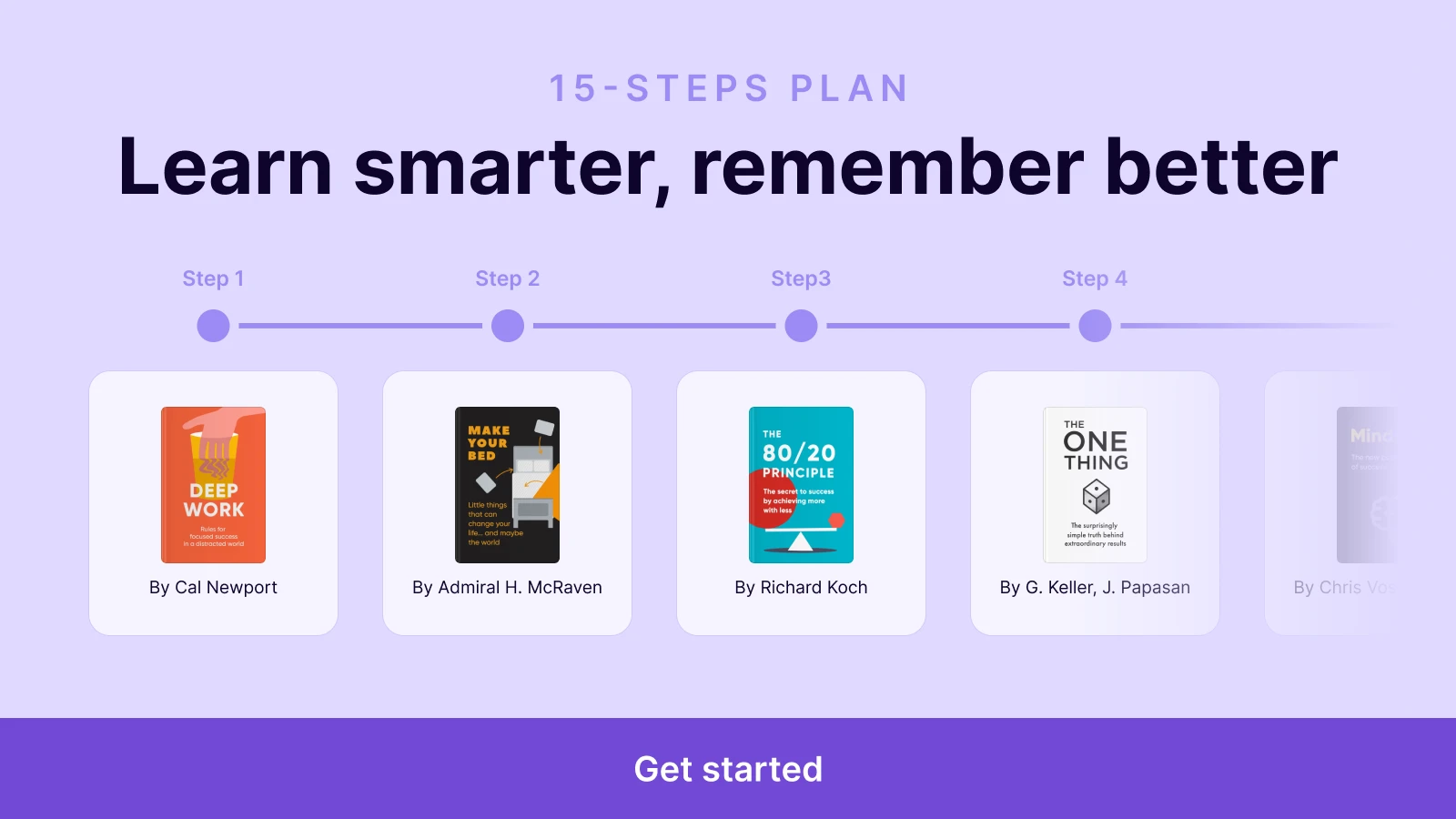
2. 'Deep Work' by Cal Newport
Cal Newport argues that focus is a superpower. Most people spend their days doing shallow work like checking their emails or social media every few minutes. This cycle prevents you from achieving high-quality results in your career. The book provides specific strategies for building a focus ritual. You'll learn why being busy isn't the same as being productive. Newport shows how to quit habits that steal time and train your brain to ignore distractions.
Staying focused means finishing more work in four hours. Newport suggests protecting your most productive hours from outside noise. He also talks about the importance of boredom. Don't reach for your phone every second. If understanding focus were enough, you'd already be doing it. Headway provides focus sounds and plans to help you stay calm. Apply Newport's rules even when your office is chaotic. These summaries help you master attention without the fluff.
Best self-improvement books for mental resilience
Your success depends on how you view your abilities and challenges.
3. 'Mindset: The New Psychology of Success' by Carol Dweck
Carol Dweck introduces the growth mindset: the belief that talents can be developed. She compares this to a fixed mindset, where skills stay static. This shift determines if you see failure as a dead end or a necessary step toward personal development. The book explains how this affects career and relationships. Praising effort beats praising talent. It builds resilience and a love for learning.
Adopting this mindset means no more fearing challenges. Dweck shows that the brain is like a muscle. It grows with every difficult task. This book is essential if you feel limited by your past. It removes the excuse that you're just not talented. You simply haven't mastered it yet. Using Headway to review these ideas keeps you on track. You won't slip back into old, fixed patterns easily. It's a practical guide for mental growth.
4. 'Man's Search for Meaning' by Viktor Frankl
Viktor Frankl was a psychiatrist who survived the Holocaust camps. He explores the human drive to find purpose. We can't always control what happens. However, we can always choose our internal response. This book is a reminder that a "why" helps endure almost any "how" in daily life. Frankl introduces logotherapy to help find personal meaning. He describes how survivors often had a clear future goal.
The book is divided into a moving memoir and a theoretical section. It challenges readers to ask what life demands. You'll learn that happiness is a byproduct of purpose. It's not a goal you can chase directly. This classic helps reframe struggles in a new way. It's a must-read if you feel lost or overwhelmed. Discover that meaning is found in work and love. It's one of the most life-changing books ever written. Headway helps absorb these heavy lessons in small parts.
5. 'Can't Hurt Me' by David Goggins
David Goggins was once overweight and depressed. He became a world-class athlete and a Navy SEAL. He introduces the 40% Rule for mental toughness. When your mind says you're done, you're not. You've only used a small part of your potential. The book is a raw look at his traumatic childhood. Goggins teaches using an accountability mirror for truth. Face your flaws to stop making excuses.
Become resilient enough to handle any obstacle. Goggins doesn't offer soft self-care advice. He provides a blueprint for total mental dominance. You'll learn how to use past pain as fuel. This book is a wake-up call for your best self. Stop being comfortable and start striving for more. Headway's summary captures the intensity of his message. Get a shot of motivation quickly. It's perfect when you feel like giving up.
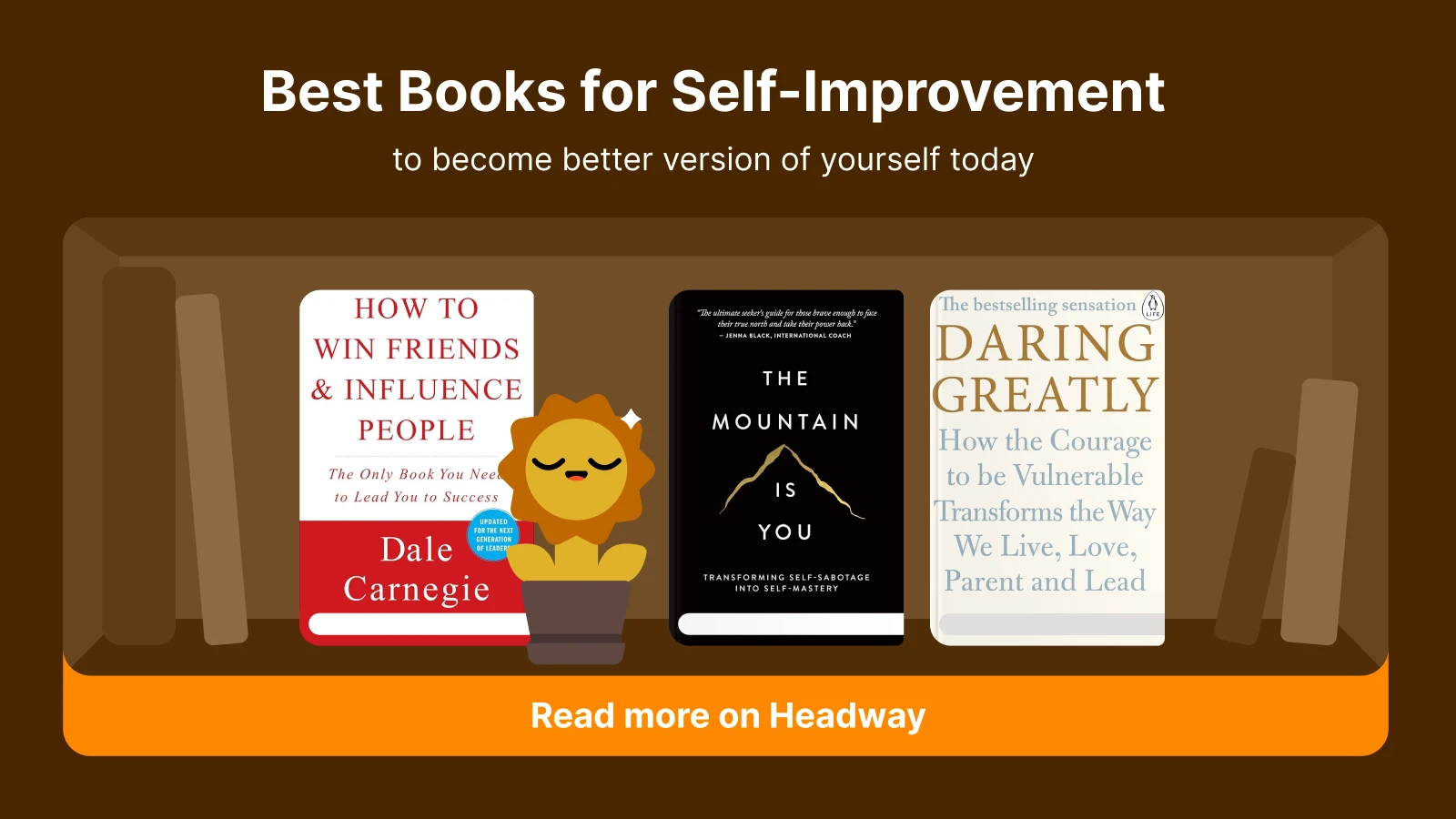
6. 'Daring Greatly' by Brené Brown
Brené Brown proves that vulnerability isn't a sign of weakness. It's actually our most accurate measure of true courage. She explains that daring greatly means letting yourself be seen. Show up even without guarantees. The book explores how the fear of shame stops us from building deep connections with others. Brown provides a framework for removing emotional armor. You'll learn that perfectionism is just a heavy shield.
Embracing imperfections opens the door to creativity. The book offers advice for leaders and busy parents. It teaches how to foster an environment of trust. You can't numb hard emotions without numbing joy, too. This point is vital if you feel you must be perfect. You're worthy of belonging just as you are. Headway helps revisit these insights through spaced repetition. You'll remember to stay brave during high-pressure social moments. It makes vulnerability feel like real strength.
7. 'The Gifts of Imperfection' by Brené Brown
In this book, Brené Brown offers ten guideposts. They help you let go of who you should be. She says that fitting in isn't true belonging. Belonging requires being your most authentic self. The book explores how to cultivate intuition and play. Let go of the need for total control. It acts like a workbook for your tired soul. Learn to practice self-compassion instead of harsh criticism.
You'll learn how to navigate difficult shame storms. Each guidepost provides a clear path to reclaiming life. The book teaches that rest isn't a luxury. Rest is an essential part of being human. It encourages you to embrace the messy parts of life and find the strength within your personal story. This guide is perfect for anyone struggling with burnout. You'll learn that you're already enough right now. Headway keeps these gentle reminders close every day.
Books on philosophy and presence
Learn how to stay grounded and calm despite the noise of the world.
8. 'Meditations' by Marcus Aurelius
'Meditations' is the personal journal of a Roman Emperor. Marcus Aurelius offers Stoic wisdom on how to live well. He reminds himself that he only controls his mind. He doesn't control external events or other people. The book teaches you to see obstacles as opportunities for growth. Accept that all things in life are temporary. Aurelius emphasizes doing your duty with integrity and treating others with kindness, regardless of their actions.
The Emperor's private thoughts show that he struggled with anger. His advice is to live as if you were dying. It's a call to focus on what matters. The book encourages you to stop worrying about reputation. Instead, focus on character and virtue. It's a great book for leadership and emotional intelligence. Headway distills these ancient notes into actionable steps where you can learn Stoicism while on the go. And these insights will help you stay calm during your most chaotic days.
9. 'The Power of Now' by Eckhart Tolle
Eckhart Tolle argues that most suffering is caused by time. We dwell on the past or worry about the future. And he explains that the ego is a false self. It keeps us trapped in a cycle of constant thinking. This book provides a guide to achieving spiritual peace now. Tolle teaches you how to observe racing thoughts and not be controlled by your busy mind. True fulfillment can only be found in this present moment.
Detaching from your mind can lead to a better mental state. The book addresses common barriers like anxiety and regret. Tolle's message is simple but profound. Life is just a series of present moments. How you handle the current one determines happiness. These teachings are essential if you feel overwhelmed by stress. So, stop overthinking and start living more fully today. Headway's focus modes help you stay grounded in the moment and make staying present a daily habit.
10. 'The Mountain Is You' by Brianna Wiest
Brianna Wiest explores why we engage in self-sabotage. She argues that our challenges stem from internal resistance. The mountain you climb is made of fears, traumas, and limiting beliefs. Self-sabotage is a survival tool that keeps you stuck in comfort. And it happens even when your comfort zone is unhappy. Here, you'll learn how to identify emotional triggers and understand why you choose to stay stuck.
Interpreting feelings as signals stops reactive behavior. The book teaches that healing isn't about changing yourself. It's about removing barriers to who you really are. It offers exercises for building self-trust. Develop the inner authority needed to make changes. And that's vital if you're your own worst enemy. You might repeatedly fail to reach your biggest goals. Headway's interactive stories help you practice these mindset shifts and explore new ways of solving life challenges.
11. 'Letting Go' by David R. Hawkins
David R. Hawkins presents a way to reach inner peace. He explains that we often suppress difficult feelings. We rarely know how to truly let them go. The book provides a technique for observing a feeling. Don't resist it or try to change it. This way, the excess energy dissipates naturally. Hawkins describes a map of consciousness for emotional states. Fear and anger affect physical health and success.


This process removes mental barriers that stop natural joy. Most of our problems are just stuck emotional states. Letting go improves relationships, heals the body, and brings professional clarity. It's a guide for living with more ease. You'll feel a sense of lightness and freedom. Headway's summaries make this complex theory easy to understand. Apply it to daily frustrations and stress. It's a practical guide for emotional well-being.
Books on wealth and human connection
Success involves both financial intelligence and the ability to relate to others.
12. 'The Psychology of Money' by Morgan Housel
Morgan Housel argues that money is about behavior. It has little to do with how smart you are. Success is a soft skill where ego matters most. The book features 19 stories about wealth and greed. You'll learn why staying wealthy is a different skill. It requires a different mindset than getting wealthy does. Housel emphasizes the power of time in investing and the importance of having room for error.
Understanding biases stops emotional financial decisions. You won't sabotage long-term security with bad choices. The book teaches that money gives control over time. And that's the greatest value that wealth can offer. It challenges the idea that you need to be an expert. All you need is to build a solid foundation with simple, disciplined actions. It's a must-read if you feel financial anxiety. Headway's daily recommendations keep these principles in mind. You'll make better spending choices every day.
13. 'The 48 Laws of Power' by Robert Greene
Robert Greene looks at the history and mechanics of power. He draws on the wisdom of figures like Machiavelli. Each law describes a strategy for gaining or defending influence. The book helps you understand the hidden games people play, protect yourself, and advance your interests. You'll learn about the power of staying silent. Greene also shows why you should never outshine your master. And he uses historical examples to show how empires were built.
Some people find these laws ruthless. But the book is a tool for social dynamics. It teaches you to be strategic in communication and become aware of the power structures in your job. Knowing these rules helps navigate office politics. You'll avoid being manipulated by people around you. The book encourages observing actions instead of words. Headway's skill islands can help you master these negotiation skills, and in time, you'll become a more influential person in any room.
14. 'How to Win Friends and Influence People' by Dale Carnegie
Dale Carnegie's classic is a guide for interpersonal skills. He says the secret to being likable is simple: Show genuine interest in others. The book teaches the power behind using someone's name. Be a good listener and make them feel important. You'll discover how to win people to your side. It happens without causing resentment or big arguments. And these principles are based on the human need for appreciation.
Applying these social rules makes you more persuasive. You'll be more loved in your personal life, too. The book encourages beginning with honest appreciation. This approach is vital when you need to change someone's mind. It's the best resource for leadership and networking. Carnegie's advice is still relevant in our digital world. Headway makes it easy to practice one principle per day. You'll soon notice that people respond better. It's a foundational book for success.
15. 'The Four Agreements' by Don Miguel Ruiz
Don Miguel Ruiz offers four rules for personal freedom. Be impeccable with your word and do your best. Don't take anything personally and don't make assumptions. He explains that society has domesticated us with many rules and that these beliefs cause unnecessary suffering. The book provides a framework for transforming your life. You'll experience a new sense of internal peace and learn how words can spread truth or lies.
Following these four agreements eliminates drama that drains energy and steals daily joy. The book teaches that nothing others do is about you. It's just a projection of their reality. This shift helps you stop victimhood. Start living with genuine autonomy and high self-esteem. It's a life-changing read for anyone struggling with self-doubt. Headway's summaries ensure that you'll refresh these agreements quickly and stay focused on your path every day.
16. 'The Artist's Way' by Julia Cameron
'
The Artist's Way' is a workbook for creativity. Julia Cameron introduces the tool of Morning Pages. Write three pages of thoughts every single morning. She also suggests a weekly solo trip called an Artist Date. She argues that creativity is a natural part of us. Artistic blocks are just fears that can be dismantled. The book provides weekly tasks to help find passion. Silence the voices that say you're not talented.
Committing to this process unblocks creative energy, and you can apply this to everything, even to art or business. The book emphasizes the process over the final product. It teaches treating yourself with kindness and being curious like a child discovering the world. This guide is perfect if you feel uninspired at work. Headway's daily streaks can help you complete the twelve-week program, and you'll find your voice and creative power again. It makes growing your spirit feel fun and easy.
17. 'The Body Keeps the Score' by Bessel van der Kolk
Bessel van der Kolk explains how trauma reshapes the brain. Trauma lives in the nervous system. It affects how we respond to the world every day. The book explores treatments, such as yoga and neurofeedback, and how they help people reclaim their lives after difficult events. You'll learn why talk therapy sometimes fails for deep hurts, as he emphasizes the importance of feeling safe in your body. This book is a scientific look at emotional resilience.
Understanding biology helps you stop self-blame for stress and heal your connection with yourself and others. The book provides a compassionate look at the path to healing. It's a vital resource for mental health. Understanding why your body reacts to certain triggers can help you build a better life. Headway's relaxing music can help regulate your nervous system. Learn these heavy lessons without feeling totally overwhelmed. It's a masterpiece of modern psychology.
Use Headway to turn this list of the best self-improvement books into real growth
If you tried to read every book here, it would take 150 hours. For most busy people, that's simply impossible. You might start with 'Atomic Habits' with good intentions, but work and family will soon take up all your time. That's the paradox of modern self-help books: the people who need wisdom most have the least time. And this friction is likely why your growth has felt so inconsistent. You read a bit, but then stop for months.
If simply understanding a concept like focus were enough, you would never be distracted again. Real change only happens when you replace fading willpower with a structured system that makes growth inevitable. That's exactly why the Headway subscription is designed to remove daily friction from your learning journey. Instead of struggling to find hours for a single book, you get the most valuable insights in just 3–20 minutes. You can listen while you are at the gym or commuting, turning your usual downtime into a personalized growth engine. Stop leaving your self-improvement to chance and start using a system that makes this knowledge finally work for you.
📘 Systemize your growth with Headway.
Frequently asked questions about the best books for self-improvement
What are the best books for self-improvement for beginners?
For beginners, 'Atomic Habits' by James Clear is the best place to start. It focuses on small, actionable changes that anyone can do. 'How to Win Friends and Influence People' is also great for building social confidence. These books provide clear rules you can apply to see immediate results.
Do self-growth books actually work?
Self-growth books work only if you have a system to apply lessons consistently. Most people read them passively and forget the insights within a single week. To make them work, you must use tools like Headway's spaced repetition. This system bridges the gap between knowing a fact and doing a new action.
Are audiobooks as effective as physical books for personal growth?
Audiobooks are highly effective because they let you learn during dead time. Research shows that our brains process the information similarly whether we read or listen. Using Headway's audio summaries is often more effective than full books. They focus only on the actionable, life-changing insights you actually need to grow.
How do I choose a self-improvement book?
Start by identifying your biggest pain point today. It could be procrastination, money stress, or even relationship conflict. Choose a book that specifically addresses that one challenge. Headway makes this easier by offering a personalized quiz. It recommends a custom reading list based on your specific goals and interests.
Do psychologists recommend self-help books?
Yes, many psychologists recommend bibliotherapy to supplement their clinical work. Books like 'Mindset' or 'The Body Keeps the Score' help patients understand behavioral patterns. Experts emphasize that books are most effective when paired with active reflection. You need a structured system for changing your daily habits over time.
Do billionaires read self-help books?
Successful leaders like Bill Gates are famous for being voracious readers of nonfiction. They don't just read for fun or to pass the time. They read to gain a competitive edge and expand their models. They use reading as a structured habit to ensure they're constantly evolving and growing.