You've downloaded every calorie-counting app. You've sworn off carbs at least three times. Yet here you are, googling "why can't I lose weight?" again at 2 am. The problem isn't your willpower. It's that most weight loss advice treats your body like a simple math equation: calories in, calories out. But your body is smarter and more complicated than that.
The best books on weight loss explain the real science behind why diets fail and what actually works. Authors like Dr. Joel Fuhrman and Dr. Satchin Panda show you how to work with your biology, not against it.
Books on weight loss: Why reading beats random diet tips
Weight loss literature allows you to tap into something that social media influencers cannot — context.
Paul McKenna, for instance, noted in his book 'I Can Make You Thin' that he wasn't simply identifying foods that you should not eat. He discussed how the brain interprets hunger signals, as well as why you might eat a cookie when you're feeling stressed. That is the difference between what to do and why it matters.
Instead of telling you to eat less, Dr. Satchin Panda, in 'The Circadian Code,' research shows that when you eat changes how your body stores fat. Eating the same meal at 8 pm versus 8 am triggers different metabolic responses. This isn't motivational fluff. It's biology you can actually use.
'Eat to Live' by Dr. Joel Fuhrman doesn't just say "eat more vegetables." He breaks down nutrient density and explains why a plate of kale does more for weight loss than a protein shake. You stop counting calories and start thinking about what your body actually needs. That shift — from restriction to nourishment — makes weight loss feel less like punishment.
The books in this collection approach weight loss from different angles.
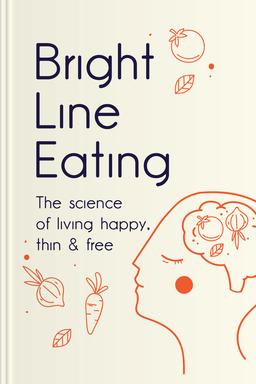
'Bright Line Eating' by Susan Peirce Thompson tackles the psychology of food addiction.
'The Whole 30' by Melissa and Dallas Hartwig focuses on eliminating foods that trigger inflammation.
'The New Atkins for a New You' presents a science-backed case for low-carb eating.
Each book provides a comprehensive framework, not just a list of rules. You understand the reasoning, so you can make choices that fit your actual life.
Best book for weight loss motivation when willpower isn't enough
The best book for weight loss motivation doesn't just pump you up with generic encouragement. It rewires how you think about food, hunger, and change. Motivation fades. What lasts is understanding why your past attempts failed and what needs to shift this time.
'Bright Line Eating' by Susan Peirce Thompson is particularly good at this. Thompson, a neuroscientist, explains how sugar hijacks your brain's reward system the same way drugs do. She's not exaggerating for effect. Brain scans show similar activation patterns. Once you see food as a biological trigger, not a moral failing, you stop blaming yourself. You start solving the actual problem.
Paul McKenna's 'I Can Make You Thin' works differently. McKenna uses techniques from hypnotherapy and cognitive behavioral therapy to change your relationship with eating. He teaches you to recognize real hunger versus emotional hunger. That distinction alone — learning to pause and ask "am I actually hungry or am I bored?" — changes how you eat. It's not about forcing yourself to resist temptation. It's about not feeling tempted in the first place.
Then there's 'The Whole 30,' which motivates through structure. Melissa and Dallas Hartwig give you 30 days of clear rules. No counting, no measuring, just yes or no decisions. That clarity helps when you're tired of debating whether you can have "just one bite." The book also prepares you for how hard the first week will be. Knowing that irritability and cravings are temporary — and normal — keeps you going when motivation dips.
What makes these books motivating isn't cheerleading. It's that they treat you like an intelligent person dealing with a complex problem. They give you tools that work even when you don't feel motivated. You build habits that stick because they're based on how your body and brain actually function, not how you wish they functioned.

 Self-growth
 Apps & Digital Tools
 Business & Career
 Success
 Growth Tools
 Psychology
 Communication
 Relationships