Self-growth
 Apps & Digital Tools
 Business & Career
 Success
 Growth Tools
 Psychology
 Communication
 Relationships

You know the scene. The main character hears a strange noise coming from the pitch-black basement. Instead of grabbing their keys and running out the front door, they grab a dying flashlight and slowly walk down the stairs.
We all yell at the screen when this happens. We tell them to run. We know that hiding in the closet or investigating the scary noise is a terrible idea.
But we do the exact same thing in our real lives.
The monsters chasing us aren't wearing a ghost mask. They're everyday terrors like public speaking, confrontation, rejection, and failure.
We hide from them and stay miserable because the unknown feels too intimidating.
Consider this your survival guide for those everyday terrors. Headway and Paramount are teaming up to show that facing what scares you is the only way out. Don't let anxiety turn your life into a horror movie.
Buy or Rent #Scream7 on Digital now.
Start with ideas that help you face your fears, not avoid them with Headway.
What's your favorite scary thing?
The phone rings. A creepy voice asks the classic question.
Let's flip it. What scares you on a random Tuesday?
Just like Ghostface targets specific victims for specific reasons, anxiety attacks us in highly personal ways. What leaves one person terrified might not bother someone else at all.
You have to know what you're dealing with before you can fight back.
What is stalking you?
Identify your personal Ghostface with this quick check-in:
Check out Headway's library to find the right book summary for your specific anxiety type!
Everyone's a suspect: When fear disguises itself as protection
Sometimes anxiety pretends to help you. It puts on a friendly mask and acts like it's keeping you safe.

Identify the habits holding you back. Start your personalized quiz.
Imposter syndrome acts like a humble friend. It tells you to keep your head down and not brag about your accomplishments. But it actually stops you from owning your skills and taking credit for your hard work.
Perfectionism puts on a mask of high standards. It tells you that if you just work a little harder, the project will be flawless. In reality, perfectionism is masking a deep fear of failure. It keeps you tweaking the same document forever, so you never have to actually share it with the world.
People-pleasing acts like kindness. You agree to take on extra work because you want to be a team player. But it's really a fear of rejection hiding in plain sight. You say yes because you're terrified of what happens if you say no.
Procrastination? That's just the fear of judgment delaying the inevitable. You put off starting the presentation because, as long as it's unfinished, no one can tell you it's bad.
Think of the big reveal in a slasher movie. The call is coming from inside the house. Your protective habits are the ones sabotaging you.
Emotions like anger and numbness often act as red herrings. Irritability does too. You might snap at your partner and think you're just stressed about work. But underneath that irritation is a fear that you aren't doing enough.
Break the cycle of recurring fears
Why do the same fears keep coming back?
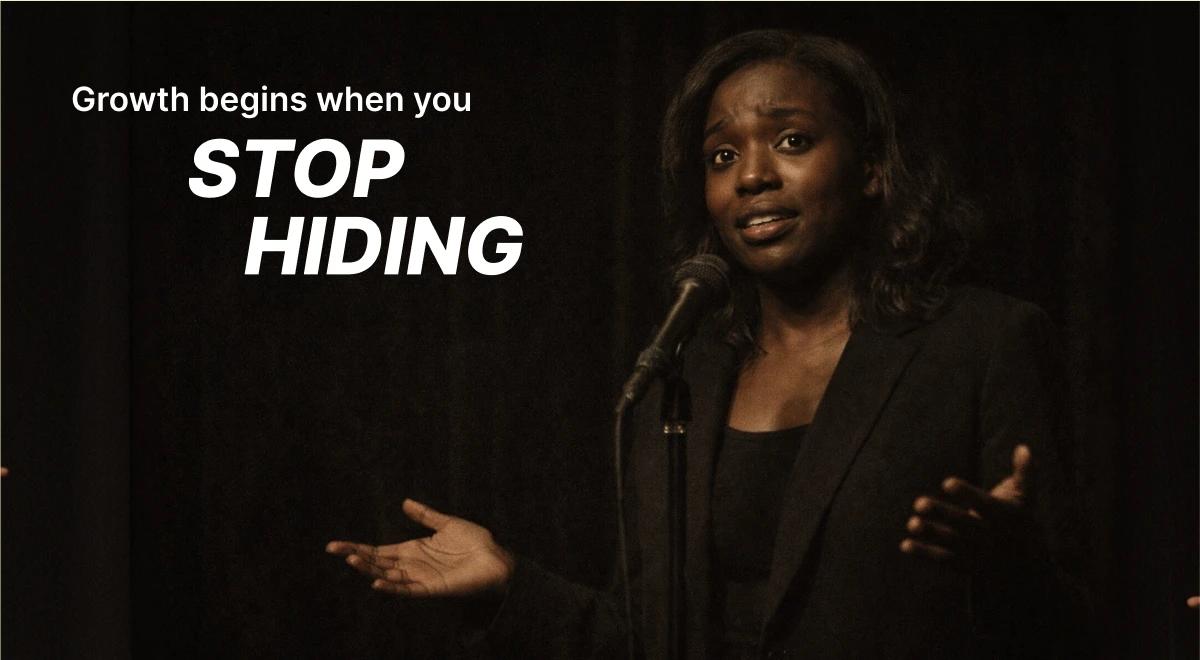
Stop hiding and start your journey toward confidence. Get practical insights.
Your brain expects the worst based on past experiences. It recognizes patterns. If you panicked during a presentation five years ago, your brain remembers that feeling. The next time you have to speak in public, your brain sounds the alarm.
When you avoid the thing that scares you, your brain thinks it did a great job. It says, "See? We ran away from the meeting, and we survived. Avoidance works." You reinforce the fear loop.
The way out is through. You don't have to jump out of an airplane tomorrow. But you can start by speaking up for one minute in a low-stakes meeting.
The "final girl" mentality means resilience comes from surviving the ordeal. It doesn't come from pretending you were never scared.
Build a toolkit to handle the scary stuff:
Reframe catastrophic thoughts: Catch yourself when you spiral. Tell yourself a different story.
The five-second rule: Take action before overthinking sets in. Count backward from five and hit send on that scary email.
Name the fear: Say it out loud. Acknowledging the anxiety takes away its control.
Find your survivor squad: Build a support system of friends or mentors who have your back when things get hard.
Small wins compound. Each time you face something scary, the next challenge gets a little bit easier.
You can't do this alone: Your fear-fighting reading list
Just like Woodsboro survivors need allies, you need tools. You can't outrun your anxiety without a plan.
We put together a list of four book summaries that tackle different angles of anxiety. Start with whichever one hits closest to home.
Top four book summaries to help you face what scares you
You wouldn't walk into a basement without a flashlight, so don't face your everyday anxieties without a solid survival plan. Grab your mental armor, learn to trust your gut, and find the courage to finally speak your mind.
Book 1: 'The Gift of Fear' by Gavin de Becker
What it covers: Distinguishing true danger from unfounded anxiety.
Key takeaway: Trust your intuition about real threats, but question irrational fears.
How it helps: You understand when to listen to your gut and when to push past the panic.
Best for: People who struggle with hypervigilance or can't tell the difference between productive fear and generalized anxiety.
Book 2: 'The Body Keeps the Score' by Bessel van der Kolk
What it covers: How trauma lives in your body and creates ongoing fear responses.
Key takeaway: Understanding the physiology of fear helps you heal it.
How it helps: Explains why anxiety feels so intensely physical and offers body-based solutions to calm down.
Best for: Those dealing with past trauma or chronic anxiety that shows up as a racing heart or tight chest.
Book 3: 'Professional Troublemaker' by Luvvie Ajayi Jones
What it covers: Speaking up, setting boundaries, and being boldly yourself.
Key takeaway: Fear of judgment shouldn't silence your voice.
How it helps: Practical advice for difficult conversations and standing your ground when you want to run away.
Best for: People-pleasers and those afraid of rocking the boat at work or home.
Book 4: 'Fear Is Not the Boss of You' by Jennifer Allwood
What it covers: Taking action despite fear, especially in business and personal growth.
Key takeaway: Courage isn't the absence of fear. Courage is moving forward anyway.
How it helps: Practical strategies for making decisions when your anxiety is screaming at you to stop.
Best for: Entrepreneurs, career-changers, and anyone stuck in analysis paralysis.
These titles are all available as quick summaries. Create a personalized learning path to tackle your specific anxieties. Knowledge is power, but only when you actually apply it.
It's always someone you know: The real killer is inaction
But do you know the biggest plot twist? Your comfort zone is the real threat. Playing it safe keeps you stuck in a horror loop of your own making: waking up, enduring a draining job, dodging hard conversations, and going back to sleep.
Nothing changes, and regret becomes the true final act.
When you let fear direct your story, you miss out on your actual life. You miss the promotion because you were too scared to apply, and you miss the relationship because you were too scared to be vulnerable.
Here's how to stop letting fear write your script:
Reframe failure as data: Every "death scene" in your career or personal life gives you new information. When a project tanks or a relationship ends, those mistakes teach you the rules of the game so you can play it better next time.
Build your fear tolerance: Treat courage like a muscle. Start with light weights. Have a mildly uncomfortable conversation with a friend, or send a networking email to a stranger to practice facing the unknown.
Celebrate your micro-courage: Track the small brave moments. Write them down to remind yourself that you're capable of doing hard things.
Know the difference between courage and recklessness: Quitting your job with zero savings because you're mad is reckless. Having a terrifying but honest conversation with your boss about your career path is courageous.
Face your fears and fight back with Headway
You're the final survivor in your own story.
You have everything you need to make it to the end credits. You have the awareness to spot your anxiety, the tools to manage it, the action plan to move forward, and the support system to keep you steady.
Unlike the movies, you don't have to wait for the sequel to figure things out. You can start right now.
Headway's library of book summaries acts as your survival guide. These 15-minute summaries let you build your fear-fighting knowledge without getting overwhelmed by a massive reading list. Pick one of the featured book summaries above and spend 15 minutes reading.
Every summary you finish is another weapon against your anxiety. You can even use the learning path feature to structure your growth day by day.
Stop letting fear direct your story.
Start your fear-fighting learning path on Headway today!