Self-growth
 Business & Career
 Success
 Communication
 Healing
 Relationships
 Psychology
 Happiness
Ever feel like your smartphone is an extension of your arm? You pick it up to check the time and, 20 minutes later, you're looking at a video of someone making a giant chocolate bar or reading a heated debate between strangers. That's the power of digital habits at work. But what are digital habits? Essentially, it's that magnetic pull that happens before your conscious mind even realizes you've unlocked your screen.
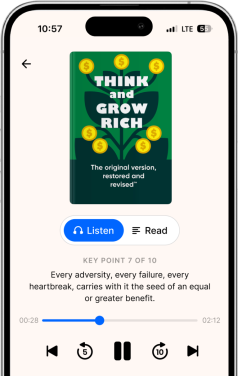
But you don't have to stay stuck in this loop. Tools like the Headway app help you swap mindless scrolling for intentional learning by putting key insights from the world's best nonfiction books right on your phone.
➡️ What is Headway and how does it work?
Most of us spend hours every day on our digital devices without even thinking about it. While technology makes our lives easier, it can also leave us feeling drained, anxious, and behind on our goals. It's a familiar struggle in 2026: we live in a digital world where every app is designed to grab and hold our attention. But there's good news: you can take control. By understanding your digital habits, you can stop doomscrolling and turn your phone into a tool for self-growth.
📘 Reclaim your screen time with Headway.
Quick answer: What are digital habits?
Digital habits are the automatic behaviors and routines you follow when using digital technologies such as smartphones, computers, and social media platforms. These are the invisible rules your brain follows every time you see a screen, feel a vibration, or hear a notification. Our brains love efficiency, so they create these shortcuts so we don't have to decide what to do every time we see a glowing light.
Think about the first thing you do when you wake up. Do you reach for your phone to check emails or scroll through Instagram before your eyes are even fully open? That's a digital habit. These routines aren't inherently bad, but they become a problem when they happen without intention. When you understand the meaning of digital habits in your life, you can start choosing which ones to keep and which ones to break.
There are two main types of digital habits, and knowing the difference between them is the first step toward taking back control.
Unlock your daily growth superpower
Transform your routine to fuel continuous learning and effortless improvement.
Let's startReactive (bad) habits:
The "morning scroll": Checking social media platforms before you even get out of bed, which starts your day in a state of comparison or stress.
Notification hunting: Jumping to your phone every time it vibrates, even during a deep conversation with loved ones.
Endless tabs: Keeping 50 browser tabs open at once, creating "digital distractions" and a feeling of being overwhelmed.
Social media comparison: Spending hours looking at "perfect" lives can hurt your self-esteem and mental health.
Phantom vibration syndrome: Reaching for your pocket because you "felt" a notification that never happened.
Proactive (good) habits:
Morning microlearning: Spending 15 minutes on an app like Headway to learn something new before starting your day.
Scheduled deep work: Turning on "Do Not Disturb" mode or using time limits during work hours to protect your focus from digital technology.
Mindful notifications: Only allowing alerts from real people, like family members or friends, and silencing all shopping or social media apps.
Digital sunset: Putting your devices away an hour before bed to protect your sleep and reduce blue light exposure.
Intentional search: Opening a browser with a specific question in mind, finding the answer, and closing it immediately.
Reactive digital habits usually lead to "doomscrolling" — that feeling of being sucked into a never-ending feed of negative news, shocking videos, or mindless content. It's a passive state where the algorithm decides what you see. Then again, healthy digital habits help you use your time wisely, turning digital devices into allies for your personal development.
📘 Upgrade your digital habits with Headway.
The hidden cost of digital distractions on mental well-being
Why should we care so much about these invisible routines? Excessive screen time isn't just a waste of time — it has a real impact on your physical and mental health. Our brains weren't evolved to handle the constant, high-speed stream of information that smartphones provide.
When we spend too much time in our digital world, our brains are constantly bombarded with information. This assault leads to a mental load that can cause chronic stress. You might also experience the "fear of missing out," better known as FOMO, which keeps you glued to your feed even when you want to look away. This constant state of being "on" prevents your brain from entering a resting state, where creativity and problem-solving happen.
See how psychology bestsellers tackle distraction and burnout — start with Headway's best summaries.
The effects aren't just mental, either. Your physical health also takes a hit:
Eyestrain: Looking at small screens for hours without a break can cause headaches, dry eyes, and blurred vision.
Blue light: The light from your phone can trick your brain into thinking it's daytime, suppressing melatonin and making it hard to fall asleep. Poor sleep then affects your performance the next day.
Physical activity: Time spent scrolling is time you aren't moving. A sedentary lifestyle is linked to various long-term health issues.
Social interaction: Even when you're with others, prioritizing your phone over others or "phubbing" (phone-snubbing) can damage your relationships and reduce the quality of your real-world connections.
In 'The Shallows,' Nicholas Carr explains how the internet is changing the way our brains work. The more we get used to quick digital distractions, he argues, the harder it becomes to focus on long-form reading or deep thinking. Creating healthy digital habits isn't just about saving time; it's about protecting your ability to think clearly and deeply.
Creating healthy digital habits: A four-step framework
Changing your relationship with technology doesn't happen overnight. You can't just "willpower" your way out of habits that have been reinforced for years. You need a system. If you want to stop the cycle of excessive screen time, follow this four-step framework inspired by the principles in 'Atomic Habits' by James Clear.
1. Identify your triggers
Every habit starts with a cue. In 'The Power of Habit,' Charles Duhigg explains that every habit loop has a trigger. Does your hand go to your phone when you feel stressed? Bored? Or just because it's sitting next to your coffee? For the next three days, try to catch yourself in the act. When you reach for your phone, ask yourself: "What am I feeling right now?" Once you know the trigger, you can change the response. For example, if your trigger is boredom, you could choose to open a book summary instead of a social media app.
2. Audit your apps
Your phone is prime digital real estate, and the "neighborhood" you build matters. If your home screen is filled with social media platforms, shopping apps, and video games, you're going to use them. Move your "time-wasting" apps to the very last page or put them in a folder named "Waste of Time." Put your growth apps right on the main dock where they're easy to reach. Making the good habit easy and the bad habit hard is the secret to lasting change.
3. Set clear time limits
Most smartphones now have built-in tools for digital well-being or screen time settings. Use them. Set a daily time limit on your most addictive apps. Once you hit your 30 minutes of Instagram, let the app lock you out. That friction forces you to be intentional. It's much easier to stop when the device itself tells you you've had enough. You can also set downtime schedules that automatically turn off distracting apps during dinner or before bed.
4. Practice "habit swapping"
The easiest way to break a bad habit is to replace it with a better one. Rather than trying to stop scrolling entirely, try "growth-scrolling." This practice is at the heart of creating healthy digital habits. The next time you feel an urge to check your phone while waiting in line or during a break, open Headway instead of TikTok. You still get that satisfying feeling of picking up something new, but you walk away with a fresh insight instead of brain fog and regret.
Beyond the screen: Digital habits of multicultural consumers
It's also worth looking at how background and culture shape online activities. For example, research into the digital habits of multicultural consumers shows that some groups use technology much more for social interaction and community building than others.
In many cultures, digital technology is a lifeline for staying connected with family members who live far away. For these users, digital communication isn't just about entertainment; it's about maintaining their cultural identity and support systems. This is a good reminder that better digital habits don't always mean using technology less. Sometimes it's about using it in ways that genuinely serve your needs and values. Whether it's through messaging apps or shared video platforms, technology can strengthen genuine human connections rather than encourage mindless consumption.
Top apps that encourage mindful digital habits
Technology created the problem, but it can also help solve it. There are several apps designed to help you maintain a healthy balance in your daily life. Here are some of the best options to help you stay on track:
Headway: The easiest way to swap mindless scrolling for something worthwhile. Instead of a feed, you get bite-sized book summaries covering the big ideas from the world's best nonfiction books in just 15 minutes. It turns your smartphone into a portable university, letting you learn about leadership, psychology, or personal finance while commuting or waiting for a meeting.
Forest: This app helps you resist digital distractions by gamifying your focus. When you want to focus, you plant a virtual tree. If you leave the app to check social media or a game, your tree dies. Over time, you can grow a whole forest representing the hours you were focused. It's a fun and visual way to practice staying present.
One Sec: This app adds a layer of friction to your phone use. Every time you try to open a distracting app like Instagram or X, One Sec makes you pause for a few seconds. That short delay breaks the autopilot and helps you decide if you really want to scroll or if you're just acting on impulse.
Calm: Great for mental well-being, this app provides focus sounds, guided meditations, and stories to help you unwind. It's a helpful counterweight to the chaotic nature of modern technology; it can help you shift from the high-stimulation world of social media to a state of relaxation.
Nibble: This app helps you replace aimless browsing with microlessons on topics like art, philosophy, and personal finance. It is designed to make your screen time more productive through short, engaging modules that fit into any part of your day.
Reclaim your time: Master your digital habits with Headway
Reclaiming your focus isn't about becoming a monk or throwing your phone into a lake. It's about being intentional. When you understand what digital habits are, you stop being a passive user and start being an active participant in your own daily life.
Every time you choose an actionable book summary over a 15-minute scroll through a random feed, you're voting for the person you want to become. You're choosing growth-scrolling over doomscrolling. You're choosing to be present for your loved ones, your goals, and your growth. And you're deciding that your time is more valuable than an algorithm's goals.
Your digital lives should support your real life, not replace it. Start small today. Move one app to a different folder. Turn off one notification category. And see how much better your daily life feels when you are back in the driver's seat.
Ready to swap your scroll for growth? Create your reading list right now and join 55 million people who are turning their digital habits into a superpower with Headway. Your future self will thank you for taking this first step toward consistent, enjoyable learning that sticks.
Frequently asked questions about digital habits
What is the digital habits definition, and what do digital habits mean?
Digital habits are automatic behaviors and routines we develop while using devices such as smartphones, computers, or tablets. On a deeper level, the digital habits meaning involves how these invisible rules shape our focus, our productivity, and our daily interactions with the world around us.
What are digital habits examples?
Common reactive examples include checking your phone immediately after waking up, scrolling through feeds while eating, or doomscrolling through negative news before bed. Good digital habits examples include using a Kindle for reading, listening to educational podcasts while exercising, or using a focus app during work hours.
How can I improve my digital well-being?
Start by conducting an app audit to remove distracting icons from your home screen. Set time limits on social media usage, turn off non-essential notifications, and schedule regular offline activities, such as physical exercise or time with family and loved ones, without devices.
What is a digital detox?
A digital detox is a period of time where you intentionally stop using all digital devices — smartphones, computers, and tablets. It can be a "mini-detox" for a few hours, a full day (like a Digital Sabbath), or even a week-long break. Giving your brain that kind of reset can dial down your brain's dopamine levels and reduce the constant urge to check for updates.
How does technology use affect physical health?
Excessive use can lead to a sedentary lifestyle, which is linked to weight gain and poor cardiovascular health. It can also cause poor posture (often called "text neck"), eyestrain from prolonged screen use, and disrupted sleep patterns due to the blue light emitted by digital technology.
What is "doomscrolling" and why is it bad?
Doomscrolling is the habit of continuously scrolling through bad news or negative social media posts, even though they make you feel anxious or sad. It's harmful because it keeps your brain in a state of high stress and can lead to burnout, poor mental health, and a distorted view of the world.