Self-growth
 Business & Career
 Success
 Communication
 Healing
 Relationships
 Psychology
 Happiness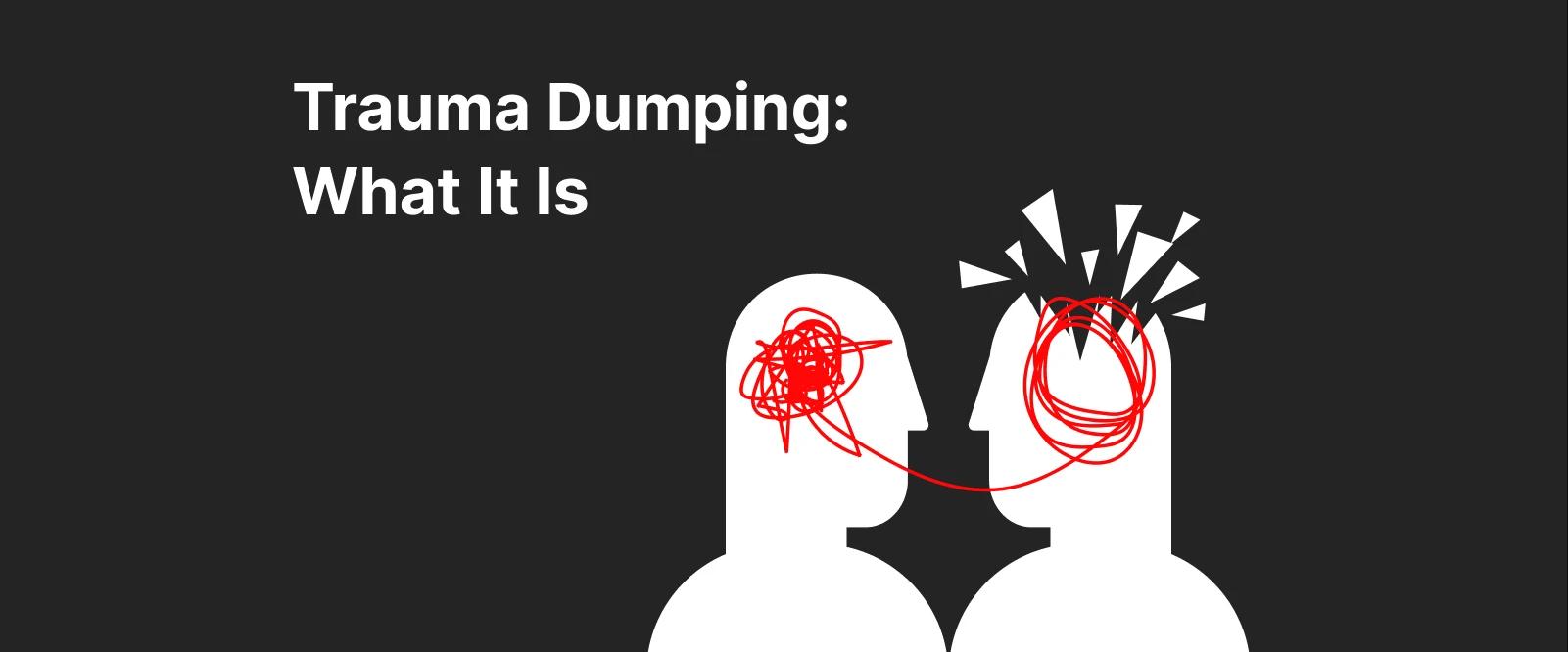
While you may have seen the term "trauma dumping" on TikTok or Instagram, its effects on your mental health and relationships go far beyond a passing trend.
Trauma dumping means sharing painful personal experiences without first checking if the other person has the space or capacity to listen. Trauma dumping can indeed leave the listener feeling overwhelmed. As a trauma-informed somatic practitioner, I can tell you that this phenomenon is not a personal failing. It might happen when pent-up emotions and unmet needs seek relief at inappropriate times, catching others off guard.
In this guide, you'll learn how to recognize examples of trauma dumping, understand why it happens, and discover healthy ways to process past trauma using evidence-based insights and practical tools.
If you're ready to transform how you share your story and build emotional resilience, download Headway today and access bite-sized wisdom from world-class books on trauma, boundaries, and healing.
Quick summary: Trauma dumping explained
What trauma dumping means: Unfiltered sharing of traumatic events without checking emotional capacity or consent
Three main signs: One-sided conversations, graphic details, and a lack of boundaries
Why it affects relationships: Causes burnout, secondary trauma, and loss of trust
How to respond: Set healthy boundaries and check in before sharing
How to heal: Build coping skills, self-awareness, and emotional regulation habits through professional support
Are you trauma dumping? A quick self-check quiz
Recognize what trauma dumping really is (and isn't)
Trauma dumping is when you spill your personal experiences and challenging moments without first checking whether the other person has space for them. It's not a clinical term, but some studies suggest it happens when big feelings or old wounds surface, and pent-up emotions need release.
The difference between trauma dumping and healthy sharing is often about pausing. Ask yourself: Do I have this person's consent? Am I rushing, or moving with care? Most trauma dumpers don't do this on purpose — it's often the nervous system reaching for support.
Trauma dumping vs Healthy sharing vs Venting
| Style | What it looks like | Impact |
|---|
Trauma dumping | Graphic details, no consent, and emotional flooding | Burnout and re-traumatization |
Healthy venting | Time-limited with mutual consent | Emotional support |
Healthy sharing | Reflective, regulated, and intentional | Connection and trust |
Recognize these trauma dumping signs in your daily life
Common examples of trauma dumping include sharing heavy content at inappropriate times or overwhelming someone who hasn't agreed to be on the receiving end of intense emotions.
In friendships
You might share childhood trauma right away with a new friend, before trust has grown. You may repeat the same story, using your friend to unload emotions instead of getting structured support.
Alas, even close people may pull away. But why? Because trauma dumping leaves them emotionally exhausted.
On social media
Social media platforms can become a place to release pent-up emotions when you lack other outlets. At first, posting personal details may feel helpful… but eventually, it leads to shame and disconnection.
Most folks who scroll haven't agreed to hold that kind of space.
At work
Sharing deep pain during meetings or in the break room can cross invisible lines. You might notice co-workers acting awkwardly or avoiding one-on-one conversations, creating distance in professional relationships.
These patterns come from unmet needs for safety and validation.
Discover why you trauma dump — and what your nervous system really needs
Trauma dumping isn't about seeking attention; it's about trying to survive. When past trauma remains unprocessed, your nervous system seeks relief.
What causes trauma dumping: A visual guide
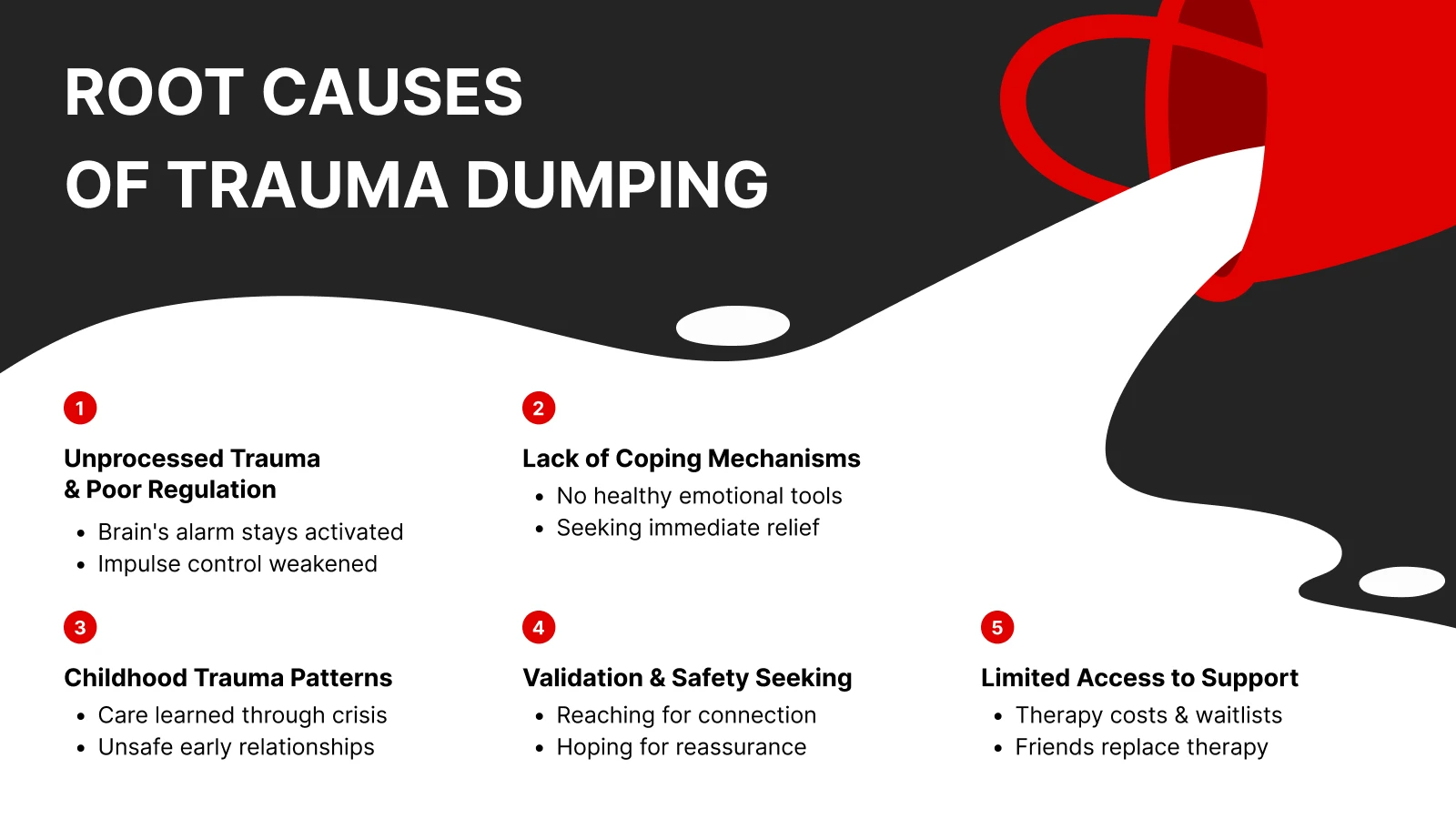
Unprocessed trauma and emotional regulation
When you go through traumatic events repeatedly, it becomes harder for your brain to manage your emotions.
Your brain's alarm system stays on high alert while your impulse control weakens. This occurrence is particularly common in people with mental health conditions like post-traumatic stress disorder (PTSD).
Strong negative emotions surface quickly, and you might feel the urge to share them immediately for relief.
Lack of coping mechanisms
Many of us didn't grow up learning healthy ways to handle tough feelings. Without tools like grounding or journaling, your nervous system seeks immediate relief — which feels good in the moment but harms relationships long-term.
Childhood trauma and unsafe family dynamics
If you grew up always bracing for what might come next, your nervous system learned to reach out when overwhelmed. Young adults navigating childhood trauma in adults often notice themselves sharing feelings quickly with people they care about. Self-reflection helps identify these patterns.
Seeking validation and a safe space
Trauma dumping can be a way to reach out for connection. When you share your pain, you may hope for validation or the sense of a safe space you once had. The need is real; it's just the way of sharing that causes problems.
Limited access to support
Sometimes, trauma dumping results from not having access to professional support. Without mental health professionals, friends and family end up in the therapist role, even though they aren't trained for it.
Your nervous system is simply doing its best to handle overwhelming stressors.



How trauma dumping quietly destroys trust (and what happens next)
Trauma dumping affects both you and the person on the receiving end. Its impact ripples out into your relationships.
The two-sided impact
For the listener: If someone shares their traumatic experiences repeatedly, it may cause compassion fatigue. What does it mean exactly?
People on the receiving end can experience emotional exhaustion (feeling drained after conversations), secondary trauma (absorbing the trauma they're hearing about), and resentment (pulling away to protect their mental health).
For the trauma dumper: You might feel relief at first, but then shame sets in. You replay the conversation, worry that you shared too much, or wonder if you were "too much." This worry can manifest as shame.
Which, in its turn, leads to increased isolation, re-traumatization (repeating your story without processing makes memories sharper), and difficulty with boundaries.

How to deal with trauma?
No matter your side, find healing insights in 15-minute book summaries.
Find outThe erosion of trust in relationships
In romantic relationships, trauma dumping can slowly break down trust. If one partner often overwhelms the other, intimacy fades. The partner listening feels more like a therapist than an equal.
If you're struggling with trust, you might find helpful guidance in learning how to rebuild trust in a relationship or understanding how to deal with toxic people who may trigger your trauma responses.
For those with betrayal trauma, learning how to stop overthinking after being cheated on is essential for healing.
Over time, listeners may avoid you to protect their well-being. Such avoidance, as you can imagine, creates a painful cycle where your need for connection pushes people away.
Transform how you share: Healthier alternatives to trauma dumping
You can learn to stop trauma dumping without shutting down your need for support. Here's how:
Ask for consent before sharing
One of the simplest shifts is to ask for permission before diving into heavy topics. Try phrases like:
"I'm going through something difficult. Do you have the emotional capacity to talk about it right now?"
"I have something weighing on me. Can I share, or would you prefer I talk to my therapist about it first?"
This habit of asking first respects boundaries and helps you notice oversharing habits.
Practice emotional regulation techniques
Learning to sit with difficult emotions before sharing is important. Here are healthy ways to cope:
Grounding exercises: Try the five-four-three-two-one technique
Somatic practices: Body scans or placing your hand on your heart can calm your nervous system
Journaling: Write down thoughts and feelings to sort what feels urgent from what can wait
Set time limits and work with the March Theory
Set limits around heavy conversations. Say, "I need about fifteen minutes to talk through this." The March Theory says small, steady actions add up to significant changes.
Instead of oversharing at once, break it into smaller pieces over several conversations. This practice honors your need to be heard and the other person's ability to listen.
Evidence-based practices inspired by top books
Mindful decluttering (inspired by 'Goodbye, Things') helps you ask: "Is retelling this helping me heal, or keeping me stuck?"
'One Small Step Can Change Your Life' offers the kaizen approach of taking tiny, consistent steps. Try asking for consent before sharing something heavy for one week.
'The Subtle Art of Not Giving a F*ck' reminds you to choose what matters. Not everyone needs your whole story. Let trust and mutual care guide your vulnerability.
'The State of Affairs' teaches that transparency doesn't mean spilling everything at once. It means naming your needs clearly.
When shame creeps in, 'You Can Heal Your Life' offers gentle affirmation practices. Try repeating "I am safe to feel my emotions" or "I trust myself to share appropriately."
When you should suggest therapy
If emotional dumping keeps happening despite your best efforts, seek professional support. Cognitive behavioral therapy gives you tools to process traumatic experiences in a safe space.
Plus, getting professional support shows you're taking responsibility for your healing instead of putting it all on friends and family. If cost is a barrier, look into sliding-scale therapists, community mental health centers, or online therapy platforms.
Build trauma-aware communication skills that last with Headway
Healing takes self-reflection, pacing, and the right tools. The Headway app offers bite-sized insights from top books on trauma, relationships, and well-being to support your growth.
Whether you're learning about your own patterns or helping a loved one, Headway gives you practical exercises from leading psychology books. Each summary takes about fifteen minutes to read, so you can build new skills even when life feels overwhelming.
You'll find practical guidance on setting boundaries, managing negative emotions, processing difficult experiences, and communicating with care. These tools help you break the cycle of trauma dumping and build healthier relationships.
Download Headway today and start your journey toward more conscious, connected communication.
Frequently asked questions about trauma dumping
Is trauma dumping a red flag?
Trauma dumping isn't a character flaw, but it strains relationships when it overwhelms listeners. If you share without consent or pacing, trust can erode. This pattern can change. Start by asking for capacity, setting time limits, and processing deeper material in therapy or support groups.
How do I know if I'm trauma dumping?
You might be trauma dumping if you start heavy conversations without asking, share graphic details, or notice people withdrawing afterward. Another sign is feeling urgent relief while talking, then shame later. Shift this by grounding first, asking for consent, and processing bigger material with professional support.
What does trauma dumping feel like?
Trauma dumping often feels urgent, like you must say everything now. You may feel activated, like having a tight chest, a tense jaw, and racing thoughts. Relief comes first, then shame or disconnection. These cues point to emotional flooding rather than intentional processing.
Why do people trauma dump?
People engage in trauma dumping when their nervous system is overloaded and reaches for fast relief. It stems from unprocessed trauma, limited coping skills, attachment insecurity, or a lack of consistent support. You're not failing — you're using the quickest tool available. Healing builds slower tools through regulation, consent, and safe containers.
How do I tell if someone is hiding trauma?
Someone who's hiding trauma might appear in control, avoid emotional topics, minimize experiences, or deflect with humor. They might even show physical tension or guardedness. Remember, you can't force disclosure. Offer a safe space, ask gently, and respect their pace and boundaries.
How do I shut down trauma dumping kindly?
Try telling them, "Hey, I care about you, but I don't have the capacity for this right now." Then, offer a container by saying, "Can we talk about it later for ten minutes?" or "I can listen, but I can't handle details like this." Suggest professional help or support groups as safer places to process complicated feelings.