Self-growth
 Business & Career
 Success
 Communication
 Healing
 Relationships
 Psychology
 Happiness
George Orwell wrote 'Animal Farm' in under 100 pages. Hemingway told an entire life story in 'The Old Man and the Sea' in about the same length. Franz Kafka changed how we think about identity in a novella you can finish before lunch.
Short classic books exist, and so does the time to read them. All that's missing is the system.
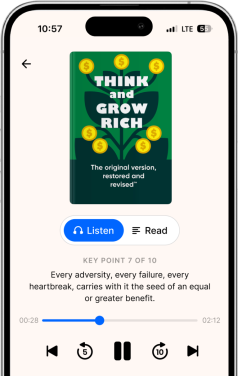
And that's where Headway fits in. You can read or listen to key insights from great books in just 5–15 minutes a day. You can use bedtime mode to wind down with wisdom instead of social media. Tap into the focus sounds to block out distractions and try watching short videos with quizzes that test what you've learned. There are also structured self-development plans that build on each book's ideas.
📘 Download Headway and turn any book into a quick learning session today.
★★★★★ 172K+ reviews
Empower yourself with the best insights and ideas!
Get the #1 most downloaded daily growth app.
Start growing dailyQuick answer: Top 5 must-read short classic books
If you're pressed for time, start here. These five titles pack powerful ideas into slim volumes that respect your schedule:
'Animal Farm' by George Orwell: A 112-page allegory about power and corruption that stays with you for years.
'The Old Man and the Sea' by Ernest Hemingway: A fisherman's battle with a marlin, and with himself, in under 130 pages.
'The Stranger' by Albert Camus: A man commits a senseless act and forces you to question everything about meaning.
'Siddhartha' by Hermann Hesse: A spiritual path told in simple, beautiful prose.
'Of Mice and Men' by John Steinbeck: Dreams, friendship, and heartbreak in Depression-era California.
Dystopian and social commentary: Facing hard truths
Some books hold up a mirror to society. These short novels do it without wasting a single page. They're not comfortable reads, but they'll change how you see the world around you.
'Animal Farm' by George Orwell
This one is required reading in most high school classrooms for good reason. Orwell tells the story of farm animals who overthrow their human master, only to watch their new leaders become just as cruel. At barely 100 pages, it's a masterclass in how power corrupts even the best intentions.
You'll recognize the patterns. The slogans that shift meaning. The leaders who rewrite history. The masses who forget what they were fighting for. It's literary fiction that reads like a thriller and hits like a warning.
📘 Unpack quick insights from Orwell's '1984' with Headway.
'Fahrenheit 451' by Ray Bradbury
Bradbury wrote this in 1953, but it feels like he saw our future. In his world, books are banned and "firemen" burn any they find. People spend their days glued to wall-sized screens, numbed by endless entertainment.
Sound familiar? The book isn't really about censorship. It's about what happens when a society chooses distraction over depth. It's a glimpse into a future where people stop reading, stop thinking, stop questioning. At around 150 pages, it's a quick read that will make you put down your phone.
'Candide' by Voltaire
This 1759 satire follows a young man named Candide who believes he lives in "the best of all possible worlds." Then reality hits. Hard. War, disaster, and betrayal. Voltaire throws everything at his optimistic hero.
It's funny in a dark way. Voltaire mocks the idea that everything happens for a reason. Sometimes bad things happen because the world is chaotic and people are cruel. The book ends with a simple conclusion: stop philosophizing and tend your own garden. Do the work in front of you.
Psychological horror and the gothic: The shadows of the mind
These short stories and novellas crawl under your skin. They explore the parts of human nature we'd rather not examine: fear, isolation, and the feeling that something is deeply wrong.
'The Strange Case of Dr. Jekyll and Mr. Hyde' by Robert Louis Stevenson
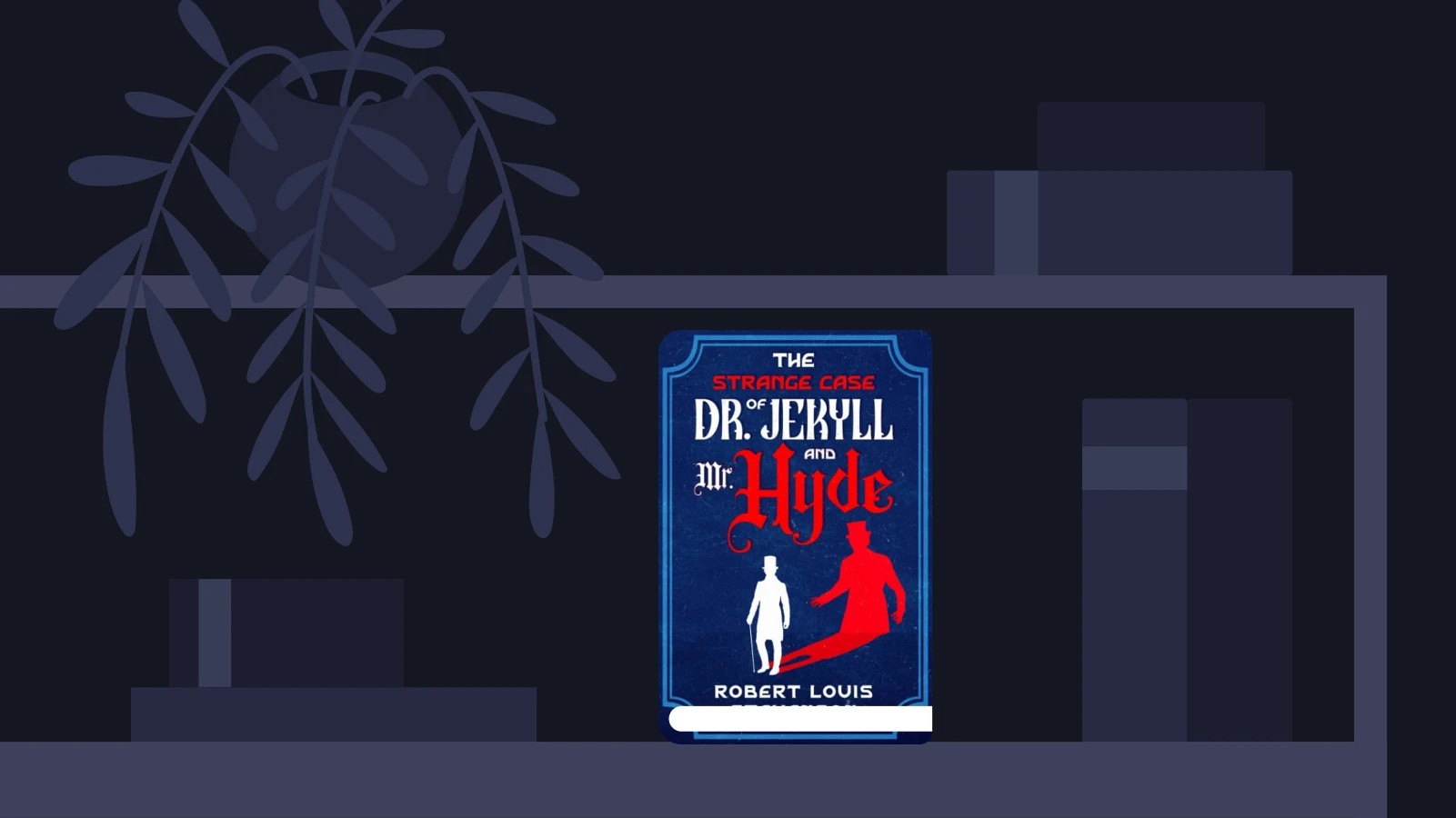
You know the basic plot. A respectable doctor creates a potion that releases his darker self. But Stevenson's original novella goes deeper than any movie adaptation. It's about the exhausting work of self-control. The constant battle between who you want to be and who you fear you really are.
At around 80 pages, you can finish it in an evening. And you'll spend much longer thinking about it.
'We Have Always Lived in the Castle' by Shirley Jackson
Merricat Blackwood lives with her sister Constance in a big house on a hill. The townspeople hate them. Most of their family is dead, poisoned years ago. Merricat practices small rituals to keep the outside world away.
Jackson wrote this in 1962, but it speaks directly to anyone who's felt like an outsider. The young woman narrator is unreliable, possibly dangerous, and somehow sympathetic. It's a gothic tale about what isolation does to the mind.
'The Yellow Wallpaper' by Charlotte Perkins Gilman
This short story takes about 30 minutes to read. But it will haunt you for much longer. It follows a woman suffering from what we'd now call postpartum depression. She is confined to a room by her well-meaning husband and told to rest. Not to write. Not to think.
Soon, she starts seeing things in the wallpaper. Gilman wrote this in 1892 based on her own experience with the "rest cure" treatment. It's a first-person descent into madness that doubles as a critique of how society treated women's mental health.
'The Metamorphosis' by Franz Kafka
Gregor Samsa wakes up one morning transformed into a giant insect. That's the first sentence. Kafka doesn't explain why. The rest of the novella follows Gregor's family as they struggle to cope with what he's become.
The story's about feeling like a burden. About working yourself to exhaustion for people who would prefer you to disappear. About the horror of being trapped in a body that doesn't feel like yours. At under 60 pages, it's Kafka's most accessible and emotionally brutal work.
'Heart of Darkness' by Joseph Conrad
Marlow travels up the Congo River to find Kurtz, a brilliant man who's gone too far into the wilderness. What he discovers is a meditation on colonialism, morality, and what happens when civilization's rules no longer apply.
Conrad wrote this in 1899. It's been criticized for its portrayal of Africa, and those criticisms are worth reading alongside the novella. But the core question remains relevant: how thin is the line between "civilized" and savage? What happens when no one is watching?
📘 Want to understand the psychology behind these dark themes? Headway offers actionable summaries of books on human behavior, mental health, and self-awareness. Listen during your commute or read before bed with bedtime mode.
Dive into psychology and self-awareness
The most popular book summaries and actionable tips. All in one app.
Try nowHuman nature and drama: Mastering relationships and choices
These books explore what it means to be human. Dreams that fail. Relationships that trap us. The quiet desperation of ordinary life. They're short novels with the emotional weight of much longer works.
'Of Mice and Men' by John Steinbeck
George and Lennie are migrant workers in Depression-era California. George is small and sharp. Lennie is huge, strong, and mentally disabled. They share a dream: someday they'll own a little farm. Someday they'll "live off the fatta the lan'."
Steinbeck wrote this as a play-novella, meaning it reads fast with lots of dialogue. At around 100 pages, it's a story about friendship, responsibility, and what happens when dreams meet reality. The ending will break you.
'The Old Man and the Sea' by Ernest Hemingway
Santiago is an old Cuban fisherman who hasn't caught anything in 84 days. On day 85, he hooks the biggest marlin of his life. What follows is a battle of endurance: man against fish against the sea itself.
Hemingway won the Pulitzer Prize for this short book. It's about persistence, pride, and whether victory and defeat can be the same thing. At 127 pages, it contains some of the most quoted lines in American literature. "A man can be destroyed but not defeated."
'The Stranger' by Albert Camus
Meursault's mother dies. He attends the funeral but doesn't cry. Days later, he kills a man on a beach. He can't explain why. The sun was in his eyes.
Camus uses this strange narrator to explore absurdism, the idea that life has no inherent meaning, and we must create our own. It's unsettling because Meursault refuses to play the social games we all take for granted. At around 120 pages, it's philosophy disguised as a crime novel.
'Ethan Frome' by Edith Wharton
Ethan is trapped. Trapped in a failing farm in rural Massachusetts. Trapped in a loveless marriage to his sickly wife, Zeena. When Zeena's young cousin Mattie comes to help around the house, Ethan sees a chance at happiness.
Wharton wrote this in 1911, but the theme is timeless: what happens when duty and desire pull in opposite directions? The ending is one of the darkest in American literature. At 80 pages, it's a tragedy that earns every moment of its pain.
'Bartleby, the Scrivener' by Herman Melville
A Wall Street lawyer hires a new copyist named Bartleby. At first, Bartleby works well. Then he starts refusing tasks with a simple phrase: "I would prefer not to." He prefers not to check documents, not to leave the office, and not to eat.
Melville wrote this in 1853, but Bartleby feels like a modern character. His passive resistance baffles everyone around him. Is he depressed? Rebellious? Simply done with the absurdity of office work? The story offers no answers. Just a haunting portrait of withdrawal from life.
'Death in Venice' by Thomas Mann
Gustav von Aschenbach is a successful writer who travels to Venice for rest. There, he becomes obsessed with a beautiful Polish boy named Tadzio. He never speaks to him. He just watches, follows, and slowly unravels.
Mann wrote this in 1912 as a meditation on art, beauty, and self-destruction. It's uncomfortable to read. That's the point. At around 80 pages, it asks hard questions about desire, dignity, and how far we'll go for what we think we want.
📘 Struggling with difficult relationships or big life choices? Headway summarizes psychology and self-help books that help you understand yourself and others. Reflect on desire wisely with Headway.
Identity, gender, and society: Modern perspectives
These books wrestled with identity long before it became a cultural buzzword. They're about the masks we wear, the roles we're forced into, and the cost of living as someone else expects.
'Giovanni's Room' by James Baldwin
David is an American in Paris, engaged to a woman back home. Then he meets Giovanni, an Italian bartender, and everything he thought he knew about himself falls apart.
James Baldwin wrote this in 1956, a time when books about gay love were rare and often punished. It's not just a love story. It's about shame, denial, and the destruction caused by refusing to accept who you are. At around 160 pages, it's one of the great American novels about identity.
'Passing' by Nella Larsen
Irene Redfield is a Black woman living in 1920s Harlem. Clare Kendry is her childhood friend, also Black, but light-skinned enough to "pass" as white. Clare has built an entire life around this deception, including a racist husband who doesn't know.
Larsen published this in 1929, and it remains startlingly relevant. It's about race, class, and the exhausting performance of being someone you're not. The ending is ambiguous and disturbing. At around 90 pages, it raises more questions than it answers.
'The Awakening' by Kate Chopin
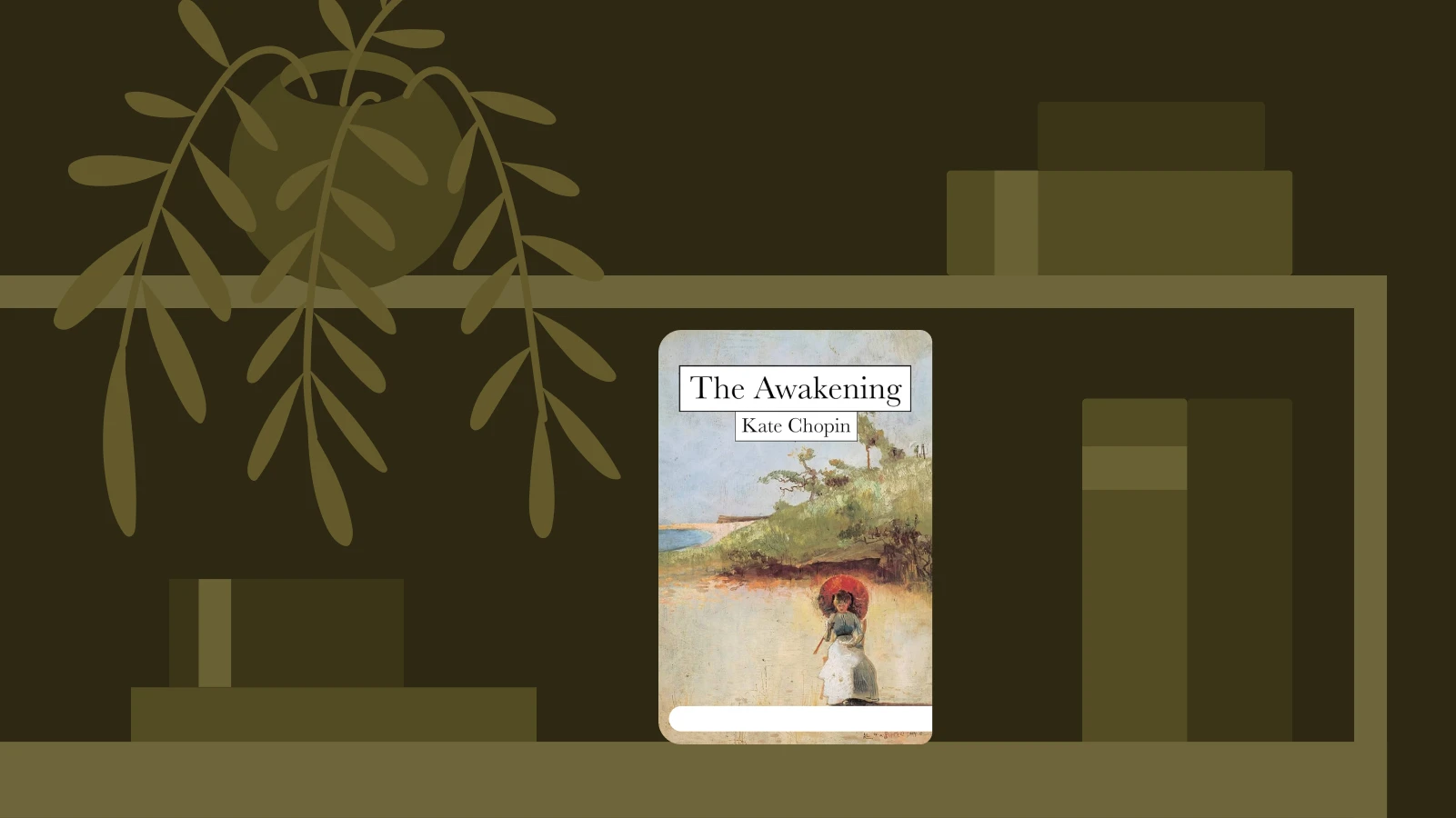
Edna Pontellier is a wife and mother in 1890s New Orleans. She has everything society says she should want, and she's miserable. Over the course of one summer, she begins to wake up to her own desires: for art, for freedom, and for a life of her own.
Chopin published this in 1899, and critics destroyed it. They called it immoral and unwholesome. Today, it's recognized as a landmark of feminist literature. At around 130 pages, it's about a young woman breaking free from the roles assigned to her and the price she pays.


'Mrs. Dalloway' by Virginia Woolf
The entire novel takes place in a single day. Clarissa Dalloway is preparing for a party. As she moves through London, memories and reflections blur with the present moment. Meanwhile, a shell-shocked war veteran named Septimus struggles with visions and trauma.
Woolf uses stream-of-consciousness to capture how the mind actually works, jumping between the past and the present, the trivial and the profound. At around 200 pages, it's on the longer side for this list, but it reads like poetry. Every sentence is deliberate.
'Lady Susan' by Jane Austen
You know Austen from 'Pride and Prejudice' and 'Emma.' But 'Lady Susan' is different. It's a short epistolary novel, told entirely through letters, about a widow who manipulates everyone around her to get what she wants.
Lady Susan is charming, beautiful, and completely ruthless. Austen wrote this early in her career, and it shows a darker side of her wit. At around 80 pages, it's a sharp look at how a smart woman could wield power in a world designed to limit her.
📘 Curious about your own identity and personal growth? Headway offers structured self-development plans based on psychology and philosophy.
Mystery, adventure, and philosophical journeys
These best books blend entertainment with deeper questions. You'll get a satisfying story and something to think about long after you finish.
'The Hound of the Baskervilles' by Arthur Conan Doyle
A legendary ghost hound is said to haunt the Baskerville family. When Sir Charles Baskerville dies under mysterious circumstances, Sherlock Holmes takes the case. Is the curse real, or is something more human at work?
It is often considered the best Sherlock Holmes story. At around 180 pages, it has everything: atmosphere, mystery, and Holmes at his most brilliant. It's a reminder that fear can be exploited and that logic is the best defense against manipulation.
'The Time Machine' by H.G. Wells
A scientist invents a machine that lets him travel through time. He journeys to the year 802,701 and finds humanity split into two species: the childlike Eloi and the monstrous Morlocks who live underground.
Wells wrote this in 1895 as a sci-fi adventure and a warning about class division. Where does our society end up if the gap between rich and poor keeps growing? At around 100 pages, it's one of the most influential science fiction stories ever written.
'Siddhartha' by Hermann Hesse
Siddhartha is a young man in ancient India who leaves home in search of enlightenment. He tries asceticism. He tries wealth and pleasure. He meets the Buddha himself. But none of it gives him what he's looking for.
Hesse wrote this in 1922, drawing on Hindu and Buddhist philosophy. The message is both simple and hard to accept: wisdom can't be taught. You have to live your way to it. At around 150 pages, it's a favorite book for anyone on a spiritual path.
'A Christmas Carol' by Charles Dickens
Ebenezer Scrooge is a miser who hates Christmas. On Christmas Eve, he's visited by three ghosts who show him his past, present, and future. By morning, he's a changed man.
You know the story. But have you actually read the original by Dickens? It's funnier and darker than most adaptations. At around 80 pages, it's a framework for personal change, a reminder that it's never too late to become someone better.
📘 Ready to apply these philosophical insights to your own life? Headway breaks down the world's best nonfiction into reads you can finish in minutes, not hours. Follow structured plans that turn ideas into action.
Memoir and real-life narratives
Sometimes the most powerful stories are true. These nonfiction works bear witness to experiences most of us can barely imagine and offer lessons in resilience, grief, and the search for meaning.
'The Year of Magical Thinking' by Joan Didion
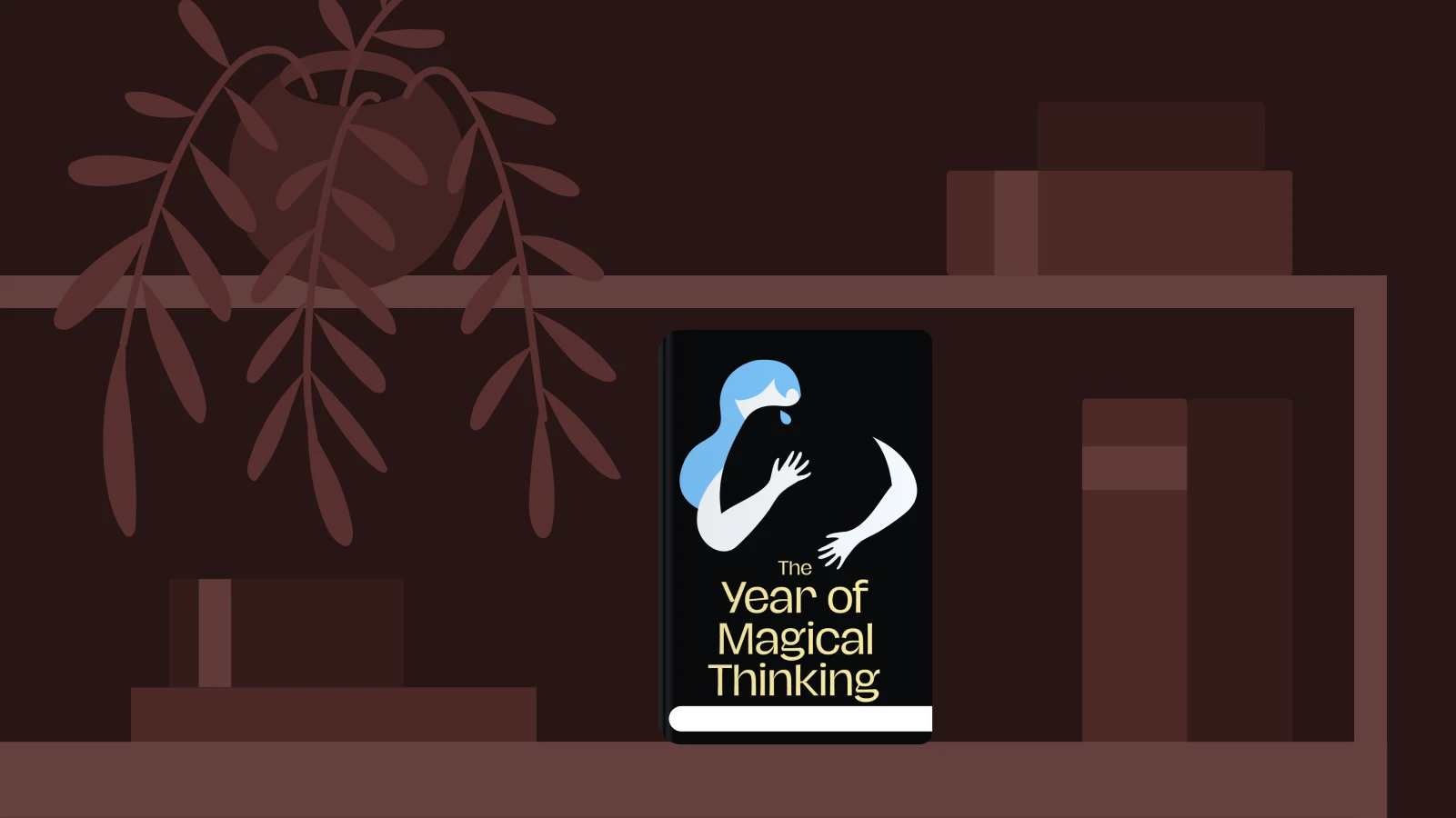
Didion's husband died suddenly of a heart attack while their daughter lay in a coma. This book is her attempt to understand grief: the irrational thoughts and the naive idea that maybe if she does things just right, he'll come back.
She's one of America's great essayists, and this is her most personal work. At around 230 pages, it's longer than most on this list. But it's also one of the most honest books about loss ever written. If you've experienced grief, it will feel like someone finally understands.
'Narrative of the Life of Frederick Douglass' by Frederick Douglass
Douglass was born into slavery in Maryland. He taught himself to read, an illegal act that could have gotten him killed. He escaped to the North and became one of the most important voices in American history.
He wrote this autobiography in 1845, while slavery was still legal. It's a first-person account of brutality, resistance, and the power of literacy. At around 100 pages, it's life-changing, a reminder of what humans can endure and overcome.
'Night' by Elie Wiesel
Wiesel was fifteen when he and his family were deported to Auschwitz. 'Night' is his account of surviving the Holocaust: the death of his faith, the loss of his father, and the moments when he wanted to give up.
It's short, around 120 pages. But every sentence carries weight. Wiesel wrote it as a witness, so the world would never forget. Reading it is not easy. But some books demand to be read.
📘 Download Headway to process difficult emotions with book summaries on grief, resilience, and mental health.
Nonfiction for self-growth
Not all of the short classic books are fiction. These nonfiction titles pack practical wisdom into pages that you can finish in a single sitting.
'Brief Answers to the Big Questions' by Stephen Hawking
Before he died, Hawking collected his thoughts on humanity's biggest questions. Is there a God? Will we survive on Earth? What's inside a black hole? Can we predict the future?
He writes with remarkable clarity, making complex physics accessible to anyone. At around 230 pages, it's a book lovers' dream: a chance to learn from one of history's greatest minds.
'Life Is Short (and So Is This Book)' by Peter Atkins
The title says it all. Atkins offers brief reflections on making the most of your time: practical advice on happiness, relationships, work, and meaning. It's the kind of book you can read in an afternoon and return to whenever you need perspective.
'Make Your Bed' by Admiral William H. McRaven
Based on a famous commencement speech, this book offers life lessons gleaned from Navy SEAL training. The core idea is simple: start each day by making your bed. Small things matter. Discipline in little moments builds discipline for big challenges.
At around 130 pages with large print, it's a quick read. But the message sticks: real-life wisdom from someone who's faced the worst situations imaginable.
📘 With Headway, any book becomes pleasantly short and actionable. Get the key insights from thousands of nonfiction titles in just 15 minutes. Use focus sounds to concentrate and bedtime mode to wind down with wisdom. Try Headway today.
How Headway helps 55 million people make time for books
Here's the uncomfortable truth: you've just read a long list of great book recommendations. You might even feel inspired, but inspiration fades. Lists get bookmarked and forgotten. And that "someday" pile grows.
That is called the action gap, the distance between what you know you should do and what you actually do. Knowing that 'Animal Farm' is a masterpiece of classic literature doesn't make you read it. Understanding that Steinbeck wrote about dreams and loss doesn't help you absorb those lessons.
You've tried willpower. You've tried motivation. You've told yourself that you'll "find time" for reading. And how's that working out for you?
The problem isn't you. The problem is friction, even with short classic novels. Physical books require dedicated time. Audiobooks require over 5 hours of commitment. Your phone is always closer than your bookshelf. And social media is engineered to steal your attention.
Headway removes the friction.
Every book becomes a great summary. You get the key ideas, the practical insights, and the wisdom that actually changes how you think. Whether you read or listen, it's your choice. Use bedtime mode when you want to wind down, or turn on focus sounds when distractions start to pull you in. Watch short videos with quizzes to make sure the ideas stick. And follow structured self-development plans that systematically build knowledge.
📘 Learn smarter, not longer with Headway.
The goal isn't to replace reading. The goal is to make reading possible again.
Book lovers who use Headway report reading more, not less. They use summaries to discover new authors. They revisit favorites to catch what they missed. And they finally get through that "someday" pile, because 5–15 minutes a day is always manageable.
Stop collecting intentions. Start collecting insights. Download Headway today and turn "someday" into right now.
Frequently asked questions about short classic books
What are some short classics?
'Animal Farm' by George Orwell, 'The Old Man and the Sea' by Hemingway, 'The Stranger' by Camus, and 'Of Mice and Men' by Steinbeck are all under 150 pages. For even shorter reads, try 'The Metamorphosis' by Kafka or 'Dr. Jekyll and Mr. Hyde' by Stevenson, both under 100 pages.
What are some famous short novels?
'Siddhartha' by Hermann Hesse, 'Fahrenheit 451' by Ray Bradbury, 'The Great Gatsby' by F. Scott Fitzgerald, and 'Heart of Darkness' by Joseph Conrad are among the most celebrated. These novellas have shaped literature and culture despite, or because of, their brevity. Each one delivers powerful ideas without padding.
Which classics are easy to read?
'Animal Farm' uses simple language to tell a complex political story. 'The Old Man and the Sea' has short sentences and a straightforward plot. 'A Christmas Carol' by Dickens moves quickly with vivid characters. These books prove that accessible writing and literary depth aren't opposites. They work together beautifully.
What is the easiest novel to read?
'Of Mice and Men' by Steinbeck reads almost like a play, mostly dialogue, minimal description, and a story that grips you from page one. At around 100 pages with simple vocabulary, it's often assigned in high school for good reason. The emotional impact, however, hits like something twice its length.
Who writes the best short stories?
Edgar Allan Poe, Anton Chekhov, and Ernest Hemingway are considered masters of the form. More recently, Raymond Carver and Alice Munro redefined what short fiction could do. Shirley Jackson's 'The Lottery' and Charlotte Perkins Gilman's 'The Yellow Wallpaper' remain two of the most powerful short stories ever written.
Why does Headway specialize in short book summaries?
Because time is the real barrier to learning. Most people don't lack motivation. They lack hours. Headway's book summaries let you absorb key insights during a commute, lunch break, or before bed. You get the wisdom without the time commitment, making consistent learning actually possible.