Self-growth
 Apps & Digital Tools
 Business & Career
 Success
 Growth Tools
 Psychology
 Communication
 Relationships

Teacher burnout is driving highly qualified educators out of the classroom at alarming rates, transforming what was once a lifelong calling into an unsustainable grind.
According to RAND's 2026 State of the American Teacher Survey, funded by the National Education Association and the American Federation of Teachers,
55% of K–12 public school teachers reported frequent job-related stress — far above the 34% reported by comparable working adults — with managing student behavior the single most cited stressor, named by 52% of teachers
This is not an individual failing or a sign of weakness. Teacher burnout is a state in which an educator has exhausted the personal and professional resources needed to do the job. It requires serious attention, structural changes, and practical daily habits to address.
📘 Not sure where to start? Get insights on Headway from the book summaries of nonfiction titles on focus, burnout, and career.
*This article is for educational purposes only. If you're feeling overwhelmed, burned out, or struggling to cope, consider reaching out to a qualified healthcare professional.

Quick answer: Teacher burnout in five sentences
Here is a fast breakdown of what the rest of this article covers in depth.
Teacher burnout is chronic, job-related exhaustion from an unsustainable workload and stress.
It shows up as emotional exhaustion, cynicism, and a drop in personal accomplishment.
Common causes include student behavior demands, low pay, and insufficient planning time.
Left unaddressed, it drives the ongoing teacher shortage and rising turnover rates.
Support, boundaries, and small daily recovery habits can meaningfully reduce burnout risk.
What is teacher burnout, exactly?
If you are asking what is teacher burnout, you have to look beyond the idea of simply having a bad week. The World Health Organization defines burnout generally as chronic occupational stress that has not been successfully managed.
Applied to the classroom, this means it is a persistent, compounding pattern that worsens over a school year. Teachers report this state at notably higher rates than similar college-educated professionals in other fields.
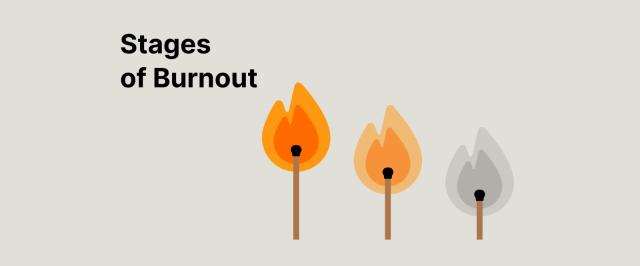
It does not happen overnight. Educators move through different stages of burnout as the initial excitement of the school year gives way to mounting demands, ultimately culminating in total exhaustion.
📘 Need a quick mental reset between grading sessions? Try the Headway app for 15-minute audio summaries of top books on stress management and boundaries.
Teacher burnout statistics worth knowing
To fully grasp the scope of teacher stress and burnout, you have to look at the numbers. These teacher burnout statistics confirm that educators across the country are facing systemic pressures.
Frequent stress: 55% of K–12 public school teachers report frequent job-related stress, compared to just 34% of typical working adults.
Behavioral demands: 52% of teachers cite managing student behavior as their single greatest stressor.
Considering an exit: Growing numbers of educators report seriously considering leaving the teaching profession entirely due to chronic stress.
National recognition: The National Education Association consistently reports that its members view exhaustion and mental health challenges as a "very serious" issue threatening public schools today.

So many educators are running on empty
Running on empty often points to systems, not willpower.
Explore burnoutSigns and symptoms of teacher burnout
Identifying the signs of teacher burnout early can help you intervene before your energy is entirely depleted. The teacher burnout symptoms generally fall into three distinct categories: physical, cognitive, and emotional.
1) Physical signs
Your body often registers stress long before your mind admits it. You might experience chronic insomnia, waking up at 3 am, and worrying about classroom management. Severe fatigue that does not resolve after a weekend of sleep, frequent tension headaches, and a generally weakened immune system are also major red flags.
2) Cognitive signs
Burnout in teachers frequently attacks executive functioning. You may notice increased forgetfulness, losing track of where you placed assignments. Trouble focusing during lesson planning is common, making a 30-minute task stretch into two hours of staring at a screen.
3) Behavioral and emotional signs
The most visible symptoms of teacher burnout show up in your attitude. You might experience irritability with students over minor issues, a deep sense of dread on Sunday evenings, or total apathy toward grading papers. When symptoms of burnout shift from occasional frustration to daily cynicism, you are officially running on empty.
How burnout in teachers gets measured: The Maslach Burnout Inventory
Many people use the word casually, but researchers measure it using a specific tool: the Maslach Burnout Inventory (MBI). Developed by Dr. Christina Maslach, this standard research tool evaluates occupational depletion across three distinct dimensions.
| Dimension | What it looks like in teaching | Example |
|---|---|---|
Emotional Exhaustion | Feeling totally drained and depleted | Having zero energy for your own family after school |
Depersonalization (Cynicism) | A negative, detached response to students | Viewing students as problems to manage rather than people |
Reduced Personal Accomplishment | Feeling incompetent or unsuccessful | Believing your teaching makes no real difference |
Understanding this three-part framework matters far more than just adopting a single "burned out or not" label. It allows educators to pinpoint exactly where they are struggling so they can apply the right coping mechanisms.
📘 Don't have time to read a full book on resilience? Get Headway to listen to the core ideas while you commute to school.
Root causes of teacher burnout
The root causes of this crisis go far beyond a lack of personal self-care. Heavy workload compounds with low support, which accelerates emotional exhaustion. According to RAND, managing student behavior remains the heaviest burden.
However, teachers also cite grading outside contract hours, navigating large class sizes, and insufficient lesson planning time during the school day.
Furthermore, a stagnant salary relative to comparable professions adds financial strain to an already demanding job.
Since the COVID-19 pandemic, the emotional demands placed on educators have skyrocketed, often without matching mental health support from school administrators.
The toll of secondary trauma
Teachers frequently absorb the emotional hardships of their students, leading to secondary trauma. This is especially true for educators working in high-poverty school districts or with special needs populations.
Carrying the weight of your students' struggles home with you every day acts as a massive, often unspoken stressor that drains teacher wellbeing.
What teacher burnout costs the profession
When educators crash, the entire educational system feels the impact. Individual depletion fuels the ongoing teacher shortage and drives up teacher turnover rates across the country.
As job satisfaction plummets, highly qualified professionals leave the profession entirely rather than simply transferring to different schools.
This mass exodus forces remaining teachers to take on larger class sizes and cover for absent colleagues when there are no substitute teachers available, creating a vicious cycle of overwork and exhaustion.
How to prevent teacher burnout: Strategies that help
Knowing how to avoid teacher burnout requires a dual approach. You cannot fix systemic issues with deep breathing alone, but you also cannot wait for the system to change before protecting your own energy.
Finding effective teacher burnout solutions means combining personal boundaries with structural support.
What can educators do individually?
Preventing teacher burnout starts with aggressively protecting your off-the-clock time.
Set strict boundaries around grading and email hours. If your contract ends at 4:00 pm, stop answering emails at 4:05 pm.
Build a sustainable self-care routine. This does not mean a monthly spa day; it means daily recovery habits like taking a real lunch break and protecting your sleep schedule.
Learn how to recover from burnout using structured coping strategies rather than just "pushing through" until summer vacation.
What can schools and administrators do?
To truly prevent teacher burnout on a large scale, school districts must step up.
Protect planning time. Stop pulling teachers into unnecessary meetings during the only block they have to prep.
Provide real access to mental health support rather than offering empty wellness perks like staff room donuts as a substitute for structural fixes.
Address workload and classroom-support gaps by hiring adequate support staff so teachers aren't acting as social workers, nurses, and disciplinarians simultaneously.
📘 Small habits build strong boundaries. Download Headway to discover actionable advice from top authors on how to protect your energy and time.
Practical tips from book summaries
Understanding your own stress response — and your students' — is much easier when you use a proven framework. Headway's nonfiction summaries offer starting points for teachers deciding where to focus their limited energy first.
1. Understand your body's stress response
Based on 'The Body Keeps the Score' by Bessel van Kolk.
Chronic classroom stress and secondary exposure to student hardship can live in the body long after the school day ends, showing up as physical tension or a short fuse.
At the end of each day, name one physical sensation you are carrying — like tight shoulders or a clenched jaw — before you drive home. Naming it interrupts the automatic carry-over into your evening.
2. Reframe stress instead of just enduring it
Based on 'The Upside of Stress' by Kelly McGonigal.
Viewing stress as purely harmful can actually make its physical effects worse. Recognizing stress as a sign that you deeply care about the outcome can change how your body processes it.
Before a hard class, replace "I can't handle this" with "This is hard because it matters to me." Notice if your body feels even slightly different.
3. De-escalate without absorbing the conflict
Based on 'Nonviolent Communication' by Marshall B. Rosenberg.
A student's disruptive behavior is almost always an unmet need in disguise. Responding to the underlying need, rather than just punishing the behavior, reduces both classroom conflict and your own emotional depletion. Next time a student acts out, silently ask yourself, "What need might be behind this?" before reacting.
4. Build your own emotional vocabulary first
Based on 'Permission to Feel' by Marc Brackett, PhD.
Teachers are constantly asked to regulate a room full of varying emotions while simultaneously managing their own. Naming your specific feeling, rather than just defaulting to "stressed," is the first step to regulating it.
Once a day, replace "I'm fine" with a more precise word like frustrated, depleted, or overwhelmed.
5. Let yourself ask for support without shame
Based on 'Daring Greatly' by Brené Brown.
Many teachers hide their struggles out of fear that it signals incompetence. Asking for help is not a failure; staying silent until burnout forces you to quit is the much bigger risk.
Identify one specific, small thing you could ask a colleague or administrator for this week — like five minutes of classroom coverage — and actually ask for it.

Rebuild your energy for the classroom with Headway!
Reading is one of the fastest ways to build the self-awareness and coping tools that burnout research points to, but full books constantly compete with lesson planning and grading for the little time teachers actually have.
Headway's 15-minute text and audio summaries let teachers explore an idea — whether it is stress physiology, emotional regulation, or classroom communication — between periods or during a brief planning block.
With progress tracking for consistency, it is a low-effort way to start rebuilding your resilience. It is not a magical fix for systemic workload problems, but it can help you learn how to recover from burnout while still working in the classroom.
📘 Discover actionable insights today with Headway!

FAQs about teacher burnout
What is teacher burnout?
Burnout among teachers is a serious condition linked to chronic fatigue that occurs as a result of continuous and unmanageable stressful conditions in the working environment within the educational institution. It completely consumes all the physical and mental resources of the educator, making them feel exhausted and indifferent to the problems of other people.
What are the signs of teacher burnout?
The most visible signs include increased irritability with students, chronic procrastination regarding lesson planning, and a deep sense of dread when thinking about the upcoming school week. Coworkers might also notice a teacher withdrawing from social interactions in the staff room, avoiding optional meetings, and showing total apathy toward grading.
What are the most common symptoms of teacher burnout?
Teacher burnout manifests itself in various ways, including the complete exhaustion of the emotional capacities of the educator and a cloudy mind. Different physical symptoms can also be found, such as stress headaches, insomnia, and frequent sickness episodes. Hence, incompetence in everyday activities becomes evident as well.
What causes teacher burnout, and how is it different from regular stress?
The reasons for teacher burnout are excessively high workloads, ongoing behavioral problems from students, low salaries, and a lack of help from the administration. It should be noted that a stressed teacher can recharge their batteries during their time off, unlike a teacher who has experienced burnout, who feels exhausted from Monday morning even after days of relaxation.
How can teachers prevent burnout during a demanding school year?
To avoid burnout, teachers should start observing strict limits for themselves regarding working hours, stop checking their emails at night, and try to form healthy habits of taking care of themselves on a daily basis. Also, a great relief of psychological pressure can be achieved through dependence on colleagues and the ability to refuse doing optional assignments.
What is the Maslach Burnout Inventory, and how does it measure burnout?
The Maslach Burnout Inventory is the leading scientific psychological assessment tool used to measure occupational burnout. It specifically evaluates a person's mental state across three distinct dimensions: the level of their emotional exhaustion, their degree of depersonalization or cynicism, and their reduced sense of personal accomplishment in their daily work.
How does teacher burnout affect the teacher shortage and turnover rates?
As noted, as teacher burnout increases, qualified teachers leave the profession, leading to an increase in turnover rates. This mass departure from teaching only increases the teacher shortage, burdening the remaining teachers with larger classes and filling the vacant areas in classrooms, which leads to an increase in their burnout due to this vicious cycle.
Can teacher burnout lead to depression or other mental health issues?
Yes, chronic teacher burnout can be a beginning or contributing factor to clinical depression, neurotic anxiety, and other serious mental health issues. When stress affects the sleeping patterns, immune system, and emotional regulation of a teacher for a long time, the problem is transformed from a workplace problem to a serious medical one requiring intervention.