Self-growth
 Business & Career
 Success
 Communication
 Healing
 Relationships
 Psychology
 Happiness

Do you ever feel like everyone else is playing a game where you don't know the rules? You might spend your commute home replaying a three-minute conversation, wondering why you said that one weird thing.
This feeling of being out of sync is more common than you think. Understanding what socially awkward means is the first step toward silencing that inner critic. When you stop worrying about being "perfect," you can actually start connecting with others.
And if you're tired of overthinking every handshake or greeting, the Headway app is worth a look. It provides bite-sized insights from thousands of books on mental health, self-esteem, and social skills.
📘 Try Headway to build your social confidence one small insight at a time, with personalized paths that fit your busy schedule!
Quick answer on the socially awkward meaning
Sometimes, a single interaction defines your entire week. Imagine you're at a wedding, and when someone says, "Enjoy the food!" you instinctively reply, "You too!" even though they aren't eating. Now you're staring at the floor, wondering if you can legally change your name and move to a different state.
This specific brand of "social cringe" is a perfect example of the meaning of socially awkward. It's a mismatch between your internal processing and the unwritten social norms of the room.
Here's what it truly means to be socially awkward:
Social cues: You struggle to read subtle signals, such as body language and tone of voice.
Self-conscious: You're often hyper-aware of your social behavior, which leads to fidgeting.
Social expectations: You feel like you're reading from a different script than everyone else in social situations.
Processing gap: There's often a "lag" between seeing a social cue and knowing how to respond.
📘 Stop replaying the cringe, start building habits for growth with Headway.
The core meaning of socially awkward
A socially awkward person is someone who finds it difficult to navigate the subtle social cues that others seem to pick up naturally. It's not a fixed trait, but rather a set of social behaviors that can be refined with the right tools and practice.
The internal experience is often characterized by intense self-consciousness. You might overthink every word before you speak, which creates a delay that others perceive as "off." Social awkwardness is different from social anxiety, which is driven by fear; awkwardness is more about a lack of social "fluency."
If you feel this way, it doesn't mean you're "broken" or "bad" at being human. Often, it just means your brain is focusing on details that others ignore. This sharp focus is actually a strength, though it can make social interactions feel like a balancing act.
Socially awkward scenarios in the real world
It's one thing to define it, but it's another to see how it plays out when you're actually trying to talk to new people. Most socially awkward individuals recognize these specific patterns in their own lives:
The over-explanation: Someone asks for the time, and you tell them exactly how a watch is made.
The physical stall: You aren't sure where to stand or what to do with your hands, so you end up holding a drink like it's a precious artifact.
The missed sarcasm: You take a joke literally and give a serious answer, leading to a long, heavy silence.
The exit fail: You say goodbye to someone and then realize you're both walking in the same direction toward the parking lot.
These socially awkward meaning examples show that awkwardness is usually about timing and social norms. You aren't doing anything wrong; you're just a half-second behind the tempo of the group.
How to be less shy and socially awkward with friends
You might feel fine with your family, but self-conscious when you're out with your friend group. That usually happens when you're worried about maintaining a certain image or fitting in with a certain vibe.
Stop comparing yourself to others: Just because your friend is extroverted doesn't mean you have to be.
Be the listener: Most people love to talk about themselves. If you're a great listener, you'll always be invited back.
Ask follow-up questions: Instead of coming up with a "cool" story to tell, ask your friend more about their experience.
When you learn how to be less socially awkward with friends, you'll find that the pressure disappears. True friends like you for your unique perspective, not for your ability to be a smooth talker.

Build stronger friendships through better communication; get science-backed ideas.
How to be less socially awkward in college
Moving to campus is a huge transition that can make even an extroverted person feel a little shaky. If you're wondering how to be less socially awkward in college, remember that everyone is in the same boat.
Join a club immediately: It's much easier to talk to new people when you're both focused on a task, like building a robot or planning a protest.
Keep your door open: If you live in a dorm, an open door is the universal sign for "come say hi."
Use the "FOCC" method: Focus on the room, Observe the vibe, Connect via a question, and Compliment something specific.
College is a unique social setting where you can reinvent yourself every semester. Don't let a few awkward situations in your first week stop you from making friends.
Books that will help you become less socially awkward
'Unf*ckology: A Field Guide to Living With Guts And Confidence' by Amy Alkon
Amy Alkon's 'Unf*ckology' is a must-read for anyone struggling with self-doubt. She uses a blend of hard science and "tough love" to help you get out of your own way.
She suggests that we often overthink our social behavior because we fear a social death. In reality, people are much more forgiving than we think. Her advice is to stop waiting for your self-confidence to arrive and start acting as if you already have it.
'Conversation Casanova' by Dave Perotta
If you want to know how to be less awkward socially in dating or high-stakes networking, Dave Perotta's book provides a roadmap. He focuses on the flow of conversation and how to keep it moving.
In 'Conversation Casanova,' he breaks down the barriers that inhibit shy people's communication. He explains that most people are waiting to be led in a conversation. If you take the lead by asking interesting questions, the other person will feel a sense of relief.
Why do we feel socially awkward?
Scientists believe that socially awkward people have a detail-oriented way of seeing the world. While others are focused on the "big picture" of a conversation, you might notice the person's facial expressions across the room or the background music.
In 'Awkward: The Science of Why We Are Socially Awkward And Why That’s Awesome,' Ty Tashiro argues that being socially awkward is actually a sign of a passionate mind. He suggests that the same traits that make you feel off in a crowd are the ones that allow you to master complex skills or think deeply about the world.
Socially awkward vs social anxiety disorder vs introversion
These three experiences get confused a lot, but they're quite different, and the difference matters for how you approach them.
Socially awkward: You find social interactions clunky or confusing, but you're generally not terrified of them.
Social anxiety disorder: You feel an intense, paralyzing fear of being judged or humiliated by others.
Introversion: You're skilled at socializing but find it energy-draining and need to be alone to recharge.
If your fear of social situations stops you from living your life, you might want to explore resources for social anxiety. Still, if you just feel like you "miss the beat" sometimes, you're likely just socially awkward. Both can be managed, but one is a matter of skill-building while the other involves managing fear.



How to be less socially awkward: The first steps
The good news is that you can learn how to be less socially awkward by treating social life like a lab experiment. You don't need a total personality transplant; you just need a few better social skills.
Become a social spy: Spend 15 minutes at a coffee shop just watching how people gesture, react, and handle small, unscripted moments, like spilling their coffee.
Focus on the other person: When you're worried about yourself, you're in your own head. Ask a question, maintain eye contact, and really listen to the answer.
Master the exit: Most awkwardness comes from not knowing how to end a conversation. A simple "It was great catching up, I'll see you later" works every time.
Practice low-stakes small talk: Try asking the cashier at the grocery store how their shift is going.
As you build social confidence, you'll realize that the "rules" aren't as strict as you think. Most people are too busy worrying about their own self-esteem to notice if you stumble over a word or two.
Master the art of the 90-second connection
First impressions happen fast, usually before you even finish your first sentence. Nicholas Boothman explains how to use nonverbal communication to build rapport in under two minutes.
In his book 'How to Make People Like You in 90 Seconds or Less,' he explains that your body language tells a story long before your mouth does. If you appear open and curious, people will naturally feel more comfortable around you. But how do you accomplish that?
The "open" stance: Avoid crossing your arms, as this signals defensiveness or boredom.
Mirroring: Subtly matching the other person's energy can make you seem more likable.
Facial expressions: A genuine smile that reaches your eyes is the universal sign of safety and connection.
For introverted people, these techniques give you a structured way to handle the first few moments of a conversation so you don't feel lost.
Managing social awkwardness with ADHD and autism
It's important to acknowledge that for many, being socially awkward is linked to how their brains are wired. For those with ADHD or autism, social norms can feel like a foreign language because of:
Neurotypical expectations: The world is often built for people who process social cues automatically.
The conscious approach: If you aren't neurotypical, you might need to learn things like tone of voice and when to stop talking.
So what can you do? Find your tribe. Many socially awkward individuals find they connect best with others who share their neurotype.
There's nothing wrong with having a different way of communicating. When you understand your specific personality traits, you can find ways to thrive in social situations without feeling like you have to mask who you are.
One of the smartest ways to improve your social life is to learn from people who have already "cracked the code." You don't have to read fifty different textbooks to understand social behaviors.
The Headway app provides 15-minute summaries of the world's best nonfiction books. You can listen to these while you're driving or getting ready for a party. These insights help you understand social cues without the stress of a long study session.
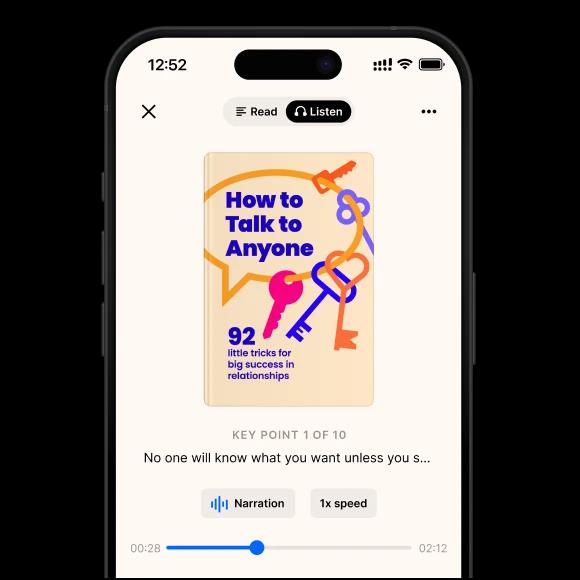
Read 'How to Talk to Anyone': Learn 92 "little tricks" to feel confident in any room.
Listen to 'Awkward': Find out why your quirks are actually a superpower.
Explore 'Unf*ckology': Build the guts to act with self-confidence even when you feel shaky.
📘 Build a reading list that matches your challenges with Headway.
The superpower of the socially awkward person
We spend so much time talking about how to "fix" being socially awkward that we forget to talk about the benefits. Socially awkward individuals are often the smartest and most creative people in the room, because they have superpowers such as:
Obsessive focus: Your ability to dive deep into a topic is what makes you an expert.
Unique perspective: Because you don't always follow social norms, you can see solutions that others miss.
Genuine kindness: Most awkward people are incredibly thoughtful because they know what it's like to feel out of place.
Instead of trying to be "normal," focus on being a more confident version of your awkward self. Use the Headway app to build your social skills so your unique ideas can finally get the attention they deserve.
Stop overthinking and start living with Headway
The way we connect is constantly changing. In a world of digital screens and remote work, social interactions have become even more intentional. For the socially awkward person, that's actually good news.
Your path to social confidence starts with a single step. Whether that's listening to a Headway summary or saying "hi" to one new person today, every action counts toward building a life you love.
Headway is here to help, with thousands of summaries on mental health, self-confidence, and social skills. You have everything you need to become the best version of yourself.
📘 Build confident connections with Headway.
Frequently asked questions on socially awkwardness
What is the meaning of socially awkward in simple terms?
In simple terms, the meaning of socially awkward describes the feeling of being "out of sync" with others during a conversation. It involves a struggle to read social cues or follow the unwritten rules of social settings. It's common among introverted people or those who are highly self-conscious, but it can be improved with practice and social confidence-building.
How to be less awkward socially at work?
To be less socially awkward in professional social settings, focus on work-appropriate social norms. Keep your tone steady and practice a few go-to small-talk topics, like weekend plans or project updates. If you miss a cue, don't over-apologize. Simply acknowledge the moment and move on. Building social skills at work is about consistency and showing that you're a reliable teammate.
Is being socially awkward a mental health issue?
While being socially awkward isn't a diagnosis, it can sometimes be a symptom of social anxiety disorder or related to neurodivergent traits like ADHD or autism. If your awkwardness causes you significant distress, it may be worth speaking to a mental health professional. For most people, though, it's simply a personality trait that can be managed through learning and practice.
How can I improve my eye contact if I'm socially awkward?
Improving eye contact is one of the fastest ways to build social confidence. If looking directly into someone's eyes feels too intense, try looking at the space between their eyebrows or their nose. It looks the same to them but feels less threatening to you. Practice for three seconds at a time during social interactions until you feel comfortable holding it longer.