Self-growth
 Business & Career
 Success
 Communication
 Healing
 Relationships
 Psychology
 Happiness
Short books, typically under 200 pages or 40,000 words, can deliver the same impact as their longer counterparts. Sometimes even more. Writers who work within tight constraints must distill their ideas down to what really matters. No filler. No repetition. Just the core message.
This list contains the best short novels, novellas, and concise nonfiction guides that fit easily into any schedule. Whether you're commuting, waiting at the airport, or stealing 30 minutes before sleep, these books respect your time while expanding your mind.
But here's something most book recommendation lists won't tell you: even short books require hours of uninterrupted focus. And if you struggle to finish those too, that's not a reading problem — it's a system problem.
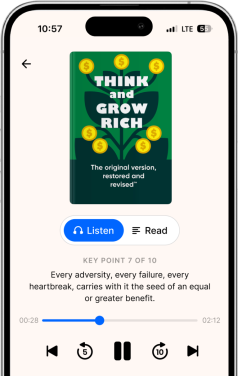
📘 Headway solves this by distilling the world's best nonfiction into quick summaries you can complete in 15–20 minutes. Download Headway today and start finishing what you start.
Quick answer: 5 easy, short books to start with
'Animal Farm' by George Orwell: A 100-page political allegory disguised as a farmyard tale. You can finish it in one sitting, and you'll think about it for years to come.
'The Old Man and the Sea' by Ernest Hemingway: Hemingway's Pulitzer Prize-winning novella about an aging fisherman. Simple prose with profound meaning in 127 pages.
'Make Your Bed' by Admiral William H. McRaven: Based on his viral speech, this bestselling nonfiction guide teaches how small habits create big results. It takes about 90 minutes to read.
'The Stranger' by Albert Camus: The existentialist classic that asks what happens when someone refuses to perform expected emotions. Just under 150 pages of unsettling brilliance.
'We Should All Be Feminists' by Chimamanda Ngozi Adichie: Adapted from her TED talk, this 48-page essay makes a clear case for gender equality. You can finish it during lunch.
The classics: Must-read short novels and novellas
These are the literary heavy hitters, the books English teachers assign because they pack massive emotional and philosophical weight into remarkably few pages. If you're building a reading habit for the first time, start here.
American masterpieces
'The Great Gatsby' by F. Scott Fitzgerald
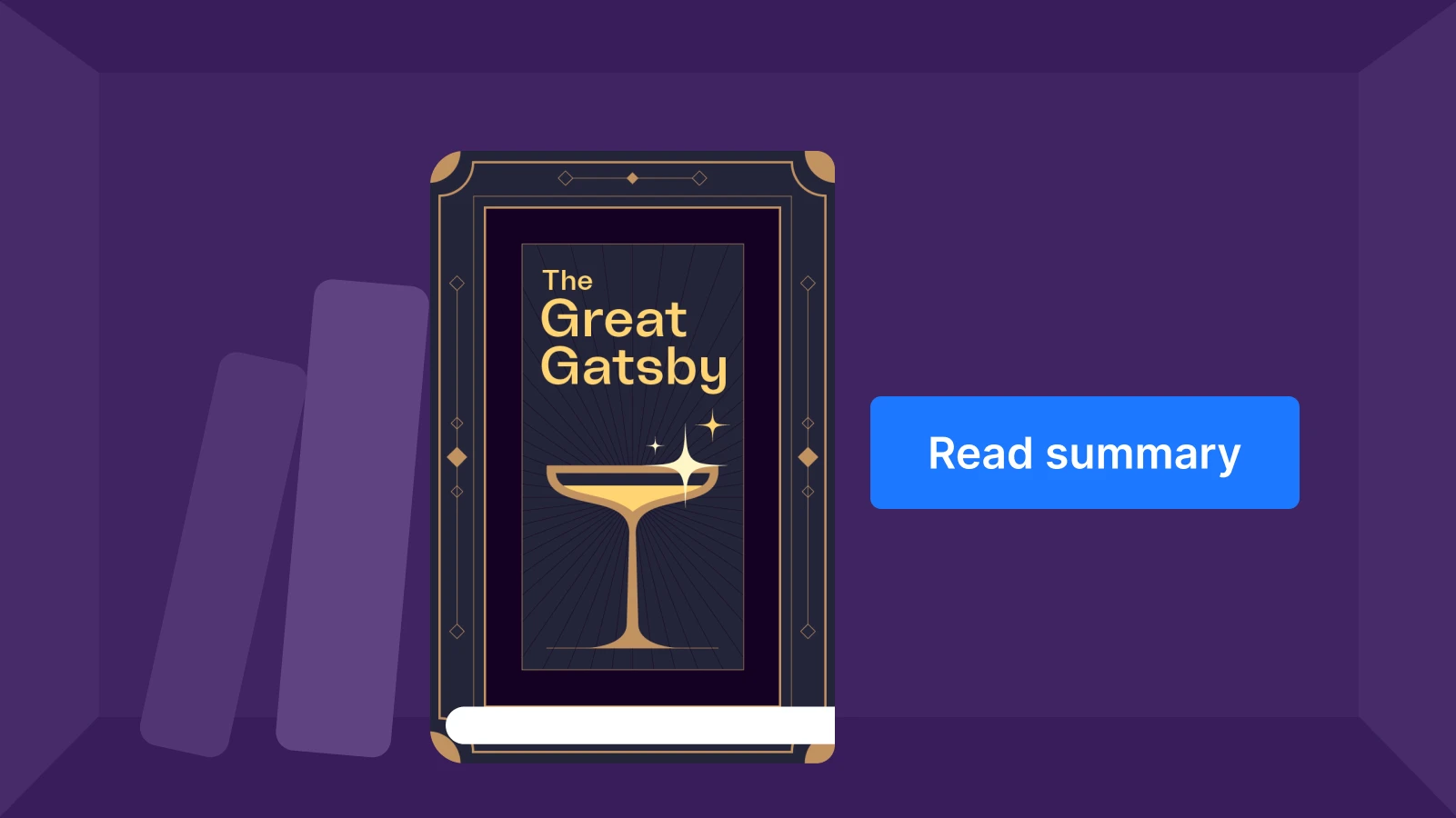
At roughly 50,000 words, this is the gold standard of the short American novel. F. Scott Fitzgerald captured the hollow glamour of the Jazz Age through Nick Carraway's eyes, as he watched his neighbor, Jay Gatsby, chase a green light across the water. High school students read it for class. Adults reread it and realize they missed everything. The prose is so efficient that literature professors have spent decades analyzing single sentences. Some of the great books in American literature run over 500 pages. This one accomplishes more in less than 200.
It isn't just a love story. It's a dissection of the American Dream, the idea that reinvention and wealth can buy you belonging. Spoiler: they can't.
'Of Mice and Men' by John Steinbeck
Steinbeck wrote this novella in six weeks. And you can read it in an afternoon. George and Lennie are two migrant workers during the Great Depression, bound together by friendship and a shared dream of owning land. The ending has devastated readers since 1937 for good reason.
What makes this book essential is its portrayal of the bond between two people who have nothing except each other. Book clubs still argue about whether George made the right choice. And there is no end to that argument.
'The Old Man and the Sea' by Ernest Hemingway
Hemingway won the Pulitzer Prize for this 127-page novella about an aging fisherman battling a giant marlin. The plot sounds simple because it is: an old man goes fishing, catches something too big, and fights to bring it home.
But beneath that simplicity lies Hemingway's meditation on endurance, pride, and what it means to keep going when everything seems lost. The stripped-down prose (short sentences, common words) became the template for a century of American writing.
'Their Eyes Were Watching God' by Zora Neale Hurston
Janie Crawford's story unfolds across three marriages and one hurricane in rural Florida. Hurston wrote this in seven weeks while doing anthropological research in Haiti. It flopped commercially, went out of print, and was rediscovered decades later.
Now it's required reading for understanding both African American literature and the universal search for self-determination. Janie's refusal to accept the life others plan for her resonates with anyone, especially any young woman, who has been told to settle.
Philosophical and existential fiction
'Animal Farm' by George Orwell
Orwell called this a "fairy story," which is technically true. It's a tale about farm animals who overthrow their human master. It's also a savage political allegory that applies to every era, every revolution, every time people trade one tyrant for another. The pigs start walking on two legs. The other animals can't remember when things changed.
At around 100 pages, this book has been taught, banned, and debated for 80 years. Some things don't go out of style.
📘 Explore Orwell's '1984' with Headway.
'The Stranger' by Albert Camus
Meursault attends his mother's funeral, starts a relationship, commits a murder, and faces execution, all while feeling nothing in particular. Camus wrote this existentialist classic to explore what happens when someone refuses to play along with society's expected emotions.
The opening line, "Mother died today. Or maybe yesterday, I don't know," remains one of the most unsettling first sentences ever written. The book itself takes about four hours to read. The questions it raises take a lifetime to answer.
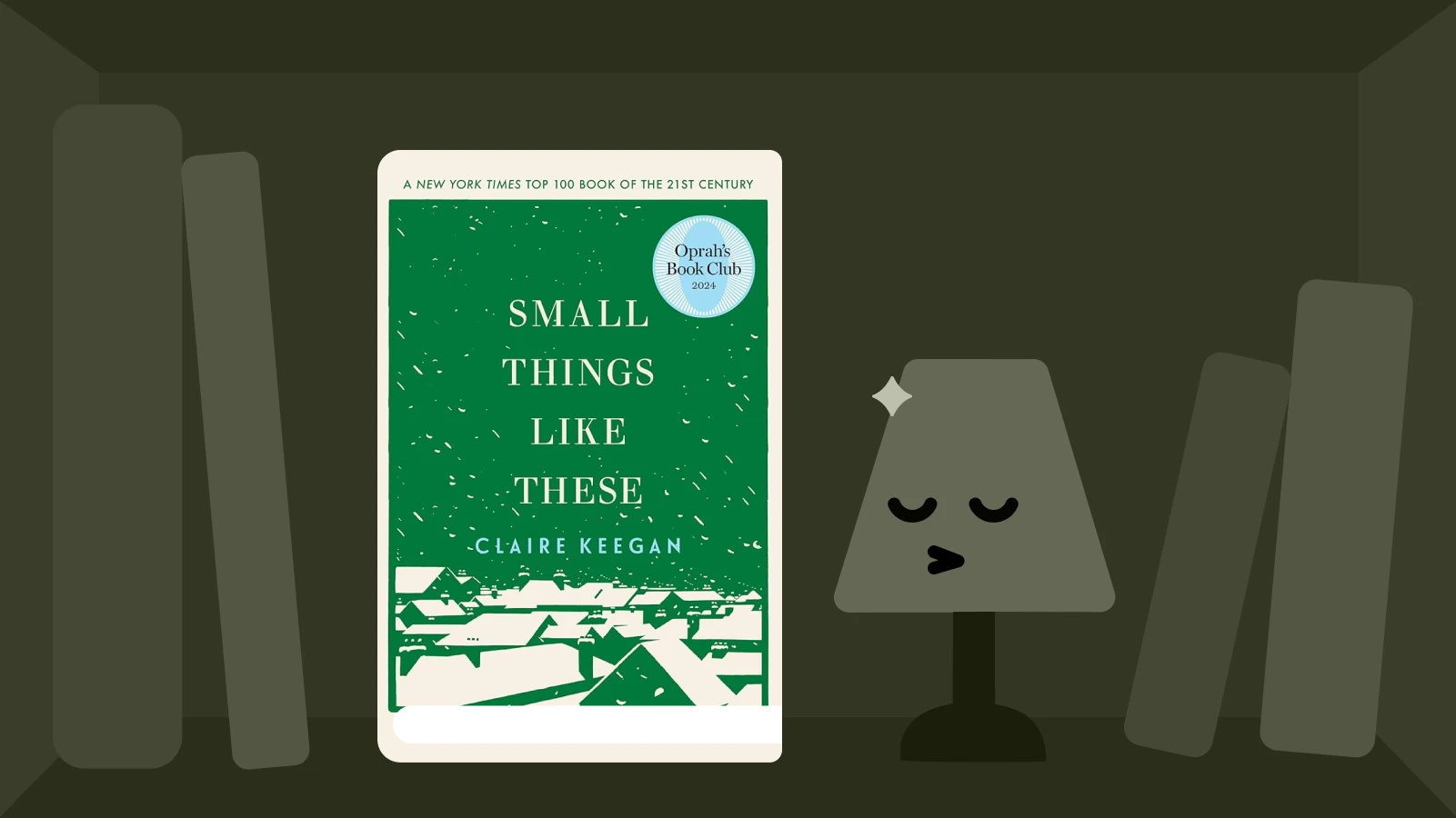
'Small Things Like These' by Claire Keegan
This 2021 novella is set in Ireland in 1985. Bill Furlong, a coal merchant, discovers something disturbing at the local convent during Christmas week. Claire Keegan tells the story in under 15,000 words, yet it carries the moral weight of books five times its length.
Keegan proves that literary fiction doesn't need elaborate plots. It needs precise observation and the courage to look at uncomfortable truths. The book was shortlisted for the Booker Prize and turned into a film, all from fewer than 100 pages.
Literary gems and character studies
'Sula' by Toni Morrison
Toni Morrison's second novel follows two Black women, Nel and Sula, from childhood in 1920s Ohio through decades of friendship, betrayal, and grief. Their bond as best friends carries through marriages, losses, and one unforgivable act. Morrison packs more insight into 174 pages than most authors manage in trilogies.
The prose is dense but never difficult. Every sentence does work. If you've never read Toni Morrison, this is an accessible entry point that demonstrates why she won a Nobel Prize. Book lovers who start here often become lifelong Morrison readers.
'Giovanni's Room' by James Baldwin
James Baldwin set this novel in Paris, following an American man confronting his desire for another man while his fiancée waits in Spain. Published in 1956, it remains one of the most honest explorations of identity and the cost of denial.
Baldwin's editor warned him that the book would ruin his career. It didn't. Instead, James Baldwin created essential reading for anyone trying to understand love stories that exist outside conventional expectations. The novel proves that some of the greatest books focus inward rather than outward.
'The Prime of Miss Jean Brodie' by Muriel Spark
Miss Brodie is a charismatic Edinburgh schoolteacher who selects a group of girls to mold in her image during the 1930s. She's inspiring, manipulative, possibly dangerous, and unforgettable.
Muriel Spark wrote with surgical precision. This book is barely 150 pages, yet it creates a world, destroys illusions, and asks hard questions about influence and responsibility. The twist ending reframes everything that came before. Anyone interested in literary fiction about power dynamics should add this to their list.
'The Sense of an Ending' by Julian Barnes
Julian Barnes won the Man Booker Prize for this meditation on memory, time, and the stories we tell ourselves about our own lives. Tony Webster looks back on his youth, his first love, and a tragedy he never fully understood.
The book is under 200 pages. You can read it in a single sitting. But you'll think about it for weeks afterward, questioning your own memories and the comforting narratives you've constructed. If you ask book lovers in Los Angeles or New York what their favorite book of the 2010s was, many will name this one.
Short nonfiction: Concise guides for self-growth
Fiction shows you other lives. Nonfiction changes you. These short guides distill years of research and experience into actionable advice that respects your time. Many have become bestselling titles not because of clever marketing, but because readers finish them and recommend them to friends.
Productivity and habits
'The Dip' by Seth Godin
Seth Godin wrote this 80-page book to answer one question: When should you quit, and when should you push through? The answer isn't always obvious. Sometimes quitting is strategic. Sometimes, persisting through difficulty is the only path to mastery.
This text isn't motivational fluff. It's a framework for making better decisions about where to invest your limited time and energy. Most productivity books waste your hours with repetition and padding. This one might save years of misdirected effort. It's the kind of first book on strategy that makes you reconsider everything.
'Make Your Bed' by Admiral William H. McRaven
Based on his viral commencement speech, McRaven argues that small disciplines create large outcomes. This New York Times bestselling author draws on Navy SEAL training to demonstrate how tiny habits compound into life-changing results.
The book takes about 90 minutes to read. The core lesson (start each day with one completed task) takes a lifetime to master. If you enjoyed the speech, the book expands each principle without overstaying its welcome. It's become a favorite book among military personnel, executives, and anyone building discipline from scratch.
'Dopamine Detox' by Thibaut Meurisse
Modern life is designed to hijack your attention. This concise guide explains why you reach for your phone when you're bored, anxious, or trying to focus, and what to do about it.
At under 100 pages, Meurisse provides a practical reset for anyone who feels controlled by distractions rather than in control of them. It's not anti-technology. It's pro-intention. Readers report real-life changes after implementing even half the strategies.

📘 Reading about habits is useful. But if understanding productivity were enough, you'd already be productive. Headway takes books like these and delivers the core insights in 15 minutes, with actionable takeaways and highlights to help you actually implement what you learn. That's the difference between knowing and doing. Regain focus intentionally now with Headway.
Strategy and success
'The Art of War' by Sun Tzu
Written over 2,000 years ago, Sun Tzu's collection of verses on military strategy now sits on the desks of CEOs, coaches, and anyone navigating competitive environments. The text is short enough to fit in your pocket, but its applications are endless.
Business leaders cite it constantly. Athletes study it before competition. The principles of know yourself, know your opponent, and choose your battles translate across domains.
'It Works' by R. H. Jarrett
This "little red book" has been in continuous print since 1926. In fewer than 30 pages, Jarrett outlines a method for clarifying and achieving your goals. Some call it manifestation. Others call it focused intention.
Either way, the brevity forces you to actually try the system rather than just reading about it. You can finish the book in 15 minutes. The real work starts after.
'The Little Book of Common Sense Investing' by John Bogle
John Bogle founded Vanguard and created the index fund. His advice is to stop trying to beat the market. Buy diversified, low-cost funds. Hold them forever. This approach has outperformed most professional money managers over the long term.
The book strips away Wall Street complexity and offers simple, evidence-based guidance that anyone can follow. Bogle became a favorite book recommendation among personal finance experts because his logic is irrefutable and his style is accessible. If you only read one investing book in your life, many experts say this should be it.
Big ideas in brief formats
'Brief Answers to the Big Questions' by Stephen Hawking
Hawking's final book tackles questions he pondered for decades: Is there a God? Can we predict the future? Will humanity survive? These thoughts aren't sci-fi speculation. It's a world-class physicist applying scientific thinking to the mysteries that keep us up at night.
At around 250 pages, it's the most accessible entry point into Hawking's mind. The chapter on artificial intelligence feels more urgent with each passing year. Readers who typically avoid science writing find this surprisingly approachable.
'We Should All Be Feminists' by Chimamanda Ngozi Adichie
Adapted from her viral TED talk, Adichie's essay makes the case for gender equality in under 50 pages. She draws on her experiences growing up in Nigeria and living in the United States to explore how gender expectations limit everyone.
The book takes 45 minutes to read. Beyoncé sampled it on her album. It's required reading in some Swedish schools. Short doesn't mean lightweight. It might just be the most life-changing 45 minutes of reading you do this year.
'Life Is Short (and So Is This Book)' by Peter Atkins
Atkins, a chemist, uses the brevity of his book as a philosophical statement. If life is short, why waste it on books that repeat the same point for 400 pages? This meta-commentary on time and meaning practices what it preaches.
If you've ever abandoned a book because the author kept making the same point chapter after chapter, you'll appreciate Atkins' approach. Not every idea needs 300 pages to land.
The nonfiction titles above represent some of the best books for building specific skills. But reading about ideas and implementing them are different things. Headway bridges that gap by delivering key insights in digestible formats with built-in review systems. When you finish a Headway summary, you're not just informed. You're equipped to act.
📘 Try Headway now and see the difference for yourself.
Concise business and leadership guides
The business section of any bookshop is filled with bloated titles that could be blog posts. These three respect your time while delivering actionable wisdom.
'The One Minute Manager' by Kenneth Blanchard and Spencer Johnson
Published in 1982, this fable teaches three management techniques through a story about a young man seeking the secret to effective leadership. The "one minute" framework of one-minute goals, one-minute praisings, and one-minute reprimands has trained millions of managers.
Critics call it simplistic. Practitioners call it practical. At 111 pages, you'll form your own opinion quickly.
'Scrum: A Breathtakingly Brief and Agile Introduction' by Chris Sims and Hillary Louise Johnson
If your workplace uses Scrum and you don't understand what's happening in those daily standups, this 40-page guide explains everything. It's designed for people who need to understand the framework without becoming certified Scrum Masters.
The title promises brevity. The book delivers.
'Brief: Make a Bigger Impact by Saying Less' by Joseph McCormack
McCormack argues that modern professionals fail not because they lack information but because they can't communicate concisely. The book teaches you to trim presentations, write shorter emails, and respect other people's attention.
Ironically, the book itself is fairly short. McCormack practices what he preaches.
Want the key insights from these business books without the time investment? Headway offers summaries of all three, plus hundreds of other leadership and management titles. You can compare ideas across books, build custom learning paths, and actually finish your professional development reading. Download Headway and become the person who actually reads the books everyone talks about.
Why even "short" books might be too long
Here's the uncomfortable truth that no reading list will admit: You already have short books you haven't finished.
'The Great Gatsby' is shorter than most podcasts. 'Animal Farm' takes less time than a Netflix movie. Yet, these texts sit on nightstands, in Kindle libraries, and on that Amazon wishlist you'll get to "someday."
The problem isn't length. The problem is friction.
Reading a short novel still requires choosing which book, finding the time, maintaining focus, and pushing through the middle when your phone is right there, offering an easier dopamine hit. Modern distractions have made even 150 pages feel like a commitment.
The "false start" problem
How many times have you bought a book with good intentions, read two chapters, and abandoned it? The short book movement assumes the bottleneck is page count. It's not. The bottleneck is completing anything at all in an attention economy designed to fragment your focus.
You don't need more book recommendations. You need a system that removes decisions, shortens the loop between starting and finishing, and builds momentum through actual completion.
That's exactly what Headway does for 55 million people worldwide.
Headway transforms the key insights from the world's best nonfiction into 3- to 20-minute summaries. Not abridgments that skim the surface. Not AI-generated bullet points. Actual distillations of core ideas with actionable takeaways.
This switch isn't about replacing books. It's about ensuring you absorb something rather than nothing. One completed Headway summary beats ten unfinished "quick reads" gathering digital dust.
If understanding ideas were enough, you'd already have implemented what you learned from the last productivity book you read. The only thing that changes behavior is a system that removes daily decisions, and this is exactly what a Headway subscription provides.
📘 Build learning systems with Headway.
Start your "short book" journey with Headway today
Let's be honest about what happens next.
You'll bookmark this list. You'll add a few titles to your Amazon cart or your local bookshop wishlist. You'll promise yourself that this year will be different.
But three months from now, those books will remain unread. Not because you lack intelligence or discipline. It's because you lack a system that accounts for your real-life schedule, your actual attention span, and the 20 notifications that interrupt every reading session.
Headway is that system. With the Headway app, you get:
Quick summaries: The core ideas from bestsellers — including many titles on this list — condensed to fit any schedule.
Audio and text options: Listen during workouts or read during lunch. Your choice.
Spaced repetition: Insights that actually stick because the app helps you review and apply them through quizzes, highlights, and shorts.
A library of over 2,500 titles: From productivity to psychology, business to philosophy.
Reading is valuable. Finishing is more valuable. And finishing consistently is what transforms knowledge into action.
Don't let another year go by promising to read more while completing less. Download Headway today and experience what it feels like to finally keep up with the ideas shaping the world, in minutes, not hours.
Frequently asked questions about short books
What is a short book?
A short book typically contains fewer than 200 pages or fewer than 40,000 words. This category includes novellas, essay collections, and concise nonfiction guides. The length allows focused reading in one to three sittings, perfect for busy schedules. Examples include 'Animal Farm' by George Orwell and 'The Old Man and the Sea' by Hemingway, both under 130 pages.
What are some short good books?
Great short books span every genre. For fiction, try 'The Great Gatsby' by F. Scott Fitzgerald, 'Of Mice and Men' by Steinbeck, or 'Giovanni's Room' by James Baldwin. For nonfiction, consider 'Make Your Bed' by Admiral McRaven or 'The Dip' by Seth Godin. Claire Keegan's 'Small Things Like These' proves literary fiction can be powerful in under 100 pages. Many bookshop staff recommend these as perfect entry points for reluctant readers.
What books have 50 pages?
Extremely brief books under 50 pages include 'We Should All Be Feminists' by Chimamanda Ngozi Adichie (around 48 pages), 'It Works' by R. H. Jarrett (fewer than 30 pages), and various poetry collections. These work well for readers building habits or squeezing reading into tight schedules. Some Headway summaries offer similar brevity with comparable insight, perfect for your first time exploring a new topic.
What are short books called?
Short fiction between 17,500 and 40,000 words is called a novella. Shorter works (7,500 to 17,500 words) are novelettes. Texts under 7,500 words qualify as short stories. Nonfiction doesn't follow these exact conventions. Terms like "guide," "essay collection," or simply "brief book" are common. The book industry has no universal standard, though "novella" remains the most recognized term.
Can I read 50 pages in 2 hours?
Yes, most adults read 50 pages in 1–2 hours, depending on the complexity and distractions. The average reading speed is 200–300 words per minute. A 50-page nonfiction book with accessible prose takes roughly 90 minutes to read. Dense literary fiction or academic writing takes longer. Eliminating phone notifications can significantly cut that time. Many readers find that they can finish a short novel during a single podcast-length listening session.
Why are short books better?
Short books aren't inherently better — they're more completable. The best book is the one you finish. Short books force authors to distill ideas rather than pad content. They respect readers' time and attention limits. For skill-building, completing ten short nonfiction guides often beats abandoning three long ones. Momentum matters more than page count. Ask any book club — finished books generate better discussions than abandoned ones.
What is a mini book?
"Mini book" usually refers to a small physical format or extremely brief content. Think pamphlets, zines, or books under 50 pages. In publishing, no formal definition exists. Self-help "mini books" often deliver one focused idea in under an hour of reading. Headway summaries function similarly: maximum insight, minimum time investment, and designed for completion. Many readers treat them as mini books for professional development.