Self-growth
 Apps & Digital Tools
 Business & Career
 Success
 Growth Tools
 Psychology
 Communication
 Relationships

Have you ever looked at your partner across the dinner table and felt... nothing? Not anger, not joy, just a heavy tiredness that sleep can't fix.
You might worry that the spark has died forever. But what you're feeling might not be the end of your story. It could be a signal that you're experiencing relationship burnout.
In this guide, we'll explore why people feel emotionally drained in their partnerships. We'll draw on insights from world-leading experts like John Gottman and Harville Hendrix to help you find a way back.
We also know that reading a massive stack of books on relationships feels impossible when you're already exhausted. That's why we'll show you how to access these expert insights through quick summaries on the Headway app.
➡️ What is Headway exactly, and how can it benefit you?
Quick answer: What is relationship burnout?
To understand your current situation, you first need to know the relationship burnout meaning. It is not just a bad day or a simple argument.
Relationship burnout is a state of chronic emotional and mental depletion. It happens when the demands of your romantic relationship consistently exceed the resources you have to meet them. You might feel like you're constantly giving but never receiving anything in return.
This feeling is often tied to emotional exhaustion. You may find yourself going through the motions of your day-to-day life without any real enthusiasm. If your partner feels like just another item on a never-ending to-do list, you're likely burned out.
Seven signs of burnout in a relationship you shouldn't ignore
Identifying the signs of relationship burnout is the first step toward recovery. You may not experience all of these at once, but even a few can indicate a problem.
Emotional distance: You pull away to protect your remaining emotional energy.
Constant irritability: Small habits that used to be endearing now feel like major stressors.
Physical disconnection: You lose interest in physical intimacy or even simple touch, like hugging.
Negative thoughts: You struggle to remember why you fell in love in the first place.
Sense of hopelessness: You feel like no matter what you do, the relationship dynamics will never improve.
Daydreaming about being single: You spend time imagining a life where you don't have to answer to anyone.
Neglecting self-care: You've stopped looking after your own wellbeing because you're too tired.
Is it burnout or the end of the road?
One of the biggest fears people face during a rough patch is whether they've simply stopped loving their partner. The difference is often found in your intent.
If you're burned out, you usually want things to be better, but you don't know how to make it happen. You might feel a sense of loss for the "old us." In contrast, falling out of love often feels like a release. You feel ready to move on rather than wanting to reconnect.
Burnout in relationship often feels heavy and stifling. Falling out of love feels more like a slow fading of interest. Ask yourself, if you had a week of perfect sleep and zero stress, would you want to spend it with your partner? If the answer is yes, you're likely just burned out.
What causes relationship burnout in 2026?
Determining what causes relationship burnout can help you stop the cycle before it gets worse. Often, it is a combination of internal habits and external pressures.
Modern life in 2026 is faster than ever. Between career goals and social obligations, we often leave our partners with only the "scraps" of our energy. Here's a breakdown of why burnout in a relationship occurs and how it looks in your daily life.
| Reason | How it manifests | |
|---|---|---|
Chronic stress | Your nervous system is stuck in survival mode, leaving no room for romance. | You finish a ten-hour workday and snap at your partner for simply asking, "What is for dinner?" |
Unmet needs | You feel lonely and unsupported, even when you are sitting in the same room. | You stop asking for help with the laundry because you're tired of being told "later" or "not now." |
Lack of appreciation | You feel like your efforts go unnoticed or are taken for granted. | You spend hours planning a special weekend, but your partner barely looks up from their phone to say thanks. |
Poor conflict skills | You engage in circular arguments that leave you both exhausted. | You spend three hours arguing about a dirty dish instead of discussing the actual resentment you feel. |
Lifestyle changes | Major life shifts drain your resources and leave you with no emotional energy. | You just moved to a new city for work, and the stress of the move makes every conversation feel like a battle. |
Introvert exhaustion | A lack of alone time causes you to associate your partner with feeling drained. | You love your partner, but you find yourself staying in the bathroom for 20 minutes just to have some silence. |
📘 Rebuild connection habits with Headway.
Long-distance relationship burnout
Managing a bond across miles comes with unique challenges. A long-distance relationship burnout often stems from "digital fatigue" and the lack of physical presence.
When your entire relationship happens through a screen, it can feel like a performance. You might feel pressured to make every call "meaningful," which eventually becomes exhausting. The lack of physical intimacy can also make the disconnection feel more permanent than it actually is.
To fight this, try to focus on low-pressure quality time. Watch a movie together in silence or read the same book and discuss it later. Reducing the pressure to "perform" can help you recover from relationship burnout in a long-distance setting.
The silent struggle: Introvert burnout in relationships
If you're an introvert, your need for alone time isn't a luxury — it's a necessity. Many people experience introvert burnout in relationships because they feel guilty for needing space.
When you spend all day at work and then come home to a partner who wants to talk, your social battery can hit zero. Without boundaries, you'll eventually start to associate your partner with exhaustion. That's not a sign that you don't love them. It's a sign that your brain needs a reset.
Setting boundaries around your quiet time is a healthy way to maintain your bond. Tell your partner, "I love you, but I need 30 minutes of silence to be a better partner tonight." Most partners will understand if you explain it clearly.



Five books on Headway to help you fix relationship burnout
You don't need to read for hours to start healing your bond. These five books are available on Headway as quick summaries. Each one offers a different perspective on why you feel drained and how to reconnect.
1. 'Getting the Love You Want' by Harville Hendrix, PhD, and Helen LaKelly Hunt
This book explores how our childhood experiences shape our romantic choices. Often, burnout happens because we're unconsciously trying to heal old wounds through our partners.
Key takeaway: Shifting from a reactive to a conscious relationship reduces the emotional energy spent on pointless fighting.
2. 'Hold Me Tight' by Dr. Sue Johnson
Dr. Johnson focuses on attachment theory and the "demon dialogues" that keep couples stuck. When you don't feel emotionally safe, your brain stays in a state of high alert.
Key takeaway: Emotional responsiveness is the antidote to disconnection. Learning to ask for what you need can save a bond.
3. 'The Relationship Cure' by John M. Gottman and Joan DeClaire
Gottman introduces the concept of "bids" for connection. A bid is any attempt to get your partner's attention, like a comment about a bird outside or a touch on the shoulder.
Key takeaway: Responding to your partner's small bids builds a buffer against future stressors.
4. 'The Dance of Anger' by Harriet Lerner
Anger is often a primary symptom of relationship burnout. Lerner explains that it's a signal that your needs aren't being met or that you're losing yourself in the relationship.
Key takeaway: Focusing on your own behavior, rather than trying to change your partner, is what breaks the cycle.
5. 'Women Who Love Too Much' by Robin Norwood
This classic addresses the cycle of obsessive love and the need to "fix" a partner. This behavior often leads to deep emotional exhaustion and a loss of identity.
Key takeaway: Recovery starts with prioritizing your own mental health and letting go of the need to save others.
Steps to fix relationship burnout
Schedule a check-in: Set aside 15 minutes a week to talk about how you are both feeling, not just logistics.
Prioritize date nights: Nothing fancy required. A walk in the park or a quiet dinner at home can do more than you'd expect.
Seek professional help: A licensed therapist for you or a family therapist for your couple can provide a neutral space to talk.
Limit negative feelings: Focus on one positive thing your partner did each day and mention it to them.
Rediscover quality time: Go back to the activities and routines that made you both happy at the start of your romantic relationship.
The role of self-care in recognizing relationship burnout symptoms and protecting your wellbeing
You can't pour from an empty cup. Often, the best way to help your relationship is to focus on your own mental health first.
Self-care goes further than bubble baths. It's about getting enough sleep, eating well, and pursuing your own hobbies. When you feel good about yourself, you have more emotional energy to give to others.
If you've been neglecting your wellness, start small. Take 15 minutes a day to do something just for you. This could be spent journaling, exercising, or listening to a summary on the Headway app. These micro-habits add up to a much healthier version of you.
📘 Improve personal wellbeing with Headway.
How to recover from relationship burnout together
Recovery is a team sport. Both partners need to be willing to look at how things have been and make changes.
Start with honesty about your emotional exhaustion. Something like, "I feel disconnected lately, and I want us to find our way back to each other." It invites your partner to be an ally instead of an adversary.
From there, look for new ways to rekindle the flame. A new hobby, a trip somewhere neither of you has been, or even just changing up your weekly routine can help. Novelty triggers dopamine in the brain, which can break the cycle of negative thoughts and low-grade boredom.
When to see a couples therapist
Sometimes, the rough patch is too deep to climb out of alone. Seeking professional help is a sign of strength, not failure.

Strengthen your relationship today and take the quiz.
A couple's therapist or a licensed therapist can help you that you might not see on your own. They can teach you how to handle stress without taking it out on each other. If traditional therapy feels too expensive, many online therapy providers offer more affordable options.
If you're feeling a total disconnection, a therapist can help you decide if a breakup is necessary or if the bond can be saved. Their goal is to help you find the healthiest path forward for both of you.
How long does relationship burnout last?
Many people ask, "How long does relationship burnout last?" And the answer depends on how quickly you take action.
If you continue the same habits that caused the burnout, it can last indefinitely. But if you start making changes today, you might feel a shift within a few weeks. The key is consistency. Small, daily efforts to reconnect are much more effective than one big, expensive vacation.
Remember that healing is not a straight line. There will be good days and bad days. The goal is to make sure the good ones slowly start to outnumber the bad.
Turning the page: Using Headway to grow
Learning about relationships shouldn't feel like a chore. The Headway app makes it easy to gain essential knowledge while you're on the go.
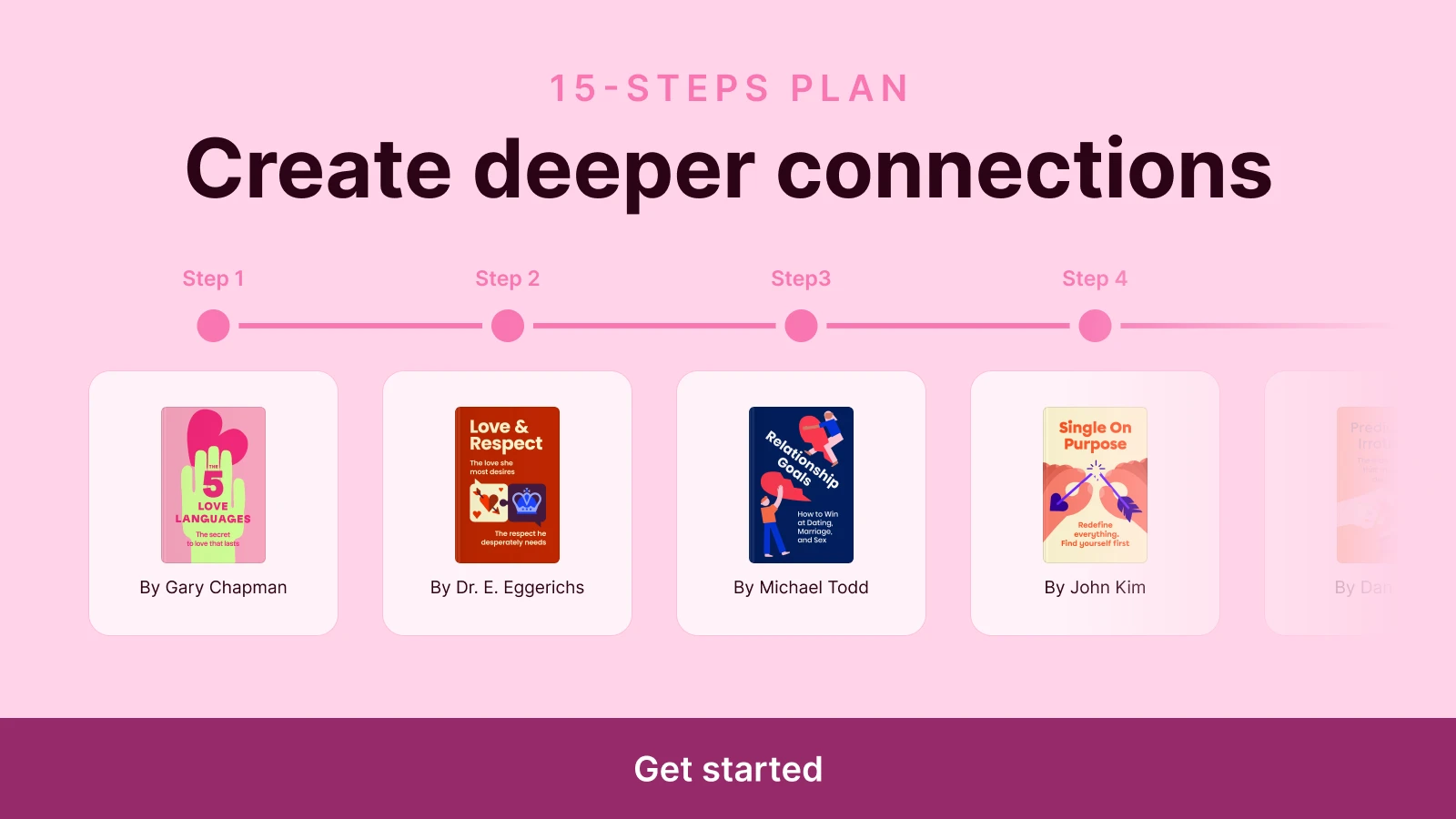
Instead of doomscrolling on your phone, you could be listening to the key ideas from 'Attached' or 'The 5 Love Languages.' These summaries help you understand your partner's behavior and your own unmet needs, without having to carve out hours you don't have.
Even 15 minutes a day can shift how you see things. You'll learn how to set boundaries, improve your communication, and prioritize your emotional wellbeing. More than 55 million people are already using Headway for exactly this kind of growth. Why not give it a try?
📘 Strengthen relationship skills with Headway.
Frequently asked questions on relationship burnout
What is relationship burnout in simple terms?
Relationship burnout is when a relationship leaves you feeling completely drained. You might notice you have no energy for conversation or intimacy, and you're just going through the motions. It usually builds over time from unresolved stress, repeated conflict, or feeling like you're giving more than you're getting.
How do I deal with relationship burnout?
Start by being honest with your partner about how you're feeling. Tell them you feel exhausted and need to make changes. From there, you should also focus on your own self-care and consider seeing a licensed therapist, either individually or as a couple. Taking small breaks to recharge your own battery can also help you feel better.
What are common relationship burnout signs?
Constant irritability is one of the most common. Others include emotional withdrawal, loss of interest in physical intimacy, daydreaming about being single, and feeling like every conversation is a fight waiting to happen.
How can I overcome burnout in relationship today?
Start by setting boundaries around your personal time. Make sure you're both getting enough alone time to relax. Reading relationship book summaries on Headway can also give you a fresh angle on what's happening and what to try next. Small gestures, like a six-second kiss or a daily five-minute check-in, can shift the dynamic more than you'd think.
How do I fix relationship burnout without a breakup?
Both people need to be willing to change something in their day-to-day habits. That means stopping the cycle of negative thoughts and remembering what you actually like about each other. Spend quality time together that has nothing to do with stress or logistics. If you both try, you can definitely rekindle the flame.
How can I recover from relationship burnout safely?
Recovery starts with admitting there's a problem without blaming anyone. Focus on your wellness and mental health first. Then, slowly reconnect with your partner through small gestures. If things don't improve, speaking with a family therapist or exploring online therapy can help you figure out the next step.
How do I handle an emotional burnout relationship?
When you feel completely numb toward your partner, it's a sign that something needs to change, not necessarily that the relationship is over. Prioritize your mental health and set boundaries around your personal time. The Headway app offers recovery strategies worth exploring.