Self-growth
 Business & Career
 Success
 Communication
 Healing
 Relationships
 Psychology
 Happiness
We all have that list of books we plan to read "someday." It sits on our phones, in notebooks, or floating in the back of our minds. But "someday" rarely comes.
If you're trying to fix that, you've probably looked for a tech solution. Your search likely led you to two very different tools: Reading trackers and summary apps.
At first glance, they seem similar. They're both digital and organized, and they both promise to improve your reading life. But in reality, they serve two completely opposing purposes. Reading trackers record what you have done, and summary apps help you learn to change what you do next.
So, which one belongs on your home screen? Let's break it down.
Quick summary: Which tool fits your life?
If you're short on time, here's the difference:
Choose a reading tracker (like Goodreads) if: You want a digital log of every book you finish, complete with ratings and organized shelves. These tools focus on your reading history — logging what you have already achieved.
Choose a summary app (like Headway) if: You want to gain knowledge but lack the time. You need key concepts quickly and tools that help you build a consistent routine. These tools focus on your growth — helping you apply new ideas immediately.
Follow along for a closer look!
★★★★★ 172K+ reviews
Empower yourself with the best insights and ideas!
Get the #1 most downloaded daily growth app.
Get startedThe reading tracker: Your digital librarian
Think of a reading tracker — like Goodreads or The StoryGraph — as a scorecard. It logs every page you turn, stores your ratings, and organizes your library into neat digital shelves.
These apps deliver a specific type of satisfaction. There's a real dopamine hit when you can mark a book as "Finished" or see your yearly chart tick upward. The process feels productive because you're creating a record of your intellectual history.
Who is it for?
The data lover: You want to know exactly how many pages you read in March versus April.
The social reader: You care what your friends are reading and love sharing your own ratings.
The completist: Your main goal is to finish a specific number of books this year, regardless of what you learned from them.
The hidden trap
Here's the catch: Counting isn't the same as learning.
You can log 50 books a year and retain almost nothing. Trackers are passive — they wait for you to do the work. If you are in a reading slump, a tracker will just show you a depressing gap in your stats. It doesn't offer a hand to pull you out; it just records the fact that you stopped.
The summary app: Your personal coach
On the flip side, summary apps like Headway play a different role. If a tracker is a librarian, a summary app is a tutor who sits down to explain those books to you.
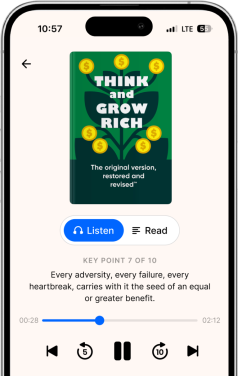
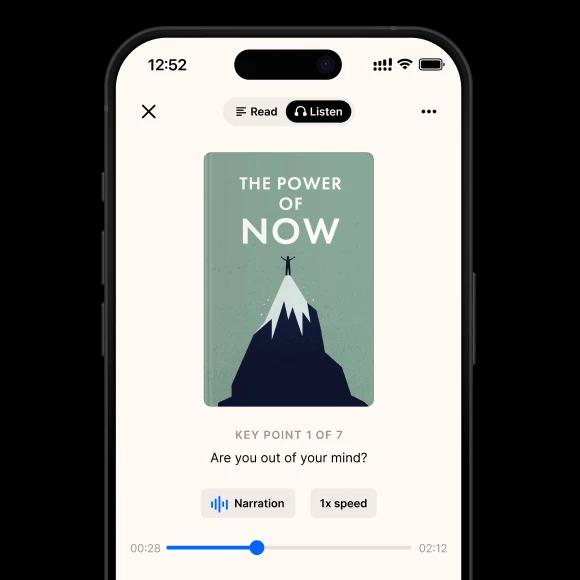
These apps don't just list titles; they break them down. They take a 300-page non-fiction bestseller and distill it into its most crucial concepts — usually in a format you can read or listen to in under 15 minutes.
Who is it for?
The busy professional: You have 20 minutes between meetings, not two hours to curl up on the couch.
The action-taker: You don't just want to say you read 'Atomic Habits'; you want to build better habits starting today.
The visual learner: You remember things better when you see a diagram or an illustration rather than a wall of text.
The real value: Momentum
Unlike a book tracker, which demands your time, a summary app gives you time back.
Bite-sized content drops the barrier to entry. You don't need "perfect conditions" to start learning. You just need your commute, your lunch break, or the time it takes to make coffee.
The core difference: Input vs Output
Choosing the right tool starts with one honest question: Do you care more about input or output?
If you want to track your reading, choose a tracker. It reflects your habits back to you like a mirror, showing what you've consumed.
If you want to grow, choose a summary app. It helps you become smarter, more efficient, or more emotionally intelligent by teaching you ideas that actually change the way you think and act.
Take Headway's spaced repetition feature. A reading tracker will never ask, "Hey, do you remember that key concept from Chapter 3?" It just assumes you do.
But Headway knows that memory fades. And that's okay! It prompts you to review ideas days or weeks later, so you can turn that information into long-term knowledge.
And the winner is… Headway! Try it today
If you have to choose just one tool today, think about what actually motivates you. If you are struggling to read consistently, a tracker might actually make you feel worse. Seeing "0 books read" just reinforces guilt.
Headway works differently. It uses gamification — streaks, daily goals, and achievements — to reward you for small wins. It doesn't matter if you didn't read for two hours. The app celebrates that you showed up for ten minutes.
That positive feedback loop builds the habit. Learn something today, feel good about it, return tomorrow. And before you know it, you'll have built a daily growth habit that lasts.
Download the Headway app today and turn your small reading breaks into everyday growth!
FAQs
Which app is best for tracking reading progress?
The StoryGraph often tops the list. It offers detailed graphs, mood tracking, and personalized stats without social pressure. Want community features and discussions that make you feel connected to other book fans? Try Goodreads with its large user base and very active forums.
What is the best app for reading book summaries?
Headway is the best app for building a sustainable habit. Its visual approach, bite-sized sessions, and gamification help you actually retain what you learn. Need deep, chapter-by-chapter breakdowns? Shortform delivers academic-level analysis. Want a broad library? Try Blinkist.
Is Goodreads the best book tracking app?
Goodreads is the largest and most social option — unmatched for seeing what friends are reading and joining discussions. For modern design and better personal stats, The StoryGraph is a new favorite. So, while Goodreads wins on community, The StoryGraph wins on usability.
Can book summary apps replace reading?
No. Summaries can't capture the emotional depth or subtleties that the full book provides. But they're excellent for previewing books before you buy or refreshing key ideas from books you've already read.
Should I read books or summaries?
Reading the full book grants you the space to fully enjoy its depth, storytelling, and true mastery of complex topics. Alternatively, summaries give you actionable insights fast. If you like, use summaries to decide which books deserve your full attention, then read those cover to cover.