Self-growth
 Business & Career
 Success
 Communication
 Healing
 Relationships
 Psychology
 Happiness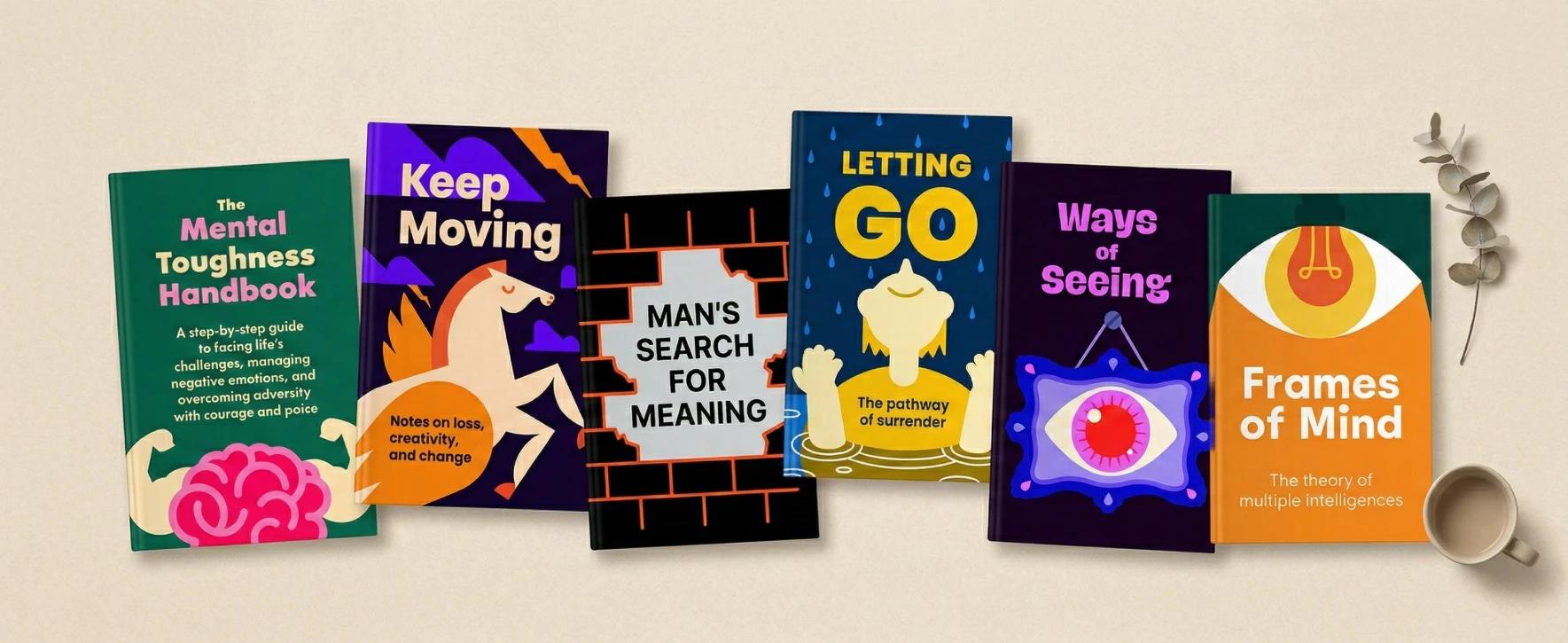
Your screen time averages 7 hours a day, yet studies show that only 23% of Americans finished a book in the past year. The gap between what we consume and what we retain grows wider as our short-term memory struggles under constant digital bombardment.
Here's the good news: reading books doesn't fight against your daily life anymore. It fits right into it. Regular reading lowers blood pressure by 68%. It sharpens your thinking skills, whether you're reading on your Kindle during your commute or listening to audiobooks while cooking, the habit of reading changes how you handle 2026's chaos.
This article gives you the 10 best books to read every day that actually stick with you. These aren't self-help books demanding hours you don't have. They're frameworks that explain everything from personal growth to why the world feels so overwhelming right now.
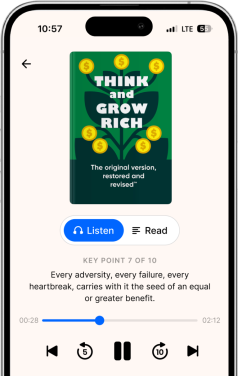
Headway, trusted by 55 million users worldwide, turns each book into 15-minute summaries. You get the insights without sacrificing your entire weekend. That's how building a daily reading habit actually works for real people.
Top five books to start reading every day this year
'Man's Search for Meaning' by Viktor E. Frankl
'The Happiness Project' by Gretchen Rubin
'Mindfulness' by Mark Williams and Danny Penman
'Ikigai' by Héctor García and Francesc Miralles
'Becoming' by Michelle Obama
1. 'Letting Go' by David R. Hawkins, MD, PhD
Dr. Hawkins gives you a simple way to release emotions without therapy bills. His technique sounds almost too easy: notice the feeling, don't fight it, let it pass—no deep analysis needed.
Think about scrolling at 11 PM with your heart racing over news you can't control. That's exactly what Hawkins addresses. You're carrying reactions you never fully processed.
When you use his method on daily triggers — annoying emails, political anxiety, relationship tension — something shifts. You stop dragging yesterday's stress into today's decisions. The benefits of reading this book are immediately apparent.
Daily reading tip: Keep Headway's summary on your phone's home screen. When stress hits, read one section instead of opening social media. Replace your anxiety scroll with two minutes of reading material that actually helps you process what you're feeling.
2. 'Frames of Mind' by Dr. Howard Gardner
Gardner destroyed the idea that there's only one type of smart. He proved humans have at least eight different kinds of intelligence. Your "weaknesses" might be strengths showing up differently.
Maybe you bomb tests, but read people instantly in meetings. Or struggle with words but solve spatial problems like magic. That's interpersonal intelligence or spatial intelligence at work.
The 2026 job market rewards this reality. Remote work means you're competing globally now. Playing to your actual strengths matters more than ever, especially as AI changes what skills employers even want.
Daily reading tip: Read Gardner's summary during your morning coffee. Spend 10 minutes thinking about which intelligence types you used yesterday. Pair your caffeine with reading time at the same time each day — your brain loves routine.
3. 'Keep Moving' by Maggie Smith
Smith wrote short notes to herself during her divorce. These tiny observations became a survival guide for thousands. Each entry takes under 90 seconds to read.
Loss defines 2026 for many people. Lost jobs, relationships, certainty about the future. Smith doesn't offer solutions. She offers companionship through the mess.
Her daily reading habit became her anchor. That's why book clubs on Goodreads have grown 40% since 2023. People need words that make them feel less alone.
Daily reading tip: Listen to Smith's summary as an audiobook during your commute or workout. Her short entries fit perfectly between activities. Audiobooks let you get reading benefits while your body moves — without stealing time from anything else.
4. 'The Mental Toughness Handbook' by Damon Zahariades
Zahariades breaks mental toughness into 26 specific techniques you can use today. No vague "be resilient" nonsense—actual tools for handling rejection and pressure.
His "10-minute rule" for starting tasks you're dreading actually works. His "worst-case scenario" planning reduces anxiety instead of increasing it. These are thinking skills you build like muscles.
The 2026 job market is brutal. Most people now juggle three income streams. Everyone faces AI competition and constant workplace uncertainty. You need mental stimulation that translates to real situations.
Daily reading tip: Use Headway's quiz after reading Zahariades' summary. Active recall beats passive rereading every time. Read one technique during lunch, then apply it to an afternoon challenge. Understanding how to retain what you read means using it immediately.
5. 'Ways of Seeing' by John Berger
Berger wrote this in 1972, but it perfectly explains Instagram culture. Images manipulate meaning based on context. What you see depends on what you've been trained to look for.
Your feed curates reality through algorithms you never agreed to. A protest photo can look scary or inspiring purely based on its cropping and caption. Advertisers and politicians exploit this constantly.
Berger gives you reading skills for a visual world. Images flood your daily life faster than your brain evolved to handle them. Understanding manipulation helps you form actual opinions in 2026's media chaos.
Daily reading tip: Read Berger right before your evening social media time. Set a timer: 15 minutes reading, then 15 minutes scrolling. You'll spot manipulation techniques instantly. The importance of reading contextual material shows up in real-time awareness.
6. 'Man's Search for Meaning' by Viktor E. Frankl
Frankl survived Auschwitz by finding purpose in unbearable suffering. His main point: you can't always control what happens, but you can choose your response. That's not toxic positivity — it's a framework for staying human when everything fails.
Mental health crises have jumped 35% since 2020. Young adults report feeling purposeless despite having material comfort. That paradox is everywhere in 2026.
Frankl says meaning doesn't come from comfort. It comes from contribution. When you ask, "What is life asking of me right now?" instead of "What do I want?" everything shifts.
Daily reading tip: Read Frankl's summary on your Kindle and highlight what resonates. Before bed, review highlights and write one sentence about tomorrow's challenges. This nightly ritual lowers blood pressure and beats doomscrolling for sleep quality.
7. 'Ikigai' by Héctor García and Francesc Miralles
The authors studied centenarians in Okinawa, Japan. They wanted to know why these people live longer and feel happier — the answer: ikigai, your reason for being.
Ikigai sits at the intersection of four things. What you love, what you're good at, what the world needs, and what pays you. Finding that overlap creates purpose that lasts.
The Great Resignation became the Great Reflection. Professionals now redesign careers around meaning, not just money. This book gives you a map when traditional career paths feel obsolete. It's essential reading material for personal growth in uncertain times.
Daily reading tip: Use Headway's self-development plans to work through ikigai exercises step by step. Spend 10 minutes each morning for a week on one question. This prevents overwhelm and ensures you actually implement insights rather than consume them.
8. 'The Book of Joy' by Dalai Lama, Desmond Tutu, and Douglas Abrams
Two spiritual leaders in their 80s spent a week discussing happiness. Both faced immense suffering — exile, apartheid, and global scrutiny. Their conversation reveals eight pillars of joy: perspective, humility, humor, acceptance, forgiveness, gratitude, compassion, and generosity.
What's radical: joy exists independently of circumstances. You can cultivate it through practice. Studies show 58% of Americans feel no one truly knows them. Loneliness is an epidemic.
The leaders emphasize connection and looking beyond yourself. Their framework isn't religious — it's practical wisdom from people who lived through hell. When people ask how many books to read a year, they miss the point. One good book beats dozens of shallow ones.
Daily reading tip: Use Headway's focus sounds while reading this summary. Ambient sound, combined with profound content, trains your brain to enter reading mode faster. Make this your morning routine before work emails — reading every day first prevents reactive thinking.
9. 'Becoming' by Michelle Obama
Obama traces her journey from Chicago's South Side to the White House. She discusses imposter syndrome, marriage challenges, and finding her voice in spaces designed to silence her. The vulnerability is uncommon for a political figure.
Her story resonates because it's about self-definition in the face of external expectations. Whether you're navigating corporate spaces as a minority or managing public image on social media, you recognize this tension — authentic self versus required performance.
Obama's solution: writing her story honestly. Personal narrative becomes power. Her book club selections and podcast appearances sparked national conversations about reading fiction, memoir, and difficult history.
Daily reading tip: Listen to Obama's summary as an audiobook during exercise, then discuss key moments with friends that evening. This two-step process — audio consumption plus conversation — dramatically improves retention. It makes reading books social instead of isolated.
10. 'The Future of the Mind' by Michio Kaku
Theoretical physicist Kaku explores the cutting edge of neuroscience. Brain-computer interfaces, memory manipulation, consciousness uploading, and telepathy research. This isn't science fiction — it's documented research from MIT, Stanford, and DARPA.
AI already changes how you think, remember, and decide. Kaku provides context for navigating this consciously. When you understand how neural implants might enhance memory, you can participate in shaping these technologies instead of being surprised by them.
His explanations make complex neuroscience digestible. Reading books about challenging topics doesn't require advanced degrees — just curiosity and a good book that respects your intelligence.
Daily reading tip: Read Kaku in Headway's Shorts format during breaks between meetings. Bite-sized sections work for fragmented schedules while delivering complete ideas. Screenshot interesting concepts and revisit on weekends. This staged reading — quick consumption during busy times, deeper processing during leisure — maximizes learning without requiring marathon reading time.
Transform reading from obligation to obsession through Headway
These 10 books work as a complete system. Gardner identifies your strengths. Tieger shows where to apply them. Rubin builds sustainable habits around what matters.
But let's be real: the number of pages in these books totals over 4,500. Traditional reading would take months you don't have. Headway compresses each into 15-minute summaries without losing core insights.
You can listen to audiobooks during your commute. Read summaries over morning coffee. Work through the self-development plans the app creates based on your goals. The platform includes quizzes that test retention. Shorts give quick insights between meetings.
Focus sounds help you concentrate when reading material demands attention. There's even a bedtime mode for people who love reading but struggle with screen-induced insomnia.
The benefits of reading compound daily. But only if you actually do it. Headway removes every excuse between you and the regular reading that lowers blood pressure, sharpens thinking skills, and builds mental frameworks for 2026 demands.
To read every day, start with one book summary. Your daily reading habit starts now, not "someday when you have more time."
FAQs
How long does it take to form a daily reading habit?
Research shows habits take 21 to 66 days to form, depending on complexity. For reading habits, starting with just 10 minutes daily makes it stick faster. Consistency beats duration every time. Reading for 10 minutes a day works better than sporadic hour-long sessions. Headway's 15-minute summaries fit this timeline perfectly, making the formation of a daily reading habit realistic.
What's the best time of day for reading books?
Morning reading before checking social media sets a focused tone. Many readers report better retention and lower anxiety when reading time comes first. Evening reading improves sleep quality by replacing screen time. Use your Kindle's warm light settings or switch to audiobooks instead of scrolling. The best time is whatever time you'll actually stick to consistently.
How do I remember what I read without constantly rereading?
Active engagement beats passive consumption every time. Take brief notes, discuss ideas with others, or apply concepts immediately. Headway's quizzes after each summary test improve your retention, which research shows is more effective at improving long-term memory than rereading. Your short-term memory needs application, not repetition. Use what you learn today, and you'll remember it tomorrow.
Should I read fiction or nonfiction for personal growth?
Both types of books offer unique benefits. Reading fiction builds empathy and emotional intelligence by exploring characters' experiences. You learn to understand people better. Nonfiction provides frameworks and strategies for direct application. You learn to solve problems better. Mix both based on your needs. The importance of reading lies in genuine engagement, not in genre requirements.
How can I read more when I'm exhausted after work?
Audiobooks transform passive time into reading time. Listen during commutes, workouts, or cooking. Many readers on Amazon and Goodreads finish 50+ books a year by simply using existing routines. If you're too tired to focus, switch to lighter reading material. Use Headway's Shorts for quick insights. Spending time on personal growth doesn't require peak energy levels.
Is reading on devices like Kindle or iOS as beneficial as physical books?
Studies show comprehension rates are similar across formats when lighting and font are optimized. Digital reading offers adjustable text size and built-in dictionaries. Physical books reduce screen time exposure. Choose based on convenience and what makes you love reading more. Reading more books matters way more than the medium. Many people use both physical books at home and a Kindle for travel.
How do I stay motivated when progress feels slow?
Track completed books on platforms like Goodreads to visualize progress. Join a book club for accountability and discussion. Set realistic goals — 12 books yearly means one monthly. That's far more achievable than vague "read more" intentions. Celebrate completing summaries on Headway as legitimate reading accomplishments. Spending time with ideas matters more than counting pages.