Self-growth
 Business & Career
 Success
 Communication
 Healing
 Relationships
 Psychology
 Happiness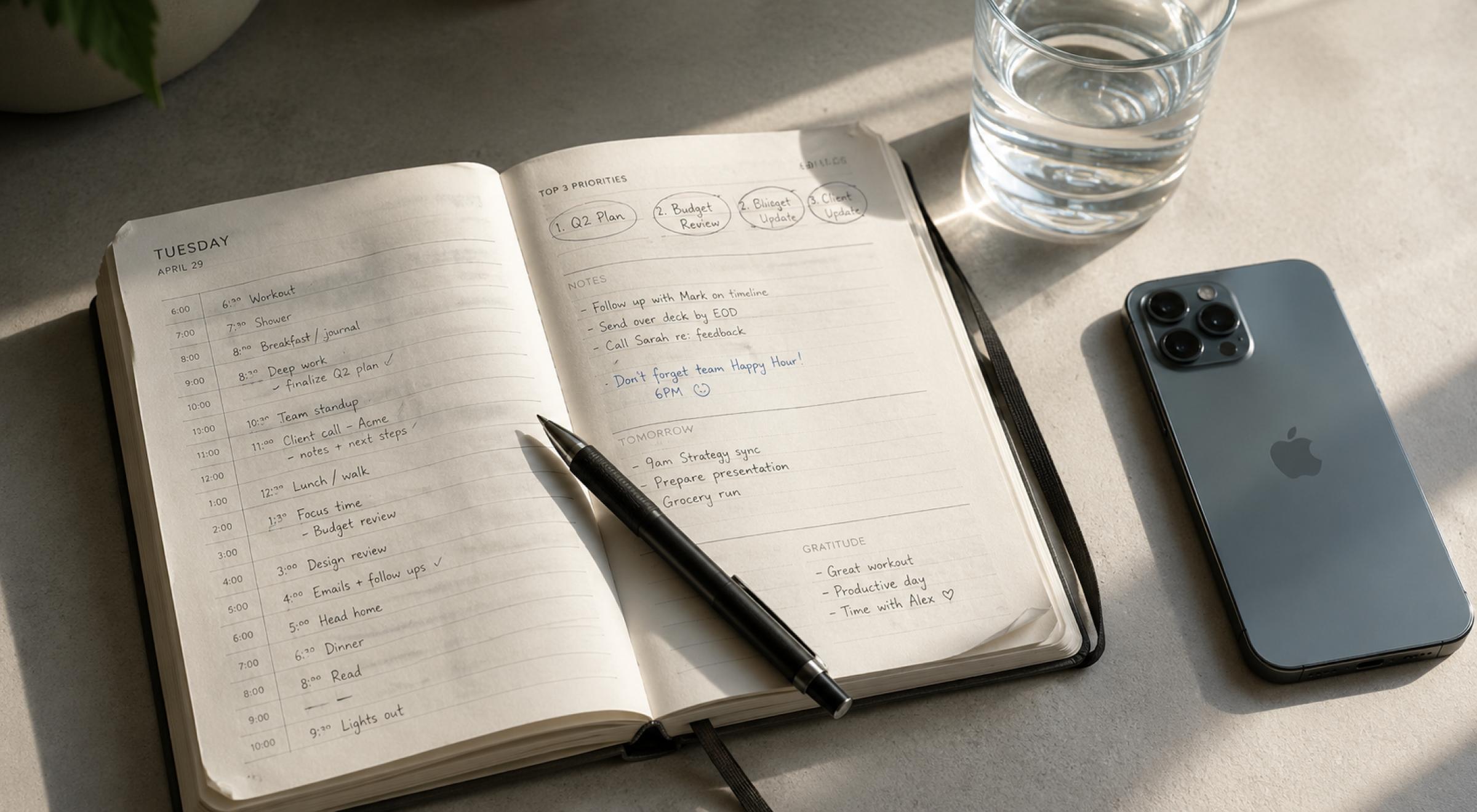

You set out to have a productive day routine, but you wake up, check your phone, and suddenly it's noon. You've been busy all morning, but your most important tasks are still untouched. It feels like you're running on a treadmill that never stops — exhausting, but going nowhere. This is the busy trap that many professionals fall into every single day.
At Headway, we've spent years analyzing the world's top productivity systems to help millions of people reclaim their time. By distilling the core insights from thousands of bestsellers into bite-sized summaries, we've identified the exact patterns that high achievers use to stay focused. Productivity isn't just about working harder. Often, it is simply a matter of better timing.
By building a consistent system, you can stop reacting to your notifications and start owning your schedule. This guide breaks down exactly how to build a productive day routine that supports your focus and protects your energy levels.
📘 Download Headway and start reclaiming your focus today.
Quick answer: What is the best productive day routine?
A productive day routine is a structured sequence of habits — divided into a mindful morning, a focused deep-work block, and a reflective evening — designed to manage energy rather than time. Key elements include early hydration, prioritizing most important tasks (MITs) first, and intentional learning breaks. By aligning your hardest work with your peak energy levels, you can achieve more in fewer hours while maintaining your well-being.
The science of energy management
Most people think productivity is a matter of time management. However, your brain has a limited amount of fuel for decision-making and focus. Science shows that we follow circadian rhythms — internal clocks that dictate when we are alert or sleepy. If you try to do deep work when your brain is in a dip, you'll end up in a cycle of procrastination.
Managing your workday based on these rhythms helps you streamline your efforts. Instead of forcing yourself to be a morning person if you aren't, you can adapt your daily routine to your biological peaks. This approach helps you avoid burnout and maintain a healthy work-life balance. Understanding your chronotype — whether you are a lion, bear, wolf, or dolphin — is the most important thing you can do to optimize your schedule.
1. Prepare the night before
A truly productive morning routine starts the previous evening, while you are still in bed. If you wake up and have to decide what to wear or what to eat, you are already wasting your limited decision-making energy. You want to clear the path for your future self so you can start the next day with total clarity.
Spend time every evening setting out your clothes and packing your bag. Write down your to-do list for the next day, highlighting the three most important things you need to accomplish. This simple act of prioritizing tasks before you sleep reduces anxiety and helps you drift off faster. When you know exactly what the morning holds, you eliminate the friction that often leads to doom scrolling in bed.
In 'Manage Your Day-to-Day', Jocelyn K. Glei shows you how to build a routine that actually protects your creative energy. They argue that your ability to produce great work depends on how well you guard your schedule from the noise of the modern world. By setting these boundaries the night before, you ensure your focus stays sharp when you sit down to work.
2. Prioritize your hours of sleep
You cannot build a productive day routine on a foundation of exhaustion. Research consistently shows that getting seven to nine hours of sleep is non-negotiable for cognitive function. When you skip sleep, your brain's ability to focus and solve problems drops significantly, making even simple tasks feel like a struggle.
Create a wind-down ritual at the end of the day to signal to your brain that it's time for rest. Turn off social media and silence your notifications at least an hour before bed. This prevents the blue light from your screen from messing with your melatonin levels, ensuring you wake up feeling refreshed and ready for an early morning start. Quality rest is a form of self-care that pays dividends in your concentration the following afternoon.
3. Start with hydration: The simplest way to clear your morning brain fog
After several hours of sleep, your body is naturally dehydrated. Most people reach for a cup of coffee the second they hit the floor, but that can actually lead to a mid-morning crash. Your brain needs water to function at its best, so your first habit should be simple: drinking water.

Fuel your morning productivity with healthy habits; get your plan.
Try to drink a full glass of water before you touch your caffeine. This small act of hydration wakes up your metabolism and clears the brain fog that often follows a long night of rest. It's a low-effort way to boost your energy levels before you even start your morning routine for a productive day. Some people find that adding a pinch of sea salt or a squeeze of lemon makes this ritual feel more like a wellness practice.
In 'Own the Day, Own Your Life', Aubrey Marcus provides a comprehensive guide to optimizing every aspect of your day. He suggests that your waking practices, starting with proper hydration and light, set the tone for your entire success. When you own these first few moments, you gain the momentum needed to own the rest of your life.
This book offers actionable steps to improve your work productivity, eating, and training habits. Marcus explains how to align your physical needs with your professional goals to achieve peak performance. By following these steps, you can create a morning routine that supports both your body and your mind for a productive day.
4. Feed your mind with cognitive fuel
Your brain needs high-quality input to produce high-quality output. Many people waste their morning hours scrolling through negative news or social media. This puts your brain in a reactive, anxious state before you've even started your workday. Instead, use this time for intentional growth.
This is where the Headway app becomes your perfect companion. While you're brushing your teeth or making breakfast, you can listen to 15-minute summaries of bestselling books like 'Atomic Habits' or 'Deep Work'. This input shift ensures you start your day with fresh ideas and motivation, turning dead time into a productive morning routine. Instead of passively listening to random podcasts, you are actively downloading the wisdom of world-class experts.
Feeding your mind early in the day acts as a cognitive warm-up. Just as athletes stretch before a game, you need to prime your brain for deep thinking. By consuming curated, high-value content, you set a standard for the information you will interact with for the rest of the workday.
5. Movement and physical activity: How five minutes can reset your entire day
You don't need to run a marathon to see the benefits of morning exercise. A quick workout or a short yoga session is enough to get your blood flowing and release endorphins. Physical activity in the morning increases the oxygen flow to your brain, which directly improves your ability to focus on tasks later.
If you aren't a fan of intense gym sessions, even five minutes of deep breathing or a walk around the block can work wonders. The goal is to move your body and wake up your senses. This habit helps you maintain high energy levels throughout the rest of the day, making it a staple in any best morning routine for a productive day. Movement acts as a natural reset button for your nervous system.
6. Eat a healthy breakfast: Fuel your brain before your most important tasks
Your first meal of the day provides the glucose your brain needs to power through your most important tasks. If you grab a sugary pastry, you'll likely feel great for an hour and then hit a wall. Focus on a healthy breakfast that aligns with World Health Organization (WHO) standards by prioritizing whole grains, fruits, and vegetables.
Think about nutrient-dense options like whole-grain oats, eggs with spinach, or Greek yogurt topped with unsalted nuts and fresh fruit. The WHO recommends keeping free sugar and salt intake low to protect your long-term health. If you're working from home, it's even easier to prep a meal that supports your wellness goals. Avoiding a sugar-heavy start prevents procrastination and helps you stay locked into your work until lunch. Sustained energy is the secret weapon of anyone who consistently has a productive day.
7. Optimize your workspace: A two-minute reset that unlocks deep focus
A cluttered desk leads to a cluttered mind. Before you sit down to work, spend two minutes streamlining your workspace. Remove anything that isn't related to the task at hand. This reduces visual distractions and makes it easier to enter a state of deep work.

Unlock peak productivity with a structured daily routine; get started now.
If you're working from home, having a dedicated workspace helps you mentally separate your professional life from your personal life. This physical boundary is a small hack that significantly improves your work-life balance. When you leave that space at the end of the day, your brain knows it's time to relax. Even a small corner of a room can become a focus zone if you treat it with respect.
8. Tackle your most important tasks (MITs) first
The most important thing you can do for your productivity is to do your hardest task when your focus is highest. For most people, this is in the early morning. Don't start your day by answering emails or checking Slack. Those are shallow tasks that eat up your best mental energy.
Follow the 'Eat That Frog!' method by Brian Tracy — do the one thing you're most likely to procrastinate on first. Once your most important tasks are done, you'll feel a sense of accomplishment that carries you through the rest of the day. This is the core of any successful daily routine. By the time lunch rolls around, you've already won the day.
Craig Ballantyne's 'The Perfect Day Formula' focuses heavily on this type of time management and goal-setting. He provides specific techniques to help you create a daily routine that maximizes your potential. By identifying your big rocks early, you ensure that your most meaningful work doesn't get pushed aside by busywork.
This book teaches you how to control your day so that you can ultimately control your life. Ballantyne's framework is designed to help you avoid the common pitfalls that lead to a wasted workday. Following his advice ensures that your daily routine examples are built on a foundation of discipline and success.
9. Use the Pomodoro technique to protect your productive day routine
Our brains aren't meant to focus for eight hours straight. To maintain a productive day routine, you need to work in sprints. The Pomodoro technique involves working for 25 minutes, then taking a 5-minute break. This keeps your mind fresh and prevents the fatigue that leads to scrolling through social media.

Recharge your daily productivity with mindful movement; get personalized insights.
During your breaks, step away from your screen. Stretch, grab another glass of water, or do some deep breathing. These micro-breaks are essential for long-term well-being and help you stay productive without burning out by 3 PM. It's much easier to stay disciplined when you know a break is only twenty minutes away.



10. Limit digital distractions: Take back the 23 minutes every ping is stealing
Notifications are the enemy of focus. Every time your phone pings, it takes your brain an average of 23 minutes to return to a state of deep concentration. To have a productive morning routine, you must be ruthless with your digital environment.
Put your phone in another room or use "Do Not Disturb" mode during your deep work blocks. If you find yourself hitting the snooze button on your productivity, try using apps that block distracting websites. Protecting your focus is the best self-care you can practice during the workday. When you control your tech, you control your output.
In 'Make Time', Jake Knapp and John Zeratsky deliver a step-by-step framework to help you reclaim your time from these digital distractions. They explain how to choose a single highlight for each day to ensure you make progress on what matters most. This intentionality helps you move away from the infinite pools of social media and news.
11. Daily routine examples: Productive day schedules
To help you visualize how these habits fit together, here are three daily routine examples for different lifestyles:
| Time | The remote professional | The busy parent | The creative night owl |
|---|---|---|---|
7:00 AM | Hydration & Headway Summary | Quick Workout & Kids | Sleep |
8:30 AM | Deep Work (MITs) | School Drop-off / Emails | Hydration & Movement |
1:00 PM | Healthy Lunch & Walk | Focused Work Block | Most Important Tasks |
4:00 PM | Shallow Tasks / Meetings | Errands / Admin | Creative Deep Work |
8:00 PM | Night Before Prep | Family Time / Relaxation | Headway Audio / Learning |
These daily routine examples of a productive day show that flexibility is key. You don't have to follow a rigid script; you just have to respect your energy peaks. Whether you're an early bird or a night owl, the sequence of prepare, focus, and reflect remains the same.
📘 Build flexible routines with Headway.
12. Reflect at the end of the day: The five-minute habit that compounds over weeks
Before you close your laptop, take five minutes to review what you've done. Did you finish your MITs? What went well, and what got in the way? This reflection helps you learn from your mistakes and adjust your daily routine for better results tomorrow.
End your workday with a clear signal that you are off. This might be a quick workout, a yoga session, or simply writing down your wins in a journal. Positive affirmations about your progress can boost your confidence and help you enjoy your evening without the guilt of unfinished work. Taking this time to shut down ensures that you don't carry work stress into your personal life.
In 'How to Have a Good Day', Caroline Webb draws from behavioral science and neuroscience to help you transform your workday. She provides practical strategies for managing your time effectively and dealing with the inevitable setbacks that occur. By applying these scientific insights, you can turn even the most challenging days into productive experiences.
Productivity apps for morning routines that actually work
Technology can either be a distraction or a powerful tool. If you want to streamline your habits, these productivity apps for morning routines are worth checking out:
Nibble: Great for quick, interactive lessons on diverse topics. It helps you stay curious and mentally sharp with five-minute learning sessions that fit perfectly into small gaps in your day.
Todoist: Perfect for prioritizing tasks and managing your to-do list with a clean, simple interface.
Forest: A fun way to stay off social media. You plant a digital tree that grows as long as you stay off your phone.
Sleep Cycle: Helps you track your sleep hours and wakes you up during your lightest sleep phase, so you don't feel groggy.
Headway: Best for cognitive input. It gives you the key insights from the world's best self-growth books in 15 minutes, so you can learn while you commute or cook.
Ready to own your most productive day? Download Headway and start in 15 minutes
Building a productive day routine is a marathon, not a sprint. You don't need to be perfect from day one. The goal is to create a system that supports your goals and makes your life easier. By focusing on your energy and choosing high-quality inputs like Headway, you can transform your workday into a source of growth rather than stress.
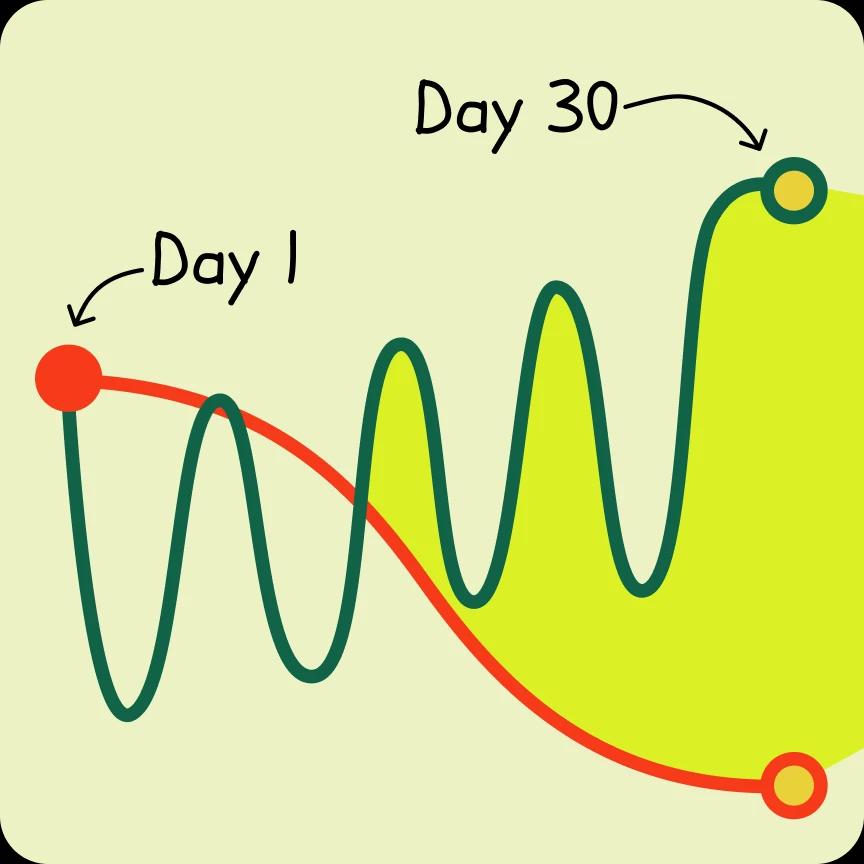
See how far consistent learning can take you.
Get actionable insights from your very first 15-minute summary.
Get the planReady to start your first 15-minute growth session? Download the Headway app and find a summary that matches your goals today. Whether you want to master your time or improve your mindset, the right ideas are only a few taps away. Your most productive day is waiting for you to design it.
FAQs about your productive day routine
What are the best productivity apps for morning routines in 2026?
The best productivity apps for morning routines include Headway for daily learning, Todoist for organizing your to-do list, and Forest for staying focused. Using a combination of these tools helps you manage both your schedule and your mental growth without feeling overwhelmed.
Can you share some daily routine examples productive day?
Sure! Popular daily routine examples include the 90/90/1 rule, where you spend the first 90 minutes of your workday on your top goal. Another example is the Time Blocking method, where you assign specific tasks to every hour of your day to avoid multitasking and distractions. Both methods help you protect your most valuable mental energy.
Is a morning routine for productive day possible for night owls?
Yes, a morning routine for a productive day is possible for everyone. It's not about the time you wake up, but what you do after you wake. If you start your day at 10 AM, you can still follow the same sequence: hydrate, move, learn, and then tackle your hardest work first. Aligning your schedule with your natural energy is more important than waking up at dawn.
How can I make my morning routine for a productive day stick?
Start small. Don't try to change ten habits at once. Pick one thing, like drinking a glass of water or listening to a Headway summary, and do it consistently for a week before adding more. Success comes from small wins rather than massive, unsustainable overhauls.