Self-growth
 Apps & Digital Tools
 Business & Career
 Success
 Growth Tools
 Psychology
 Communication
 Relationships

Motivation vs discipline isn't a competition. It's a partnership where motivation provides the "why" and discipline provides the "how."
Most of us have been there: it's the first week of a new year, and you're fired up about a new habit, only to find that three weeks later, the fire has completely gone out. The real secret to sustainable success isn't finding more motivation — it's understanding that the motivation vs discipline debate is the wrong way to frame the problem.
You need both to reach your full potential. Motivation is the spark that gets you off the couch, while self-discipline is the system that keeps you moving when the couch looks tempting again. Here, we'll break down how to use both so you can follow through this time.
📘 If you're ready to level up, Headway offers bite-sized insights from the world's best productivity books to help you build a daily routine that sticks.

Motivation vs discipline — quick answer
What is motivation? The emotional drive or feeling of wanting to act, often fueled by dopamine and a growth mindset.
What is discipline? The practice of taking action based on a decision rather than a mood, even when you don't feel like it.
The big difference: Motivation is a passenger that comes and goes; discipline is the driver that stays the course.
Which matters more? Self-discipline is better for long-term weight loss or career growth, while motivation is great for starting a New Year's resolution.
How they work: Motivation gets you to the starting line, but discipline carries you across the finish line.
The bottom line: Don't choose one over the other. Use motivation to ignite your goals and discipline to turn them into a daily routine.
What is motivation, and what is discipline?
Looking at motivation vs discipline psychology, you see two very different mental engines. Motivation is a state of emotional readiness. It's that surge of energy you get after watching an inspiring video or listening to a great podcast.
That drive usually comes in two flavors: intrinsic motivation, fueled by your internal values and genuine interests, and extrinsic motivation, driven by external rewards like money or social approval.
Both are useful, but here's the thing: motivation is a feeling. And just like happiness or boredom, feelings are fleeting. You can't wait to feel like it to get work done, or you'll spend your life waiting.
Discipline, on the other hand, is the practice of showing up regardless of your mood. It's the decision to make certain actions non-negotiable. People often confuse self-discipline vs motivation with pure willpower, but willpower is a limited resource that runs out by 5 PM.
Real discipline isn't about white-knuckling your way through a task; it's about building systems. It's the work ethic that turns a goal into a series of small steps that you do automatically. While motivation depends on how you feel, discipline depends on what you have already decided to do. One is a fleeting spark, while the other is the steady flame that keeps the engine running.
Motivation vs discipline: Why the debate misses the point
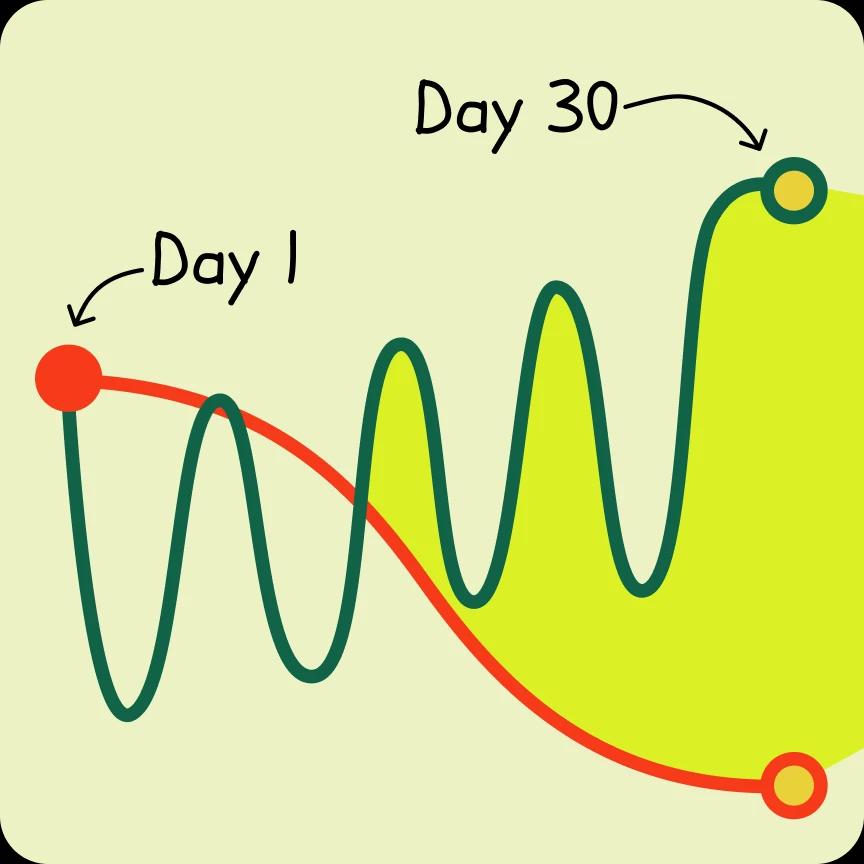
Most people treat motivation vs discipline like they are two boxers in a ring, but in reality, they work hand-in-hand to get you to sustainable success. If you want to actually achieve goals, stop looking for a winner and start looking at how they pass the baton. Think of it as a three-stage handoff that turns a wild idea into a daily routine.

1. The spark (motivation): This is that initial boost you get. Maybe you saw a successful startup founder's post on LinkedIn, or a growth mindset clip from a podcast gave you a jolt of dopamine. In this case, motivation is doing exactly what it was designed to do: it provides the energy needed to start. It's great for the short-term, but it's not meant to last forever. Use this energy to set your systems in place while you actually feel like doing it.
2. The grind (discipline): A few weeks in, the excitement dips. Here's where most people quit because they think they've lost their motivation. In reality, they just need to switch gears. Discipline is what makes you follow through when you'd rather be scrolling on social media. You do the small steps not because you are inspired, but because you made a pre-commitment. You aren't finding time; you're honoring a schedule.
3. The automatic (habit): This is the destination. After enough reps powered by discipline, the behavior becomes a part of who you are. It stops being a battle of willpower and just becomes "what I do." Books like 'Atomic Habits' by James Clear, which you can find summarized on Headway, perfectly explain this loop. Motivation starts the fire, but discipline keeps the wood on the pile until the fire becomes a self-sustaining habit.
📘 Willpower is limited, but knowledge is a superpower. Get the playbooks for habit-building and discipline from the experts on Headway.
Don't write off motivation: when it's exactly what you need
The internet has become obsessed with the "discipline over everything" mantra, but let's not throw the baby out with the bathwater. There are times when looking into the motivation vs discipline psychology shows that a boost of inspiration is exactly what you need. If you're trying to motivate someone or even yourself after a massive setback, pure grind can sometimes lead to burnout rather than progress.
Motivation is your compass. While discipline keeps your feet moving, intrinsic motivation reminds you why you're walking in that direction in the first place. It's important at the very beginning of a new habit or a weight loss journey, before you've built up any discipline muscles.
It's also what helps you achieve goals that actually feel meaningful, rather than just checking boxes on a list. Self-discipline is the engine, but motivation is the fuel that makes the effort worth it. Without it, you might reach the finish line only to realize you ran the wrong race.



How to build motivation and discipline that actually last
If you've spent the last few hours doomscrolling or wasting your evenings wondering why you haven't started your project yet, you don't need another hustle quote. You need a practical way to reset. Maybe you've seen those "how to disappear for 6 months and change your life" posts on social media. They sound exciting, but they only work if you have a plan to beat procrastination when the initial hype dies down.
Even if you use ChatGPT to write your workout plan or your startup pitch, you are still the one who has to show up and do the work. To make sure you actually hit your full potential, you need to treat these two like different tools in a toolkit. Here's how to sharpen both.

To rekindle motivation:
Reconnect with your "why": Write down why this goal matters to you personally. Intrinsic motivation, doing it because it feels right, is always stronger than extrinsic motivation, doing it for a paycheck or to look good on LinkedIn.
Reduce the scope: If the goal feels too big, you'll naturally avoid it. Break it into small steps. The goal isn't "write a book." It's to "write one paragraph." Starting creates its own momentum.
Change the input: Sometimes you just need a fresh perspective. Listen to a new podcast, read a different book, or have a conversation with someone who has a growth mindset. New ideas often trigger that dopamine hit you need to get moving again.
Celebrate the small wins: Don't wait for the new year or the final result to feel good. Acknowledge that you showed up today. What gets rewarded gets repeated.
To build discipline:
Design your environment: Stop relying on willpower. If you want to stop scrolling, put your phone in another room. If you want to go to the gym, put your shoes by the bed. Make the right choice, the easiest choice.
Remove the decision: Make your daily routine non-negotiable. If you have to decide every morning whether or not to work out, you've already lost. Pre-decide the time and the place so there's no room for debate.
The two-minute rule: If a new habit takes less than two minutes, just do it. It's a great way to bypass that initial resistance. Once you start, you'll usually find the energy to continue.
Track your consistency: Use a simple calendar or an app to track your streak. Seeing a visual record of your work ethic makes it harder to break the chain. What gets measured gets managed.
For anyone who wants to go deeper into the psychology of motivation vs discipline, there are some incredible resources out there. Titles by David Goggins on self-discipline and Charles Duhigg on the science of habits are both worth your time.
You can find all these books summarized on Headway, which is perfect if you're busy but still want to absorb world-class strategies for sustainable success.
See how far consistent learning can take you.
Get actionable insights from your very first 15-minute summary.
Get the planUse Headway to elevate both motivation and discipline!
The motivation vs discipline debate isn't really a fight. It's a question of what stage of the journey you're in. At the start or when you've hit a wall, look for motivation. It's the spark that reminds you why the struggle is worth it. But in the middle, you have to lean on your self-discipline.
You don't need a new year to start over. You just need to decide that your goals are more important than your current mood. Long-term, your goal is to build habits that eventually remove the need for both. If you want to find more ways to master your mind and time, Headway's book summaries on discipline and habit-building are a great next step.
They give you the core ideas in minutes, whether you prefer to read or listen on the go. Stop waiting for the perfect feeling and start making sustainable success your new reality.
📘 Don't leave your growth to chance. Build the self-discipline of a high-achiever with 15-minute book summaries on Headway.
FAQs about motivation vs discipline
What is the difference between motivation and discipline?
Motivation is that sudden rush of energy you feel after watching an inspiring video or setting a new goal. It's an emotional spark. But discipline is a repetitive behavior. It's the choice to show up on a rainy Tuesday when that initial spark has completely vanished. One is a fleeting emotion; the other is a rock-solid habit.
Does discipline beat motivation?
In the long run, yes. Motivation is great for the sprint, but discipline wins the marathon every single time. You can't build a business or lose weight if you only work when you feel like it. Discipline creates the consistency needed for results. It's the safety net that catches you whenever your motivation takes a day off.
Is discipline more effective than motivation?
It's more effective because it's reliable. You wouldn't trust a car that only started when the sun was out, and you shouldn't trust motivation to reach your biggest goals. Discipline removes the "should I?" from the equation entirely. By turning your actions into a daily routine, you make progress predictable rather than leaving it to chance.
Can you be disciplined without motivation?
You definitely can, and that's the whole point of being a high performer. Discipline is the ability to do the work, specifically when you have zero motivation. It's about honoring a commitment you made to yourself in the past. When you stop waiting to feel right, you open up a level of productivity that most people never reach.
What is more powerful than discipline?
Habits are the ultimate goal. While discipline still requires a bit of effort to keep the engine running, a habit is completely automatic. It's the stage where you stop thinking about the work and just do it. And that's why Headway focuses on small, daily microlearning sessions: turning the hard work of discipline into an effortless, lifelong growth habit.