Self-growth
 Apps & Digital Tools
 Business & Career
 Success
 Growth Tools
 Psychology
 Communication
 Relationships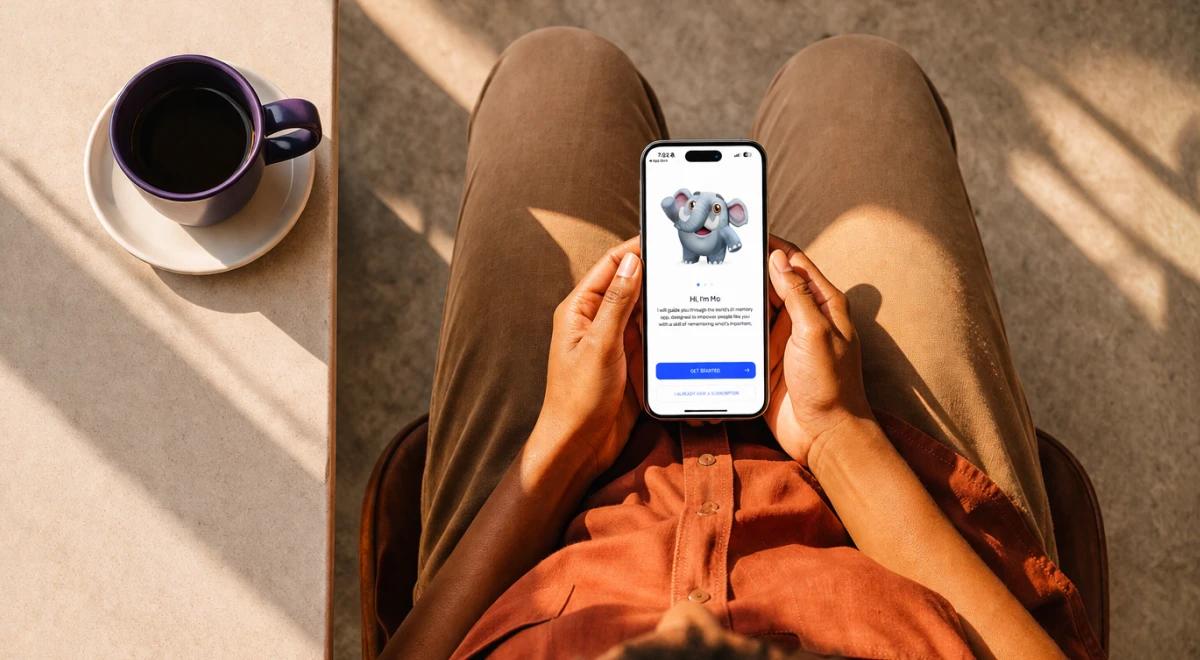

Have you ever walked into a room and completely forgotten why you were there? Or met someone new, only to forget their name seconds later? Whether you're looking for memory exercises for names and faces, or just a way to stop forgetting what you read, the underlying skill is the same: better encoding.
In a world where we consume more information than ever, the real challenge isn't access. It's retention. We read, watch, and listen constantly, yet most of it slips away before we can actually use it. According to estimates by the Salk Institute, the human brain has a memory capacity of at least one petabyte — roughly ten times more than researchers previously believed. So the problem isn't insufficient storage. It's how we encode information going in and retrieve it later.
Some tools focus on solving this by training your memory. Others focus on helping you learn the right things in the first place, in a way that fits into your daily life.
Headway, for example, has built its entire experience around helping people grow in just 15 minutes a day, turning complex nonfiction ideas into structured, actionable insights you can actually retain and apply.

But what if you want to go one step further, not just learn faster, but remember better?
That's where MemoryOS comes in.
In this MemoryOS review, we'll break down how the app works, what makes it different, and whether it truly helps you build a memory that keeps up with your ambition.
Quick answer: Is MemoryOS worth it?
MemoryOS is worth it if you want to master the mind palace technique through a gamified, 3D experience. While traditional apps focus on reflex games, the MemoryOS app teaches actual memorization skills. It offers a free version, but the MemoryOS Student Plan (around $4.49/mo billed annually, or ~$79.99 for lifetime access) is the best value for long-term skill building and better retention.
What is MemoryOS?
Let's look at what MemoryOS actually is before getting into the price. It isn't just another memory exercises app or a collection of puzzles. It's an ed-tech platform teaching memorization methods for adults that have existed for thousands of years, updated for the smartphone era.
The World Memory Champion's touch: The app was co-founded by Jonas von Essen, a two-time World Memory Champion. He didn't start with a gifted brain. He used these exact memory skills to go from a regular student to someone who can memorize 100,000 digits of Pi.
Virtual mind palaces: The app's core uses virtual mind palaces — some of the most effective visual memory training exercises ever developed. Instead of you having to imagine a house in your head, the app provides a 3D environment built on the Unity engine, showing you how to use spatial memory for learning almost anything: speeches, vocabulary, or lists.
Crowdfunded success: This wasn't a quiet launch. It became the most successful Kickstarter project in the history of memory training, proving that people are hungry for a better memory.
Scientific backing: The methods aren't just tricks. They rely on loci (the method of places) and mnemonics to help your brain encode information more effectively.
How does MemoryOS work?
When you first open the MemoryOS app, you aren't thrown into a math test. Instead, you're greeted by Jonas von Essen, who walks you through bite-sized lessons on memory techniques for studying faster. The goal is to move information from your short-term scratchpad into your long-term memory.
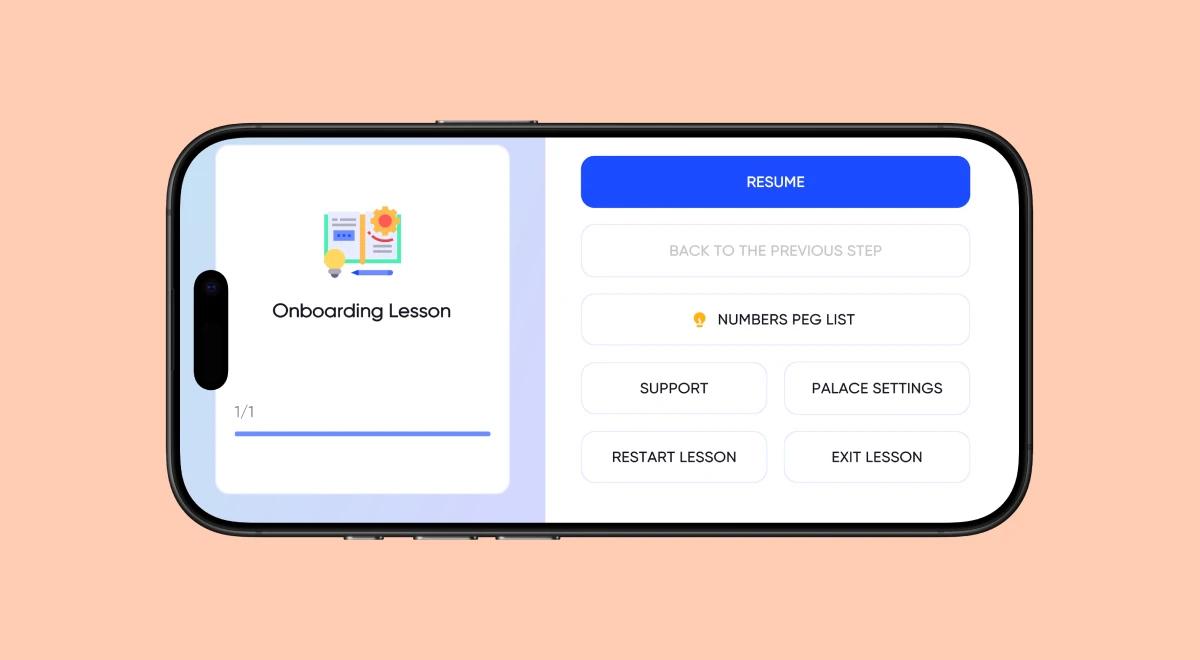
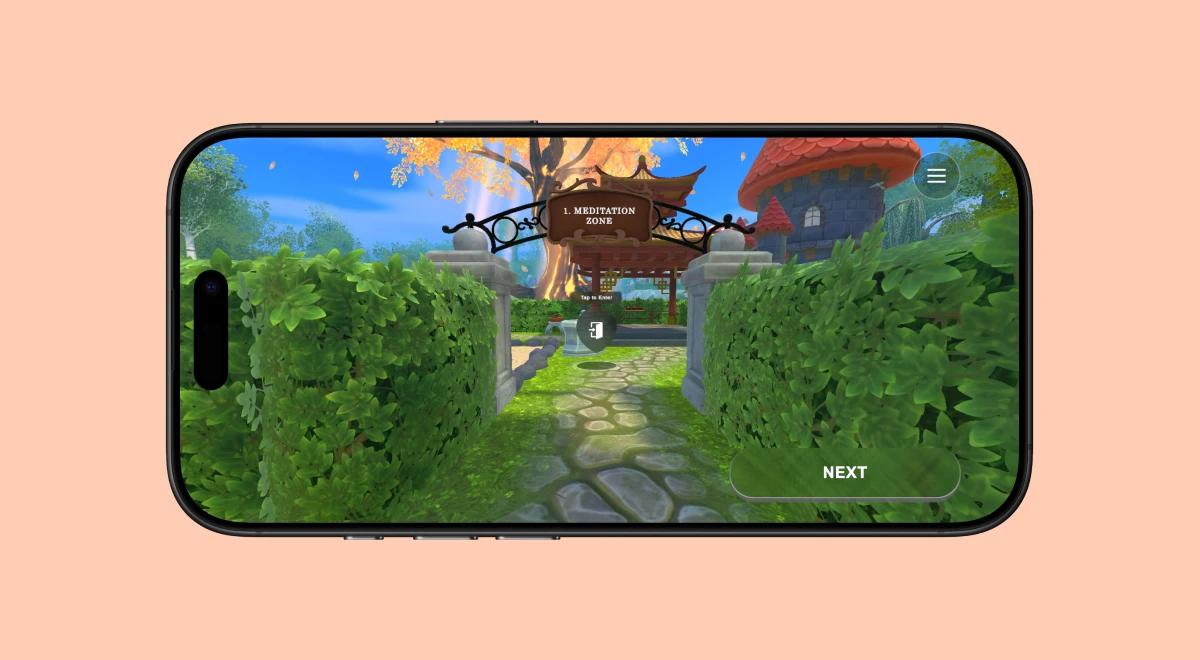

Step-by-step training: You start with simple memorization tasks, like a grocery list, using the loci method. You walk through a 3D room on your iPhone or Android device and place items in specific spots.
One-tap navigation: A recent 2026 update introduced "One-Tap" mode, making the app one of the more approachable options for digital memory training for beginners. Navigating virtual mind palaces is straightforward, even if you've never played a video game.
Spaced repetition: If you've been wondering how to train long-term recall, this is the mechanism that actually works. The app uses spaced repetition, reminding you to review your palaces just as you're about to forget them.
Gamification: Making memory improvement into a series of levels keeps the whole thing more engaging. You earn points, maintain streaks, and watch your Memory Quotient rise.
MemoryOS app pricing: A detailed breakdown
One of the most frequent questions is about the cost of MemoryOS. While you can download the app for free on the App Store or Google Play, the real power lies in the premium tiers. Here is a breakdown of the MemoryOS pricing in 2026.



Monthly vs annual plans
If you prefer a subscription, you can choose based on your commitment level. Most plans include a free trial for the first week, where you can cancel anytime.
Student Plan: It's $5.99 a month, or $4.49 a month ($49.99 total) with the annual option. It includes 140 loci, 52 micro-lessons, and 11 lifelong skills.
Essential Plan: It's $17.99 a month, or $8.49 a month ($99.99 total) if you commit to a year. You get 280 loci, 93 lessons, and 18 skills.
Expert Plan: It's $29.99 a month, or $14.99 a month ($179.99 total) for a year. This unlocks 660 loci, 126 lessons, and 28 memory skills.
Lifetime Options
The MemoryOS lifetime access price is often the best deal for long-term users. You can frequently find the Student Lifetime deal on sites like StackSocial for around $79.99. That's a one-time payment with no recurring charges.
| Feature | Student Plan | Essential Plan | Expert Plan |
|---|---|---|---|
Loci for storage | 140 loci | 280 loci | 660 loci |
Micro-lessons | 52 lessons | 93 lessons | 126 lessons |
Memory skills | 11 skills | 18 skills | 28 skills |
Ad immunity | Included | ||
Infinite hearts | Included | ||
In-app economy: Hearts and loci coins
To keep the learning gamified, the app uses a Heart system. Hearts allow you to progress through lessons and practice without waiting.
10 Hearts: $0.99
25 Hearts: $1.99 (+5 bonus)
100 Hearts: $7.99 (+29 bonus)
Additionally, users can purchase Loci Coins to unlock specific rooms or expand their mental storage without upgrading their entire plan. This flexibility makes the MemoryOS app accessible regardless of your budget.
MemoryOS app user reviews: Pros and cons
To give you an honest MemoryOS app review, we analyzed hundreds of user reviews from across the web. As of April 2026, the app currently holds a 4.9 rating on the App Store and a 4.8 rating on Google Play. That kind of consistency across platforms is hard to argue with.
Pros
Proven results: Many MemoryOS app reviews report a significant boost in memory recall after just 40 minutes of training.
ADHD-friendly: The app's high-engagement, visual nature makes it a great option for people with ADHD who struggle with traditional rote memorization.
Relatable coaching: Users consistently praise Jonas for being a funny and non-judgmental teacher, making the complex loci method feel accessible.
No experience needed: As a beginner-friendly memory app, MemoryOS starts at zero even if you think you have a bad memory, gradually building practical memory skills for daily life.
Cons
Cancellation hurdles: Some MemoryOS app user reviews on Reddit mention that the trial cancellation process can be confusing if you don't use the direct App Store settings.
Consistency is key: If you don't use the MemoryOS system regularly, the loci you've built can start to fade. It requires a daily habit.
Mobile-only: As of 2026, the MemoryOS app remains heavily optimized for mobile. Users looking for a robust desktop experience might find it lacking.
MemoryOS vs other brain training apps
How does this stack up against the competition? Most memory test games for adults — think Lumosity or Elevate — focus on brain agility. It's a treadmill for your reflexes.
MemoryOS is more like a toolbox. It doesn't just make you faster at clicking buttons. It gives you the actual memory techniques to retain a speech, learn a new language, or memorize the key points from a book. If you're looking for memory improvement that helps you in real-world scenarios, like remembering your boss's kids' names, MemoryOS is the clear winner.
How one Headway user turned learning into a daily habit
Building memory skills only works if you show up consistently — and that's the piece most people struggle with. Enrique García Galán, a software engineer and PhD researcher, figured out how to build a better memory routine by swapping something he was already doing every morning.
"I used to spend about 20 minutes each morning scrolling through my phone after breakfast," Enrique shared. "Social media, news feeds, random content — nothing that actually stuck with me."
Instead of adding more to his day, he redirected that same 20 minutes into Headway summaries. One year later, he's absorbed ideas from 58 book summaries, discovered titles like 'Focus' that reshaped how he thinks, and — more importantly — gained control over where his attention goes. His two-day rule keeps the habit alive: if he misses a day, he doubles up the next.
That's the anchor most memory improvement techniques for professionals are missing. Tools like MemoryOS train the encoding side; a daily learning ritual gives your brain something worth encoding in the first place.
📘 Read Enrique's full story: How I Replaced 20 Minutes of Scrolling With Daily Learning.
Master the world's best ideas with Headway
While MemoryOS helps you sharpen the way your brain stores data, you still need a way to find high-quality information worth keeping — and figure out how to remember what you learn from apps once the session ends. That's where Headway works well as a standalone personal growth tool.
Headway is a comprehensive microlearning app that distills the world's nonfiction bestsellers into 15-minute summaries. It isn't just about reading less; it's about learning more in a way that fits your actual lifestyle.
Practical insights in 15 minutes: Get the core ideas from over 2,500 titles without committing to a 400-page book. Whether you choose text or audio, every summary is designed to give you immediate value.
Personalized growth paths: After a quick quiz about your goals, the app builds a custom plan based on what you're actually working toward, whether that's leadership, productivity, or wellness.
Habit-building tools: With features like daily streaks, challenges, and spaced repetition flashcards, Headway helps you stay consistent and build on what you've already learned.
Headway gives you the ideas, and MemoryOS gives you the technique to hold onto them. Together, they help you move from passively consuming information to actually retaining it.
📘 Master microlearning habits with Headway.

Frequently asked questions about the MemoryOS app review
What is MemoryOS, and how does it help?
It's a gamified memory training app co-founded by Jonas von Essen. It uses virtual mind palaces and mnemonics to help users encode and recall information. Most MemoryOS app reviews highlight how it simplifies the ancient loci method for modern users on iPhone or Android devices.
Is MemoryOS free to use?
Yes, MemoryOS is free to download and join. The basic version offers a meaningful start, including introductory lessons and access to the initial 3D environments, with no obligation to pay. Unlocking advanced memorization skills, more complex virtual mind palaces, and the full training course requires a premium subscription.
How much does MemoryOS cost in 2026?
The cost of MemoryOS varies depending on the plan you choose. While there is a free version of MemoryOS for basic lessons, the premium features start at $4.49/mo (billed annually). Many users prefer the MemoryOS price for the lifetime student plan, which is often around $79.99. Remember to check the MemoryOS website for the most current pricing before you subscribe.
Does MemoryOS work for people with ADHD?
Many MemoryOS app user reviews suggest it does. The gamified nature of the app and the use of virtual mind palaces provide the high-stimulation environment that ADHD brains often need to stay focused during memory training and avoid the frustration of traditional memorization.
Is MemoryOS legit or just a scam?
It's highly reputable. It was the most successful Kickstarter in the memory training space and is backed by a world memory champion. With over 500,000 users and high ratings on the App Store, it's a widely recognized leader in the memory improvement app space.
Can I get a better memory in just 15 minutes a day?
Yes, the MemoryOS app is designed for short, focused lessons. Spending just 15 minutes a day on memory recall exercises and building virtual mind palaces can significantly improve your long-term memory. It fits well into a busy schedule, much like the 15-minute summaries on the Headway app.
What is the loci method, and how does it work?
The loci method is an ancient mnemonic strategy that uses spatial memory to improve recall. You mentally place vivid images of information in specific locations within a familiar environment, like your home, and create a structured path. To remember the information, you simply walk through those spots in your mind.
Has MemoryOS received any funding as an AI startup?
Yes. The company recently secured investment from institutional backers, including Angel One Fund. The funding is being used to accelerate the development of their 3D virtual mind palace technology. It's a sign that institutional investors see real potential in the memory training space, not just as a novelty but as a category worth building on.