Self-growth
 Business & Career
 Success
 Communication
 Healing
 Relationships
 Psychology
 Happiness
Key takeaways:
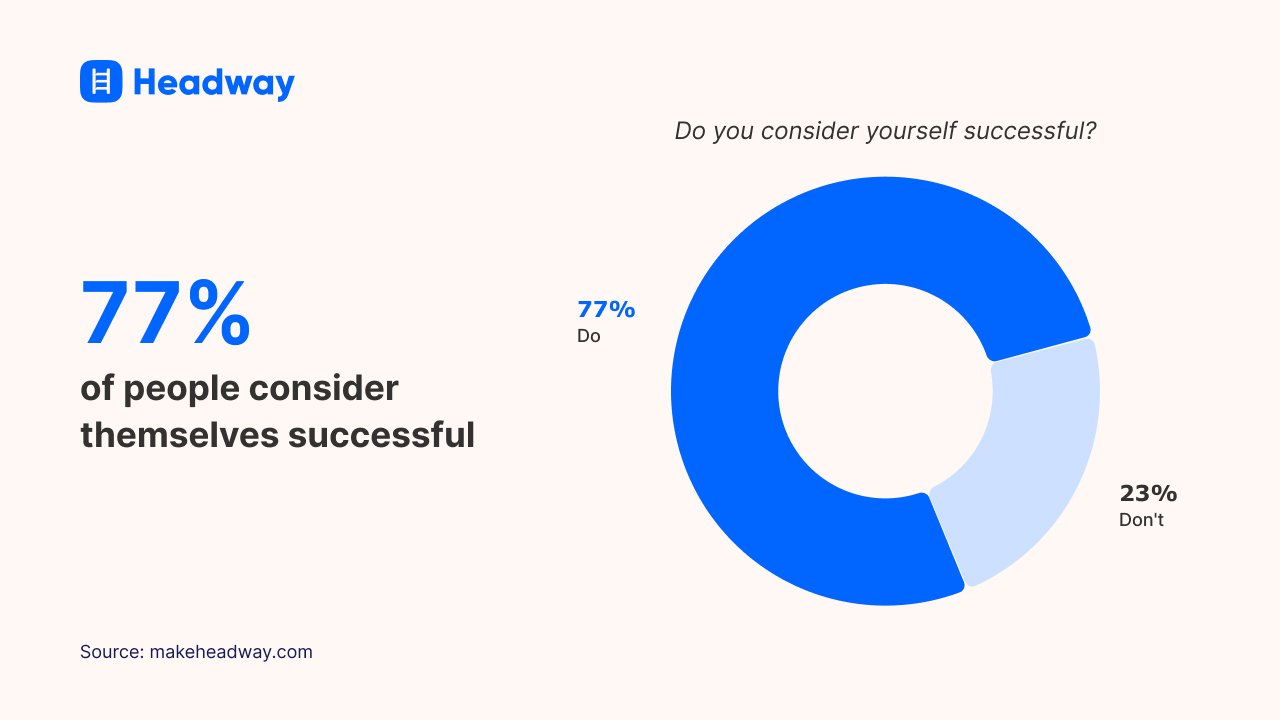
Some 81% of people feel behind others their age in at least one area of their lives. However, 77% still consider themselves to be successful.
Success statistics show 44% have given up their free time chasing goals, 37% have sacrificed sleep, and 37% have neglected their mental health. Likewise, 37% have also gone against their personal values.
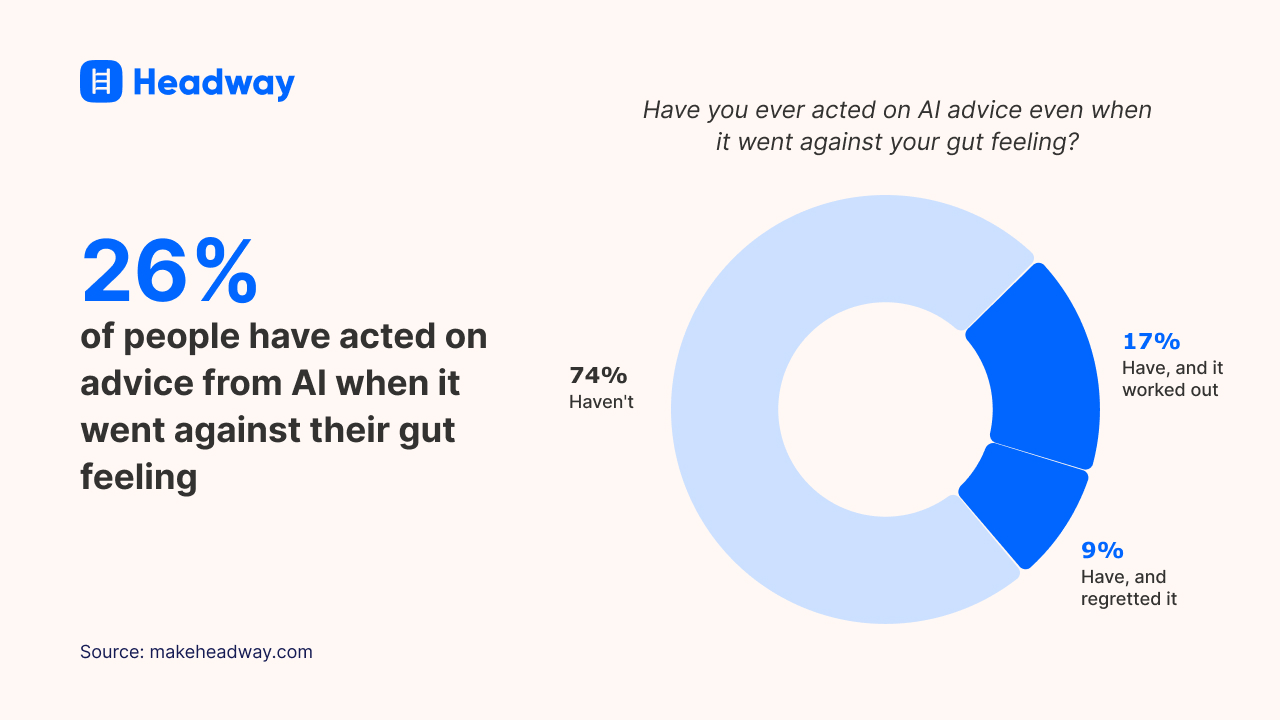
Some 60% trust their own judgment most when making major life decisions, while 51% turn to AI tools, with 26% going against their gut to follow its advice.
However, AI cannot fast-track success. According to 72%, it's steady progress and discipline that have contributed most to reaching their goals.
We all have big ambitions – earning more, starting a family, traveling the world, or mastering our craft – and we pile on plenty of pressure, often sacrificing our health, relationships, and even our values to get there as quickly as possible.
But what is success? Is it only reaching the finish line that counts, or do the small, steady signs of progress, whether five minutes of microlearning or a few pages read, mean just as much?
The Headway app surveyed 2,000 people about how they define success, the sacrifices they've made, and the strategies they're using to get there.
Measuring personal success: How successful do we really feel?
Flooded with LinkedIn career updates, Instagram wedding photos, and TikTok vacation clips, it's hard not to compare our lives to others.
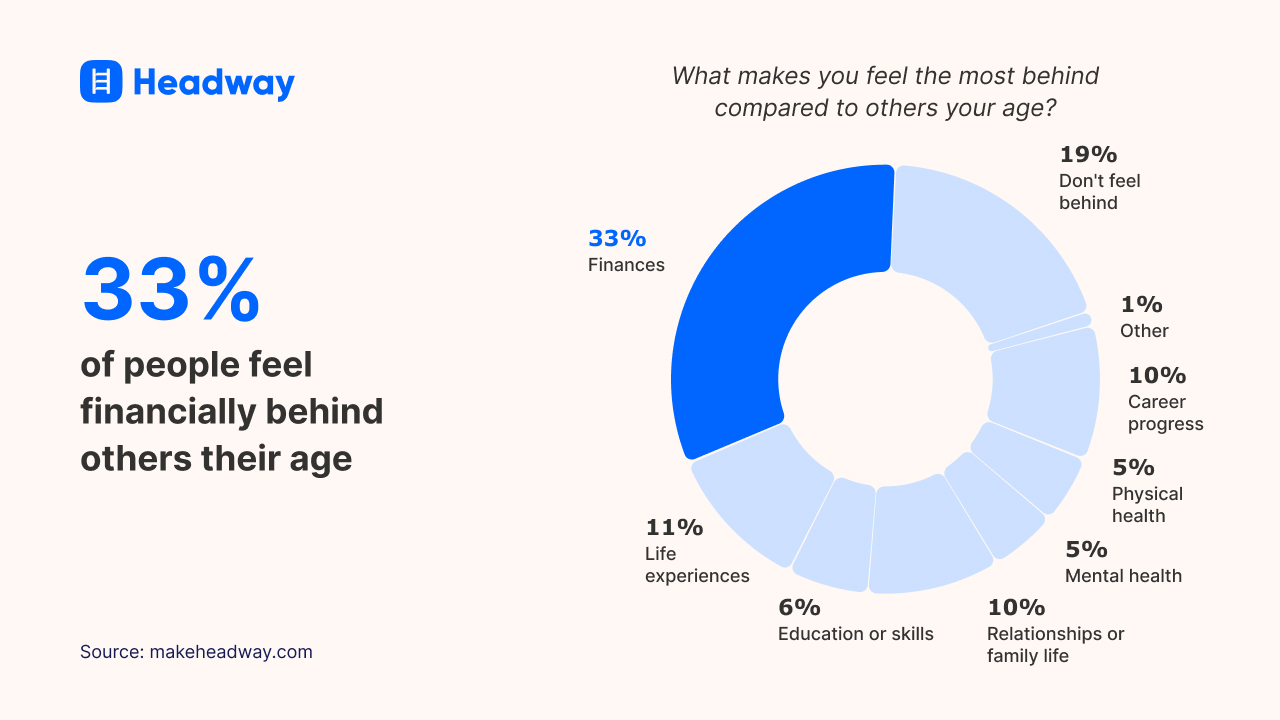
Just 19% feel like they're where they should be in all aspects of their lives, with finances (33%), life experiences (11%), relationships (10%), and career progress (10%) the areas where we feel most behind our peers.
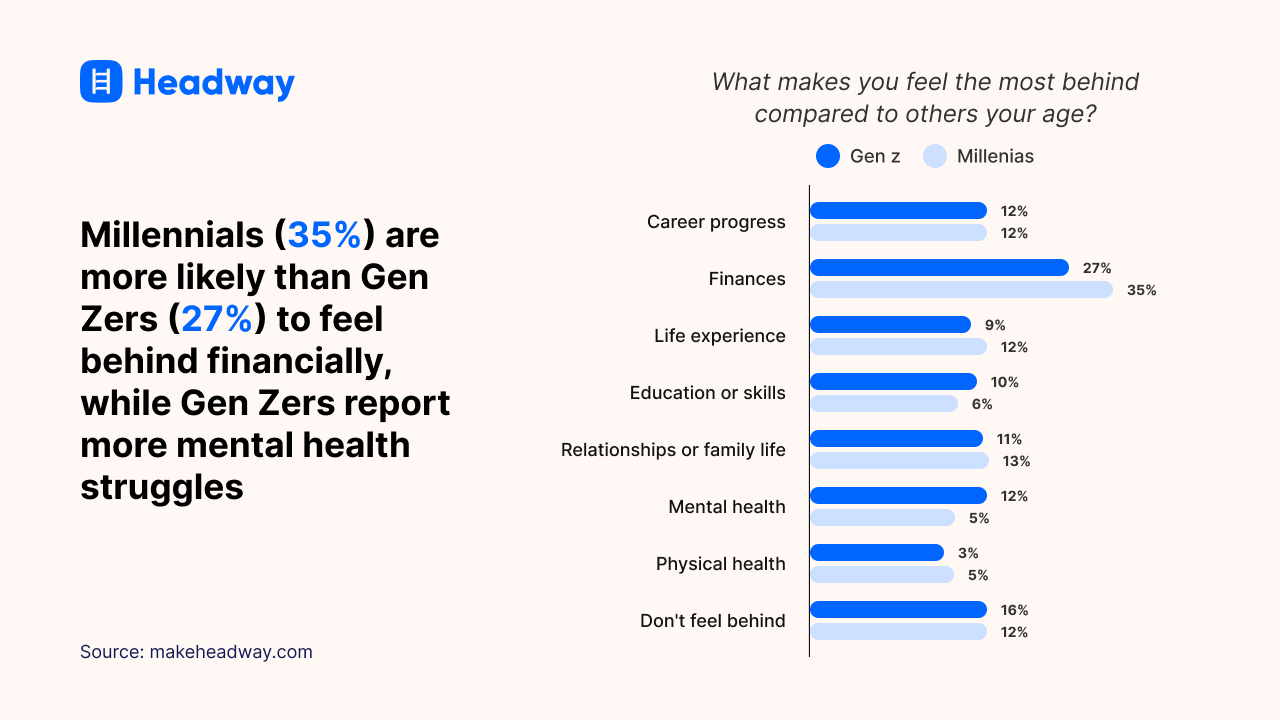
The older you get, the more that feeling grows: 35% of millennials feel behind financially, compared to 27% of Gen Zers.
So you aren't earning six figures yet, you haven't met the one, and you've barely ticked anything off your bucket list. Does that make you unsuccessful? Not at all.
Defining success in life is entirely up to you. It comes down to what you value in life and your motivations for success, and while most of us have areas we want to improve on, 77% already consider themselves to be in a good spot.
Sacrificing sleep, social lives, and sanity: The price tag on progress
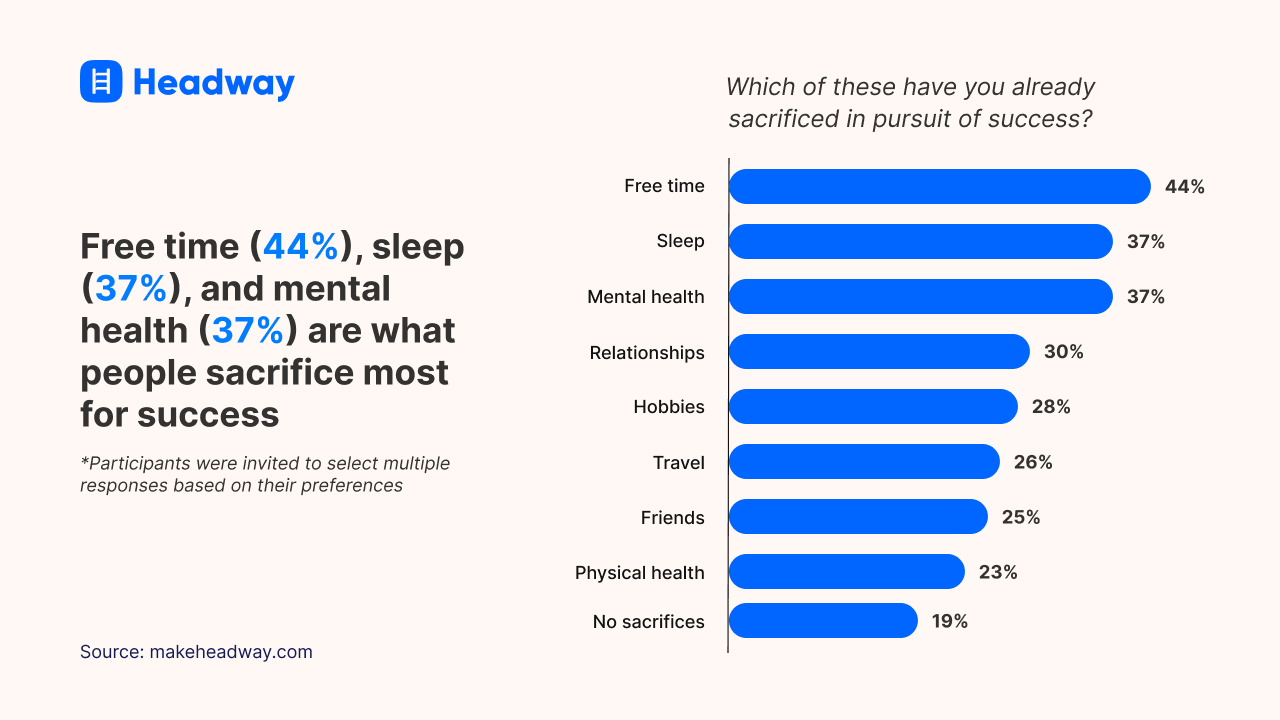
Some 44% have given up their free time to pursue goals, 37% have sacrificed sleep, and 37% have put their mental health second.
The reward for all that hard work? Burnout – and success is incredibly tough to sustain when you're exhausted, stressed, and downbeat.
If you want it to last, goal setting for success needs to be realistic, achievable, and sustainable.
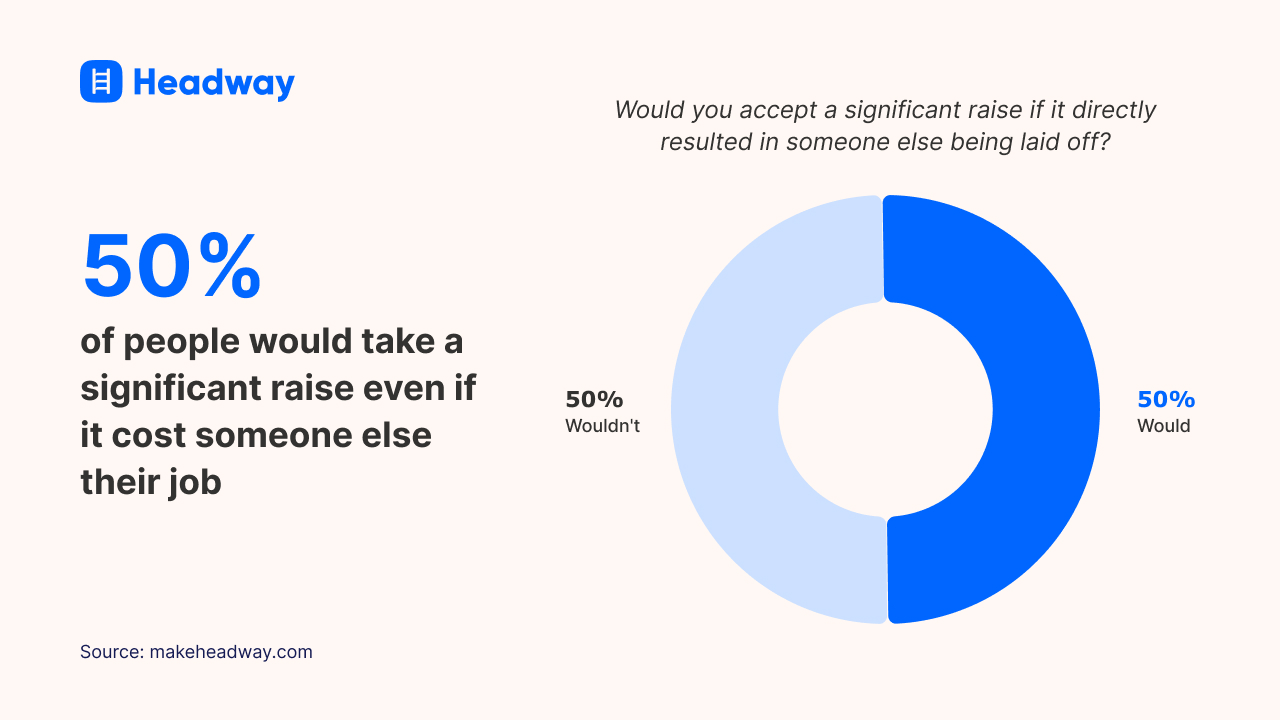
Many have ambitions of climbing the career ladder, and they aren't afraid to kick a few people off to reach the top: 50% say they would accept a significant raise at work, even if it were at someone else's expense.
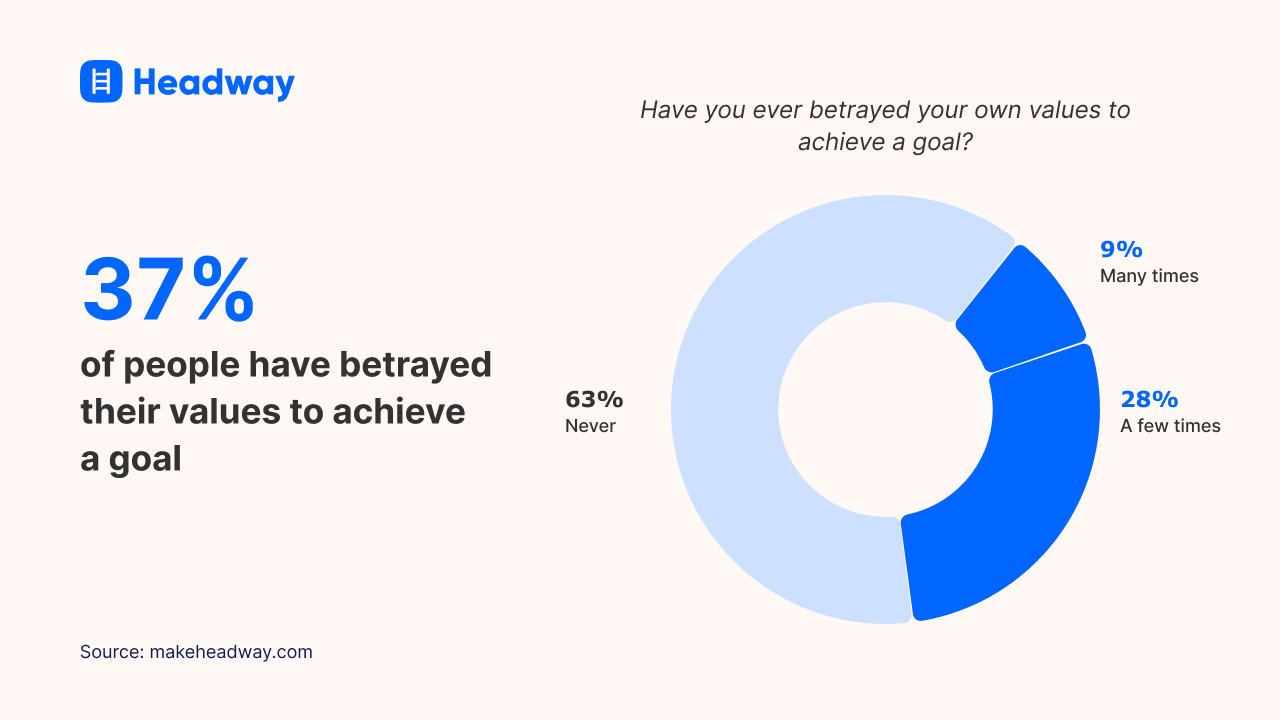
When expectations are too big and deadlines are tight, desperation can make us do things we swore we never would: 37% admit they've betrayed their own values to achieve a goal.
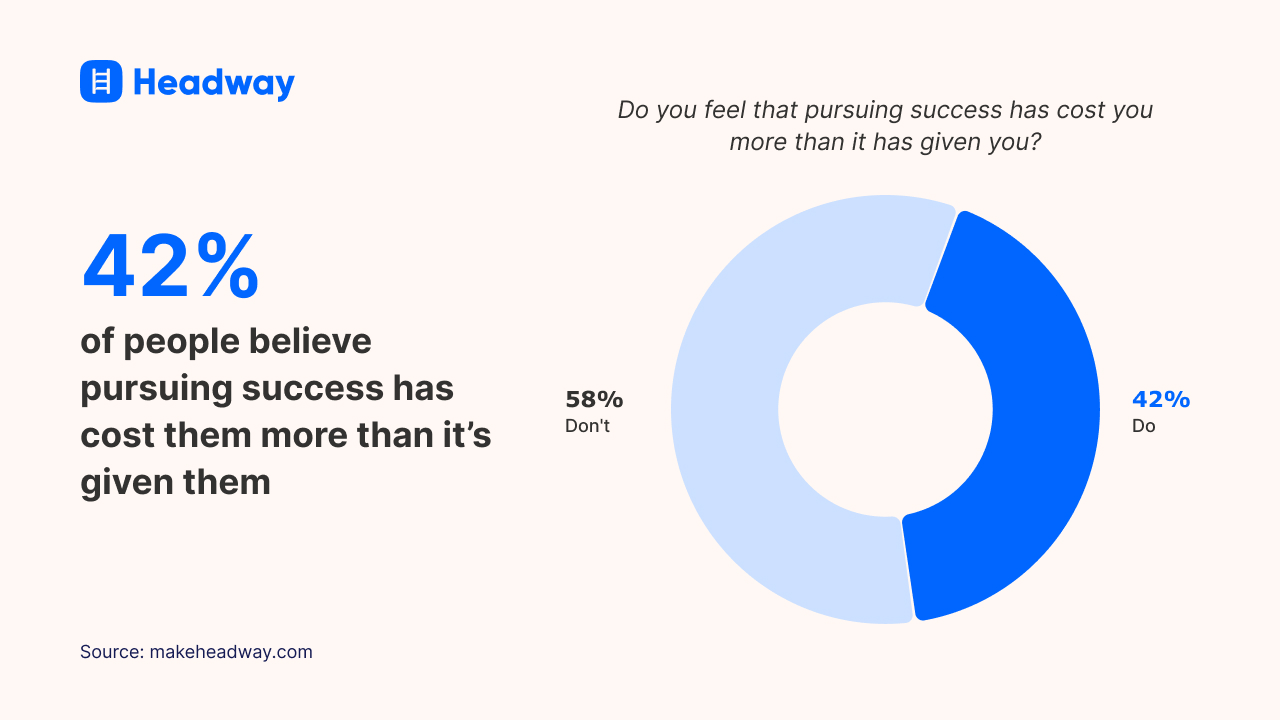
Was it worth it? While 58% say their sacrifices have paid off, 42% question whether their success came at too high a price.
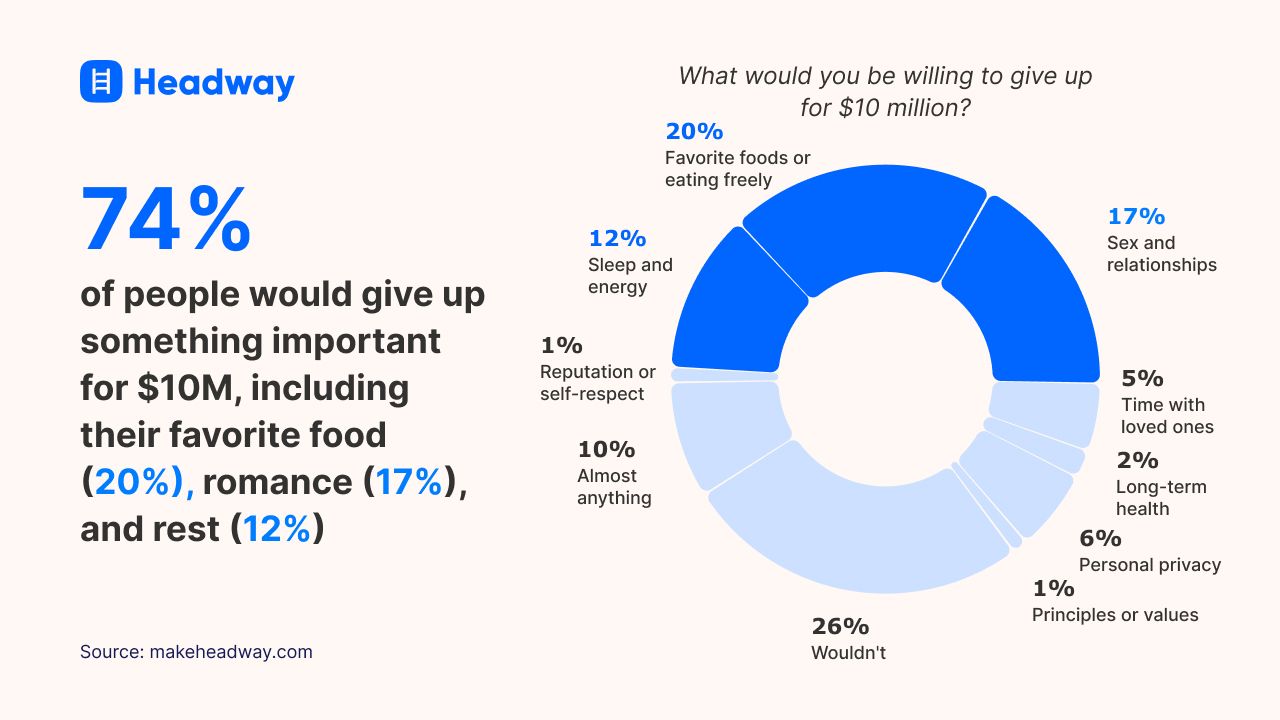
But few are ready to quit, and many are willing to pay a whole lot more for a taste of success.
In fact, 74% would give up something important to them for $10 million, with 20% willing to ditch their favorite foods, 17% forgoing love, 12% open to trading their sleep and energy, and 10% putting just about anything on the table.
Outsourcing success: Who or what we turn to for support
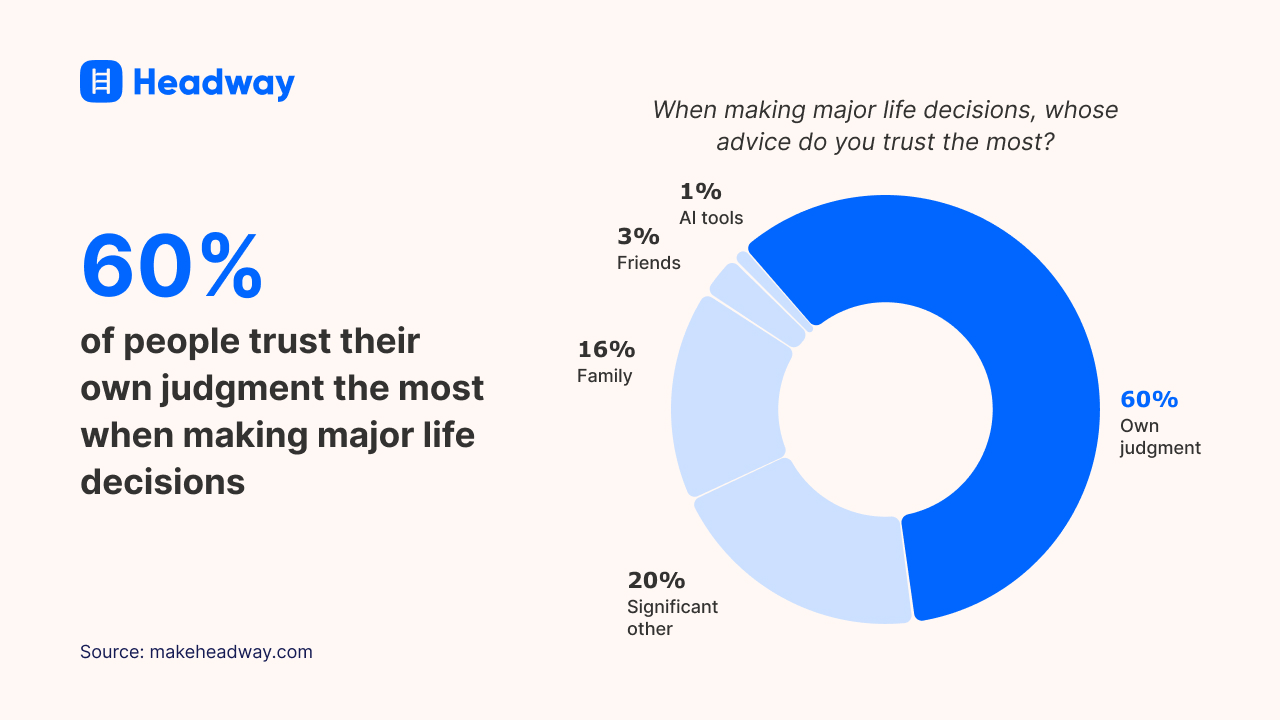
Sometimes success requires taking on risks and making decisions that feel uncomfortable. When it comes to making those big calls, 20% turn to a partner for support, 16% ask family, and 3% call upon their friends. However, 60% insist there’s no better judge than their gut.
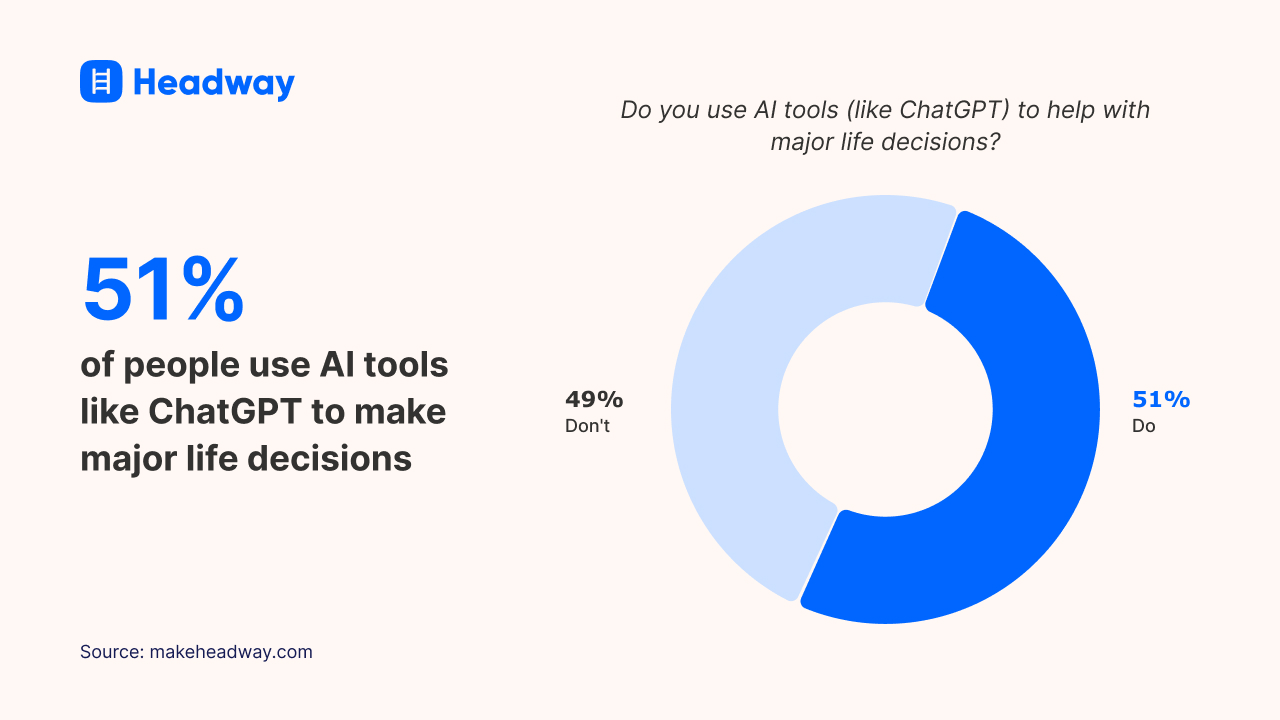
But a second opinion doesn’t hurt, and AI is always ready to assist, with 51% having turned to tools such as ChatGPT for advice on major life decisions.
With a lack of time and resources among the biggest barriers to success, being able to outsource some of the decision-making actually makes a lot of sense.
The problem is, AI has a talent for making every idea sound foolproof.
Leaving your high-paying job to launch a business selling luxury water for houseplants? Wow! What a great idea.
And dumping your retirement fund in a cryptocurrency you’ve never heard of because someone on social media said it’s the next big thing? Just think of the potential profits!
With AI’s high praise and convincing language, 26% admit they’ve gone against their gut and acted on advice from AI that didn’t feel right – yet 17% say it all worked out.
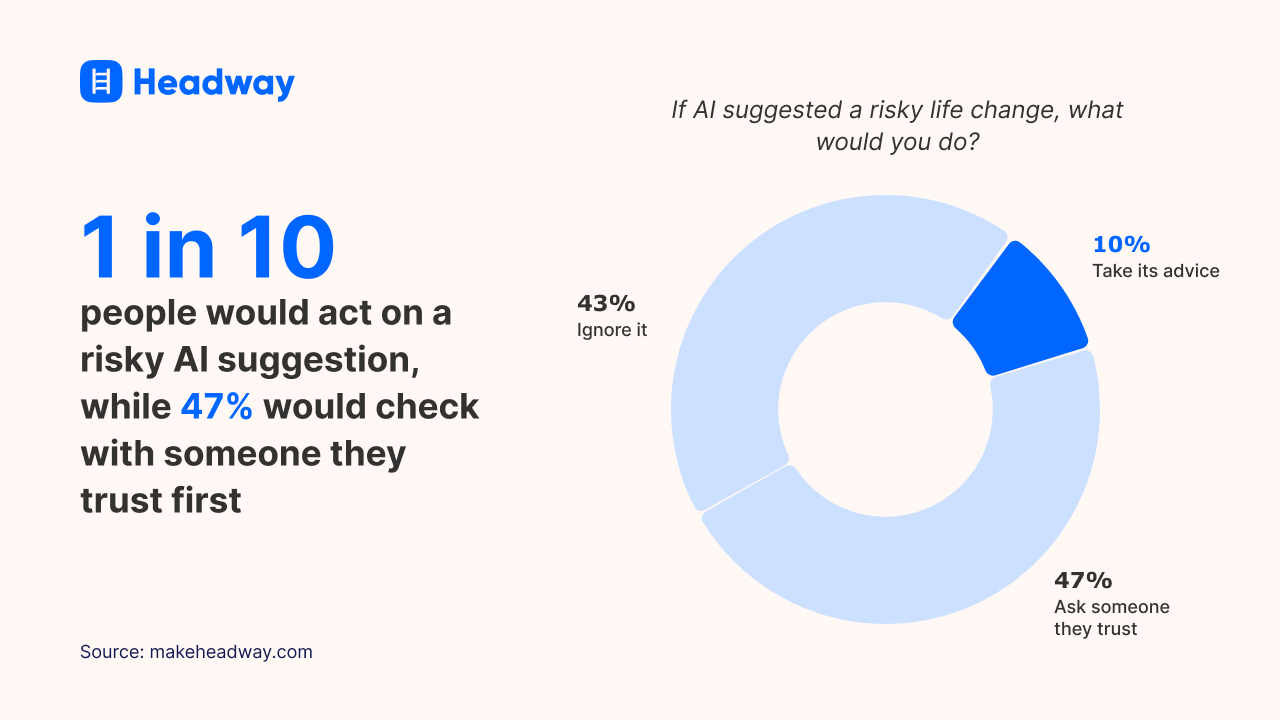
However, we haven't fully handed over our autonomy to AI just yet. While many turn to it for advice, 47% check with a trustworthy human before acting on any risky suggestions.
Prompting success: The major decisions people are leaving up to AI
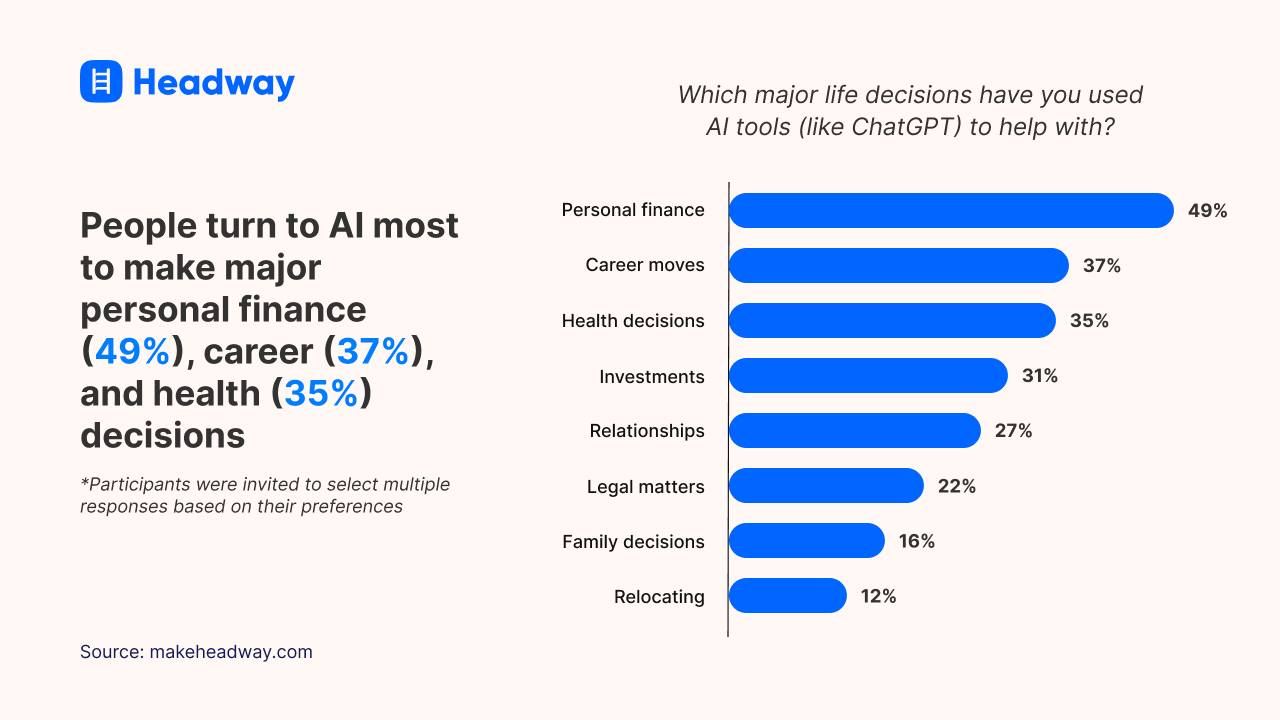
Most commonly, people turn to AI for help with personal finance (49%), career choices (37%), and health decisions (35%).
It’s a career coach, financial advisor, relationship therapist, lawyer, and doctor all rolled into one.
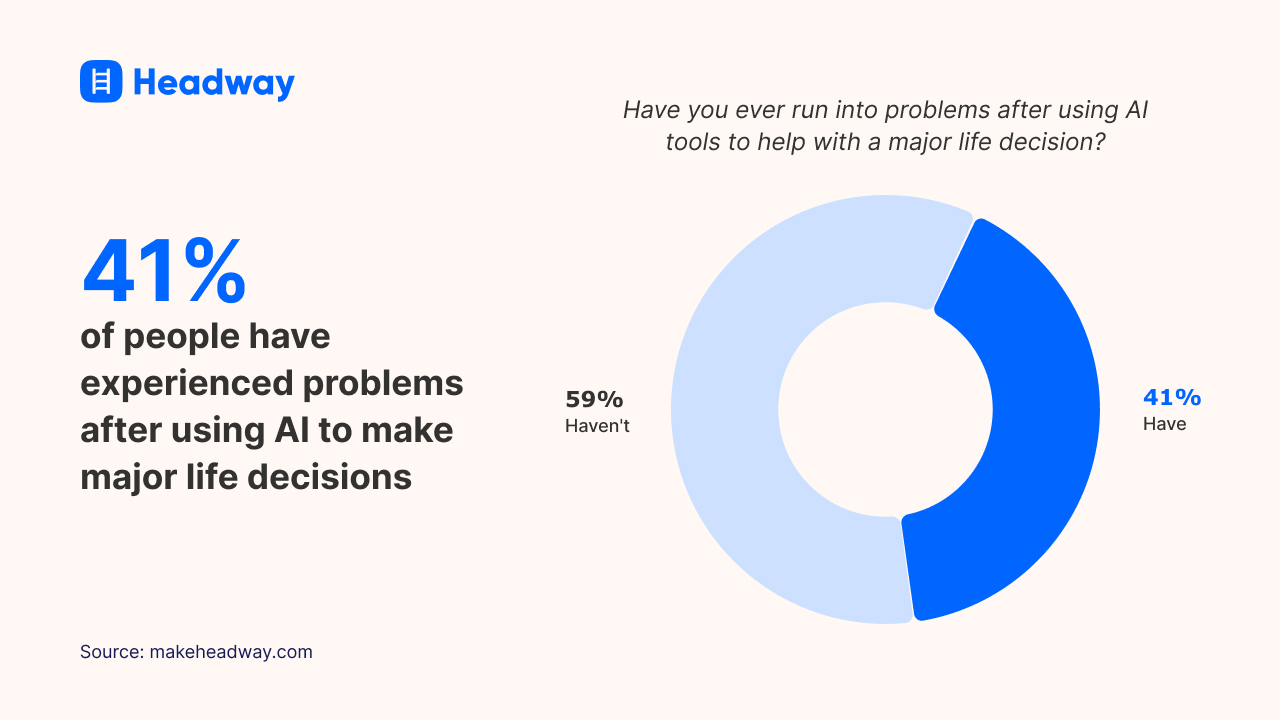
As for AI’s own success? Well, it still has some work to do... When it comes to making big decisions, 59% say its guidance paid off, while 41% say they’ve experienced problems after taking its advice.
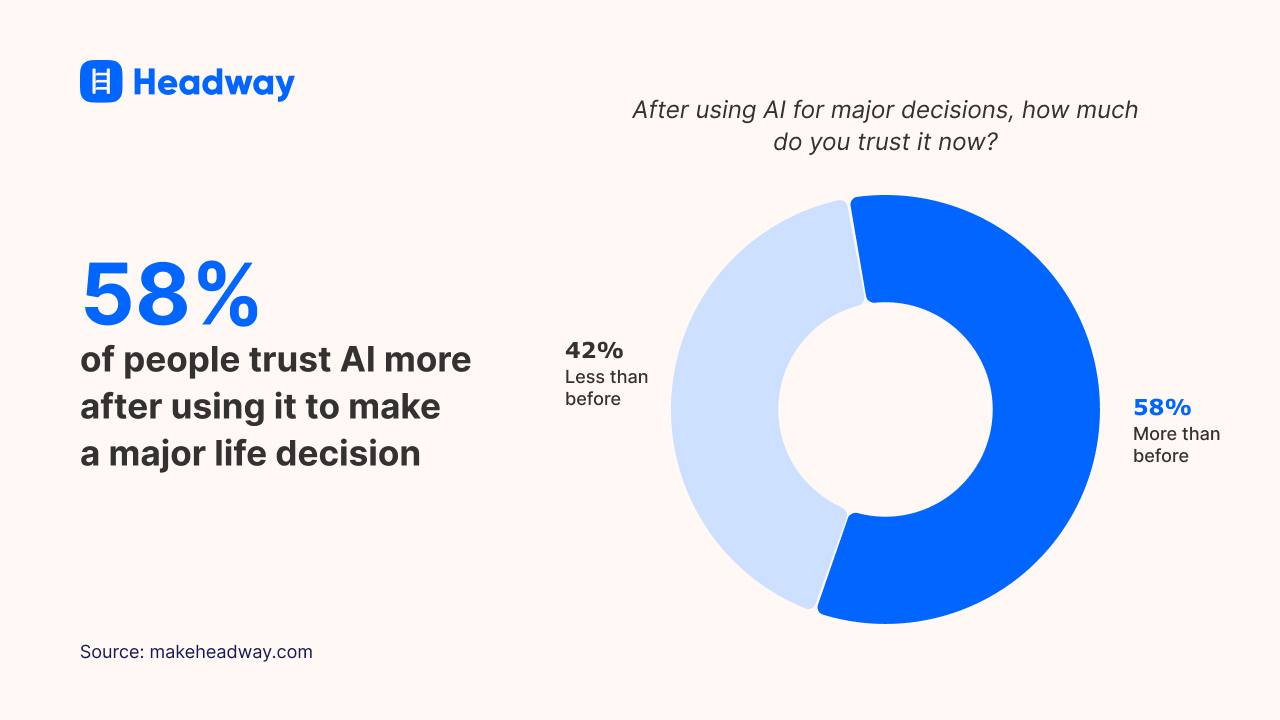
Unsurprisingly, those experiences determine trust. Among those who’ve used AI for big decisions, 58% say they trust it more than before, while 42% are less convinced.
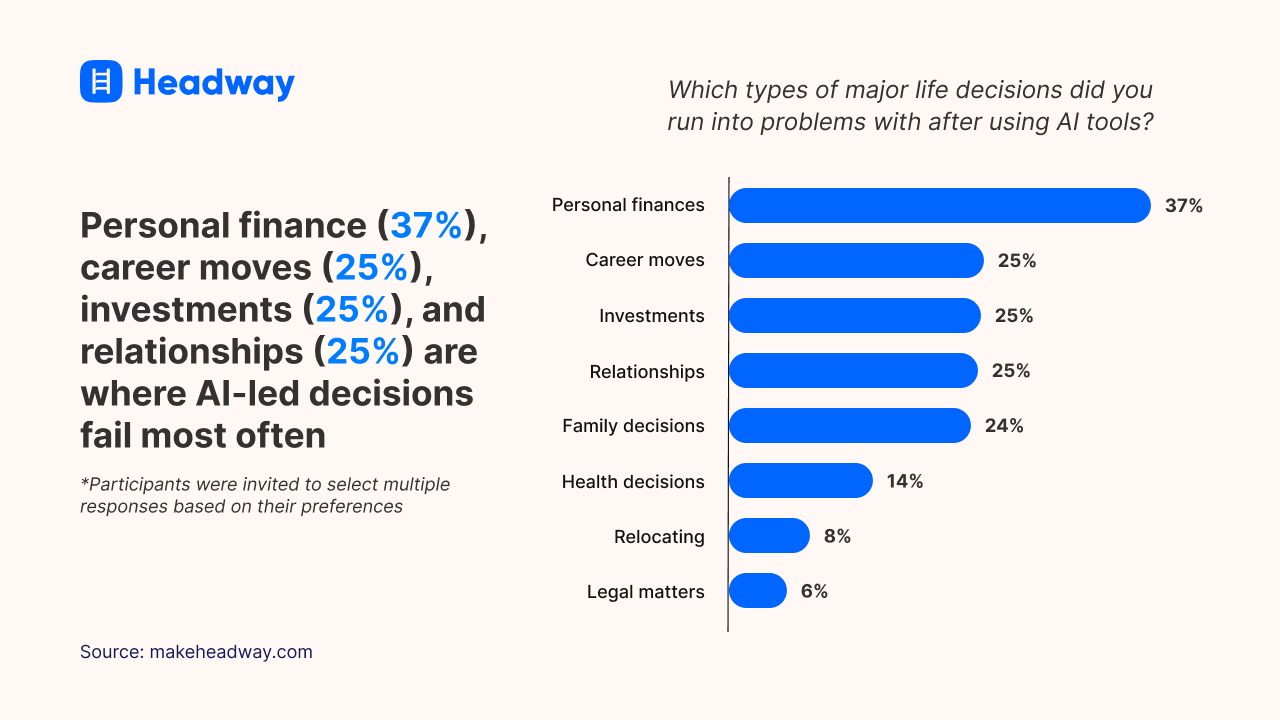
AI short-circuits most when it comes to offering guidance on personal finance (37%), followed by career moves, investments, and relationships (25%).
But if you need legal advice (6%) or guidance on relocating (8%), it’s far less likely to get its wires crossed.
How to achieve success: Hustle, habit, or just sheer luck?
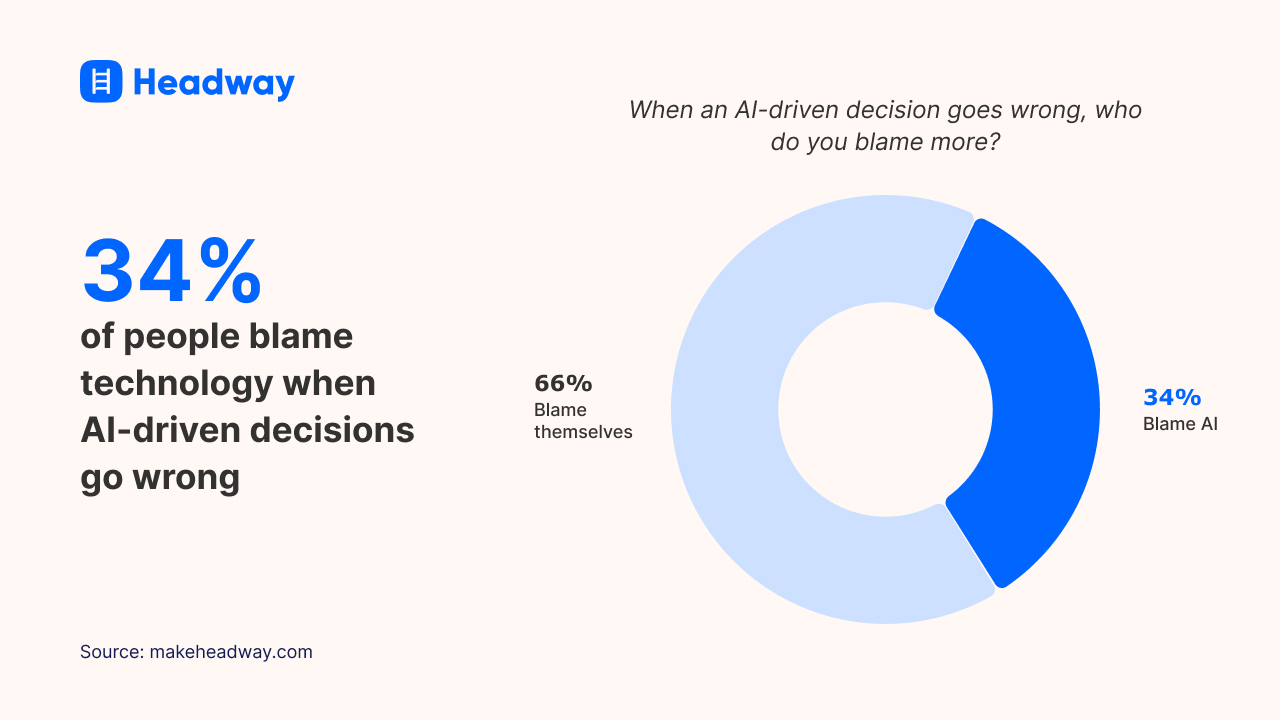
When AI suggestions don’t go to plan, 34% of people blame the technology. But maybe they’re just pursuing success all wrong, expecting too much, too soon.
Success takes time, and all-knowing algorithms can’t perform miracles.
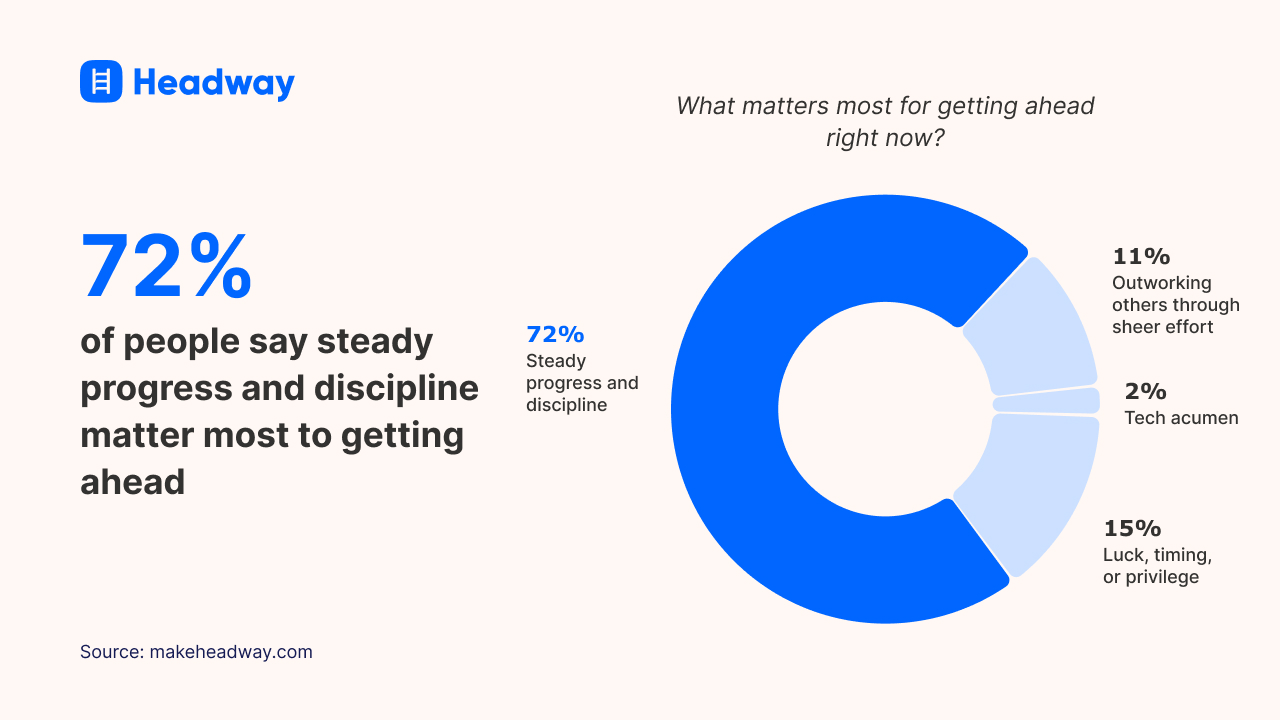
What are the factors that determine success?
Pushing yourself to the limit might work in the short term, and luck likely plays a role. But according to 72% of people, steady progress and discipline pay off most.
Some of the most common traits of successful people include being able to see the bigger picture and maintaining focus and persistence even when things aren't going to plan.
Progress and success are never a straight line. There are highs and lows, leaps forward, and steps back. Every experience counts, and any progress is a successful step towards your goal.
Methodology: To create this study, researchers from Headway surveyed 2,000 professionals of all genders, aged 18 and over.
About Headway
With over 50 million users in 170+ countries, the Headway app is the world's most downloaded book summary app. It offers 15-minute audio and text summaries of nonfiction bestsellers, as well as daily microlearning sessions and gamified challenges. The app is designed to help people achieve their self-development goals. Headway received the Editor's Choice award from the US App Store and constantly hits the App Store home screen as App of the Day.