Self-growth
 Business & Career
 Success
 Communication
 Healing
 Relationships
 Psychology
 Happiness
Key takeaways:
Men are twice as likely as women to rate themselves the smartest in the room, with 41% believing they are smarter than their colleagues and 27% insisting they could do a better job than their CEO.
Some 33% of people believe they could perform minor surgery with guidance, and 57% think they could survive on a desert island using logic and YouTube tutorials.
Some 37% of people say that intelligence is the biggest turn-on when dating, with 22% of women and 18% of men having ended a relationship over intellectual differences.
However, while we value intelligence highly, just 14% say it's the main contributor to success. Instead, 55% say hard work matters most.
Most of us like to think we’re pretty smart. Smarter than our exes, our colleagues, and often even our bosses.
Why? Because we value intelligence highly. It earns us respect at work and sparks attraction on dates. And there’s few better feelings than that burst of confidence when we know something others don’t. But do smarts really set us apart?
Headway app surveyed 2,000 adults on how they measure their own brainpower in life, work, and love; the burning desire to be right; and whether intelligence really shapes success.
Intellectual confidence: How we rate our own intelligence
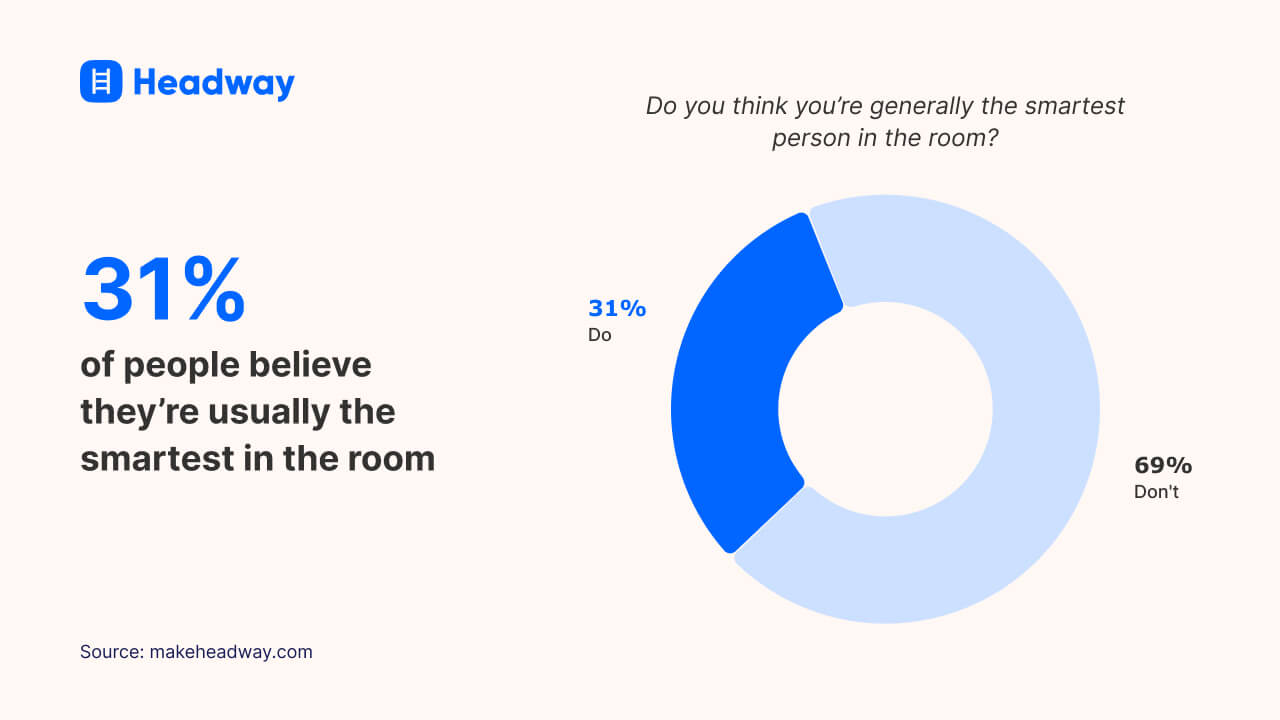
We may play down our smarts in front of others to avoid coming off as overconfident, but our minds don’t lie: 31% of us are convinced we’re usually the smartest in the room (and the rest are probably just being modest).
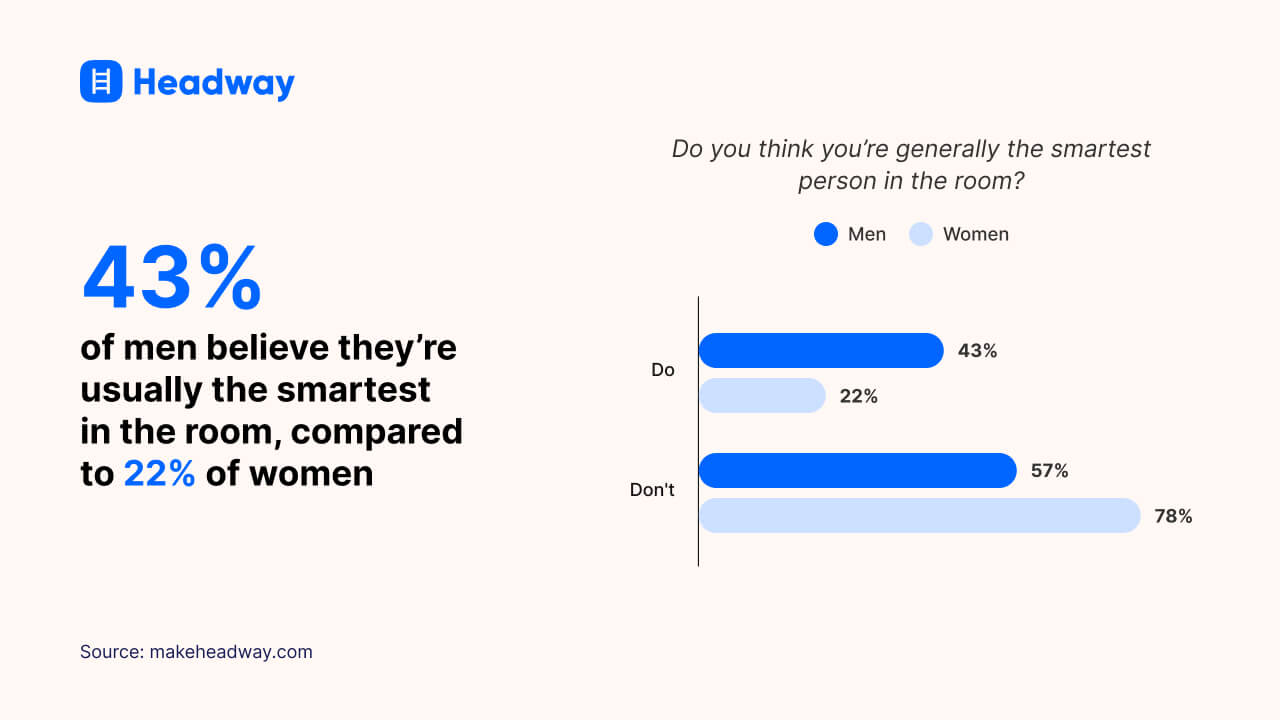
Illusory superiority – the tendency to overestimate our own abilities compared to others – is particularly common among men.
Some 43% see themselves as the brightest mind, compared to 22% of women. Yet, with countless studies showing gender has no bearing on intelligence, it’s clearly a case of bravado rather than biology.
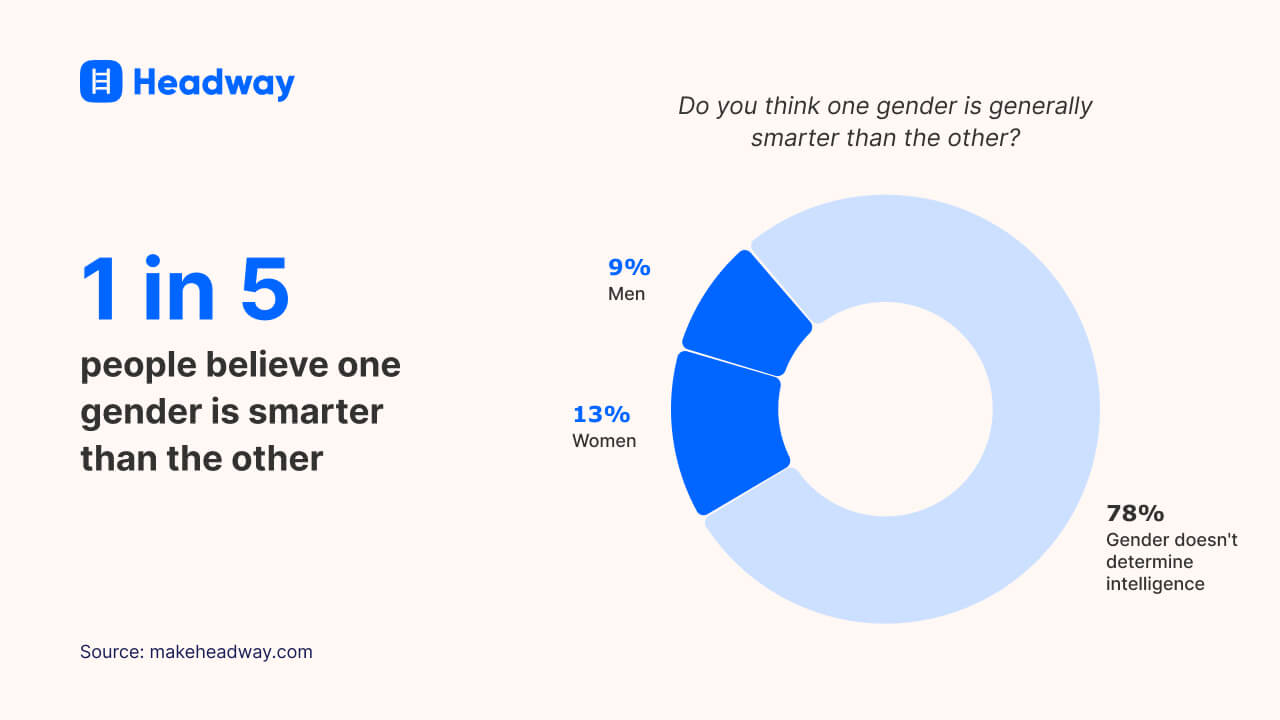
Even if IQ tests insist and science says otherwise, 22% of people believe one gender is smarter than the other, with 9% favoring men and 13% championing women.
Brains and boardrooms: Do women undervalue their intelligence at work?
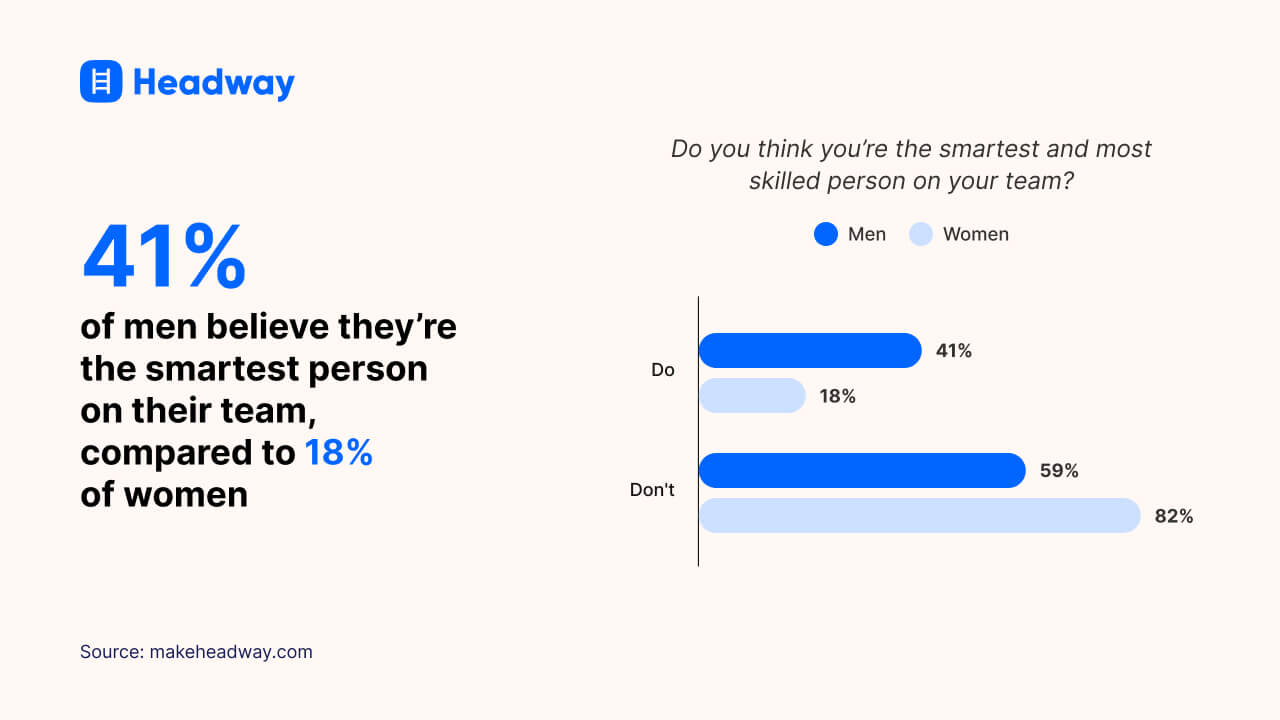
The gender gap is even wider when it comes to self-perceived intelligence in the workplace. While 41% of men will confidently claim they’re the brainiest person on their team, only 18% of women feel the same way.
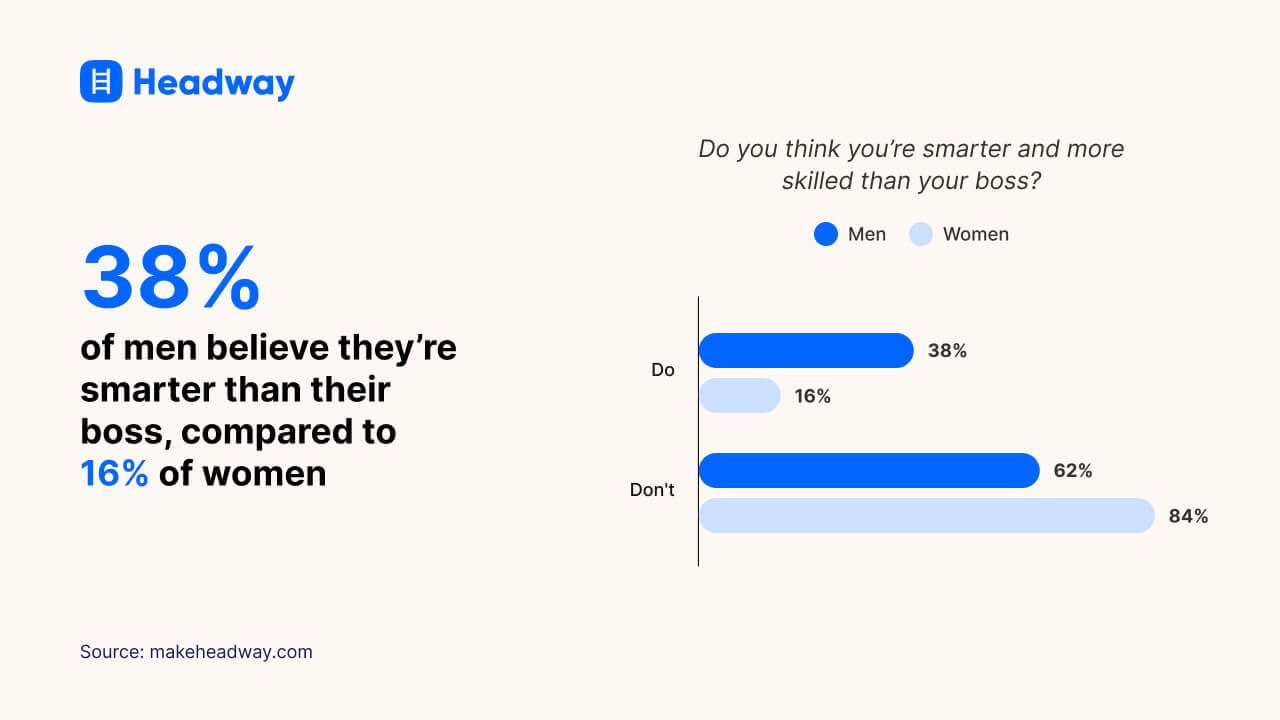
Likewise, an even smaller number of women – just 16% compared to 38% of men – are willing to declare themselves more intelligent and skilled than their bosses.
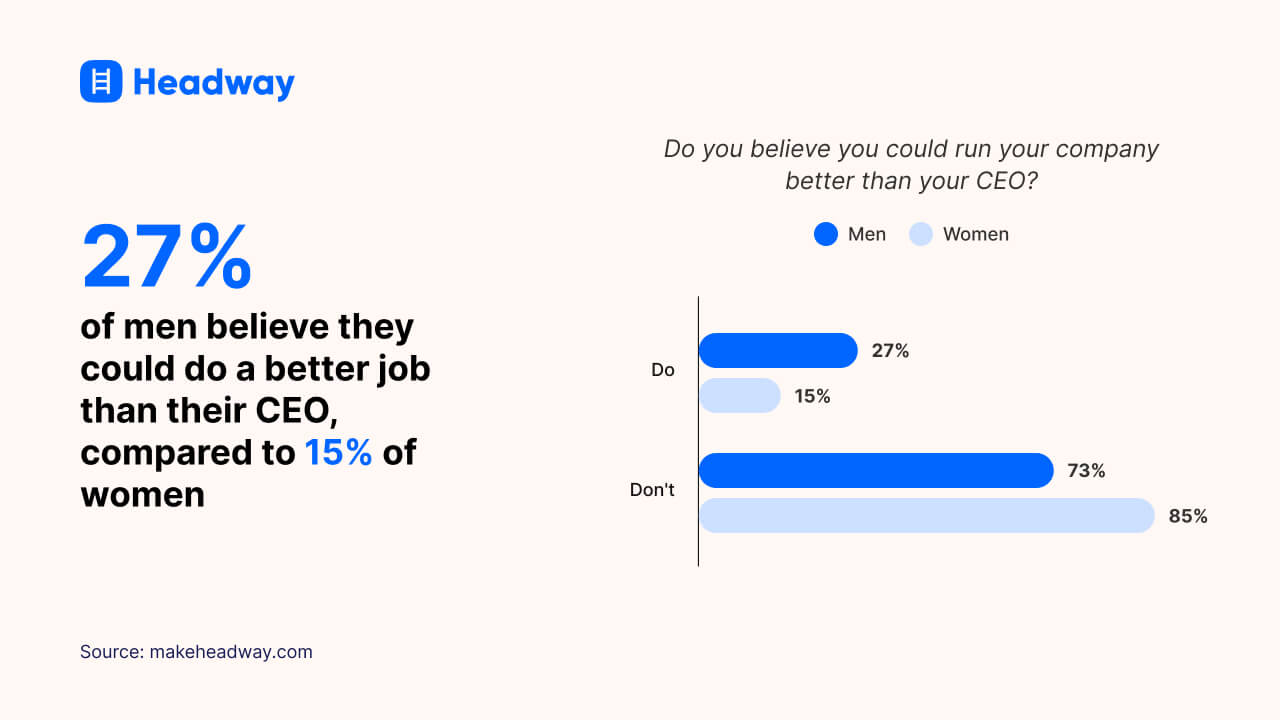
Some 27% of men believe they deserve a rung right at the very top of the corporate ladder, insisting they could do a better job than their current CEO. Yet women, in contrast, are far more modest, with just 15% feeling the same way.
There’s a likely reason for this disparity in workplace confidence: conditioning. Men have historically been favored in the workplace and remain far more likely to receive promotions and pay rises for their input.
While men have their intelligence validated by reward, women have to work twice as hard for recognition – often causing them to doubt their abilities and question their worth.
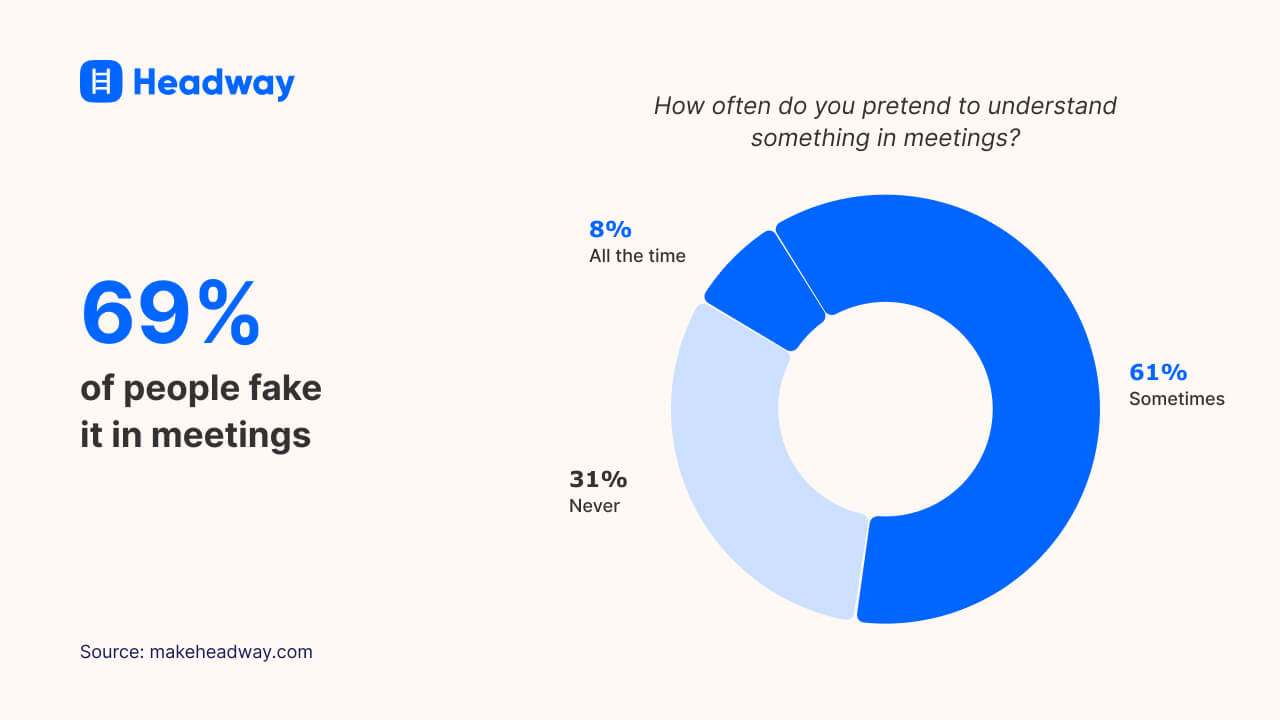
The truth is, everyone has gaps in their knowledge, regardless of gender. In fact, 69% of people admit to faking it in meetings on occasion.
Do-it-all delusions: The tough tasks we're certain we can handle
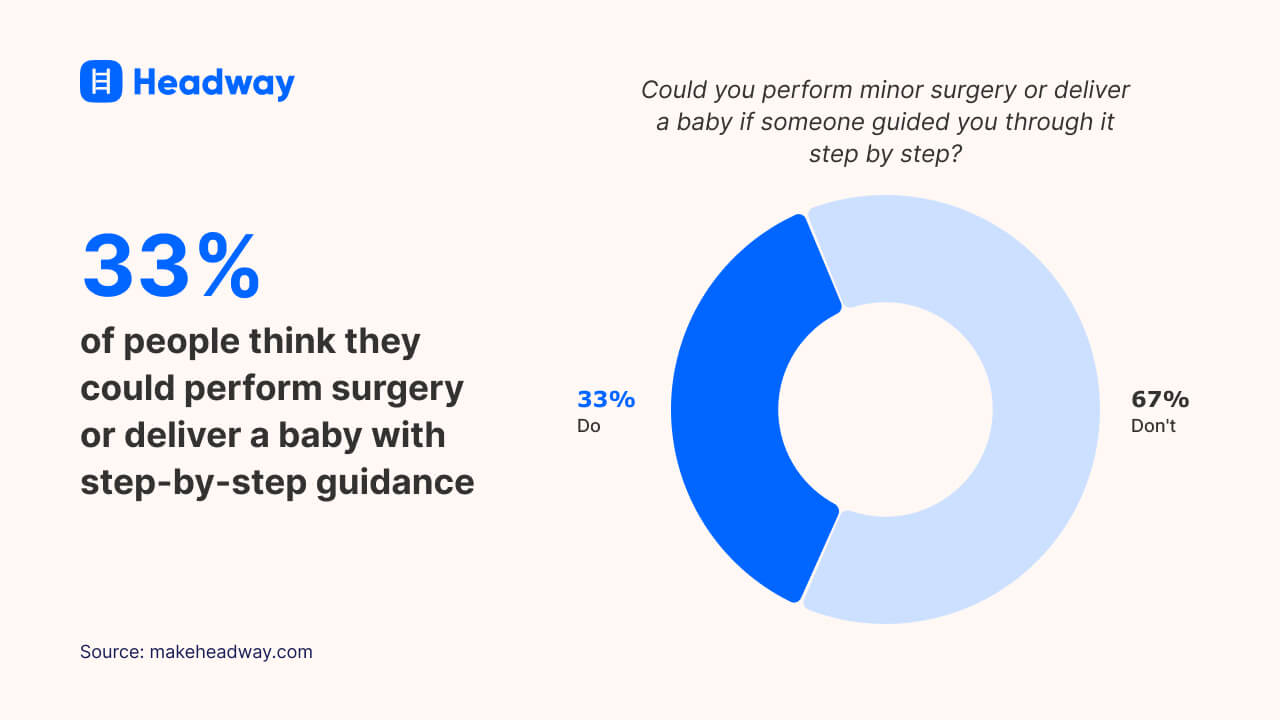
Performing surgery? Easy peasy. Some 33% of people are confident they could handle a minor operation or deliver a baby, provided they were given step-by-step instructions.
Who needs med school when you possess such a sharp mind?
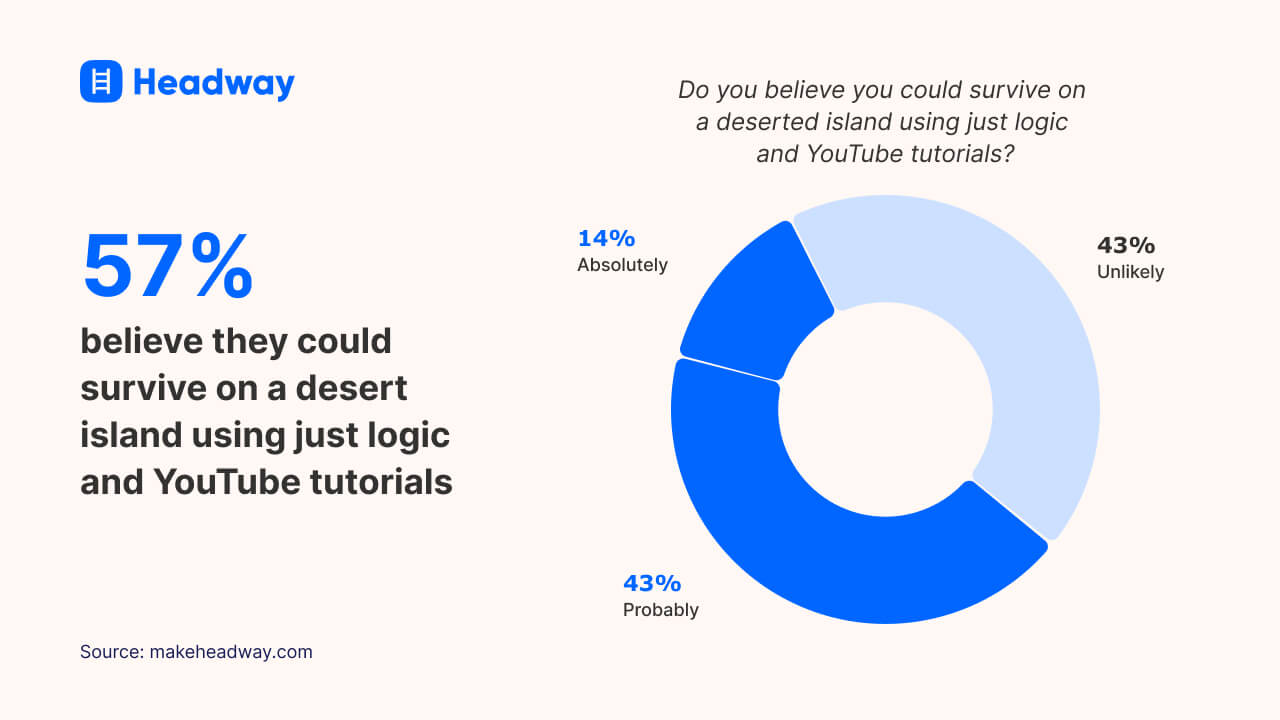
Likewise, 57% are at least somewhat confident they could survive on a desert island armed with nothing more than logic and a few YouTube tutorials.
Build a shelter, start a fire, catch a few fish, and spend the rest of the day sunbathing… How hard can it be?
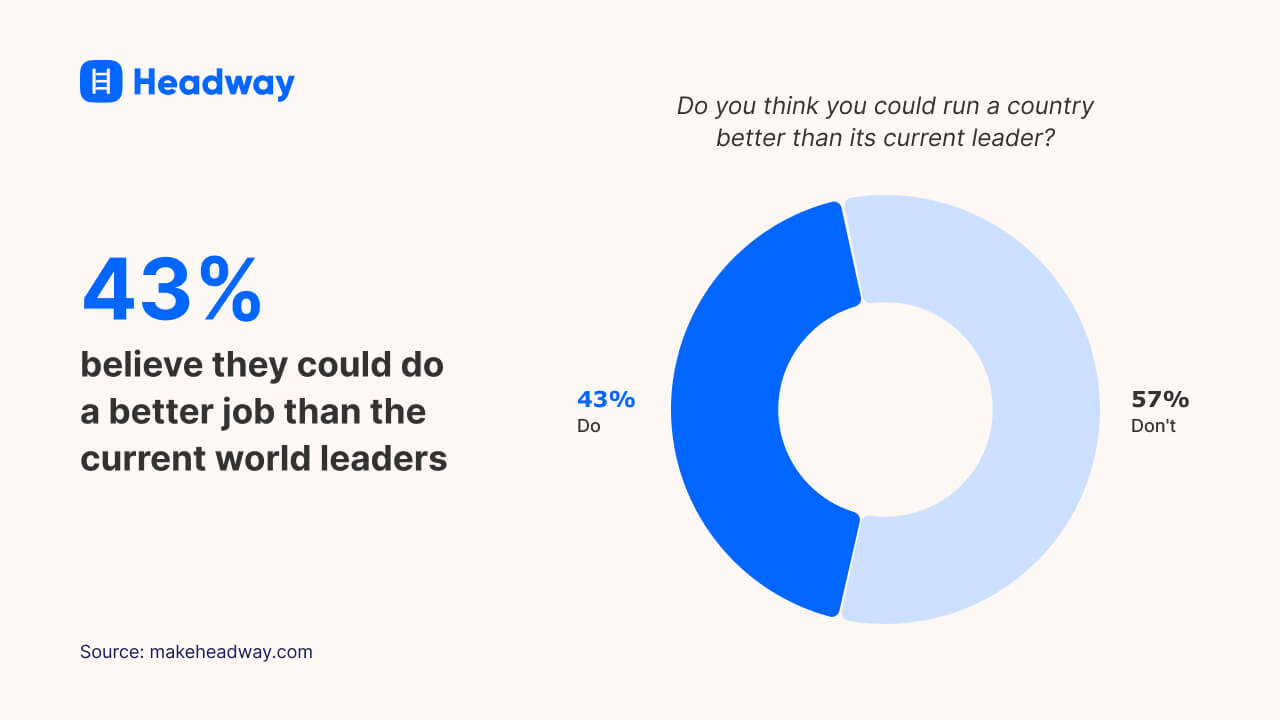
The global economy is dipping, the environment is struggling, and everyone seems to be at each other’s throats. We can all agree that our world leaders aren’t exactly acing the test – and 43% are convinced they could do a far better job themselves.
Compulsively correct: The need to be right (even when we're not)
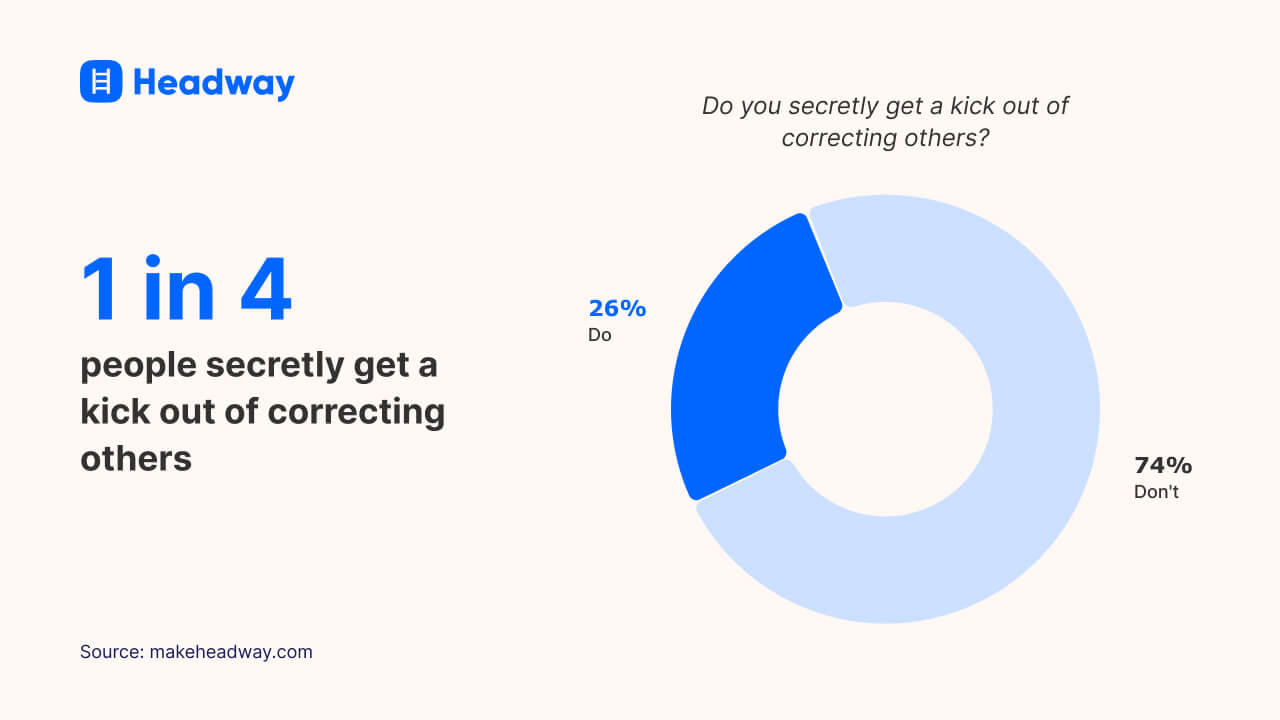
Even at the risk of being branded a know-it-all, 26% of people can’t resist the urge to correct others – getting a little rush from flaunting their smarts and setting the record straight.
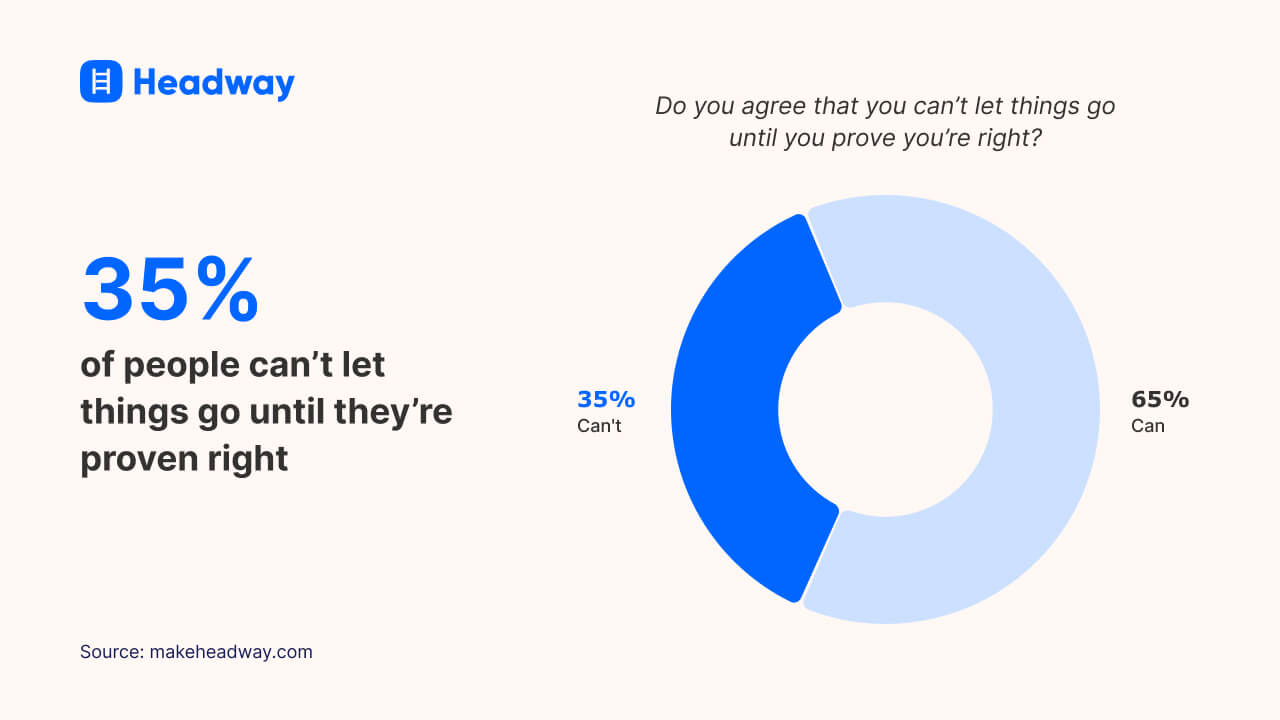
From squabbles among friends to arguments in the comment section, it’s often easier to let things slide, even when you know you’re right. But for 35% of people, there’s something deeply ingrained that won’t let them quit until they’re proven correct – no matter how long it takes or how much it costs.
Brains over beauty: Do smarts help to win our hearts?
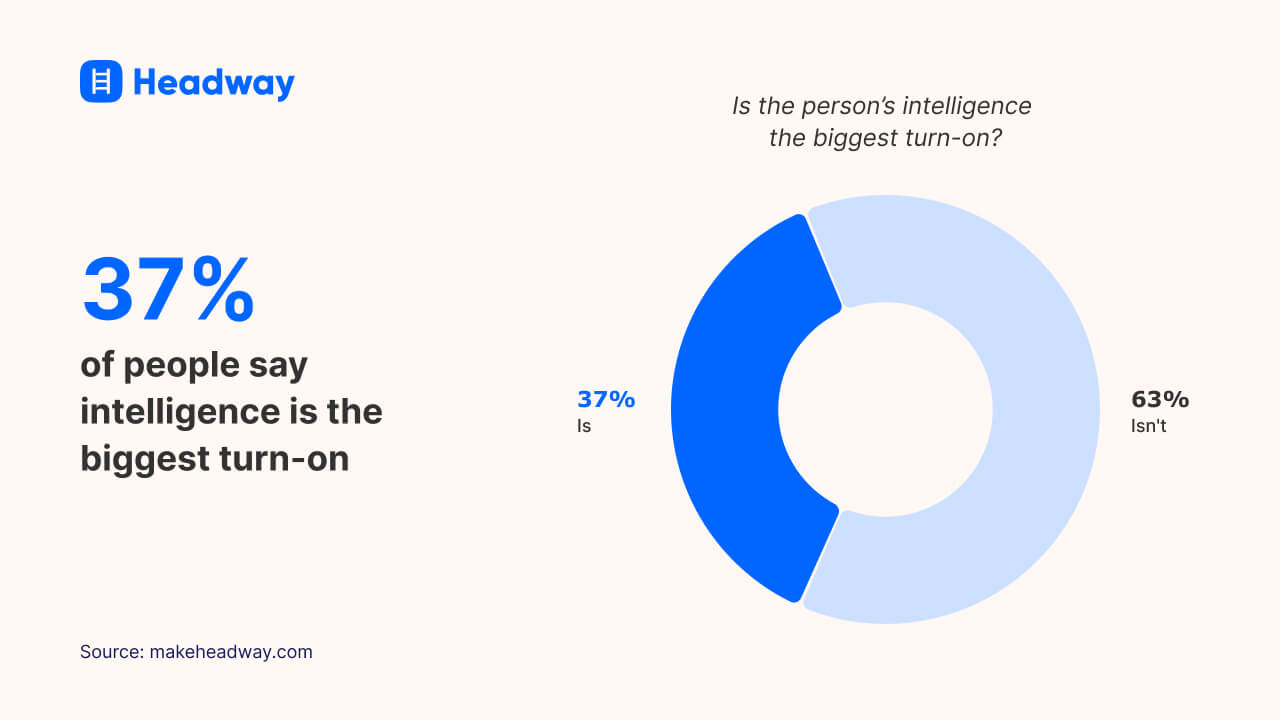
We put so much thought into looks when dating. Yet, for 37% of people, six-pack abs, warm smiles, and good style barely matter. Sharp wit, clever banter, and engaging conversation are what make them swoon.
For them, intelligence is the ultimate aphrodisiac. It’s what’s known as sapiosexuality – the attraction to someone’s mind, rather than their body.
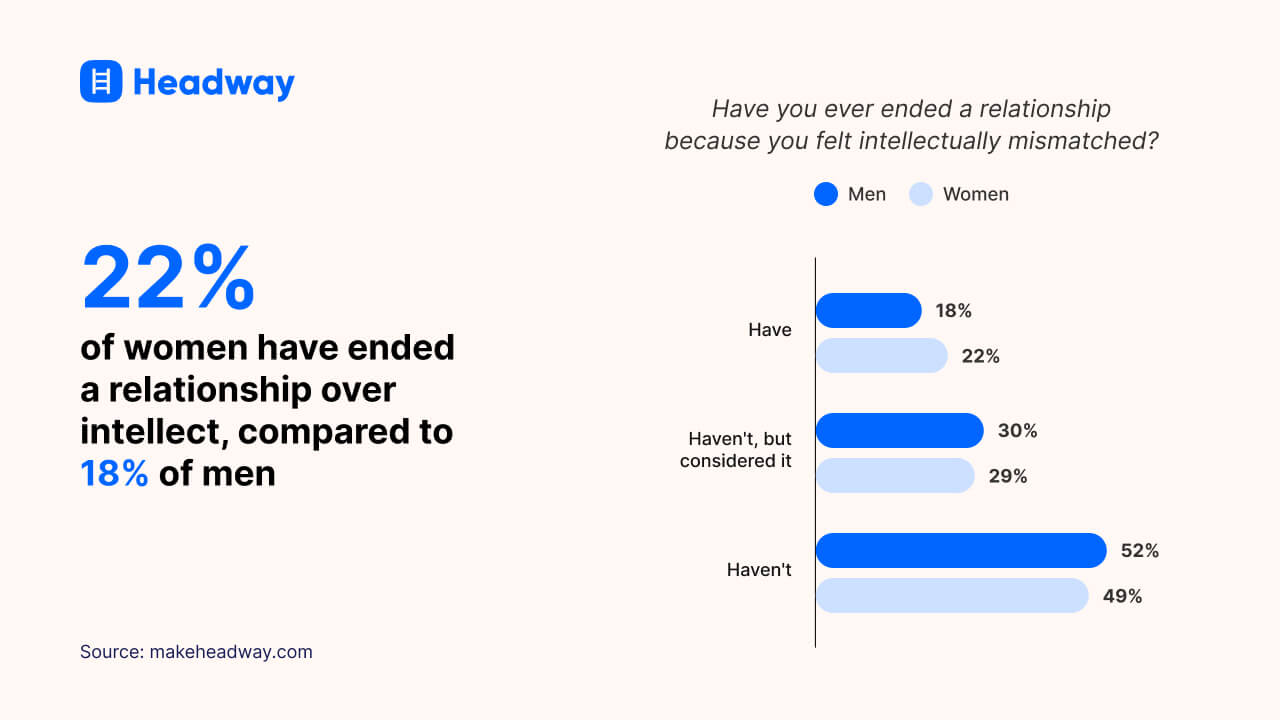
Healthy, lasting relationships require accepting each other’s imperfections. Yet, intelligence is one area where couples seemingly struggle to compromise.
For 22% of women and 18% of men, intellectual mismatch has already proven to be a dealbreaker. Likewise, another 30% of men and 29% of women have flirted with ending a relationship over a perceived lack of intelligence.
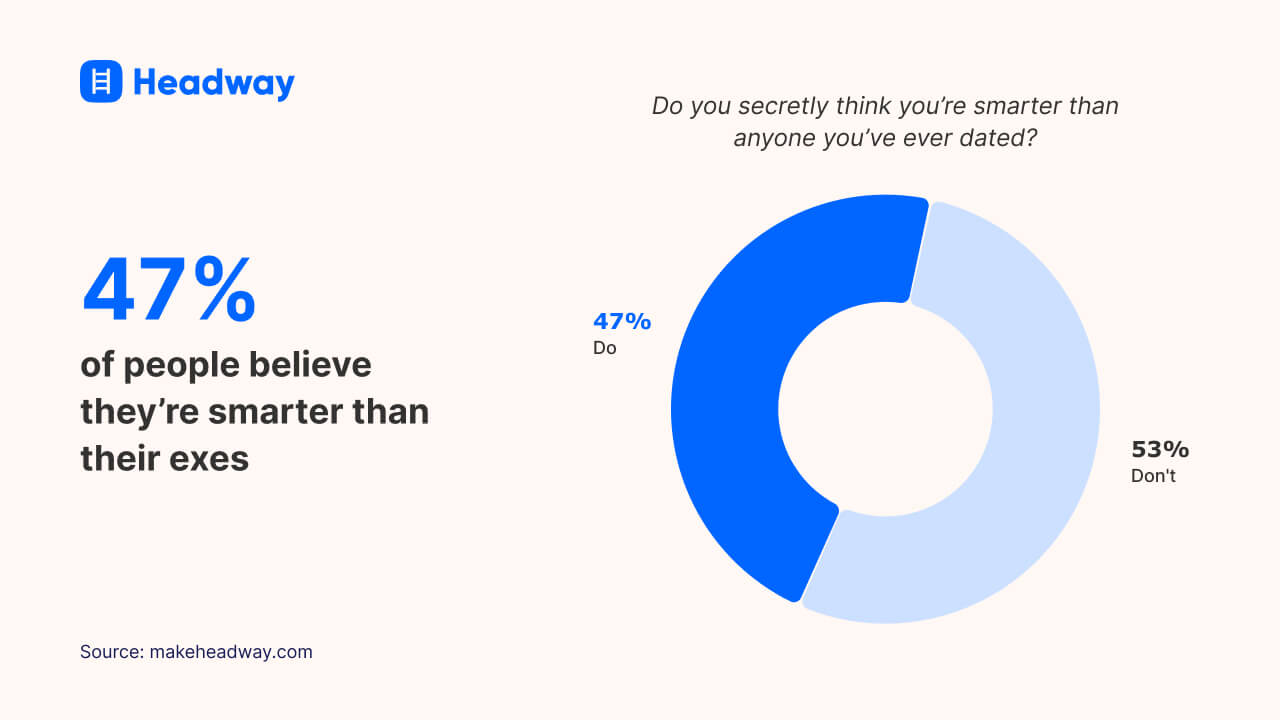
Brain power may top the list of turn-ons, but finding a partner of comparative intelligence isn’t easy. In fact, 47% of people secretly believe they’re smarter than all of their exes.
Determinants of success: Does a smart mind guarantee a bright future?
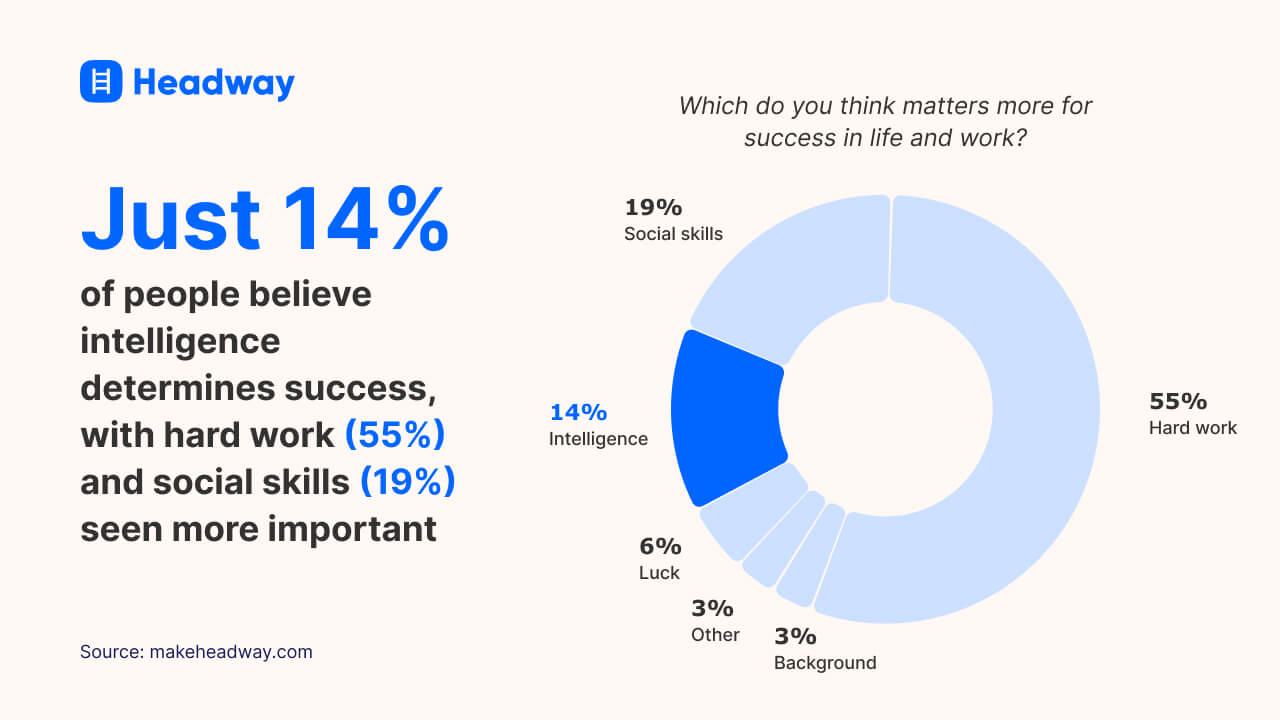
Clearly, we value intelligence highly, but genius is no guarantee of success. Just 14% of people believe it matters most, compared to 55% who say hard work contributes more to our achievement in life and work.
So if you want to be successful, stop worrying whether you’re the smartest person in the room. The most brainy move you can make? Focusing your time and energy on working hard and pursuing growth instead.
Methodology: To create this study, researchers from Headway app surveyed 2,000 people of all genders, aged 18 and over. The survey took place in November 2025.
About the Headway app
With over 50 million users in 170+ countries, the Headway app is the world's most downloaded book summary app. It offers 15-minute audio and text summaries of nonfiction bestsellers, as well as daily microlearning sessions and gamified challenges.
The app is designed to help people achieve their self-development goals. Headway received the Editor's Choice award from the US App Store and constantly hits the App Store home screen as App of the Day.