Self-growth
 Business & Career
 Success
 Communication
 Healing
 Relationships
 Psychology
 Happiness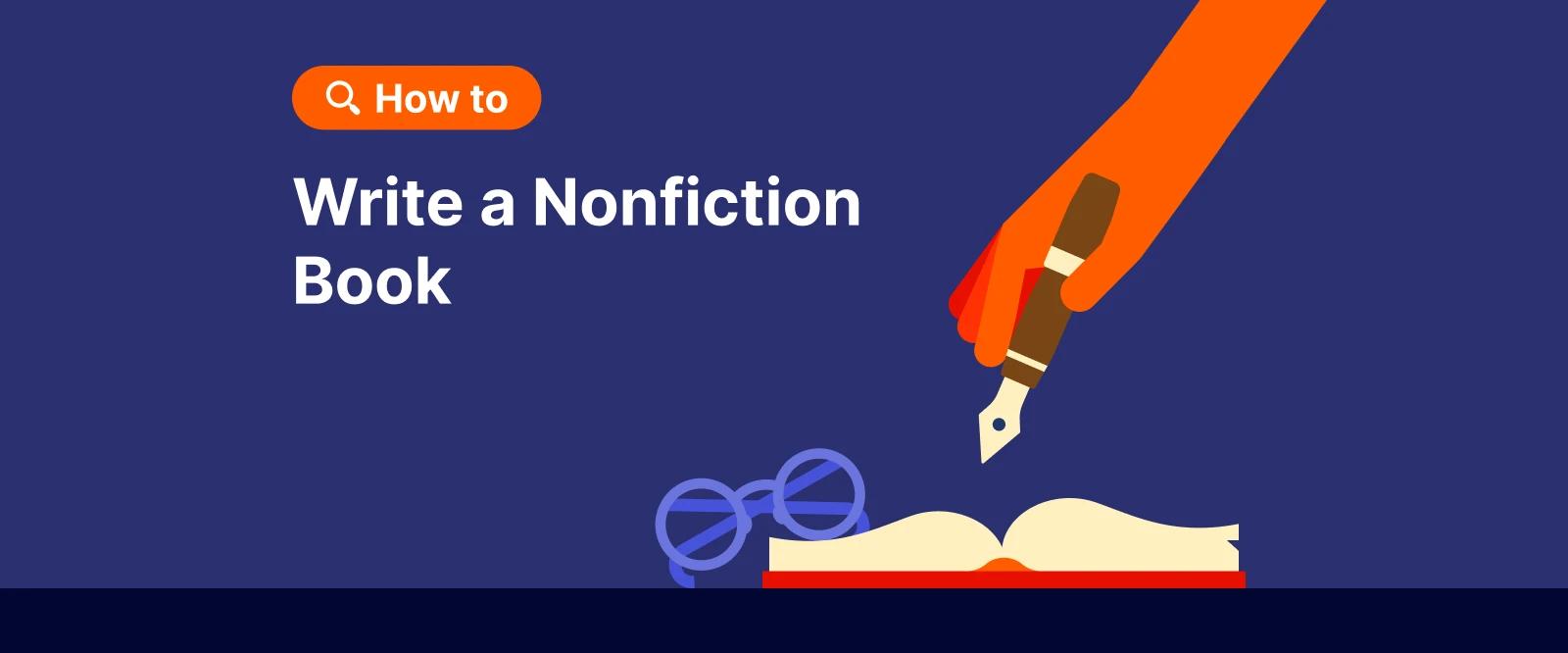
Have you ever read a great nonfiction book and thought, "I want to do that"? Maybe you feel called to share the knowledge you've acquired. Or you want to build your authority as an expert. Or you want to make an impact and help others overcome challenges.
But if you're wondering how to write a nonfiction book, you might be unsure where to start. In this guide to writing nonfiction books, you'll learn how to grow your concept from an idea to your first book. You'll also discover the building blocks and creative habits needed to form a lifelong creative process, no matter your schedule.
I'll also walk you through the strategies I used to write my own book,
'How to Write a Book Review.' Along the way, you'll see how reading widely, while using microlearning tools like Headway, can help you spot strong ideas, clarify your thinking, and stay inspired without feeling overwhelmed.
Are you feeling overwhelmed right now? Don't worry. Anyone can write a book, even without experience. Get started with this nonfiction book writing guide.
Quick summary: How to write a nonfiction book
Along the way, we'll cover the following foundational lessons:
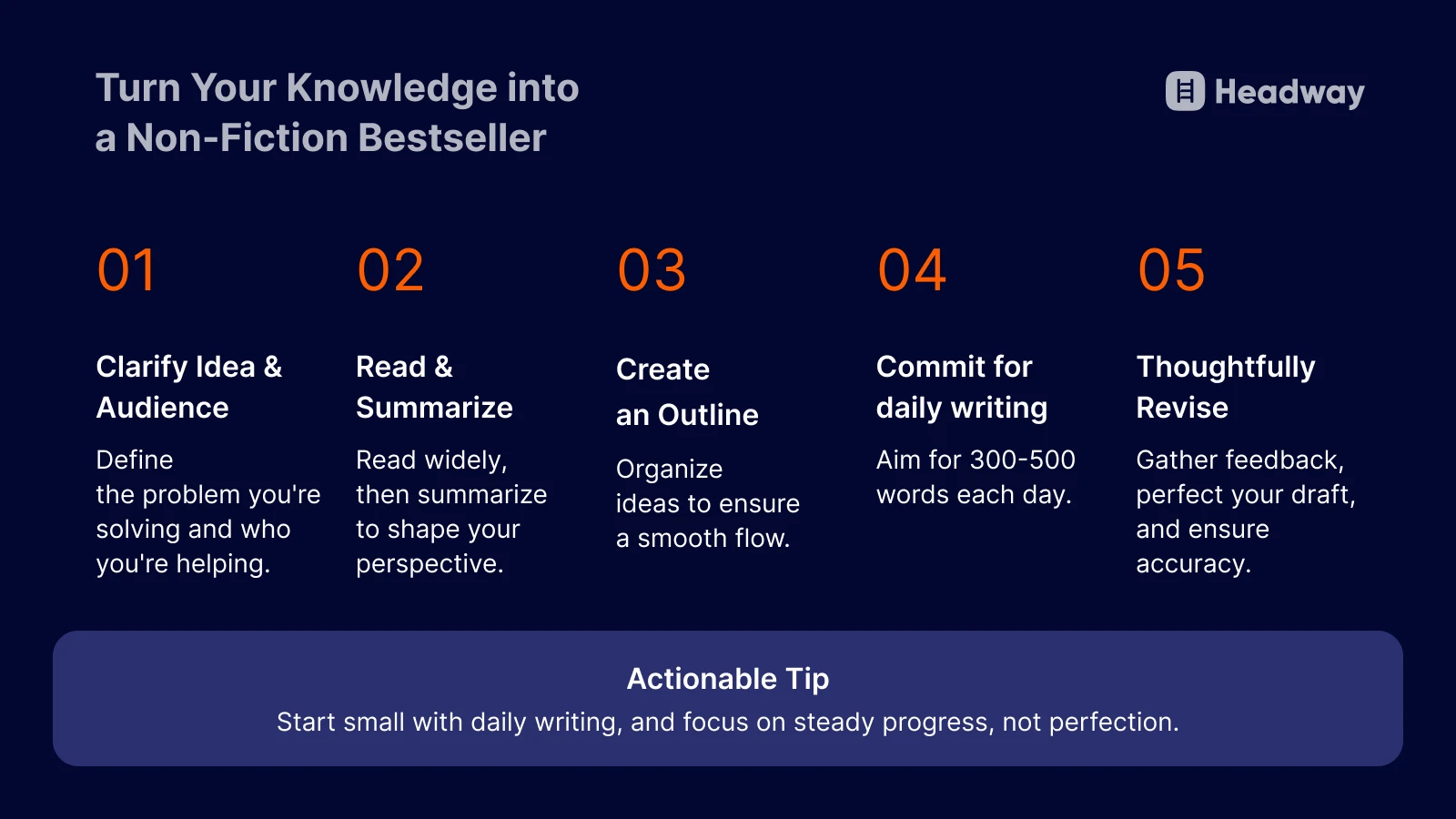
Clarify your core idea and audience. Before you write a single word, you'll become clear on what your book is about. You'll establish your "why" and your book's mission. Most importantly, you'll define your audience's problem and how you can solve it. You'll want to establish why you're the perfect person to help them.
Build a reading and summarizing habit. You'll learn the value of reading widely and summarizing to develop your unique perspective.
Create a flexible, layered outline. We'll show you how to use techniques to turn your brainstorming into an outline that creates a seamless reading experience.
Commit to micro-writing routines. You don't have to block out large stretches of time to write. Instead, try micro-writing sessions.
Embrace revision. Afraid of revising? We'll teach you how to see revision as an opportunity to perfect your book through credibility checks and feedback.
Looking for the best way to write a non-fiction book? Read on!
Discover a new book every day with the Headway app.
Try nowSection 1: Why writing nonfiction is different (and what many guides miss)
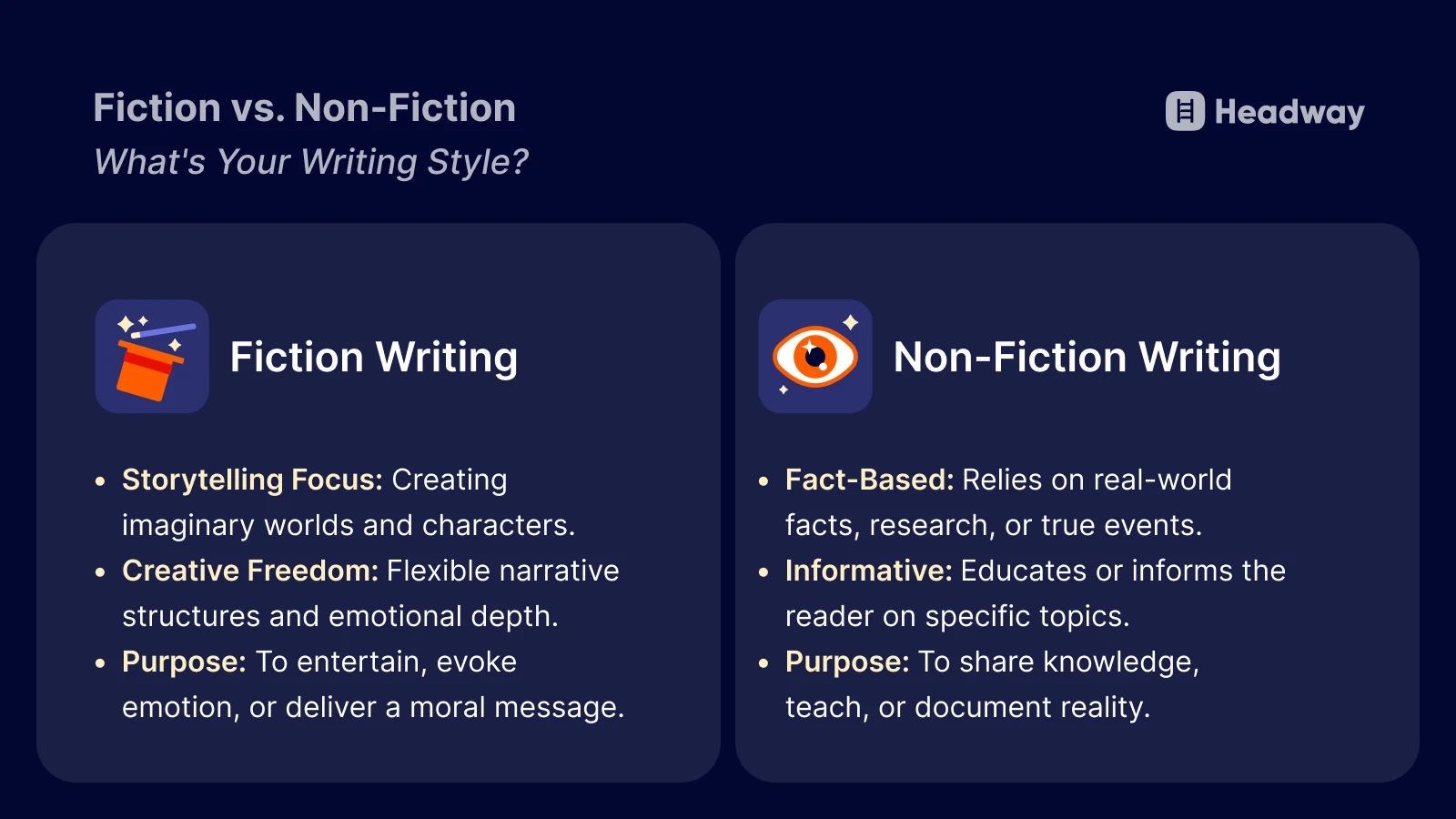
If you're writing a nonfiction book, it's essential to recognize nonfiction's benefits and challenges.
First, let's look at how nonfiction offers unique advantages for writers and readers alike.
Positives for readers: Some of the benefits for readers include:
Acquire knowledge and expand your worldview.
Enrich yourself by cultivating self-improvement.
Expand your skillset by learning new techniques for personal and professional growth. With 'How to Write a Book Review,' I wanted to help readers develop new skills for reviewing books with an easy-to-follow template that would help them right away.
Positives for writers: Some of the benefits for writers include:
Share knowledge and help readers acquire new information.
Build authority by leveraging your expertise.
Make an impact by teaching readers how to achieve real change.
Next, let's discuss some common obstacles that nonfiction writers face:
Clarity: Specialized knowledge can be hard to translate into clear language that readers can easily absorb.
Credibility: If you're new to your field, you might not be recognized yet as a credible expert.
Structure: Without proper organization, information can leave readers confused.
Consistency: To avoid scattered focus, establish consistent habits for your creative practice.
We'll discuss each of these challenges in this guide.
Last, we'll look at some of the gaps in common advice:
Motivation: Some say artists should follow their muse. But successful nonfiction authors don't wait for inspiration. Instead, they stay motivated every day. For an extra kick, check out our guide on how to motivate yourself.
Creative process: Writers often hear confusing advice about the "creative process." In this guide, we'll explore how a creative process is tied to consistent effort.
Time management: Authors are often bombarded with conflicting guidance on time management. Here you'll discover actually helpful strategies, like time-blocked content creation.
Habit formation: Some guides offer unrealistic expectations for your daily workload. What matters more is establishing habits that form a consistent writing routine.
We'll address each of these pitfalls in this guide. Now let's get started.
📘 Master writing habits and structure — get Headway.
Section 2: Action plan: 30‑day book‑writing bootcamp
Just picture it: a month from now, your nonfiction book can be written and one step closer to being published and in the hands of your readers.
How?
Let Headway guide you through the process, from idea to finished product, with our 30-Day Book-Writing Bootcamp, where you'll learn how to write a nonfiction book.
Ready? Let's do this.
Days 1–3: Build your foundation
All great nonfiction books start with a solid foundation built on existing knowledge. They inspire and motivate other authors — like you — to enter the conversation.
The first step in our boot camp is to create a reading and summarizing routine to build that foundation. Aim to read for 20–30 minutes two to three times a week. Consume information widely, from books to podcasts to articles. Book summaries, like those on Headway, can help you quickly sample ideas that inspire your book.
For an extra boost to tackle page one, check out our advice on how to start a book.
Days 4–7: Clarify your idea
After your research, clarify your nonfiction book idea and what problem your book solves. Ask yourself: why are you uniquely qualified to help?
To get to the heart of your idea, pinpoint your avatar, meaning your ideal reader, and what they need. You need to define specifically who your reader is and, most importantly, what problem you can help them with. That problem forms the heart of your book's "why" and its mission. This purpose should be felt on every page.
When I was conceptualizing 'How to Write a Book Review,' I identified my readers' problem: they struggled to write a book review. I took a methodical approach to understanding and solving the problem my readers faced. I had been reviewing and writing about books professionally for years, so I knew that I could leverage my expertise to help them.
Next, I did keyword research to determine what readers were searching for. I discovered that they were looking for a "book review template," so I wrote an answer to that problem. Then I deliberately chose a title that was a common search string so that readers would find the book in the top results.
Week 2: Brainstorm your content
Now it's time to brainstorm the book's content.
Start with a timed session. Write down every possible concept you want to include in your book. Don't worry about perfecting the structure right now, just follow your mind. Aim for 10 to 20 core ideas.
If you work visually, consider mind mapping. Start with a unifying subject in the center of your map. Then work outwards with each branch a related idea. Keep going until you've got between 10 and 20 core ideas.
Week 3: Establish your outline
Next, turn your core ideas into an outline for your book.
Write down each idea from brainstorming in a note or on an index card so that you can experiment with how you arrange them.
Organize your ideas thematically into chapters as sub-points. Structure your book so that each chapter builds on the earlier ones. You want to work toward an ending that solves your reader's issue.
In 'How to Write a Book Review,' I organized the book so that each chapter corresponded to a component of the book reviewing template. The outline was strategically designed to help readers write their book review in bite-sized pieces that would lead to an organized final product.
Week 4: Start your first draft
Now comes the fun part: writing your nonfiction book. Don't overthink it; your first draft doesn't have to be perfect.
The key to completing a first draft is consistent effort. Set a daily word, page, or time goal and stick to it.
If writing a whole nonfiction book sounds daunting, don't do it all at once. Work with your schedule, not against it, and fit in daily micro-writing when convenient. Commit to writing sessions of 300–500 words or 30 minutes a day.
After your first draft is complete, perfect your book by revising it
Congrats! If you've followed our 30-Day Book Writing Bootcamp, you've got everything you need to get ready for publication.
First things first, take some time off and come back to your draft with fresh eyes.
Next, you'll want to schedule a revision process. If you can't block out multiple hours for revision, focus on 20–30 minutes a day.
Try to identify pitfalls, like not having a clear "why" or a lack of organization.
Get a credibility check with someone who can make sure that all the facts and information in your manuscript are accurate.
You'll also want to set up a feedback round. Ask trusted readers to take a look at the book and give their honest take. After incorporating their suggestions, it's time for one final polish.
If grammar isn't your strong suit, consider hiring a proofreader to ensure it's free of mistakes.
Last, you'll want to map out a plan for publication. If you want to publish with a traditional publisher, you'll need a strategy to query agents or connect with an editor. If you're leaning more toward self-publishing, you'll want to hire a manuscript formatter, and you'll also need to design a marketing strategy. Find inspiration in author Jordi Reche's journey, detailed here on the blog.
If you've completed Headway's 30-Day Book Writing Bootcamp, you're on track to write your nonfiction book. We've also got proven techniques to be more creative every day.
Now we'll go over how you can harness the power of writing routines and habits for crafting more bestseller-worthy nonfiction books.
📘 Build lasting writing habits — download Headway now.
Section 3: Forming writing routines and habits (especially for busy professionals)
How does it feel to have finished your first nonfiction book? Amazing, right?
But if you want to convert this singular success into a series of multiple books, you'll need to develop productive writing routines. Creating a schedule with regular writing habits is part of learning how to write a nonfiction book, even if you're a busy professional.
By incorporating habit and consistency into your daily life, rather than waiting for inspiration to strike, you'll establish a sustainable creative process.
Say goodbye to common barriers like time, motivation, burnout, and imposter syndrome. When you develop a routine, you'll be able to overcome those setbacks.
Shape your creative process with these expert-approved exercises adapted from the work of all-star nonfiction authors.
1. Exercise: Time-blocked content creation
Instructions: You don't need endless open hours to write if you structure your time effectively. One hour of laser-focused content creation a day, five days a week, could yield a higher ROI than wasting five hours on a single day with little progress.
For this exercise, inspired by 'The One Hour Content Plan' by Meera Kothand, try setting aside a daily hour for focused content creation. During this block of time, focus on creating as much content for your current writing project as possible. Stick to the same time of day for a few weeks and adapt as you discover your optimal schedule.
Benefit: This exercise will help you build a habit of consistent writing by breaking tasks into manageable chunks, which is key for busy professionals and helps create a productive writing routine.
2. Exercise: Morning pages
Try it: Start your day off with a fresh mind. In 'The Artist's Way,' Julia Cameron introduces the concept of morning pages.
After you wake up, immediately write whatever comes to mind for three pages. Try to write longhand in a dedicated journal to feel closer to the ideas as they flow. This habit helps by not judging or editing the thoughts that come to mind.
If you find that you have nothing to say, lean into that feeling and write about it.
Morning pages help you clear your mind for the day ahead.
Benefit: Morning pages act as a mental cleanse. They help you overcome mental blocks and get into a creative mindset that sets you up for starting the main writing task.
3. Exercise: Flow identification
Try it: In this Flow identification exercise based on the work of Mihaly Csikszentmihalyi, you'll engage with your intuitive, creative process.
Choose an activity that you know will challenge you creatively. For example, you might focus on a tricky chapter you're avoiding. Block out all distractions. Work for a set period of time, immersing yourself in the act of creation. After you're done, review how your creative flow feels. What did you discover about your writing? About yourself, as an artist?
Benefit: This exercise helps you better understand your natural creative rhythm for maximum impact.
# Inspired by Creativity by Mihaly Csikszentmihalyi
4. Exercise: Write through hardship
Try it: When you're going through a tough time, you might feel like shutting down or waiting for the muse to write when you're "feeling better." But in 'Keep Moving,' Maggie Smith advocates for writing during challenges.
By establishing a daily writing practice that you follow consistently, you won't be as easily discouraged when something bad happens.
The next time hardship strikes, whether big or small, push yourself to write. Designate 20 minutes and leave your challenges off the page.
You might even find that the act of writing daily to be a welcome escape from your problems. Writing every day could offer you the break you need.
When I was writing 'How to Write a Book Review,' I struggled with ongoing health obstacles. The last thing I wanted to do was write. Instead of giving up, I pushed myself to keep writing. In fact, having a creative project helped me feel better by giving me something to focus on. I couldn't solve my health problems, but I could write and help solve other people's problems.
Benefit: This exercise helps build resilience in your writing by creating a daily writing practice that won't be thwarted by hardship.
5. Exercise: Battle the resistance
Try it: If you're struggling to establish a consistent content-creation process, it's time to understand what internal resistance is holding you back.
In 'The War of Art,' Steven Pressfield introduces the idea of creative resistance. This inner hesitancy to form new routines is driven by fear, self-doubt, and other scary feelings that tell us that we can't achieve our greatest passions and goals.
For this exercise, fight your resistance as if writing were a battle. Before you start writing, jot down in one sentence what's holding you back from creating a regular writing routine.
Then, write for an hour with each word being a response to your resistance. After, reflect on how you turned that negative energy into creative energy.
This task will help you overcome the mental setbacks that prevent you from writing regularly.
Benefit: By framing writing as a battle, you'll push through internal mental obstacles and create a consistent writing habit.
📘 Overcome creative resistance — get Headway.



Section 4: Common pitfalls and how to avoid them
Even experienced nonfiction authors encounter setbacks. In this section, we'll cover some of the routine pitfalls nonfiction writers face:
Scope creep: When you draft, you might be tempted to incorporate every idea you uncovered in brainstorming. You find that your outline expands. If this happens, challenge your instincts. Ask yourself, "Does this help my audience?" If the answer is "No," delete.
Perfectionism and paralysis: Being too focused on writing or over-editing the perfect draft can make you so paralyzed that you never finish your book. In fact, you might actually be procrastinating from writing the parts of your book that scare you the most. The truth is, no first draft will be publication-ready. Instead, turn the volume down on your inner editor. Embrace the mess that comes with being an artist.
Losing motivation and overcoming inconsistency: You might find yourself losing your motivation to write, which causes inconsistency in your routine. Conversely, being inconsistent in your routine can, in turn, zap your motivation. To solve this issue, go back to your "why." Return to the problem, you are the perfect person to solve it. Having a distinct purpose for your book and a reader you want to help will keep you motivated.
Ignoring audience needs: Unsuccessful nonfiction books don't identify their readers and their needs. The result is a book that doesn't connect with its audience and fails to break through. Avoid this trap by being clear on who you write for and how you can help them.
Lack of structure or plan for your writing routine: Without the anchor of a routine, a chaotic schedule with erratic writing can lead to eventual burnout. Instead, use the tools in this guide to design a structured creative process with achievable goals.
Now that we've explored common writing pitfalls, let's wrap up our guide on how to write a nonfiction book.
Why nonfiction writing matters — and how summaries and Headway can help
In an increasingly complex world, readers need excellent nonfiction books to help them thrive. Let's review why nonfiction still matters for readers and writers.
Why nonfiction will always matter to readers and authors
As long as readers encounter obstacles in their lives, nonfiction writing will continue to matter. As a nonfiction author, you are sharing your knowledge to solve the problems complicating your audience's lives.
Writing nonfiction also matters to writers because it helps you build your authority as an expert in your field, trusted by your readers and colleagues.
With your nonfiction book, you'll make an impact. Readers will benefit from learning skills you teach them to improve their lives.
Open your mind, and writing success will follow
The best nonfiction books add to the dialogue. They build on existing knowledge while also contributing something new to the discussion. To write a book that introduces fresh ideas, you must open your mind to concepts that inspire, challenge, and provoke you.
Writing a nonfiction book isn't just about the writing process. It's also about understanding your target audience, shaping your writing style, and choosing the right format — whether you're working on self-help books or narrative nonfiction.
Headway helps new writers build this foundation faster. Through short summaries, you can study book proposals, sample chapters, tables of contents, and even how successful authors think about cover design, book titles, and structure before pitching to a literary agent.
As you grow your writing life, you'll also start thinking beyond the manuscript. How will your book live on social media? How does book marketing work? What role do bookstores play? What needs self-editing before submission?
With microlearning, you don't just learn how to write — you learn how books are built, positioned, and shared with readers. One insight at a time, Headway helps turn scattered ideas into a finished book that's ready for the world.
Frequently asked questions about writing a nonfiction book
How long does it take to write a nonfiction book?
For some writers, setting a goal of a week or even a weekend fuels them. For other writers, there's no set deadline. Instead, they set and meet micro-objectives. Each book — and each author — is unique. Ultimately, what matters is not how long it takes to write a nonfiction book, but how long it takes to write a good nonfiction book. And that's a process unique to every writer.
What do most writers struggle with?
One of the biggest obstacles many writers face is a lack of confidence. You might be a leader in your field, but if you don't believe in yourself, you might never finish your book. Write a paragraph that summarizes your qualifications. Review this statement each time you begin to question your expertise.
Is nonfiction book structure the same for self‑help, memoir, and business?
Different nonfiction genres require different structures. However, all nonfiction books should help a reader solve a problem. This objective will determine how you organize your book. For example, with memoir, you'll adapt your life experiences into a story that shows how you overcame setbacks. For self-help, your book is built around helping readers improve their lives by sharing practical skills they can apply to their struggles.
Do I need to be an expert to write nonfiction?
Nonfiction books are built on expertise. The good news? You're already an expert! All you need is the wisdom you've acquired in your life journey. In your nonfiction book, you'll package that knowledge into information that helps readers. The bottom line is that what counts in writing a successful nonfiction book is how you leverage your battle-worn expertise, not letters after your name.
How successful are first-time authors?
Seeing a debut author's book become a bestseller can be inspiring — or intimidating. While it might seem that the writer found instant success, a closer look reveals that what matters the most is the book's quality. Whether you're a seasoned nonfiction writer or a first-time author, your aim should be the same: write the best book possible.