Self-growth
 Business & Career
 Success
 Communication
 Healing
 Relationships
 Psychology
 Happiness

Ever had a day where your to-do list is screaming at you, but your body is glued to the sofa? Most people have looked at a pile of laundry or a work deadline and felt that heavy, sinking feeling of a lack of motivation. Those are the moments you might start calling yourself a lazy person or wondering what's wrong with you.
But laziness is rarely about a lack of character. Usually, it's a symptom of something deeper happening in your brain or body. Whether you're dealing with burnout, perfectionism, or a medical condition, understanding the why is the first step to overcoming laziness.
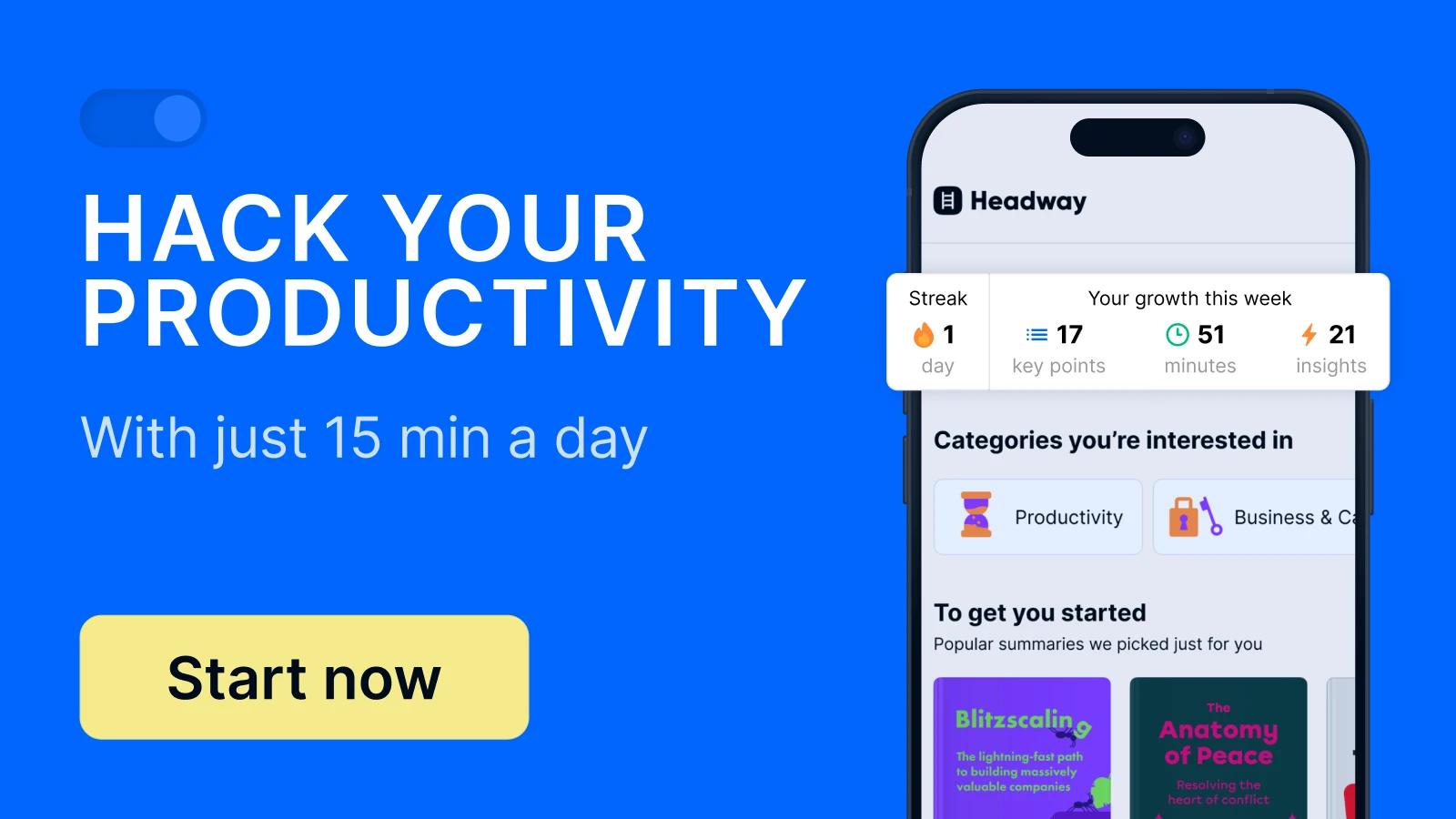
Here, we'll look at how to stop being lazy by examining the science of dopamine, mental health, and habit formation. You don't need a total life shake-up. You just need a few life hacks and a shift in perspective. If you're short on time, the Headway app can help you check in with these ideas through 15-minute book summaries that fit into any daily routine.
📘 Beat procrastination with Headway.
Disclaimer: This article is for informational purposes only and doesn't substitute for professional medical advice. If you believe your lack of motivation is linked to a serious mental health issue, please consult a healthcare provider.
Quick answer: How to stop being so lazy today
If you need to move right now, follow these five steps to break the cycle of procrastination:
Use the five-minute rule: Commit to working on one task for only five minutes to lower the barrier to entry.
Boost your biology: Get sunlight or do a quick stretch to increase your natural energy levels.
Remove digital friction: Put your phone in another room to reduce the urge to scroll through social media.
Scale down the goal: Don't look at the whole project; just identify the very next physical action.
Get external inspiration: Use the Headway app to listen to a summary of 'Atomic Habits' while you start a chore.
Laziness vs Reality: Why you aren't actually a "lazy bum"
Before you can figure out how to stop being a "lazy bum," you have to stop calling yourself one. Labeling yourself as lazy can actually damage your self-esteem. When you believe you're fundamentally unmotivated, your brain stops looking for solutions and starts looking for an exit.
In reality, what we call laziness is often executive dysfunction or a protective mechanism. Your brain might be trying to protect you from the stress of a task that feels too big or confusing. Sometimes, a lack of motivation is actually your body's way of saying it needs more hours of sleep or better nutrition to support your physical health.
It's also important to consider your mental health. If you find yourself wondering how to stop being depressed and lazy, it's possible that your low motivation is a symptom of clinical depression. That calls for professional support instead of a simple boost in willpower. By reframing the issue, you can move from guilt to action.
Many people feel more motivated when they see others constantly getting things done. But everyone has a different starting point. Comparing your inside to someone else's outside is a fast track to feeling stuck. Instead of judging yourself, look at your habits through a scientific lens.
How to stop being lazy and unmotivated: 12 evidence-based strategies
Learning how to stop being lazy and get motivated is about working with your biology, not against it. Here are 12 strategies to help you overcome laziness and regain your momentum.
1. Manage your dopamine baseline
Dopamine is the molecule of more. It drives people to seek rewards and stay focused. If you spend all morning on social media, you burn through your dopamine reserves early. That leaves you feeling flat and unmotivated for the rest of the day.
To fix this, try a morning dopamine fast. Avoid high-stimulus activities, such as checking your phone or eating sugary snacks, immediately after waking up. That keeps your baseline steady, making it easier to get started on productive tasks. When your brain isn't overstimulated by screen time, simple tasks feel more engaging.
2. Practice behavioral activation
One of the biggest myths is that you need to feel motivated before you act. Productive people know the opposite is true: action creates motivation. It's called behavioral activation, a concept often used in mental health therapy.
If you're trying to figure out how to stop being lazy and depressed, start with one tiny physical movement. Don't wait for the mood to strike. Just stand up and wash one dish. The momentum from that one small act often carries you into the next one.
3. Use the 'Two-Minute Rule'
David Allen, the author of 'Getting Things Done,' popularized this simple tip. If a task takes less than two minutes, do it immediately. The idea is to stop small chores from piling up into an overwhelming mountain of procrastination.
Hanging up your coat or replying to a quick email takes seconds. When you clear these micro-tasks, you reduce the mental clutter that makes you feel lazy. It keeps your to-do list lean and manageable. You'll find that being less lazy is often just about making quick decisions.
4. Optimize your energy levels, not just your time
Time management is useless if you don't have the energy to use that time. Often, people think they're being lazy when they're actually just exhausted. Check your basic physical health: are you getting enough sleep?
Most adults need seven to nine hours of sleep to function. If you're constantly tired, your brain will prioritize rest over work. Prioritize your well-being by setting a strict bedtime and staying hydrated throughout the day. It's hard to overcome laziness when you're running on empty.
5. Break tasks into ridiculously small steps
Perfectionism is a major cause of procrastination. When you want to do something perfectly, the pressure makes you freeze. You end up doing nothing, which looks like laziness from the outside.
To combat this, break your goals down into smaller, more manageable pieces. Instead of cleaning the house, try putting away three items in the living room. Small wins build self-esteem and prove to your brain that you're capable of getting things done. It's the ultimate way to stop being lazy and unmotivated.
6. Design your environment for success
Your environment dictates your behavior more than you might realize. If your workspace is cluttered or your phone is always within reach, you're making things harder for yourself. It takes a lot of willpower to ignore distractions, and willpower is a finite resource.
Minimize screen time by using app blockers or leaving your devices in another room. Create a low-friction environment where the things you need to do are easy to get started on. Lay out your workout clothes the night before, for example. That simple daily routine hack makes the right choice the easiest choice.
7. Stop the negative self-talk
The way you speak to yourself matters. Constant self-talk that frames you as a lost cause creates a cycle of shame. Shame drains your energy and makes you want to hide under the covers rather than work on a project.
Instead of berating yourself, try being curious. Ask why you're struggling to start. Maybe you're scared of failing, or you don't have enough information. Treating yourself with kindness makes it much easier to overcome laziness in the long run. Self-compassion is a key part of long-term well-being.
📘 Reframe inner dialogue with Headway.



8. Use 'Reward Yourself' systems
Your brain loves rewards. If you only focus on the hard work, you'll eventually burn out. Create a system that rewards you after completing difficult tasks. That helps your brain associate effort with a positive outcome.
The reward doesn't have to be big. It could be five minutes of a favorite podcast or a piece of dark chocolate. By linking a boring task to a positive reward, you train your brain to look forward to getting work finished. It's a simple way to stay motivated.
9. Address perfectionism directly
Perfectionism is often just laziness in a fancy suit. You tell yourself you're waiting for the perfect moment or the perfect plan. In reality, you're just afraid of being imperfect. That fear keeps you from starting, which leads to more procrastination.
Accept that done is better than perfect. Allow yourself to do a rough first draft of whatever you're working on. Once you have something on paper, the fear of the blank page disappears. That's how you stop being lazy and procrastinating on your big goals.
10. Check for a medical condition
If you've tried every productivity tip and still feel heavy, it might be time for a medical check-in. Conditions like anemia, thyroid issues, or vitamin deficiencies can mimic laziness. It might not be a motivation problem at all; it might just be a biological one.
Chronic fatigue is a real physical state, not a character flaw. If your lack of motivation is accompanied by physical pain or extreme lethargy, consult a doctor. Rule out the biological before you blame your personality. A medical condition needs medical attention, not just a push to work harder.
11. Limit social media consumption
Social media is designed to keep you scrolling. It provides cheap dopamine that tricks your brain into thinking it's being productive or social when it's actually just passive. That's why people spend hours on their phones and feel exhausted afterward.
High screen time is one of the biggest contributors to feeling lazy, even when you've been active online. Try a grayscale mode on your phone to make it less visually stimulating. Without the constant ping of notifications, your focus returns, and you feel less lazy.
12. Try microlearning
Sometimes you might feel lazy because the thought of learning something new feels like a massive chore. That's where microlearning comes in. It's a short-term commitment with long-term results. Instead of a two-hour lecture, try a 15-minute summary.
Use the Headway app to listen to the core ideas of bestselling books while you cook or commute. This small win creates a sense of progress that fuels further action. It's a great way to stop being lazy and unmotivated because it requires very little initial effort to get started.
➡️ What is Headway exactly, and how can it improve my daily life?
Overcoming specific hurdles: ADHD, Work, and Burnout
Sometimes, general advice doesn't work for specific situations. If you're struggling to stop being lazy in an ADHD way or feel stuck in your career, you need a tailored approach.
How to stop being lazy with ADHD
For those with ADHD, low motivation is usually a struggle with executive function. Your brain has trouble switching between tasks or prioritizing what is important. That's not a bad thing — it's just how your brain is wired. You're not a lazy person; you just have a different way of processing.
Focus on body doubling — working alongside someone else, even virtually. Use external timers and visual to-do lists to stay on track. Breaking tasks into very small, timed intervals helps keep the ADHD brain engaged. The key is to reduce the mental load required to start a task.
How to stop being lazy at work

Beat workplace procrastination and get practical insights to stay focused daily.
Feeling lazy at work is often a sign of burnout. If you used to be productive and now you can't bring yourself to open your email, you're likely exhausted. That isn't laziness; it's a lack of alignment or a response to chronic stress.
Try to find micro-purposes in your daily tasks. How does your work help someone else? If that doesn't work, focus on time management techniques, such as the Pomodoro method, to get through the day. Sometimes, overcoming laziness at work is about learning to rest properly on your weekends.
How to stop being lazy and procrastinating
Procrastination is an emotional regulation problem, not a time problem. You procrastinate because a task makes you feel anxious, bored, or insecure. To stop, you have to address the emotion first. If you keep putting things off, you're just avoiding a feeling.
Acknowledge it. "I feel anxious about this report." Once the emotion is named, it loses some of its power. You can then use the five-minute rule to start, even while feeling that anxiety. That's a practical way to stop being lazy and procrastinating on the things that matter most.

Use Headway to bridge the "Action Gap"
The Action Gap is the space between knowing what to do and actually doing it. Most of us know how to stop being lazy, but the effort required to gather that information feels like too much. You want to grow, but you're too tired to read a 300-page book on the topic.
Headway makes that easier. You don't have to spend hours researching how to stop being so lazy. You can simply open the app and find a collection of summaries on habits, focus, and drive. It's designed for people who want to overcome laziness but need a gentle start.
Audio summaries: Listen to books like 'The 5 Second Rule' while you're doing the dishes or driving to work.
Daily reminders: Get small nudges to keep your well-being on track and remind you to check in with your goals.
Growth plans: Follow a structured path so you never have to wonder what's next. This approach removes the decision fatigue that often looks like laziness.
Quizzes and shorts: Engage with content that feels like social media but actually helps you grow.
By turning personal growth into a 15-minute habit, you prove to yourself that you're not a lazy person. You just needed a better system. Small, daily actions are the antidote to feeling overwhelmed and unmotivated.
📘 Turn insight into action with Headway.
FAQs on how to stop being lazy
How to stop being lazy and unmotivated right now?
To stop being lazy and unmotivated immediately, try the five-minute rule. Commit to doing just one small task for five minutes. Often, the hardest part of any job is simply starting. Once you break the initial resistance, your brain's natural momentum will help you continue without needing constant willpower or high energy levels. It's the fastest way to stop being so lazy today.
How to stop being lazy ADHD, and get things done?
Start by dropping the idea that discipline alone will fix it, and focus on dopamine management instead. Break tasks into tiny, visual steps and use a timer. Working in short bursts with frequent rewards helps prevent brain fog. Also, try body doubling, which is working in the presence of others to maintain focus and accountability while getting things done.
How to stop being so lazy and depressed at home?
When you're feeling low and unmotivated, the focus should be on behavioral activation — performing small physical actions even when you don't feel like it. Start with basic self-care, like taking a shower or making the bed. These small wins can slowly help rebuild your self-esteem and improve your overall mental health.
How to stop being lazy and get motivated for work?
Learning how to stop being lazy at work usually requires better time management and clear boundaries. Use a to-do list to prioritize your most important tasks for the morning when your energy levels are highest. If you feel burnt out, ensure you're getting enough sleep and taking short breaks to avoid mental exhaustion and protect your well-being.
How to stop being lazy and procrastinating on social media?
The best way to stop being lazy and procrastinating on social media is to remove the temptation entirely. Put your phone in another room or use a website blocker during work hours. Reducing your screen time allows your brain to reset its dopamine baseline, making real-world tasks feel more engaging and less like a boring chore. That helps you become less lazy over time.
How to stop being a lazy bum and change my life?
The first step is to drop the harsh self-talk. Focus on building a daily routine that includes small, manageable habits. Use tools like the Headway app to engage in microlearning for informational purposes. It's a way to gain new life hacks and perspectives on self-esteem without feeling overwhelmed by a massive lifestyle change.
Is laziness a medical condition or just a habit?
While laziness itself isn't a medical condition, it's often a symptom of underlying issues like ADHD, depression, or chronic fatigue. If you're getting enough sleep and maintaining good physical health but still can't function, it's worth checking in with a professional. Understanding the root cause is the most reliable way to overcome laziness and restore your energy levels.