Self-growth
 Apps & Digital Tools
 Business & Career
 Success
 Growth Tools
 Psychology
 Communication
 Relationships

Ever stood in a silent elevator, staring intensely at the floor numbers, feeling your social battery drain just from the possibility of having to speak?
That frantic internal search for conversation starters usually ends in a panic about the weather or a weird comment about the lobby carpet. But here's the secret: knowing how to start a conversation isn't some magical trait you're born with. It's a set of social skills, much like riding a bike or cooking an egg, that anyone can master with the right practice.
At Headway, we've helped over 55 million users simplify the path to social mastery, including how to start conversations without the brain freeze. Our mission is to take the intimidation out of starting conversations so you can connect with new people naturally.
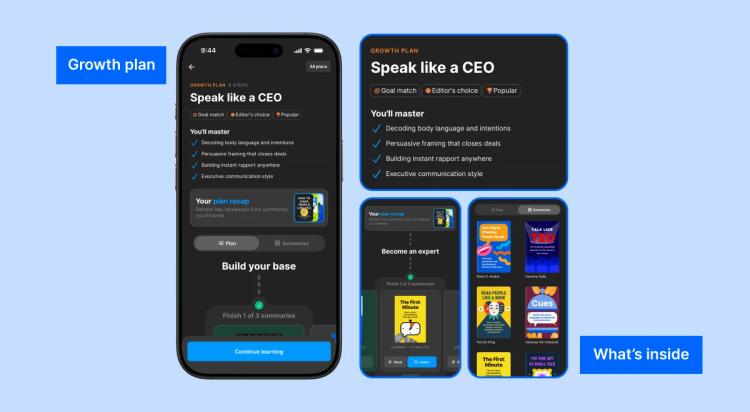
📘 If you're ready to sharpen your conversational skills, download Headway. Our growth plans and book summaries on communication are a great place to get started.
How to start a conversation: The essential checklist
If you need to break the ice right now, here are the best ways to get going without the awkwardness:
Observe the environment: Pick something you're both seeing: a long line, a weird piece of art, or even the coffee, and make a low-pressure comment about it.
The FORD Method: When you're stuck, ask about Family, Occupation, Recreation, or Dreams. These are universal conversation topics that almost everyone loves to discuss.
Use open-ended questions: Avoid "yes/no" dead ends. Start your sentences with "How" or "What" to keep the conversation flowing.
The support shift: Instead of waiting for your turn to talk about yourself, focus entirely on their story. This way shows genuine interest and builds an immediate connection.

Tired of awkward silences when meeting someone?
Connect with anyone instantly using proven ideas from communication experts.
Learn to talk effortlesslyThe psychology of social anxiety: Why we freeze before we even start
The reason we often struggle with how to start off a conversation isn't that we have nothing to say. It's that our brains are playing tricks on us. Psychologists call this the 'Spotlight Effect.' It's that nagging feeling that everyone is hyper-focused on your every word, waiting for you to trip up.
In reality, most people are far too worried about their own social interaction to notice if your opening line wasn't Shakespearean. When we overthink, we create an unnecessary barrier to real conversation. In the classic 'How to Win Friends and Influence People,' Dale Carnegie highlights that the first time you meet someone, the goal isn't to be interesting. It's to be interested.
Humans have a fundamental, deep-seated desire to be heard and understood. Shifting the focus away from your own performance and onto the person in front of you lowers anxiety and makes the whole thing easier. It's much easier to find how to start a casual conversation when you realize the other person is likely just as nervous as you are.
Strategy #1: The FORD Method and the ARE Method
Frameworks are some of the most useful shortcuts in social situations. The FORD method, Family, Occupation, Recreation, and Dreams, is a classic for a reason: it covers the bases of a person's life. But if you want to move beyond small talk and into meaningful conversations, you need the ARE method: Anchor, Reveal, and Encourage.
First, anchor the conversation in a shared reality (for example, "This conference is way more crowded than last time, right?"). Then, reveal a tiny bit of yourself to build trust ("I'm usually more of a homebody, so this is a bit out of my comfort zone"). Finally, encourage them to speak by asking engaging questions ("How are you finding the sessions so far?").
This strategy creates a natural loop that keeps the conversation going without it feeling like an interrogation. Mastering these communication skills is about creating a safe space for the other person to open up.
📘 Networking doesn't have to be awkward. Master professional communication and grow your career with Headway's growth plans today.
Strategy #2: Body language and non-verbal openers
You could have the most polished script in the world, but if your body language is screaming "I'd rather be anywhere else," the interaction is going to flop. Humans are social animals. We pick up on signals long before we actually process the words someone is saying. If you're hunched over or checking your phone, you're essentially closing the door before you've even knocked.


In her book 'Captivate,' Vanessa Van Edwards talks about the "Triple Peak." It's a simple combination of a quick eyebrow raise (which signals curiosity), a genuine smile, and a slight lean-in. These small physical cues act as a green light for the other person, letting them know you're approachable and safe to talk to.
Also, don't underestimate the power of solid eye contact either. You don't need to stare them down, but looking someone in the eye shows you have the social skills to actually engage. It's one of the best ways to show you're paying attention without saying a single word. When your physical presence matches your genuine interest, the whole "getting to know you" process feels a lot less like a chore.
Strategy #3: Networking and professional openers
So, here's the truth: how to start a conversation at work is often the most awkward hurdle of all. We've all been at those "mixers" where everyone is clutching a lukewarm coffee and asking the same soul-crushing question: "So, what do you do?" It's a conversational dead end because it defines people by their job titles rather than their actual interests.
If you want to master how to start a new conversation in a professional setting, you have to break the script. Instead of the "What do you do?" trap, try asking, "What's keeping you busy these days?" or "What's a project you're actually excited about right now?" This allows the other person to talk about their passions, not just their payroll.
Whether you're meeting someone for the first time at a conference or just trying to navigate a social interaction in the breakroom, focusing on their current energy makes starting conversations feel much more natural. It turns a stiff exchange into a real-life connection that people will actually remember.
Strategy #4: Sustaining the flow
Breaking the ice is the hard part, but keeping the conversation flowing is where things get interesting. Most people stumble here because they fall into "Conversational Narcissism." That's when you're just waiting for the other person to stop talking so you can jump in with your own story. If they mention they just started a new podcast, don't immediately launch into a list of your favorite books or shows. That's a "Shift Response," and it kills the momentum.
To get into meaningful conversations, you need "Support Responses." Use follow-up questions that encourage them to keep going. If they tell you they went on a trip, ask, "What was the most unexpected part of that trip?" instead of just saying, "Cool, I went to Italy last time I had a break."
Using open-ended questions shows you're actually listening, which makes the other person feel valued. That's the core of great conversational skills: it's not about having the perfect story to tell, but about being the best person to listen to. When you stop worrying about being interesting and focus on being interested, meaningful conversations happen almost by accident.
📘 Build your social muscles 15 minutes at a time. Join 55 million learners on Headway and start your charisma streak.
The digital shift: Chat and text mastery
A huge chunk of our social interaction happens through a screen these days. But just because you aren't looking someone in the eye doesn't mean the rules of a good conversation change. In fact, figuring out how to start a new conversation via text or DM can feel like even higher stakes because you lose the benefit of body language. Without a smile or a friendly tone of voice to buffer your words, things can get misinterpreted fast.
Create authentic connections anywhere and get science-backed ideas for growth.
Whether you're trying to figure out how to start a conversation in chat with a new colleague or looking for a text opener for someone you just met, the specific callback is your best friend. Instead of the dreaded "Hey, what's up?" (which is the digital equivalent of a wet blanket), try to reference a shared moment. Maybe it's a TV show you both mentioned or a weird podcast you both follow.
When you're looking for how to start a romantic conversation over text, the rule of thumb is to be specific. Instead of a generic greeting, try: "I just saw this, and it totally reminded me of that story you told about your dog. How's your week going?" This approach shows genuine interest and gives them an easy way to respond. It moves the needle from small talk to a real conversation without the pressure of an immediate in-person meeting.
Conversation starters for any situation: Events, work, friends, and strangers
Sometimes the brain freeze is real, and you just need a direct script to kill the awkward silence. You don't have to be a professional comedian to have great conversational skills. You just need a few go-to entries in your mental repertoire.
Here is a breakdown of how to start a conversation examples that actually work in real life:
| Context | How to start a conversation with anyone | Why it works |
|---|---|---|
At a party or event | "I don't know many people here. How do you know the host?" | It's honest, humble, and finds common ground immediately. |
With your best friend | "What was the weirdest thing that happened to you today?" | Perfect for how to start a fun conversation with someone you already trust. |
Professional or work | "I've been looking for a new podcast to listen to on my commute. Have you heard anything good lately?" | Focuses on shared interests and works well as a how to start a casual conversation starter. |
With a stranger | "I love that book/shirt/bag. Where did you get it?" | Compliments are easy ways to lower someone's guard and start conversations. |
The key to how to start a conversation and keep it going is to follow up with engaging questions. If they tell you they love their favorite books, don't just say "Cool." Ask them, "What was the last time a book actually changed the way you thought about something?" This framing shifts the social interaction from a surface-level exchange into something that actually positively impacts your mental health.
Get more out of every conversation with Headway!
At the end of the day, being good at conversation isn't something you're born with. It's a skill you build through repetition. For introverts, the idea of walking up to new people might always feel a little daunting, but the more you practice starting conversations, the less power the awkward silence has over you.
Headway is created specifically for people who want to grow but don't have hours to spend in a library. We've distilled the best ideas from the world's top experts on body language, eye contact, and communication skills into 15-minute summaries.
Instead of overthinking how to start a conversation with someone, you can learn the exact frameworks used by the world's most charming people while you're drinking your morning coffee.
Your social mastery challenge:
Grab the app: Join our community of 55 million learners already using Headway.
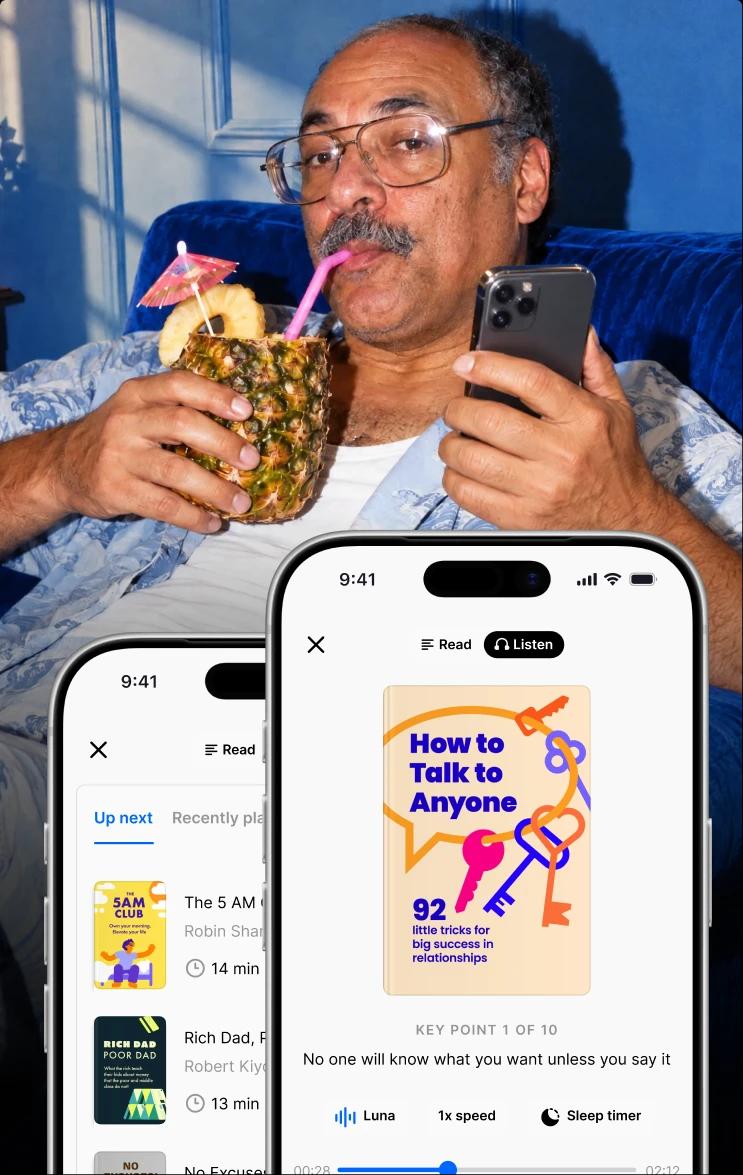
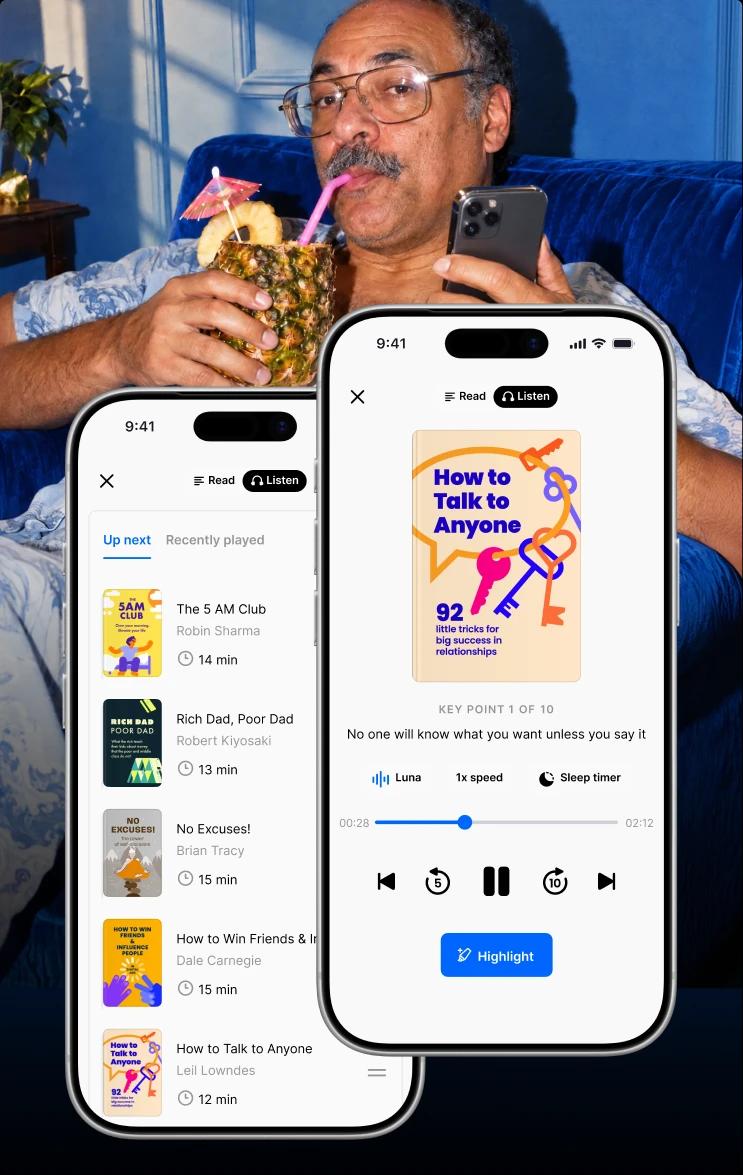
Listen to one summary: Start with 'Captivate' or 'How to Talk to Anyone.'
Take it to real life: The next time you're in person, try one new follow-up question or opener you learned.
You don't need to be the loudest person in the room to have meaningful conversations. You just need the right tools ready when you need them. Whether you're looking for how to start off a conversation at a high-stakes networking event or just want to feel more comfortable in your daily life, the right framework makes a bigger difference than you'd expect.
📘 Ready to master the art of the opening line? Download the Headway app now and explore our collections to start connecting like a pro.
FAQs about how to start a conversation
How to start a conversation with a friend?
Friends are the best place to practice your social skills because the pressure is low. Instead of the usual "how are you," try referencing a shared interest or a funny memory. Something like, "I just saw this, and it reminded me of that time we..." instantly bridges the gap and moves you past surface-level small talk into a real conversation.
How to start a text conversation with a guy?
The best way to start a text conversation is to skip the generic "hey" and go straight to a specific hook. Mention a TV show he likes or a podcast you both follow. A low-pressure question like, "I just heard this crazy story on that show we talked about, what did you think of it?" keeps the conversation flowing naturally.
How to start a conversation with your boyfriend over text?
When you've been together a while, starting a conversation over text can feel repetitive. Break the routine by sending a text about a future dream or a fun memory from your last time together. It signals genuine interest and gives him something easy to respond to. Try: "I was just thinking about that trip we took; we should definitely plan something similar soon, right?"
How to start a romantic conversation over text?
Starting a romantic conversation over text requires a mix of vulnerability and playfulness. Avoid overthinking and focus on the vibes you want to create. A thoughtful compliment or a "thinking of you" message works wonders. For example: "I was just listening to that song you sent me, and it totally made my day. You always have the best taste."
How to start a conversation with someone new?
To start a conversation with someone new, use the ARE method: Anchor, Reveal, Encourage. Anchor the chat in your shared surroundings, reveal a small detail about yourself, and encourage them to speak with open-ended questions. This approach creates common ground quickly and helps you avoid that awkward silence. It takes the pressure off both of you in an otherwise stressful social situation.