Self-growth
 Business & Career
 Success
 Communication
 Healing
 Relationships
 Psychology
 Happiness
You probably know the feeling of wanting to change but choosing the couch instead. It's much easier to stay in your comfort zone than to chase long-term goals. But building discipline isn't about being a robot; it's about making better choices every day.
Self-discipline is the ability to choose your long-term goals over instant gratification. You can learn how to develop discipline by building consistent daily habits and practicing delayed gratification. It's a skill you strengthen over time, like a muscle, rather than a fixed trait you're born with.
Here's a simple breakdown of what discipline is and what it definitely isn't:
| What discipline is | What discipline is not |
|---|---|
Sticking to a plan even when you don't feel like it. | Waiting for "motivation" to suddenly appear. |
Creating a system that makes good habits easy. | Trying to force yourself through sheer willpower alone. |
Making little, steady progress every single day. | Doing a lot of work once and then quitting. |
Saying "no" to things that distract you from your goals. | Punishing yourself for making a mistake. |
Choosing your future self over your current comfort. | Burning yourself out by never taking a break. |
With Headway as your primary tool for learning from world-class experts in just 3–20 minutes, you can start your self-improvement journey right now. Having the right knowledge is a great start, but the real power comes from taking action.
📘 Build unshakable discipline with Headway.
Quick answer: Five fast ways to build self-discipline
Start with small wins: Focus on one new habit that takes less than five minutes to finish each day.
Remove temptations: Design your space so you don't have to use up your willpower to manually resist temptations.
Use a to-do list: Write down your tasks to save mental energy for doing the work rather than remembering it.
Manage triggers: Identify what causes your procrastination and plan a different reaction to those feelings.
Practice self-care: Prioritize your physical health and well-being to keep your brain ready for hard tasks.
Starting with these quick tips gives you the momentum needed to explore the deeper reasons why staying disciplined can feel so hard.
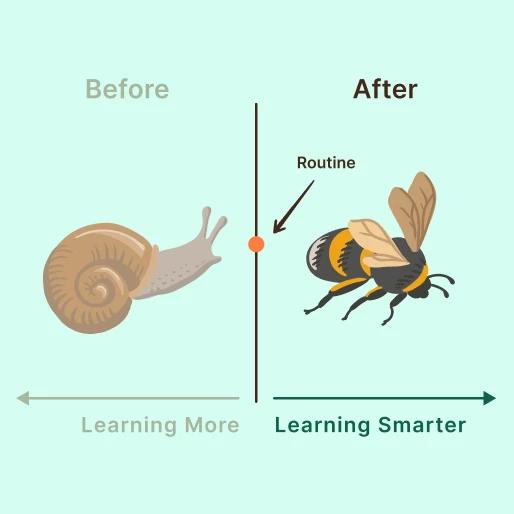
Unlock your daily growth superpower
Transform your routine to fuel continuous learning and effortless improvement.
Let's startThe psychology of self-control: Why discipline fails
Discipline often fails because people rely too much on willpower, which is a limited resource. Your brain naturally loves instant gratification because it makes you feel good right now. But long-term success requires delayed gratification, which means waiting for a bigger reward later.
Practicing delayed gratification can drain your mental energy if you have to make too many choices throughout the day. When you're tired, your decision-making suffers, and you're more likely to fall back into bad habits. Focusing on your mental health and getting enough rest helps keep your brain ready for these challenges. Once your mind is ready, you can start using specific techniques to turn your goals into lasting habits.

Actionable strategies to develop discipline
A solid daily routine is the best way to develop self-discipline without burning out. When your actions become automatic, you don't need to use your willpower to get started. You simply follow the plan you already made for yourself.
Manage digital overload in an AI-driven world
AI and constant notifications can fill your head with too much noise. Having so many distractions makes it hard to focus on your own work. You can build discipline by setting clear times to stay offline. This practice protects your brain from "information fatigue" and helps you keep your focus sharp.
Create boundaries for hybrid and remote work
Working from home often blurs the line between rest and effort. It's easy to slide into "familiar comforts" when you should be working. Design a specific corner of your home just for your tasks. This space helps your brain switch into a focused state even when the couch is nearby.
Fight "willpower depletion" from constant change
Fast economic shifts and new tech can drain your energy quickly. When your cognitive load is high, you're more likely to give up on your goals. Use small routines to save your willpower for the big decisions that really matter for your long-term success.
Choose growth over the safety of the status quo
Automation might make life feel easier, but it can also lead to stagnation. It's tempting to stay where it's safe and easy. But you must intentionally pick tasks that challenge you and pull you away from the "easy path" to stay disciplined.
If you struggle with a specific task, try the "5-second rule" to stop procrastination before it begins. Count backward from five and move your body as soon as you hit one. This simple act builds the mental toughness needed to push through your comfort zone. Recording your progress through journaling can also help you see how far you've come. For even more guidance, turn to the experts who've spent years studying the best ways to stay on track.
📘 Learn from world-class doers with Headway.
Five essential books on discipline from the Headway library
Learning from experts is a great way to find a life-changing strategy for your own life. These five books offer practical advice for building self-control and staying on track. You can find key insights from all these titles in the Headway app.
'No Excuses!: The Power of Self-Discipline' by Brian Tracy
Brian Tracy argues that your level of self-discipline is the primary factor in your success. He provides a roadmap for taking total responsibility for your life, which is perfect if you feel like external factors are holding you back. This book helps you stop making excuses and start building a foundation of personal power.
Tracy breaks down 21 key areas of life, including finances, health, and personal relationships, where discipline is the difference between failure and achievement. He explains that by mastering the "Eat That Frog" method of tackling your hardest task first, you can rewire your brain to value long-term results over short-term comfort.
'Discipline Equals Freedom: Field Manual' by Jocko Willink
Jocko Willink draws on his Navy SEAL experience to show that discipline is the path to greater freedom. If you feel trapped by your own bad habits or lack of direction, his no-nonsense mindset is the wake-up call you need. He teaches you that the shortcut is a lie and that hard work is the reward.
Willink details how a strictly regulated physical and mental regimen removes the burden of decision-making. By waking up early and preparing for "the war" within yourself every morning, you build a psychological edge that makes you harder to distract.
'Self-Discipline in Difficult Times' by Martin Meadows
This book is specifically for the reader who struggles to stay on track when life gets chaotic. Martin Meadows offers strategies to keep moving forward even when your world turns upside down. It's a great guide for building resilience and maintaining your daily routine through economic shifts or personal stress.
In this text, Meadows dives deep into the concept of "unshakable" discipline, which relies on mental flexibility rather than rigid perfection. He explores how to lower your expectations during a crisis while still maintaining your core commitments, so you don't lose momentum when life becomes unpredictable.
'The Science of Self-Discipline' by Peter Hollins
If you want to understand the "why" behind your behavior, Peter Hollins breaks down the biology of willpower. He explains the psychological mechanisms that lead you to fail and provides tools to resist temptation. This book is for readers who want evidence-based techniques to beat procrastination and improve their self-control.
Hollins explains how your dopamine system often hijacks your intentions, leading you toward instant gratification. By understanding biological triggers like "ego depletion" and the "what the hell effect," you can implement cognitive hacks that protect your focus and keep your behavior aligned with your long-term goals.
'The Willpower Instinct' by Kelly McGonigal, PhD
Kelly McGonigal explores how self-control works and why it's so important for your well-being. She shows you that willpower is a biological function you can strengthen with practice. This book is the ideal choice if you want to stop feeling guilty and start treating your self-discipline like a skill you can train.
It outlines the three distinct powers of self-control: "I will," "I won't," and "I want." McGonigal reveals how physiological factors, like stress and sleep deprivation, directly attack these powers, and she provides specific breathing and mindfulness exercises designed to physically strengthen the prefrontal cortex over time.
These lessons are not just for researchers. They're the same principles that successful leaders use to manage their daily work.
📘 Strengthen self-control with Headway.



Lifehack: Find your role model to stay on track
Entrepreneurs and world-class leaders are the ultimate role models for self-discipline. They often work without a boss or a fixed schedule, meaning they must build their own internal structures to survive. Looking at how they manage their time can help you bridge the gap between your big goals and your daily actions. Use their experiences as a blueprint for your own growth, rather than trying to figure everything out alone.
By studying their habits, you'll realize that discipline isn't a secret gift, but a choice they make every morning. When you see a self-disciplined person succeed with these methods, it becomes easier to believe you can do the same. Seeing real results makes it easier to keep going when you feel like quitting. Eventually, following these patterns leads to the long-term success you're looking for.
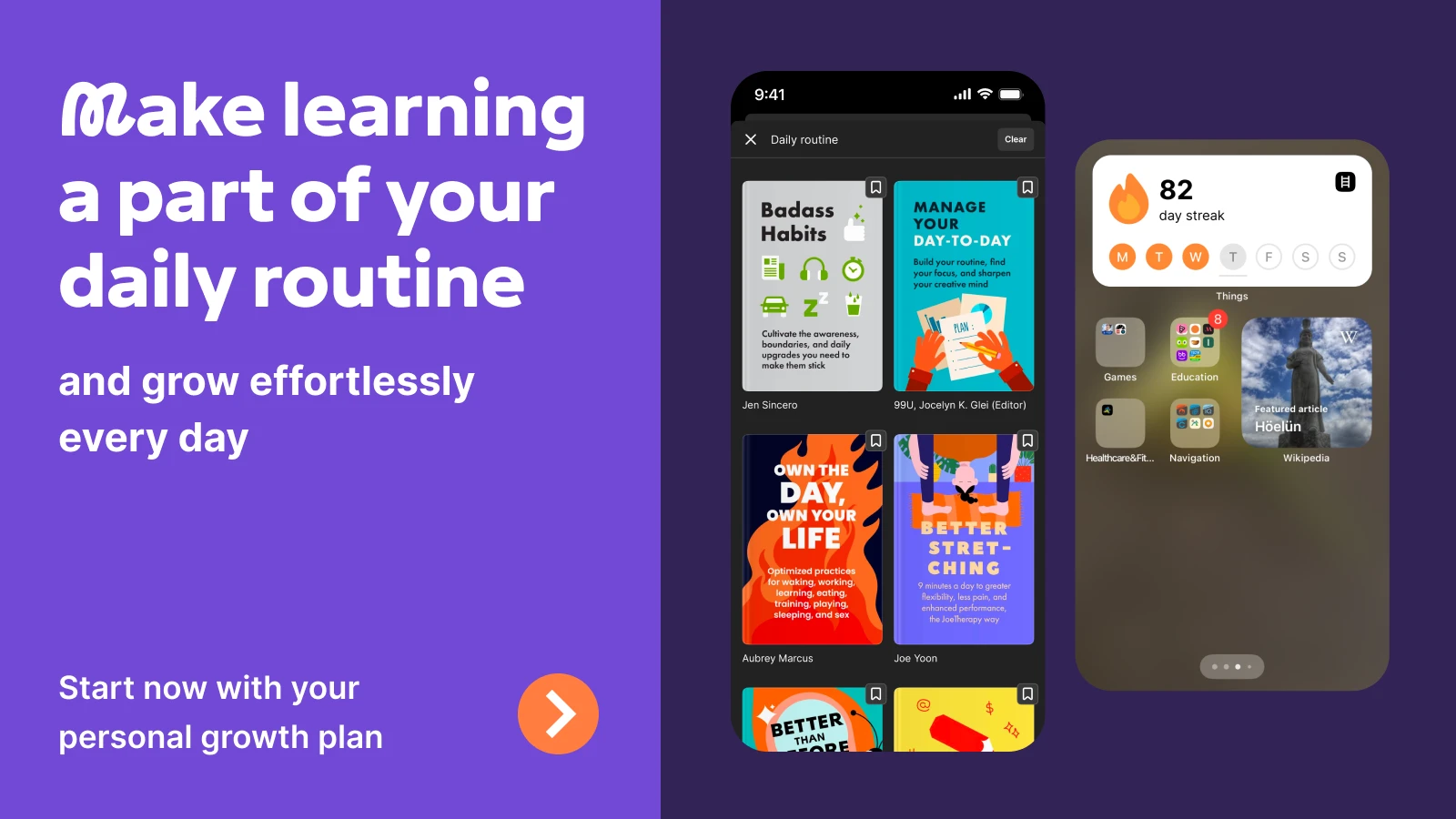
Develop discipline without burnout with Headway
Becoming self-disciplined takes time, and you should focus on progress rather than perfection. You'll have days when you fail, but the goal is to get back on track as quickly as possible. Every small step you take today helps you build a more disciplined life for tomorrow.
Headway makes building this habit easy by turning the world's best nonfiction books into quick summaries. Instead of spending weeks on one book, you get the key insights and practical advice in a format designed for your busy life. Here's how Headway helps you stay consistent:
Daily microlearning: Fit growth into small gaps in your day, like your morning coffee or commute.
Audio and text options: Listen while you exercise or read before bed to keep your mind sharp.
Personalized growth plans: Get book recommendations tailored to your goals, such as overcoming procrastination.
Motivation widgets: Track your learning streaks and see your progress right on your phone screen.
Actionable takeaways: Each summary ends with practical steps you can use immediately in your daily life.
Start with Headway's self-help book summaries and find the knowledge you need to crush your goals. Join over 55 million people already using the app to grow, one book at a time.
📘 Turn discipline into a habit with Headway.
Frequently asked questions on how to develop discipline
How do I develop discipline?
You develop discipline by starting with tiny actions that require very little effort. Instead of relying on big bursts of energy, you build systems that make your habits automatic. That means setting up your environment for success and focusing on one small change at a time. Consistency is the secret to lasting results.
How can I stay disciplined without motivation?
Motivation is a feeling that comes and goes, so you can't rely on it. Real discipline means following your schedule even when you don't feel like it. You achieve this by creating a solid daily routine and using tools like the "5-second rule." This method takes the choice out of the moment.
What are the five C's of discipline?
The five C's of discipline are clarity, courage, commitment, consistency, and control. You need clarity to know your goals and courage to start. Commitment keeps you focused, while consistency builds the habit over time. Finally, control helps you manage your impulses and stay on your chosen path toward long-term success.
What is the root cause of a lack of discipline?
A lack of discipline often comes from a brain that's wired for instant gratification. When you face too many distractions or high stress, your mental energy drains quickly. A drain like this makes it harder to choose long-term goals over comfort. Improving your environment and managing your triggers can help you regain your focus.
How do I develop discipline as an adult?
Developing discipline as an adult requires taking full responsibility for your daily choices. Since you don't have a teacher or parent watching, you must build your own internal structure. Start by protecting your morning routine and removing environmental barriers. Using microlearning apps like Headway can also keep you inspired.
How do I build discipline with ADHD?
Building discipline with ADHD works best when you break large tasks into micro-steps. High-stimulation environments can be distracting, so simplify your workspace. Focus on using external tools like timers and to-do lists to reduce your cognitive load. Celebrate small wins to keep your dopamine levels high and your momentum going.