Self-growth
 Business & Career
 Success
 Communication
 Healing
 Relationships
 Psychology
 Happiness
Having a boss who watches your every move is draining. If you're tired of being nitpicked, you don't have to quit — you just need a better strategy to handle the pressure.
Among workers with micromanaging bosses, 68% report low morale and 55% report a drop in productivity. This workplace stress does not just vanish when you log off, either. You might lie awake on Sunday nights, dreading Monday morning. Your well-being takes a hit because constant oversight makes you question skills you know you have.
So, how do you deal with a micromanaging boss? The answer depends on understanding why they hover in the first place. Some managers act this way because anxiety drives them to control every detail. Others use excessive oversight as a power move. Your response should match the problem.
Books like 'Extreme Ownership' and 'Crucial Conversations' offer research-backed strategies for handling a difficult boss and tips on how to work with a micromanaging boss day to day. Headway turns these long books into quick summaries. You can learn boundary-setting techniques during your lunch break and practice them by your afternoon meeting. You can build a toolkit for workplace challenges without sacrificing your evenings.
➡️ What is Headway and how does it work?
Let's look at practical ways to handle a micromanaging boss, protect your mental health, and maybe even turn your working relationship around.
Quick answer: How to deal with a micromanaging boss
Start by building trust through proactive communication instead of waiting to be asked for updates. Most micromanagement stems from a lack of trust, and you can reduce oversight by proving your reliability. Send regular status updates before your boss requests them, meet every deadline, and document your wins to reference during one-on-one meetings.
When you understand the root cause of micromanagement — usually fear or anxiety rather than malice — you can respond strategically instead of emotionally.
If micromanagement crosses into bullying through public humiliation or deliberate sabotage, document everything and involve HR. Know when to escalate versus when better clear communication can fix the problem.
Why your boss micromanages (and why it matters)
Understanding what drives your micromanaging boss helps you respond effectively instead of just getting frustrated. Most controlling bosses are not trying to make your life miserable. Their management style usually reflects deeper issues that have nothing to do with your actual competence.
The anxious perfectionist
This type of boss believes perfection is achievable and that they are the only person who can deliver it. They often started as high-performing individual contributors who got promoted without proper leadership training. Now they are stuck trying to do everyone's job instead of delegating tasks to their team.
Perfectionist managers obsess over minor details because those details give them a false sense of control. They might engage in nitpicking, like changing "happy" to "glad" in an email for no reason. Their anxiety spikes when they cannot see exactly how you are completing a task, so they hover over your workflow and ask for constant updates.
You can ease their anxiety by keeping them informed. When they know what is happening, they calm down. Regular communication becomes your best tool for reducing their need to watch every decision you make.

★★★★★ 172K+ reviews
Empower yourself with the best insights and ideas!
Get the #1 most downloaded daily growth app.
Get startedThe insecure leader
Some managers act this way because they doubt their own abilities. They worry that delegating tasks will expose their lack of expertise. If their team makes mistakes, those failures might reveal that the boss does not know how to fix problems or guide people effectively.
Insecurity also surfaces when managers in a new job feel pressured to prove their worth. They take a hands-on approach to everything because visible involvement looks like leadership. Unfortunately, this usually backfires. The team resents the interference, productivity drops, and the boss's reputation suffers.
You can help insecure bosses by making them look good to their supervisors. Frame your wins as team accomplishments. Give them visibility without requiring their involvement in every single step. When they feel secure in their role, they will gradually loosen their grip.
📘 Understand difficult personalities with Headway.
When control becomes a weapon
Some bosses use control deliberately. No, not to get results, but to keep you off-balance. They withhold information that you need to do your job, shift the goalposts at the last minute, and then act like the mess that follows is your fault.
If your boss humiliates you in meetings, singles you out while leaving everyone else alone, or seems to enjoy watching you struggle. That's not just bad management. That's a toxic work environment, and the strategies in this article will only go so far. At some point, you're looking at HR or an exit plan.
Seven proven strategies on how to handle a micromanaging boss
Learning how to cope with a micromanaging boss requires both patience and strategic action. These approaches come from leadership experts and real-world experience.
1. Take ownership of communication
The biggest mistake you can make when dealing with a micromanaging boss is trying to prove independence by going silent. You finish a project on your own and drop it on their desk, but instead of praise, they panic. They had no idea what you were doing in the first place, which triggers their need to control.
Jocko Willink explains in 'Extreme Ownership' that leaders hover when they feel out of the loop. If you are not pushing information upward, your boss fills that gap by asking constant questions. You can take control of the workflow by sending updates before they ask.
Send weekly updates: Send a summary email every Friday at 3 PM.
Outline progress: List what you completed and what you are working on next.
Highlight obstacles: Mention any roadblocks you are facing.
Propose a schedule: Ask whether Monday or Thursday works for them.
When you consistently provide information, your boss's anxiety drops. They stop checking in constantly because they know an update is coming. You have reduced micromanagement without a single confrontation.
2. Build trust through consistent delivery
Trust is something you earn through consistent action. Every time you meet expectations, deliver quality work, and handle challenges independently, you deposit trust in an invisible account. Eventually, that account grows large enough that your boss stops monitoring you closely.
Never miss deadlines. If you realize you will be late, tell them early with a solution in mind. Don't just say "I'm behind." Say "I'm behind because X happened. I can deliver by Thursday instead of Tuesday." Bosses who see you take responsibility for errors actually trust you more than people who never make mistakes.
Keep a private record of your wins. Save emails where you solved problems independently and document times when you went above and beyond. Reference these wins during check-ins to remind your supervisor that you are capable and reliable. People stop worrying about things that consistently work.
📘 Build unshakable trust with Headway.
3. Clarify expectations upfront
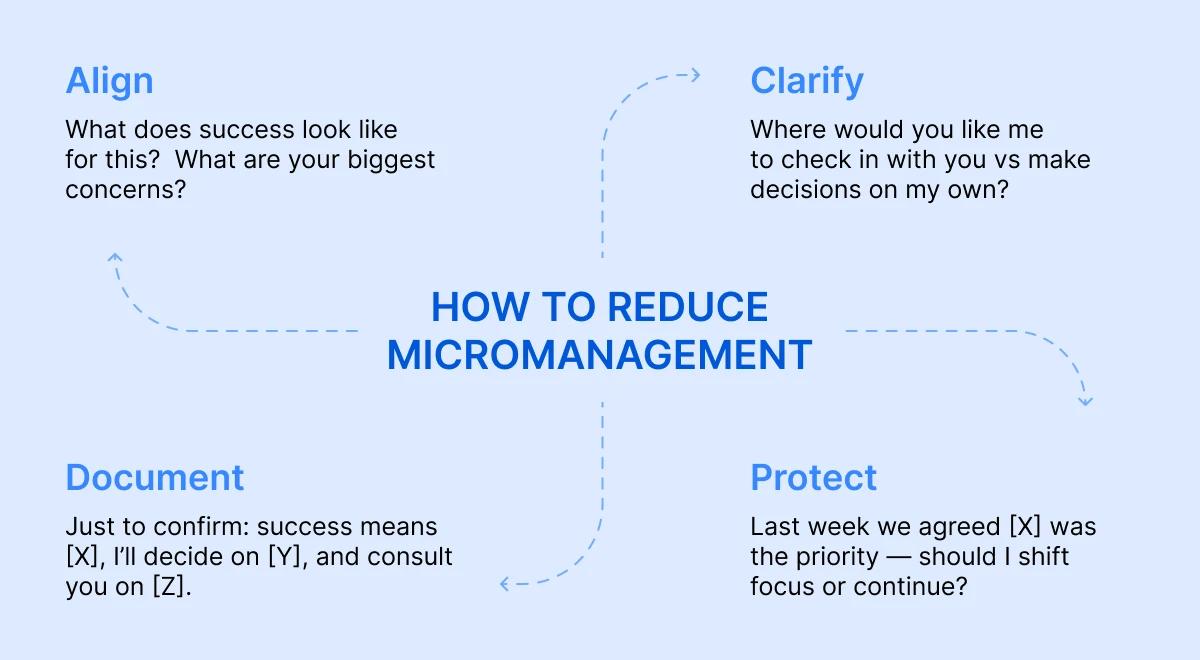
Micromanagers hate uncertainty. Vague projects with unclear goals trigger their anxiety. You can reduce oversight by making everything crystal clear from the beginning. At the start of any project, schedule a brief conversation to align on what success looks like.
Start learning how successful managers build trust without constant oversight.
Ask them about their biggest concerns and where they want you to check in vs make decisions alone. Document these agreements in writing. After your meeting, send an email confirming the goals and timelines. This written record protects you from moving goalposts later and helps you handle a difficult boss.
4. Make them look good to their boss
One overlooked strategy is making your boss's success your priority. When your boss looks good to their supervisors, they feel less pressure to control every detail of your work. Ask them directly how your tasks can support their quarterly goals.
Frame your wins as team accomplishments in public settings. If your boss mentions your project during a meeting, you can add: "The approach suggested by my boss really helped us hit that deadline." Giving them credit builds an association between you and positive outcomes, which helps build trust faster than almost anything else.
5. Set boundaries professionally
Setting boundaries feels risky, but it is essential for preventing burnout. The key is framing limits as productivity improvements rather than personal preferences. Present a solution that benefits both of you.
Instead of saying "Stop interrupting me," try this: "I've noticed I work most efficiently when I have two-hour blocks for deep focus. Could we try a daily 4 PM check-in instead of messages throughout the day?" You are presenting a trial to see if it reduces bottlenecks and helps the team move faster.
📘 Handle toxic managers with Headway.
6. Ask for feedback, not permission
Small word choices carry more weight than you'd think. Asking for permission signals that you need someone's approval to act. Asking for feedback signals that you're already in the driver's seat. That's a different dynamic entirely.
Try saying: "I'm planning to send this to the client this afternoon. Any concerns?" instead of "Can I send this?" Over time, managers who see you take initiative and provide solutions learn to trust your judgment. This gradual expansion of autonomy is key to your professional growth.
7. Document everything
Keep detailed records of your interactions. Documentation serves two purposes: it protects you during reviews and provides evidence if you need to escalate to HR. Save emails that show changing requirements or contradictions.
If your boss publicly humiliates you or creates a hostile environment, detailed documentation becomes essential. Record dates, times, witnesses, and specific behaviors. Be objective rather than emotional in your notes. Sometimes the healthiest choice is leaving, and your records will help you explain why in future job interviews.



Five books to master working with difficult bosses
Reading about workplace psychology gives you the tools to handle a micromanaging boss. Headway gives you the core strategies from these bestsellers in under 15 minutes.
'Extreme Ownership' by Jocko Willink: Learn how to manage up by controlling the communication flow.
'Crucial Conversations' by Kerry Patterson: Discover scripts for addressing sensitive topics without triggering defensiveness.
'The First 90 Days' by Michael D. Watkins: Build credibility quickly in a new job to prevent micromanagement before it starts.
'Radical Candor' by Kim Scott: Learn to give feedback to your boss without damaging the relationship.
'Emotional Intelligence 2.0' by Travis Bradberry: Separate your boss's anxiety from your own competence.
Build resilience and professional growth with Headway
Dealing with a difficult boss is a skill you'll use throughout your career. Even if you leave your current job, you'll eventually face another challenging manager. Learning how to work effectively with a micromanaging boss actually accelerates your professional development.
Reading books about leadership, communication, and psychology helps you understand workplace dynamics. But busy professionals struggle to find time for reading. You're already exhausted from managing your boss's demands. The last thing you want is homework.
Headway solves the exact problem. The app turns the world's best career and leadership books into actionable summaries you can read or listen to on the go. More than 55 million people use Headway to build professional skills without sacrificing their evenings and weekends. The app offers text and audio formats so you can learn while commuting, exercising, or taking a walk to clear your head after a frustrating day.
When you're preparing for job interviews at new companies, Headway helps you understand different leadership styles so you can ask better questions. Instead of walking into another micromanagement situation, you'll recognize warning signs during the interview process and make informed decisions about which offers to accept.
Download Headway today to start building your toolkit for workplace challenges. You deserve to work somewhere that respects your skills and trusts your judgment. Sometimes that means improving your current situation. Sometimes it means preparing for your next opportunity. Either way, you'll be ready.
📘 Turn workplace challenges into career growth with Headway.
Frequently asked questions on how to deal with micromanaging boss
How do you deal with a micromanaging boss without losing your job?
Confrontation rarely helps here. What actually works is making yourself the easiest person on the team to trust. Send updates before they ask. Hit your deadlines. Keep a record of what you've delivered. When you do bring up autonomy, tie it to the work, not your frustration. Bosses tend to loosen their grip once they stop worrying about you.
How to manage a micromanaging boss?
To effectively manage a micromanaging boss, you must take control of the communication flow by scheduling regular check-ins before they can interrupt your workflow. Focus on proving you can get the job done independently, which helps build trust and reduces their need to nitpick every minor detail of your daily tasks.
Should I tell my boss they are micromanaging?
Skip the word "micromanaging." It almost always triggers defensiveness. Talk about the behavior instead. Say something like, "I do my best work with longer focus blocks. Could we try daily check-ins instead of hourly ones?" That kind of ask is hard to argue with because it frames the change as a win for both of you.
What causes a boss to micromanage?
Most micromanagers aren't trying to make your life difficult. They're usually dealing with their own fear of failure, shaky confidence in their leadership, or perfectionism they never worked through. Sometimes, they were just promoted without any real training. Once you get a read on what's driving it, you can choose how to respond rather than just react.
How do I set boundaries with a micromanaging supervisor?
Try proposing a structure to set boundaries before your boss fills in that time themselves. Suggest set check-in times, clarify who owns what on each project, and agree on how to handle urgent versus routine requests. When you pitch it as a way to keep the team running smoothly and avoid burnout, it's harder to push back on.
How can I stay calm with a micromanaging supervisor?
Your boss's anxiety isn't a verdict on your work. Keep that separation clear to protect your well-being. Apps like Headway can help you pick up stress management techniques from people who've actually studied it. Protect your time by setting boundaries, and you'll stay productive, even when someone's hovering over every step.
Can I find a better management style elsewhere?
If your toxic work environment hasn't improved despite your best efforts, it might be time to open a new tab, dust off your LinkedIn profile, and start looking around. Start poking around for roles that actually give you room to breathe. Somewhere, your professional growth isn't treated like an afterthought.