Self-growth
 Apps & Digital Tools
 Business & Career
 Success
 Growth Tools
 Psychology
 Communication
 Relationships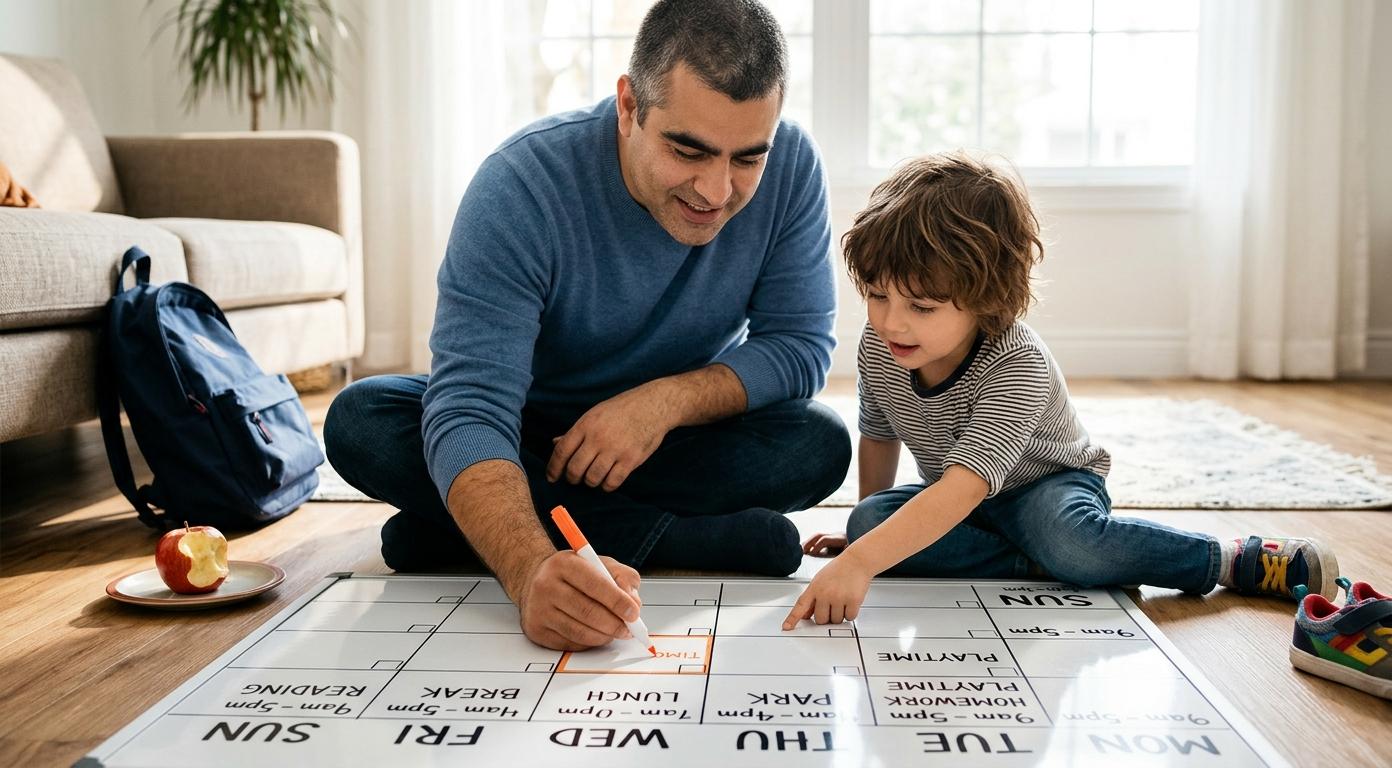

It's Tuesday night: homework is half-finished, your child is melting down, and you're staring at the calendar wondering how any of this fits into a single evening.
Learning how to create a study schedule for kids isn't about finding a magic fix. But a solid plan, built with your child instead of forced on them, removes a massive amount of daily friction. The trick is being entirely realistic. Most calendars fail because they are built for an imaginary student, not the actual kid you have living in your house.
Real strategy comes from understanding behavior. Books on toxic parenting, focus, motivation, and learning are condensed into 15-minute reads inside Headway, helping you figure this out in real time.
📘 Learn how to help your kids build unshakeable focus by streaming bite-sized book summaries on Headway.

How to create a study schedule for kids: The short version (TL;DR)
Don't just default to a generic after-school block; look at when your kid actually has energy. Some are sharp at 4 pm, while others honestly need a massive reset until 7 pm.
Keep your study sessions matched to their age, too: think 15–20 minutes for younger kids, stretching to 40 minutes for teens. Throw in a quick minute break between blocks, or they'll lose focus entirely.
Build the actual study plan right alongside your kid. Getting their genuine input is the single biggest predictor of whether this study schedule for kids survives past week one.
Carve out a separate, low-pressure time for reading that has nothing to do with basic schoolwork. This keeps it from feeling like a punishing chore.
Expect the entire study routine to break down at some point. Create a 20-minute fallback plan for the rough nights when everything goes completely sideways.
Why a study schedule actually helps kids
Setting up a visual calendar isn't just a sneaky way to force your child to finish their math worksheet before dinner. Research from Harvard's Center on the Developing Child shows that kids build crucial executive functions, like focus, planning, and self-restraint, through daily experience with clear, steady structures.
Think of a study schedule as a practical tool for your child's learning that teaches genuine, long-term time management skills. Your ultimate goal isn't to micro-manage every single hour of their evening like a drill sergeant. You are simply giving them a basic scaffolding that they can eventually run all on their own.
It completely kills those exhausting, daily negotiation matches over homework. When study time is a non-negotiable part of the night, you stop arguing about the clock. Instead, you can actually look at the homework and help them build real, solid study habits that lead to long-term academic success.
How to create a study schedule for kids in five steps
Here's a 5-step guide to creating a study schedule that will work for your kids:
1. Map out their actual week before writing anything down
Before you buy a fancy calendar or download a colorful online template, you need a completely honest look at where the hours actually go. Grab a blank piece of paper and plot out everything that already fills up their calendar. Write down the exact school hours, sports practices, music lessons, family dinners, and daily screen time.
You aren't trying to invent a new lifestyle out of nowhere; you're just looking for realistic gaps that are already free. Skip checking the numbers first, and you'll build an impossible wishlist.
2. Spot their natural peak focus windows
Kids don't share the same internal clock or learning style. Some do great straight out of elementary school because they're still in that classroom mindset. Others front-door crash — they need a massive snack or space to run around before they can even look at a worksheet. Watch them for a few days without nagging. When are they alert and not totally exhausted? Lock that slot down for the brutal subjects.
3. Match the length of the study sessions to their age
Expecting a seven-year-old to sit still for an hour straight is a quick way to cause massive parental burnout. Keep those study sessions short. Little kids from ages 6–9 need short 15-minute blocks max, then some fast movement breaks to burn off the jitters. Older kids might push to 30 minutes, but forcing elementary students into marathon study blocks backfires every single time.
📘 Master the core secrets of childhood habit formation on your next coffee break with the Headway app.
4. Sit down and design the plan together
If you want to know how to create a study schedule for kids that actually lasts past Friday, you cannot build it in secret and hand it down like a law. Sit down at the kitchen table with your child and ask for their input. Show them the empty blocks of time.
Let them decide if spelling happens before dinner, or what kind of fun activity they get to do on their breaks. Grab a whiteboard, write it all down, and stick it where everyone can see it. Giving them a say means they take ownership and actually follow it.
5. Count backward from the day of the test
Don't let them cram a huge project into one panicked night. Show them how to chunk it backward from the deadline. Friday test? Thursday is a light check, Wednesday is for practice, and Monday is when you start.
Wednesday is for taking practice quizzes. Tuesday is for reading chapter two, and Monday is for tackling chapter one. Learning how to create a study schedule around this backward timeline builds incredible learning habits that they will use all the way through college.



What to do when the schedule breaks
Even the most beautiful layout will fall apart eventually. Maybe your ten-year-old has a complete meltdown, sports practice runs an hour late, or you find yourself dealing with heavy personal stress like co-parenting with a narcissist. If you struggle to control anger during these high-stress evenings, it is incredibly easy to slide into loud arguments.
Instead, treat it as a personal no yelling challenge and handle the situation like a calm mother or father would. Take a deep breath and do a quick emotional check-in with your kid before pushing the books.
When the night goes completely sideways, abandon the full routine. Trying to force the entire study plan when everyone is exhausted will only cause tears and burn out your child's study motivation. Swap the normal blocks for a quick, 20-minute emergency fallback plan.
Pick the one assignment that is absolutely due the next morning and work on it using a tight Pomodoro timer. If you are dealing with younger kids in elementary school, offer simple incentives like colorful stickers just to get through that single piece of schoolwork.
This saves your sanity and protects your kid's emotional well-being. Skip everything else without a shred of guilt, and simply reset your regular learning routines the very next afternoon.
U
Curious how much you can learn in 15 minutes?
Get actionable insights from your very first summary — and keep going from there.
Get the planHelp your kids learn better — Start with what you're learning on Headway!
Figuring out how to create a study schedule for kids that actually works over the long haul is a major learning curve for any parent. You can't expect yourself to automatically know how to maximize information retention, handle behavior shifts, or adjust goals based on a changing grade level.
Fortunately, you don't need to spend hours scrolling through random educational apps or hand out your phone number to expensive private tutors to find real answers.
The absolute best insights on focus, child development, and human motivation already exist in world-class books. Masterpieces like 'The Whole-Brain Child' by Daniel Siegel and 'Mindset' by Carol Dweck explain exactly how young brains process information.
But when you are busy managing a home, you don't have the spare hours to read hundreds of pages or collect nice parenting quotes for your fridge. Headway solves this by condensing these essential books into sharp, 15-minute summaries you can read or stream on the go. It is the fastest way to upgrade your own knowledge so you can build a better study schedule and support your family with real confidence.
📘 Join other parents who are sharpening their skills and learning faster through the Headway app.
FAQs about how to create a study schedule for kids
How do I make a study schedule for kids?
Sit down with your kid and write out their weekly sports and activities first. Find the times when they actually have energy, then drop the toughest homework into those exact slots. Keep the focus blocks short, build in quick breaks, and stick the final whiteboard on the fridge. Headway's summaries can help you map this out smoothly.
Is it possible to create a study schedule for kids that works?
Absolutely, but you have to drop the perfectionism. Handing down a strict checklist without their input fails immediately. When you match the plan to their actual attention spans and have an emergency fallback routine for awful days, it sticks. Flipping through quick habit summaries on Headway makes this whole process way simpler.
What is the 3-3-3 rule for kids?
It's a fast trick for handling homework meltdowns. Have your child point out three things they see, three things they hear, and move three body parts, like their toes. It totally breaks the panic loop so they can settle down. Headway summaries explain how simple, quick brain breaks like this protect daily learning and keep things on track.
What is panda parenting?
Think of it as a soft, gentle approach that still keeps firm boundaries. Like a real panda, you are incredibly loving and supportive, but you don't micromanage their homework. You let them make mistakes instead of hovering over the desk. This style creates independent kids who can easily run their own study schedules without your constant nagging.
What is a type B mother?
This is a laid-back mom who chooses flexibility over rigid perfectionism. When a study plan falls apart on a rough night, she doesn't freak out or start screaming. She just adjusts the timeline on the fly. This relaxed attitude cuts out household anxiety, making it much easier for kids to build steady learning habits without feeling constantly pressured.