Self-growth
 Apps & Digital Tools
 Business & Career
 Success
 Growth Tools
 Psychology
 Communication
 Relationships

Do your hands sweat when you walk into a crowded room? Feeling out of place is incredibly common. Knowing how to be less socially awkward is a skill, and the good news is that it can be learned.
Luckily, great authors have been studying this stuff for decades, and their findings are truly helpful. Experts like Dale Carnegie and Susan Scott share practical frameworks to help you build confidence. Their ideas break down complex communication concepts into easy-to-follow lessons.
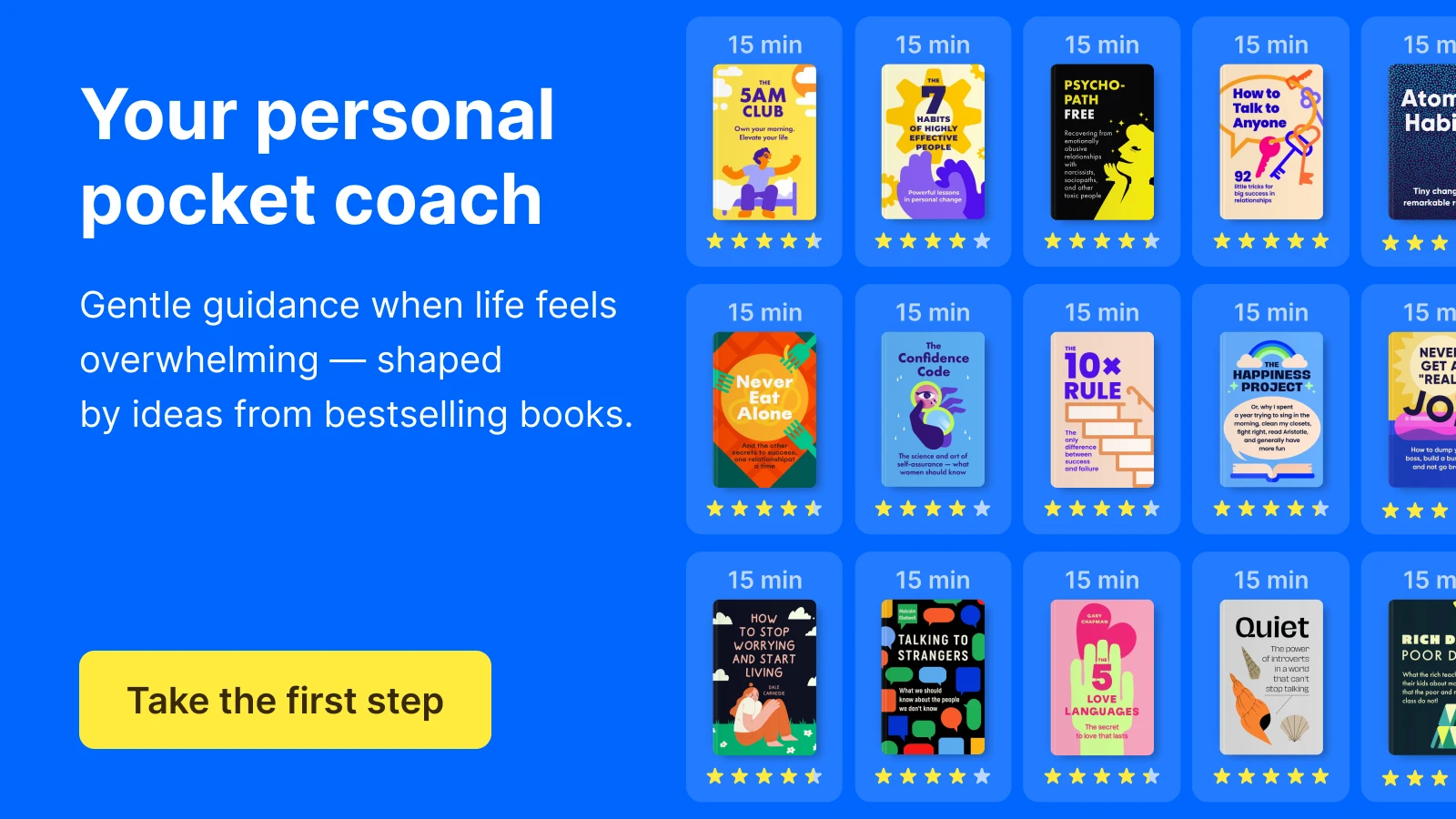
The Headway app makes it easy to digest these microlearning lessons on your phone. It fits perfectly into a busy schedule, helping you grow without feeling overwhelmed.
Download Headway today and take the first step toward better conversations!
Quick summary: Key takeaways to be less socially awkward
Here are the top five strategies to help you feel more comfortable in any conversation.
Build communication skills
Stop negative self-talk
Speak up assertively
Navigate interactions effectively
Grow tougher mentally
Read the full list below for daily exercises that work.
📘 Acquire conversation confidence in just 15 minutes a day with Headway!
What is social awkwardness? A quick breakdown
What does it mean to be a socially awkward person?
Social awkwardness is the uncomfortable feeling you get when you're unsure about basic social norms or struggle to read a room. It differs greatly from shyness. Shyness involves a general hesitance around people.
An awkward moment usually stems from misreading social cues. You might struggle with eye contact during a serious chat, or miss the facial expressions that signal how someone is feeling. These moments can trigger self-conscious feelings that are hard to shake.
New social situations are common triggers. Many people feel stressed at crowded events or when making small talk with strangers. Noticing these signs early can help you handle your reactions better.
📘 Turn awkward moments into genuine connections with Headway!
Introversion vs social anxiety
Mental Health America notes that people often mix up being naturally quiet with having a clinical condition; their guide on introversion and social anxiety explains the difference well.
Introverts usually feel refreshed after spending time alone, away from busy groups.
People with social anxiety often worry about being judged in social situations.
Social anxiety disorder is a serious mental health issue that only a professional can diagnose.
Both groups regularly face awkward situations.
| Trait | Introversion | Social anxiety |
|---|---|---|
Energy source | Solitude | Unrelated |
Fear of judgment | Low to moderate | Very high |
Social life desire | Prefers small groups | Wants connection, fears it |
Physical symptoms | Fatigue | Racing heart, sweating |
Knowing this difference helps you accurately address your specific needs. And once you know your baseline, building better social skills becomes much simpler.
📘 Stop overthinking every word. Start speaking naturally with Headway!
Quiz: Am I socially awkward?
Grab a pen and tally your "yes" or "no" answers.
Many people share these exact feelings. With time, patience, and dedicated practice, you can train yourself to become a well-spoken person.
📘 Learn to read the room like a pro with Headway!
The psychology behind social awkwardness: Why we feel this way
Our brains naturally want to protect us from group rejection. That protection mechanism causes us to overthink every social interaction. You start worrying about your body language. You obsess over every small mistake.
Low self-esteem plays a crucial role in this process. You might feel like everyone is watching your every move. That intense self-focus creates more anxiety and keeps you stuck inside your comfort zone.
You need high self-compassion to break this cycle. Recognizing your worth reduces the heavy fear of judgment. From there, you can approach social settings with a calmer, clearer mind.
📘 Turn social anxiety into social confidence with Headway!



Shift your focus: How to stop thinking about yourself in conversations
People who feel less awkward direct their attention outward. Pay attention to the other person speaking. Notice their tone, hand gestures, and facial expressions. This mindset takes the pressure off your own performance.
Practicing active listening works wonders for your communication skills. Ask follow-up questions based on their previous answers, and you'll come across as genuinely interested in their life. This approach helps you communicate effectively in any environment.
Taking a deep breath helps center your thoughts. Quick breathing exercises instantly calm your nervous system. You can then focus fully on the present moment.
📘 Practice assertive communication daily with expert tips from Headway!
Social skills 101: Key principles to banish awkward moments
Solid communication rules give you a reliable safety net. These fundamentals are worth keeping in your back pocket whenever you feel stuck in a chat.
Think outward, not inward
Focus entirely on the speaker during any conversation. Save the self-reflection for later. Give them your complete attention.

Build confidence by mastering the art of listening—get communication tips.
Curiosity over self-criticism
Ask questions out of genuine interest. Your curiosity makes the other person feel highly valued, and you'll stop worrying about your own words.
Practice makes perfect (especially in awkward situations)
The more you practice, the easier awkward moments become. Try speaking up more often. Consistency really helps you improve.
Confidence is built, not innate
Nobody starts out with perfect social skills. You gain social confidence by practicing, so remember to celebrate your progress, even the small wins.
Routine and reflection are your friends
Look back on your conversations without being too hard on yourself. This framing helps you see where you can improve. Having a routine also keeps you on track.
📘 Break free from your comfort zone with bite-sized lessons on Headway!
Practical tips that actually work (backed by books)
Reading about communication gives you useful ideas and examples you can try. Here are five books worth knowing, each with a daily exercise.
1. How to build people skills
Dale Carnegie's principles remain as relevant as ever. Show genuine interest in others to succeed. Smile often during social events to appear approachable. Remember people's names to build immediate rapport.
These small actions make a massive difference in your social life. You build trust quickly with new acquaintances, and you'll find that people love talking to genuinely good listeners. You can talk to anyone using these timeless rules.
Daily exercise: Greet three strangers today. Use their name if you know it. Offer a sincere compliment about their work or outfit.
2. Mental strength hacks
Amy Morin teaches us to control our internal self-talk. Negative thoughts ruin your self-confidence completely. The fix is replacing them with realistic, grounded ones.
Don't waste energy on things you can't control. You can't control what others think about you. You can only control your own daily actions. Taking a break from social media helps quiet these comparisons.
Daily exercise: Write down three positive affirmations every morning. Read them out loud before any major social interaction.
3. Find out how to speak up
Aziz Gazipura explains the danger of extreme politeness. Being overly nice leads to hidden resentment. Assertive communication is the healthier alternative.
Stop apologizing for simply existing in a space. Share your true opinions clearly and firmly. This attitude helps you speak with authority.
Daily exercise: State your preference clearly today. Choose the restaurant or movie without deferring to the group.
4. The skill of conversation
Susan Scott emphasizes the need for authentic dialogue. Surface-level chatter often feels incredibly empty. So, ask meaningful questions to connect.
Pay attention to the answers you get. Let the silence hang in the room if necessary. Meaningful connections require a real willingness to be open.
Daily exercise: Ask one open-ended question during your next chat. Wait for the full answer without interrupting.
5. Grow tougher through practice
Damon Zahariades focuses on personal resilience. Social mistakes are inevitable. The goal is to accept them gracefully rather than dwell on them.
Use awkward moments as helpful data. See what went wrong during the exchange. Adjust your approach slightly for the next time.
Daily exercise: Purposely initiate a conversation outside your comfort zone. Analyze the result objectively afterward.
📘 Pick up people skills that actually work with Headway!
Four steps to reduce social awkwardness
You don't need to change your whole life to build better habits. Try adding these four simple steps to your daily routine.
1. Start your day with simple mindset practices
Write down three things you appreciate deeply. Use positive self-talk to set the tone for your day.
2. Set small social goals for yourself daily
Start a brief conversation at your local coffee shop. Try making good eye contact with the cashier at the grocery store.
3. Reflect on your progress with a journaling routine
Write down what went well in your conversations. Also, jot down what you'd like to improve, but don't be too hard on yourself.
4. Read Headway summaries for continuous personal growth
Pick up something useful during your morning commute. Try putting one new communication tip into practice each day.
📘 Build unshakeable social confidence one summary at a time with Headway!
How to handle common awkward situations with confidence
First introductions often trigger intense anxiety for many people. A brief, friendly greeting prepared in advance goes a long way toward settling your nerves.
Smile warmly and offer a firm handshake. Ask the other person how their day is going to start to get the flow started. People with ADHD may find preparation especially helpful here, since the overlap between ADHD symptoms and social anxiety is well-documented.
Breaking the ice in a small group takes careful observation. Notice what people are discussing currently. Offer a short, relevant comment to join the conversational flow. You can use these tips on how to speak like a girlboss to command respect in groups.
Navigating networking events also calls for a solid strategy. Stand near the food or drinks tables. People naturally gather in those areas. Ask them what brought them to the event to spark a chat.

Master the art of conversation with your personalized growth plan.
Awkward silences don't have to derail you. Don't panic when a conversation pauses. Use relaxation techniques to stay grounded. Bring up a new, related topic, and the flow usually comes back quickly.
How to end a conversation smoothly
A conversation often turns awkward at the very end. People frequently linger too long because they lack a polite exit strategy.
You can wrap up a chat gracefully without causing any offense. Use these simple tactics to leave an interaction calmly.
The clear conclusion: State your appreciation for the chat, summarize one point, and say goodbye. You could say, "I loved hearing about your trip, and I hope you have a great week."
The transition phase: Mention a specific task you need to complete. Tell them you need to grab some water, find your friend, or make a quick phone call.
The introduction hand-off: Bring a third person into the dialogue. Introduce the two individuals, let them start a new topic, and then excuse yourself quietly.
Having a prepared exit strategy lowers your anxiety before it even starts. You'll feel far more relaxed walking into a social event when you know how to walk out of a conversation.
📘 Stop fearing small talk. Start enjoying it with Headway!
Build social confidence with Headway book summaries
Anyone can learn how to be less socially awkward over time. The Headway app offers the perfect starting point for this self-improvement journey.
The app provides quick, 15-minute book summaries. You can study essential communication strategies on the go. These insights help you manage social anxiety, stop overthinking, and build true social confidence.
There's nothing wrong with feeling awkward sometimes. What matters is that you have the tools to handle it.
Download the Headway app to enhance your knowledge and communication skills today.
FAQs
What is social awkwardness?
Social awkwardness is a feeling of discomfort in social settings. It happens when you struggle to interpret social cues or apply social norms. An awkward person might find small talk difficult or struggle with eye contact. This discomfort often leads to overthinking and self-consciousness during everyday social interactions.
Is social awkwardness the same as shyness?
Social awkwardness and shyness share similarities, but they differ. Shyness involves a general fear of social interaction and meeting new people. Awkwardness usually stems from a lack of social skills or misreading facial expressions. You might feel totally outgoing on the inside while still having awkward moments in public.
How can I stop feeling socially awkward?
Practice active listening and shift your focus outward. Use relaxation techniques to calm your nerves before social events. Work on your body language and eye contact gradually. Consistent exposure to new social situations builds resilience and real social confidence.
Can reading books really help with social confidence?
Yes. Experts share solid strategies for managing self-talk and navigating awkward situations. You can study these frameworks to better interpret human behavior. Applying what you read to your real interactions will steadily improve your self-esteem and conversational skills.
How long does it take to improve social skills?
It takes consistent practice over several months. You'll notice small improvements in your comfort zone within a few weeks. Managing social anxiety might take a bit longer. Stay patient as you build these habits through regular social gatherings, daily interactions, and self-awareness exercises.