Self-growth
 Business & Career
 Success
 Communication
 Healing
 Relationships
 Psychology
 Happiness
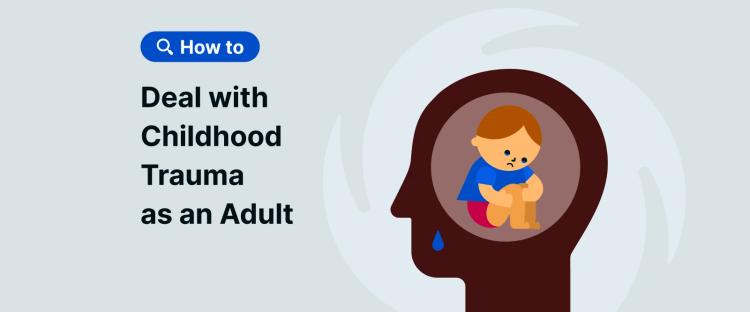
The inner child is a metaphorical representation of our childhood memories, emotions, and experiences stored in the subconscious of an adult. It retains both unhealed wounds (like fear, resentment, feelings of abandonment, shame, and childhood trauma) and authentic qualities (like spontaneity, curiosity, joy, and creativity).
The inner child can be "healed" (feeling safe, being spontaneous and joyful) or "wounded" (carrying the burden of childhood trauma, which manifests as insecurity, fears, aggression, and addictions).
I'm Sophia Rodriguez, a Licensed Marriage and Family Therapist in Santa Monica, Los Angeles. Working with the inner child has helped me witness how this work transforms the lives of adults. By using this therapeutic technique, adults can become more confident, communicate more effectively, and build healthier relationships, whether in the workplace or at home. Exploring how your younger self perceives the world helps you understand your adult reactions and reveals a calmer, more confident self.
Quick Takeaway: Start reconnecting with your younger self today, even if you only have 10 minutes to spare. Download the Headway app today to access book summaries like 'It Didn't Start with You,' 'Etched in Sand,' and 'The Myth of Normal,' which provide practices to guide your healing process.
How to reconnect with your younger self and heal emotional wounds
Identify if you have a wounded inner child
Investigate the relationship between childhood trauma and adult life
Learn self-reparenting and understand appropriate self-care practices
Learn healthy boundaries and coping skills
Gain confidence through practice and implementation
Develop awareness of both verbal and non-verbal communication cues
Master active listening skills
Increase emotional intelligence
Experience guided exercises from leading mental health books

Childhood Trauma Still Shapes Your Adult Life
Unhealed patterns don’t disappear.
Start rebuilding emotional safety in just 15 minutes a day.
What does "inner child" mean, and why does it matter?
The "inner child" is the internal representation of your younger self — the parts of yourself shaped by your early experiences, caregivers, environment, emotions, and unmet needs. Psychologists, including figures like John Bradshaw, have emphasized that our childhood experiences don't disappear. They simply become quieter parts of ourselves that surface in present-day triggers, relationship habits, vulnerability, and coping mechanisms.
Why 'healing your inner child' is more than a trendy metaphor
Our inner child carries an emotional blueprint that we bring into adulthood. If you experienced childhood trauma, inconsistent parenting, or emotional neglect, these past experiences can show up as perfectionism, people-pleasing, negative thoughts, fear of conflict, difficulty setting boundaries, or chronically putting others' needs above your own needs.
Inner child healing helps you rewrite emotional narratives formed long before your adult self had the ability or understanding to do so. It addresses inner child wounds by creating a safe space within yourself to feel, process, and reparent yourself in the way you needed as a child.
Want to learn more? Explore Headway's resources on:
📘 Heal your inner child with Headway.
Signs your inner child needs healing
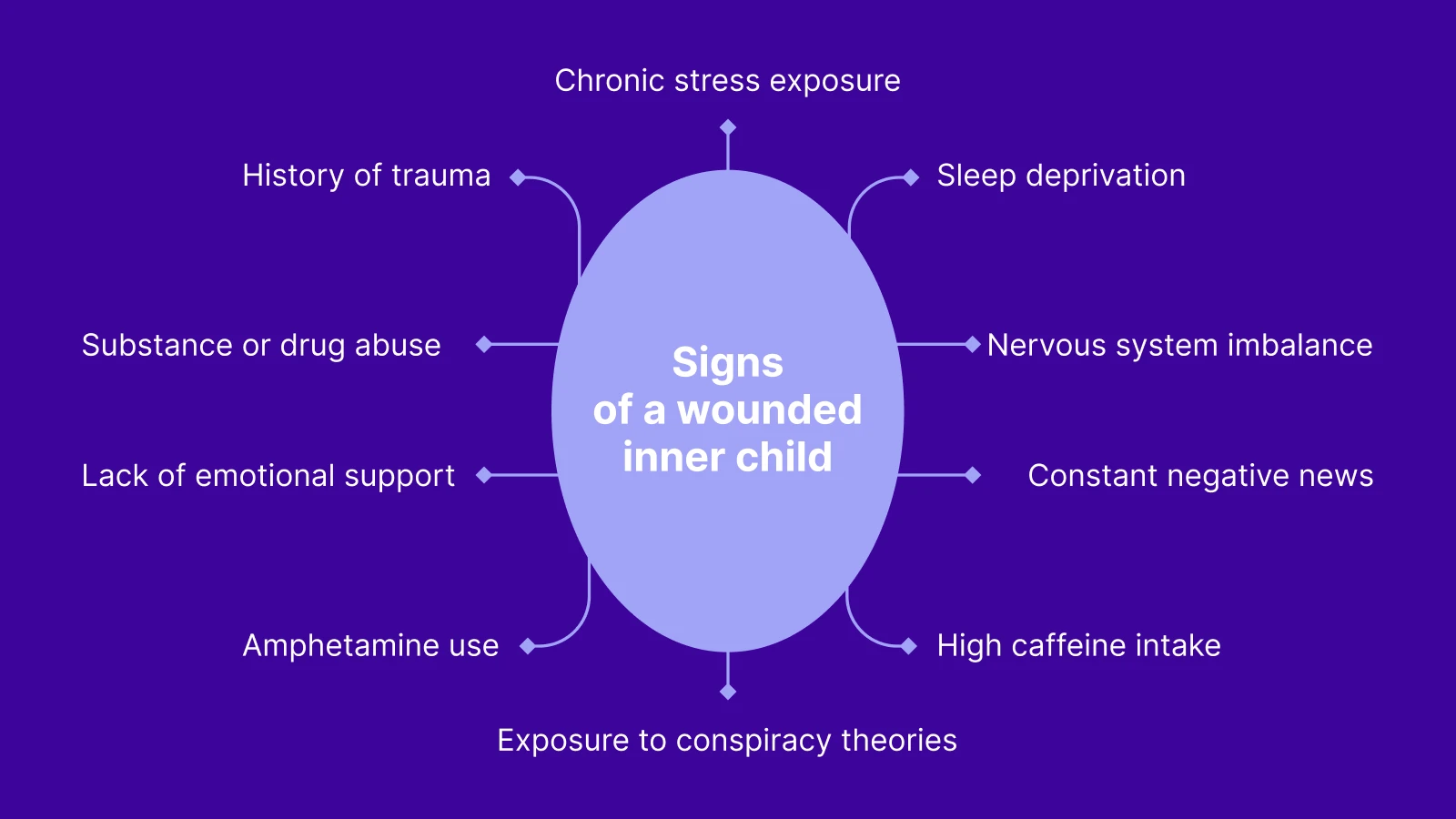
Confusing or disproportionate reactions to things can be a sign of a wounded inner child, and this is typically a good time to start inner child work through psychotherapy or other resources like Headway. Common signs of a wounded inner child include:
Disproportionate emotional triggers (like shame, fear, or anger arising quickly)
Perfectionism rooted in fear of criticism
People-pleasing or struggling with healthy boundaries
Feeling "too young" or "too old inside."
Difficulty with self-care or self-compassion
Fear of abandonment or intense reactions to conflict
Chronic self-sabotage, especially in relationships or your career
Harsh inner critic, fueled by negative thoughts
Difficulty trusting others, especially in leadership or teamwork
Overreaction to feedback, especially in workplace settings
In a professional setting, the wounded inner child shows up when you react to a supervisor like you're reacting to a caregiver. If your inner child feels unheard, overlooked, or invalidated, your emotional response might feel much bigger than the present-day moment. Recognizing these signs is the first step toward healing your inner child.
Practical tips & exercises for healing your inner child (with book‑connections)
Here are five exercises you can start this week — each tied to a book summary you'll find in the Headway app.
Exercise 1: Write a letter to your younger self
Inspired by: It Didn't Start with You by Mark Wolynn
This exercise helps you connect to the younger self within you who still carries emotional wounds or unmet needs. Wolynn highlights how past trauma and inherited trauma leave imprints on the body, mind, and emotional patterns.
How to do it:
Sit in a quiet space.
Visualize your younger self at the age when pain or insecurity first formed.
Write a letter offering understanding, validation, and self-compassion.
Consider including affirmations such as: "You deserved safety. You deserved care."
Reflection questions:
What did my child within need that they didn't receive?
How does this part affect my adult life today?
Busy-professional 10-minute version:
Record a 60-second voice memo speaking to your younger self.
Exercise 2: Reparenting dialogue
Inspired by: Will I Ever Be Good Enough? by Dr. Karyl McBride
Reparenting is a core inner child work technique that involves meeting your inner child's needs with the compassion that caregivers didn't or couldn't provide.
How to do it:
Identify a moment when you feel triggered.
Pause and imagine your adult self speaking to your wounded inner child.
Say something grounding to this part of you, like: "I'm here. I see you. You're safe."
Reflection questions:
What did I need emotionally at this stage of life?
How can my adult self offer that now?
Busy-professional 10-minute version:
Write short self-care check-ins like: "What do I need today?" Then practice setting boundaries based on the answer.
Exercise 3: Joy-sourcing & playful reconnection
Inspired by: Battlefield of the Mind for Kids by Joyce Meyer
Joy is essential to healing your inner child. Many adults abandon play as coping mechanisms form around productivity, pressure, or fear of judgment.
How to do it:
List 10 things your younger self loved doing.
Choose one to recreate weekly (like art, music, dancing, or games).
Pair it with affirmations to rewire negative thoughts that may arise during the activity.
Reflection questions:
When did I feel the most free?
What brings my inner child joy?
Busy-professional 10-minute version:
Put on a favorite childhood song and notice what it brings up for you.
Exercise 4: Trigger map & body archive
Inspired by: The Myth of Normal by Gabor Maté
Maté explains how trauma lives in the body and affects mental health, well-being, emotional responses, and quality of life.
How to do it:
Track triggers in a journal for one week.
Note the physical sensations that arise (like a tight chest, heat, or shaking).
Recognize parallels to childhood experiences or unresolved emotional wounds.
Reflection questions:
What emotions feel familiar?
What parts of yourself are asking for care?
What do you notice in your body when certain triggers arise?
Busy-professional 10-minute version:
Start an ongoing list of moments when you notice yourself having a big emotional response to something.
Exercise 5: Family legacy & inner lineage mapping
Inspired by: Etched in Sand by Regina Calcaterra
Though a memoir, Calcaterra's story reveals how resilience grows when you understand your family patterns and reclaim your narrative.
How to do it:
Draw a simple family map showing relatives, like caregivers and siblings.
Outline dynamics and emotional themes.
Note patterns like silence, conflict, avoidance, or support.
Identify what you absorbed and how it affects your present-day life.
Reflection questions:
What patterns do I notice in my family? Which do I want to keep?
Which ones no longer serve my healing journey?
Busy-professional 10-minute version:
Write a quick list of "family messages" that shaped your beliefs growing up — for example: "You have to be perfect to be loved" or "Don't show your emotions." Pause after each one and reframe it with self-compassion and self-acceptance. Try: "I am worthy even if I make mistakes" or "My emotions are valid and safe to express."
For a deeper dive into these exercises, download the full book summary in Headway. To understand unhealthy patterns in relationships, explore:


How healing your inner child boosts your confidence, communication & habits
If you're a busy professional, it's easy to think that inner child work is "emotional fluff." But the truth is, healing your inner child directly impacts your adult potential, as it plays a role in career performance, leadership presence, communication, and relationships. When your younger self feels safe, your adult self can respond calmly, set boundaries, and make decisions with clarity instead of reacting out of old unmet needs.
Before doing inner child work, a performance review may cause anxiety, defensiveness, and self-doubt because of how your younger self has felt ignored and criticized. After truly healing these wounds, you will be able to view feedback from an objective lens instead of from the perspective of unmet needs. You will be able to establish boundaries with coworkers or clients without feeling guilty, as your self-esteem will no longer depend on whether or not you please others.
Inner child work boosts emotional intelligence and interpersonal skills. By recognizing triggers and reframing negative thoughts, you stop reliving past trauma in present-day situations. You develop a more grounded sense of self that supports both personal and professional growth.
In short, when your inner child is encouraged, your adult self thrives.
📘 Thrive as your best self with Headway.
When to seek extra support
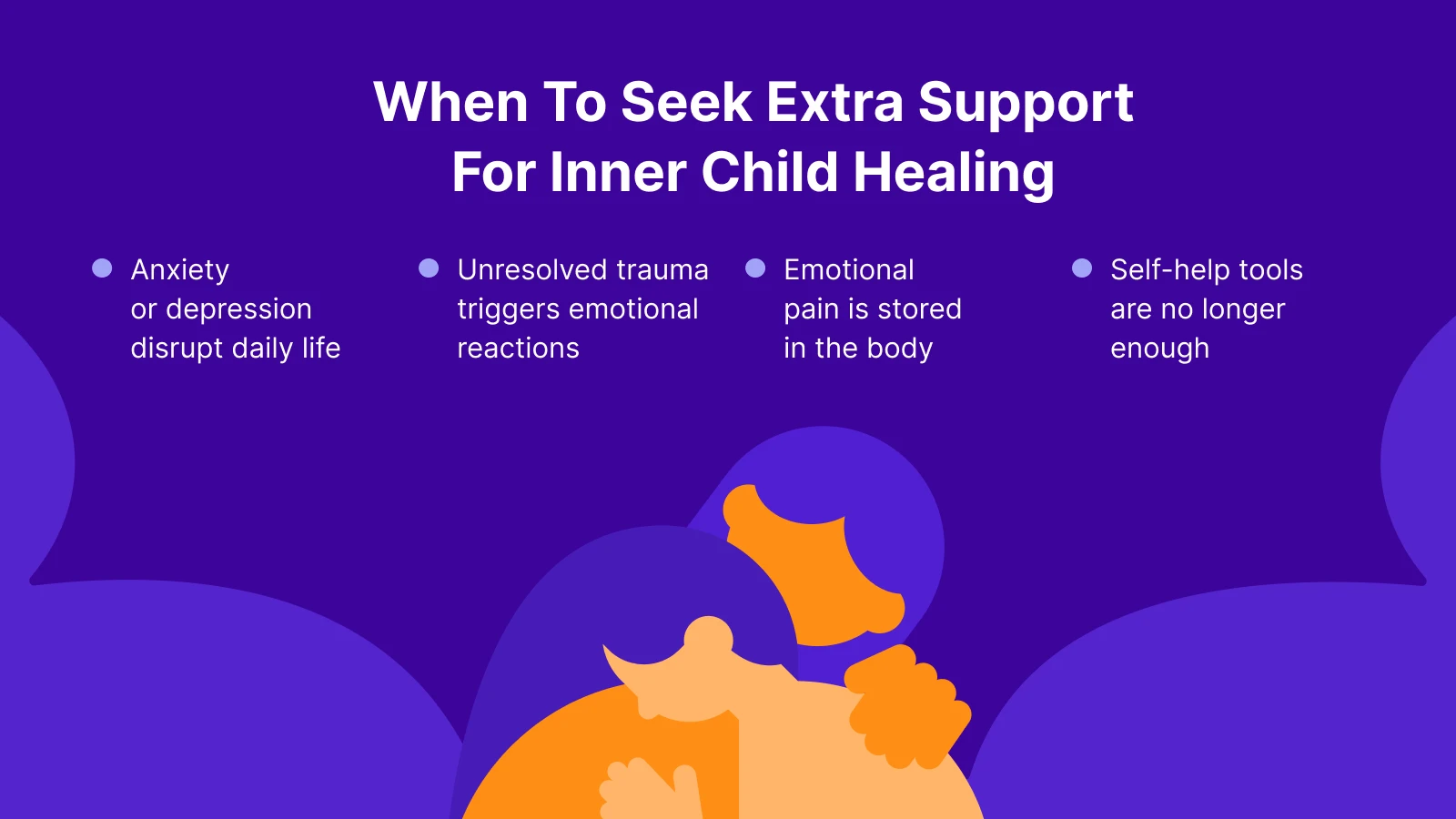
While you can work toward taking charge of your life without assistance from others by engaging in activities like working out, keeping a journal, and utilizing helpful tools like Headway, it is sometimes necessary to turn to another person for help. If you have a mental health issue that is restricting your ability to live normally, such as chronic anxiety, chronic depression, substance abuse, or untreated childhood trauma, you will benefit from professional therapy services.
As an EMDR-trained therapist, I help clients reprocess traumatic memories stored in the body and nervous system, allowing the inner child to heal. EMDR (Eye Movement Desensitization and Reprocessing) is a trauma-based modality that's particularly effective for transforming emotional wounds from past experiences into adaptive, present-day coping.
I also incorporate Internal Family Systems (IFS), a modality based on the idea that various "parts" or subpersonalities make up our identity and sense of self. Among these parts exist our wounded or protective inner child parts. Through IFS, clients create more understanding toward and between their parts.
Additionally, Somatic Experiencing addresses how trauma is held physically, using body awareness to release tension and restore a sense of safety. These three evidence-based modalities support inner child healing through a trauma-informed, evidence-based approach.
If this article resonates with you, or if any of these modalities sound interesting to you, I highly recommend reaching out to a therapist near you!
Continue your inner child healing journey with Headway
Healing your inner child is a foundation for emotional maturity, self-acceptance, and well-being. With Headway, you can explore summaries from essential books mentioned in this article.
Spend just 10 minutes a day practicing exercises such as reparenting, affirmations, visualization, and journaling, and you'll notice that you meet the inner child needs your younger self didn't receive.
Lastly, it's very important that you nurture those aspects of your life that still need nurturing. Remember that taking small intentional steps toward nurturing your inner self adds up.
Use the Headway app, which offers practical information to help you heal yourself, wherever you are, and move forward in creating the secure environment you have deserved since you were young.
Frequently asked questions on healing your inner child
What does "healing your inner child" mean?
By acknowledging and addressing the needs of your childhood self, you can heal your inner child. You will learn to accept yourself, release any childhood traumas, and be loving and supportive of yourself. As you heal your inner child and practice self-care, you'll be kinder to yourself, have a more peaceful relationship, and create more joy and security in your life.
How long does inner child healing take?
The process of healing the inner child is individual and can last from several weeks to months or years. The speed depends on the depth of the trauma, the willingness to work on yourself, and the techniques used: self-help, therapy, exercise, meditation, and journaling. Even 10 minutes of attention daily can produce noticeable changes.
Can I do this alone, or do I need therapy?
You can begin on your own using tools, journaling, and guided meditations or exercises. If you would like support along your journey, or if your symptoms cause daily distress, then seeking professional psychotherapy is a great option for you.
What are the quick signs my inner child is wounded?
You become calmer with triggers. Less self-criticism. More permission to be happy without guilt. It's easier to say "no." You want to play, laugh, and try new things. Like in good books about healing, you stop "surviving" and start living.
Which books should I start with?
To begin healing your inner child, you should turn to the books 'It Didn't Start With You,' 'The Myth of Normal,' and 'Will I Ever Be Good Enough?'. They help you understand the impact of childhood trauma, recognize emotional patterns, and learn how to take care of yourself, even in the midst of daily busyness. The copies of these books are available at the Headway library.