Self-growth
 Business & Career
 Success
 Communication
 Healing
 Relationships
 Psychology
 Happiness
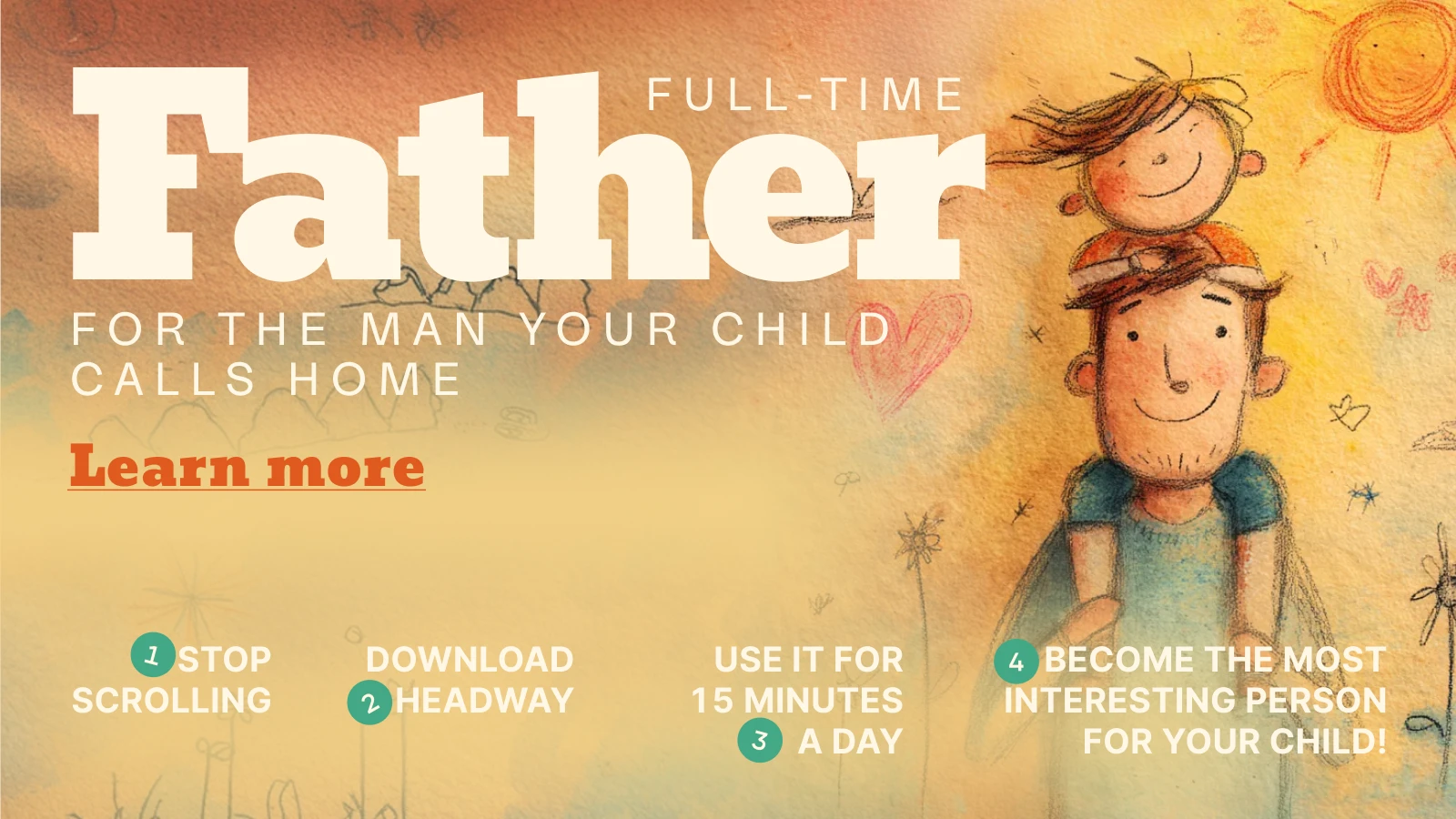
Being a full-time father for the man your child calls home means more than just showing up. It's waking up in the middle of the night, the 7 am video game arguments, answering "why?" for the hundredth time, and being the person your kid runs to when things fall apart.
Whether you're a first-time dad or years into this, fatherhood looks different now. You're not just the breadwinner — you're a caregiver, teacher, emotional anchor, and role model. Some days, you're the only parent holding everything together.
This guide covers practical habits and real challenges full-time fathers face. And if you need advice that fits your schedule, Headway provides 15-minute book summaries covering topics such as parenting, leadership, and mental health.
📘 Get fatherhood advice that fits your life — try Headway now!
Quick answer: What does being a "full-time father for the man who feels like home" mean?
Being a full-time father means:
Daily caregiving and emotional support: Meals, homework, meltdowns when they happen.
Teaching values through action: What you do teaches more than what you say.
Growing while parenting: You're still learning and adjusting as you go.
Creating stability: You're who they come to when life gets chaotic.
Balancing work and life: Managing your mental health, goals, and whatever work setup you have.
Some days, you get it right. Some days, you don't. And either way, it's totally okay.
What modern full-time fatherhood looks like
Full-time fatherhood looked different back then. Mostly, dads used to be the breadwinners, meaning they worked a lot, had dinner, and maybe went out for a weekend catch — that was it.
What modern fathers do now:
Handle school drop-offs and pack lunches
Sit through parent-teacher conferences
Deal with sick kids in the middle of the night
Manage homework battles and screen time limits
Work remotely full-time, part-time at an office, or stay home completely
Children with engaged fathers tend to do better in school, navigate problems better, and develop healthier emotional regulation. They see what healthy relationships look like because you're there.
Fathers who lean into caregiving also report better mental health and stronger family connections. You're not giving up your life — you're building something real with your kids while still being yourself.
Gender roles shifted because the old model stopped working. Mothers don't do everything alone anymore, and fathers aren't as easily allowed to be distant. Full-time fatherhood means showing up in whatever way your family needs.
📘 Learn parenting skills in 15 minutes — download Headway today!
Types of full-time fathers (and how to navigate each role)
Stay-at-home dads
You handle meals, errands, and the daily routine while your partner is at work. It gets lonely when you're the only dad at the playground.
➡️ What helps: Find other stay-at-home fathers through online groups or local meetups. Your mental health needs adult conversation, beyond talking to toddlers all day.
Remote-working fathers
Balancing Zoom calls while your kid needs help with algebra or wants to show you something right now. Work interrupts parenting. Parenting interrupts work.
➡️ What helps: Set real boundaries between work hours and kid time. "I'll help when my meeting ends at 3 PM" actually works when you follow through.
Single dads
You're the only parent handling everything with no tag-teaming or breaks. Late-night emergencies, sick days, and homework battles all land on you alone.
➡️ What helps: Build your support network before you desperately need it. Get other parents' numbers, find reliable babysitters, and ask for help without guilt.
Stepdads and blended-family fathers
Figuring out your role with kids who aren't biologically yours while managing ex-partner dynamics takes time and patience.
➡️ What helps: Build trust before trying to enforce rules. Let relationships develop naturally instead of forcing instant family bonds.
Flexible schedule dads
Freelancing or juggling part-time work while handling full-time caregiving means your income and schedule constantly shift.
➡️ What helps: Protect specific hours for your kids where work emails and gig stress stay off your phone completely.



Daily habits for full-time fathers
Full-time fatherhood gets easier when you have some structure, even if chaos is your norm.
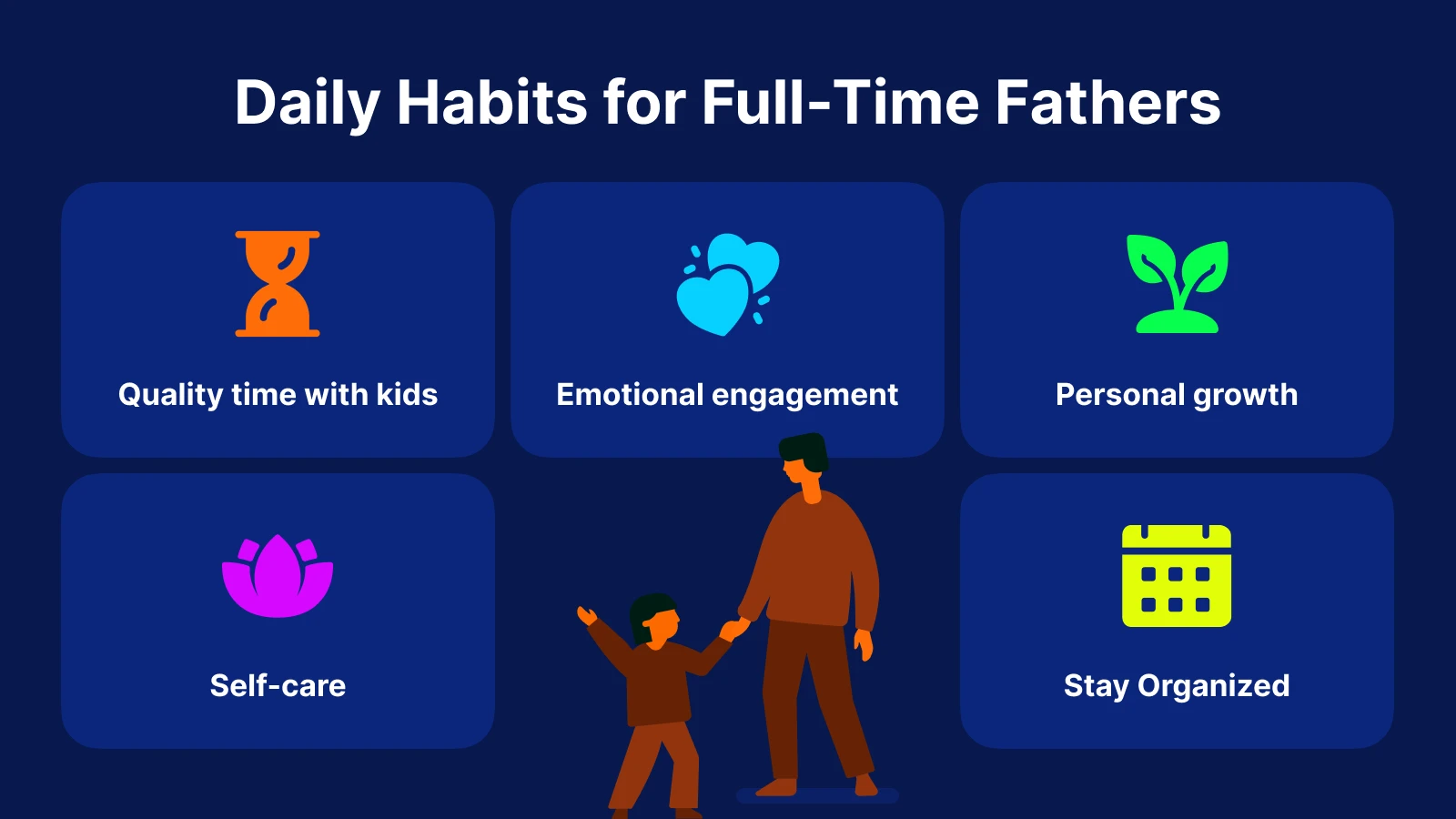
Quality time with your kids
Dedicate specific time that's entirely theirs by putting the phone down and being present. Twenty focused minutes beats an hour of half-watching while you scroll. Whether that looks like playing video games together, helping with homework, or cooking side by side, these shared activities teach more than telling them what to do.
Emotional engagement
Be someone they trust when things fall apart. Kids learn emotional regulation by watching how you handle frustration, disappointment, and mistakes. When they're upset, listen before jumping straight to solutions.
Personal growth
You're still yourself, not just "dad." Keep learning in whatever time you've got. Headway offers 15-minute book summaries on parenting, mental health, and leadership, which you can enjoy during lunch breaks or after your little ones are asleep.
Keep your hobbies alive too: Weekend sports, building projects, and podcasts you enjoy. Whatever reminds you that you exist beyond being the caregiver or breadwinner.
Self-care
Your mental health directly impacts your kids. Sleep when possible. Eat real food, not just their leftovers, while standing at the counter. Move your body by going to the gym, taking walks, or playing outside with your kids.
Struggling? Talk to someone. Get a therapist's phone number, call a friend, join a dad group. Burning out just makes everything harder for everyone.
📘 Learn and grow on your schedule — try Headway!
Balancing personal growth and full-time fatherhood
Being a full-time father doesn't stop your growth — it just changes how it happens.
Model learning for your kids
When your kids watch you learn something new, they see that growth doesn't end after school. Reading, taking courses, listening to podcasts during drives — they notice. Trying something for the first time and messing up? Shows them failure is normal, not something to hide.
Build skills through fatherhood
Full-time parenting forces you to develop patience, manage time better, and handle emotions under pressure. Those wake-ups in the middle of the night? You're learning to function exhausted. Managing schedules while working part-time? That's executive function training you can't get anywhere else.
Fit learning into your schedule
Headway works for busy fathers — 15-minute book summaries you can finish during downtime or before bed. Small, consistent learning beats massive plans you never follow through on.
Try:
'The Whole-Brain Child' for understanding how your kid's brain actually works
'How to Talk So Kids Will Listen' for better communication
'Raising An Emotionally Intelligent Child' for handling big feelings without losing your mind
Connect what you learn to caregiving
Learning emotional intelligence helps with meltdowns. Communication skills improve co-parenting. Mental health knowledge helps you recognize when anyone needs support. Everything feeds back into being a better father and person. Your kids benefit when you're growing alongside them instead of just going through the motions.
What helps full-time fathers overcome common challenges
Isolation hits hard. You're the only dad at playground meetups or school pickups. Most parenting groups assume moms are the primary caregivers. Find other full-time fathers online or locally. Get phone numbers from dads you meet. Listen to parenting podcasts during commutes or in the dead of night.
Financial pressure messes with your identity. Not being the breadwinner creates stress, even when staying home makes financial sense. Budget realistically for reduced income. Look for flexible part-time work if needed. Remember that childcare costs what you'd earn anyway.
People question your choices constantly. They ask when you're going back to "real work" or assume you're babysitting until your partner gets home. Stop explaining yourself to people who won't understand. Find fathers who respect what you're doing — their opinions matter, random relatives at holidays don't.
Mental health struggles are real. Full-time parenting means isolation, exhaustion, and a lot of repetition. Some days, you're touched out by noon with eight hours left to go. Therapy isn't a sign of weakness — get a therapist's phone number before a crisis hits. Have you ever noticed that you're always exhausted, angry, or checked out? That's your signal that something needs adjusting.
Make Headway and become the father who feels like home!
Full-time fatherhood provides a deep connection with your kids that lasts even after they grow up. You're teaching them how to be decent human beings, showing what emotional availability looks like, and being present through both the mess and the magic.
Some days you'll question everything, especially the first time you realize you have no clue what you're doing. On other days, you'll handle that middle-of-the-night chaos and understand precisely why this matters.
Keep growing alongside them. Headway offers 15-minute book summaries, self-growth challenges, and parenting insights that fit your actual schedule.
📘 Keep learning while raising kids — download Headway today!
Frequently asked questions
How can I be a good first-time father?
Nobody hands you a manual when your kid arrives. Start with being present instead of trying to be perfect. Ask other dads questions without embarrassment. You'll figure out how to manage those late night wake-ups and diaper changes by doing them badly first. Reading parenting books or listening to podcasts helps, but mostly, just showing up consistently matters most.
What do dads struggle with the most?
Mental health hits hardest. You feel isolated when home full-time, stressed about money if you're not the breadwinner, and worried you're failing at everything. Balancing work with caregiving leaves you exhausted by noon. People keep asking when you're getting back to a "real job," as if what you're doing doesn't count. You're not alone in this.
Do men change after becoming fathers?
Everything shifts. Your priorities completely rearrange — video games and weekend plans matter way less than making sure your kid's safe and happy. Sleep deprivation becomes your baseline. Things that never made you emotional before suddenly hit different when you're watching your kid grow up.
What are the 3 P's of fatherhood?
Presence, patience, and persistence. Presence means putting your phone down and actually listening when they talk about their day. Patience gets you through the hundredth "why" question and the drama that feels earth-shattering to them. Persistence keeps you showing up on hard days when you're too tired to think. Being there consistently beats being perfect.
Is it okay to be a stay-at-home dad?
Absolutely, if that works for your family. Someone needs to raise the kids, and there's no rule saying it has to be mom. If it makes financial sense, or you genuinely want to do it, then do it. Connect with other stay-at-home dads through parent groups or online — isolation can sneak up quickly. Your mental health matters just as much as your kids' does.