Self-growth
 Business & Career
 Success
 Communication
 Healing
 Relationships
 Psychology
 Happiness
When you choose to monitor specific actions, you gain a clear picture of your progress. Most of us think we know how we spend time. But without a record, our memories often lie to us.
When you don't track habits, you might swear that you drank eight glasses of water yesterday, but you really only had three. You're convinced you meditated for 20 minutes, but it was closer to five. This disconnect between what we believe and what we actually do keeps us stuck in the same patterns year after year.
Tracking your daily routine creates a visual history of your wins. It turns vague goals like "be healthier" into a concrete to-do list you can actually finish. When you see proof of what you accomplished, your brain releases dopamine. That little chemical reward makes you want to add another checkmark to your to-do list tomorrow. This simple act of awareness is often the difference between staying stuck and achieving personal growth.
In this article, you'll find science-backed ideas to add to your habit tracker. Whether you want to improve your mental health or reach new career heights, these small shifts will help you get there.
And if you feel like you're not sure where to start, the Headway app can help you find your footing. It offers bite-sized summaries of the world's best self-growth books, so you can learn exactly how to build better habits in just 3–20 minutes a day.
📘 Start building habits with Headway today.
Quick answer: What are the best daily habits to track?
If you want to start today, focus on these five core areas. These habits offer the highest return on your time and energy.
Physical health: Drink eight glasses of water and walk for at least 30 minutes.
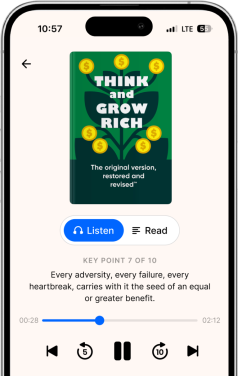
Mental growth: Listen to one 15-minute book summary on the Headway app.
Mindfulness: Write down three things you're grateful for every morning.
Digital boundaries: Limit your social media screen time to 30 minutes.
Environment: Declutter one small surface, like your desk, before you go to sleep.
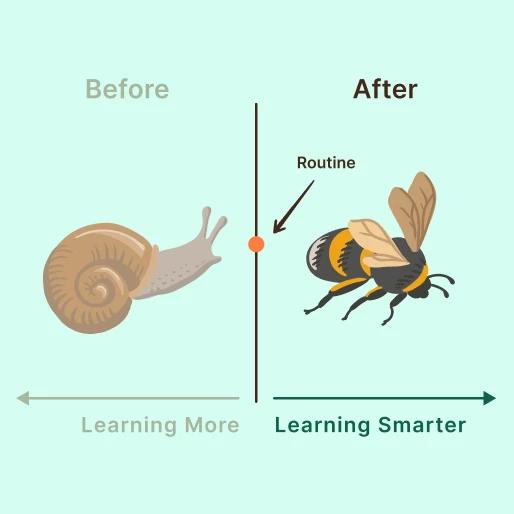
Unlock your daily growth superpower
Transform your routine to fuel continuous learning and effortless improvement.
Let's startWhy tracking your daily routine works
Most people rely on willpower to build a new habit. Unfortunately, willpower is like a phone battery that drains throughout the day.
James Clear, the author of 'Atomic Habits,' argues that a system is far more effective than raw determination. By the time you get home from work, you might not have the energy to choose healthy habits over easy ones. That's exactly why you need a habit tracker app or a physical journal. It removes the need to rely solely on motivation.
Think of your tracker as a visual cue that reminds you to act. Every time you place a checkmark next to a task, your brain gets a small hit of dopamine. This sensation makes you want to repeat the action tomorrow. The tracker itself becomes the reward system.
But here's where habit tracking gets really interesting. Over a long period of time, these small wins change how you see yourself. You stop "trying to exercise" and start "becoming an athlete." You're not "attempting to read more," you're now "a reader." This identity shift is the real goal of self-improvement. When you see a long streak of successful days, you won't want to break it. You'll protect that streak like it's precious, because it represents who you're becoming.
Essential daily habits to track for physical health
Your body is the foundation for everything else you want to achieve in life. If you aren't physically energized, it's nearly impossible to stay focused on your long-term goals. This approach isn't about perfection. It's about consistency in the little things that keep your engine running.
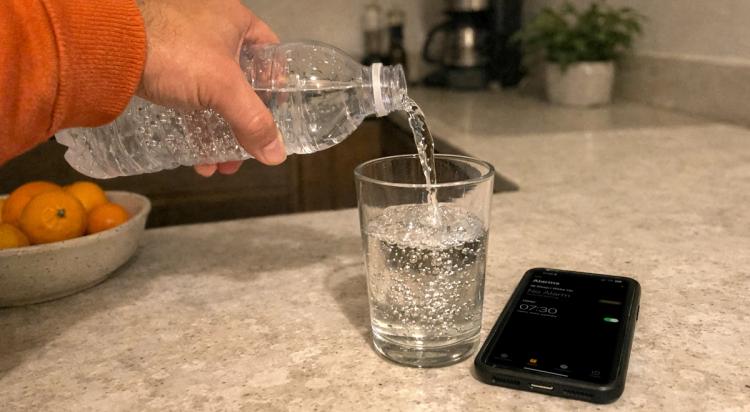
Start with hydration. According to Harvard Health Publishing, even mild dehydration can trigger symptoms like fatigue, dizziness, and confusion. This reaction happens because every system in your body relies on water to function at its best. Tracking how many glasses of water you drink is a simple way to ensure you stay alert and energized throughout your day.
Next, look at your plate during meals. Try to include different colored veggies with your dinner to get a variety of nutrients. The more colors you see, the wider range of vitamins and minerals you're getting. These little things might seem small, but they help keep your brain sharp and your energy stable.
Don't skip the hygiene basics that affect your long-term health. Make it a goal to floss your teeth every night before bed. It takes less than five minutes and helps prevent gum disease and major dental problems later. Most people ignore this daily habit because the consequences feel distant, but your future self will thank you for protecting those teeth now.
Finally, focus on movement. Aim for 10,000 steps or a 20-minute walk outside to clear your head. Walking isn't just exercise; it's a reset button for your nervous system. When you're stuck on a problem at work, a quick walk often delivers the solution your stressed brain couldn't find sitting at your desk.
📘 Turn walks into learning with Headway.
Daily habits to track for mental health and well-being
Mental health requires as much attention as physical fitness. Yet most people spend more time planning their grocery list than protecting their emotional well-being. Use these habits to reduce stress and improve your overall sense of balance.
Start your day with a positive affirmation or a moment of gratitude. It'll help train your brain to notice what's working alongside what's broken. Taking the time to write down three things you are grateful for or small acts of kindness you saw throughout the day helps you focus on the good. When your brain knows it has to find something positive later, it starts looking for those moments throughout your day.
Here's what nobody tells you about social media: it's designed to keep you scrolling. By tracking your screen time, you regain control over your attention. This practice helps you spend time on things that actually make you happy, rather than watching other people's highlight reels. Set a 30-minute limit per day and watch how much mental space you reclaim.
Meditation is another powerful tool. Even five minutes of sitting in silence can calm a busy mind. You can use printable logs or templates to record how you feel after each session. This exercise helps you notice patterns in your mood over weekly habits. When you see what triggers your stress, whether it's lack of sleep, too much caffeine, or checking email first thing in the morning, you can start to remove those bad habits.

Start learning breathing techniques backed by research in just five minutes a day.
The key is paying attention. Most people live on autopilot, reacting to whatever life throws at them. Tracking forces you to check in with yourself and ask: "How am I actually doing today?"
Productivity habits that actually stick
Being busy isn't the same as being productive. You can answer 50 emails and still accomplish nothing meaningful. These habits help you focus on what truly matters for your career and life.
Try to schedule 90 minutes of "deep work" every day. You should use this time to work on your hardest tasks without distractions. Turn off your phone, close your email, and put a "do not disturb" sign on your door if you have to. This kind of focus is rare, but it's one of the most effective tools a high achiever can develop. It allows you to finish more in two hours than most people do in a full day.
Why 90 minutes, you ask? Research shows that's about how long the average person can maintain intense concentration before needing a break. Don't try to push past it. When your brain gets tired, take a real break. Go for a walk, grab a snack, or talk to a colleague. Then come back for another round.
You should also prioritize learning. Many people want to learn a new language or a new skill, but never start because they think they don't have time. But the truth is that you do have time. You're just spending that time scrolling through social media or watching TV. Use the Headway app to listen to book summaries during your commute. It turns "dead time" into a valuable part of the daily routine for growth.
Finally, review your goals for five minutes every evening. This practice keeps your long-term vision fresh in your mind. When you remind yourself why you're doing all this work, it's easier to stay motivated. Ask yourself, "What's the one thing I need to do tomorrow to move closer to my goals?" Put that task at the top of your to-do list.
📘 Upgrade productivity habits with Headway.



Habit tracker apps vs bullet journaling: Stop wasting time on the wrong system
Choosing the right tool is a big part of your success. If your tracking system feels like a chore, you'll quit. Both digital and analog methods have their own benefits, so choose what works best for your lifestyle.
Habit tracker apps are perfect for busy people who always have their phones. They send you reminders and automatically track your streaks, which is great for building positive habits without having to remember them yourself. Many apps also offer templates that make setup very fast. You can start tracking in under two minutes.
On the other hand, a bujo (bullet journal) is great for creative thinkers. There's something special about physically marking a checkmark on paper. The tactile act of writing reinforces the habit in your brain differently than tapping a screen. It allows you to customize your pages exactly how you like. Some people draw elaborate spreads with colors and stickers. Others keep it minimal with simple boxes. Still, bullet journaling takes more time to maintain than a digital tool.
| Method | Best for | Key benefit |
|---|---|---|
Habit tracker app | Busy people on the go | Automatic reminders and data streaks |
Bullet journaling | Creative or visual thinkers | Tactile satisfaction and customization |
Headway app | Lifelong learners | Combines tracking with expert knowledge |
The truth is, you could use both. Track your daily habits in an app for convenience, but journal about your thoughts and feelings in a notebook for deeper self-care. There's no rule that says you have to pick just one system.
How to make a new habit easy
If a habit feels too hard, you'll eventually quit. That's not a character flaw — it's human nature. James Clear suggests using the "Two-Minute Rule" to stay consistent, and it works because it removes the biggest obstacle: getting started.
This rule says that a new habit should take less than two minutes to start. If you want to read more, start by reading one page. If you want to run, just put on your shoes. You don't have to finish a whole book or run five miles. The goal is to master the "art of showing up" first. Once you're consistent with showing up, you can slowly increase the difficulty.
But why does this work? Because most of us quit before we even begin. We think, "I need to run for 30 minutes," and that feels overwhelming, so we don't do it. But "I'll just put on my running shoes" feels easy. Once your shoes are on, you usually end up running anyway.
Another great strategy is "habit stacking." You pair a new action with something you already do every day. For example, "After I pour my coffee, I'll write my to-do list." This connection uses your existing daily routine to anchor the new behavior. You're not adding something completely random to your day; you're building on top of what's already automatic.
You should also design your environment to help you succeed. If you want to eat more veggies, put them at eye level in the fridge. If you want to floss, leave the floss right next to your toothbrush. Make good habits obvious and bad habits invisible. Hide your phone in a drawer if you want to read more. Put a water bottle on your desk if you want to drink more water.
Small changes to your environment can lead to huge changes in your behavior over time.
📘 Build lasting habits with Headway.
The power of microlearning for high achievers
High achievers know that their greatest asset is their mind. The more you learn, the more opportunities you see. But finding time to read full books is a challenge for most busy professionals.
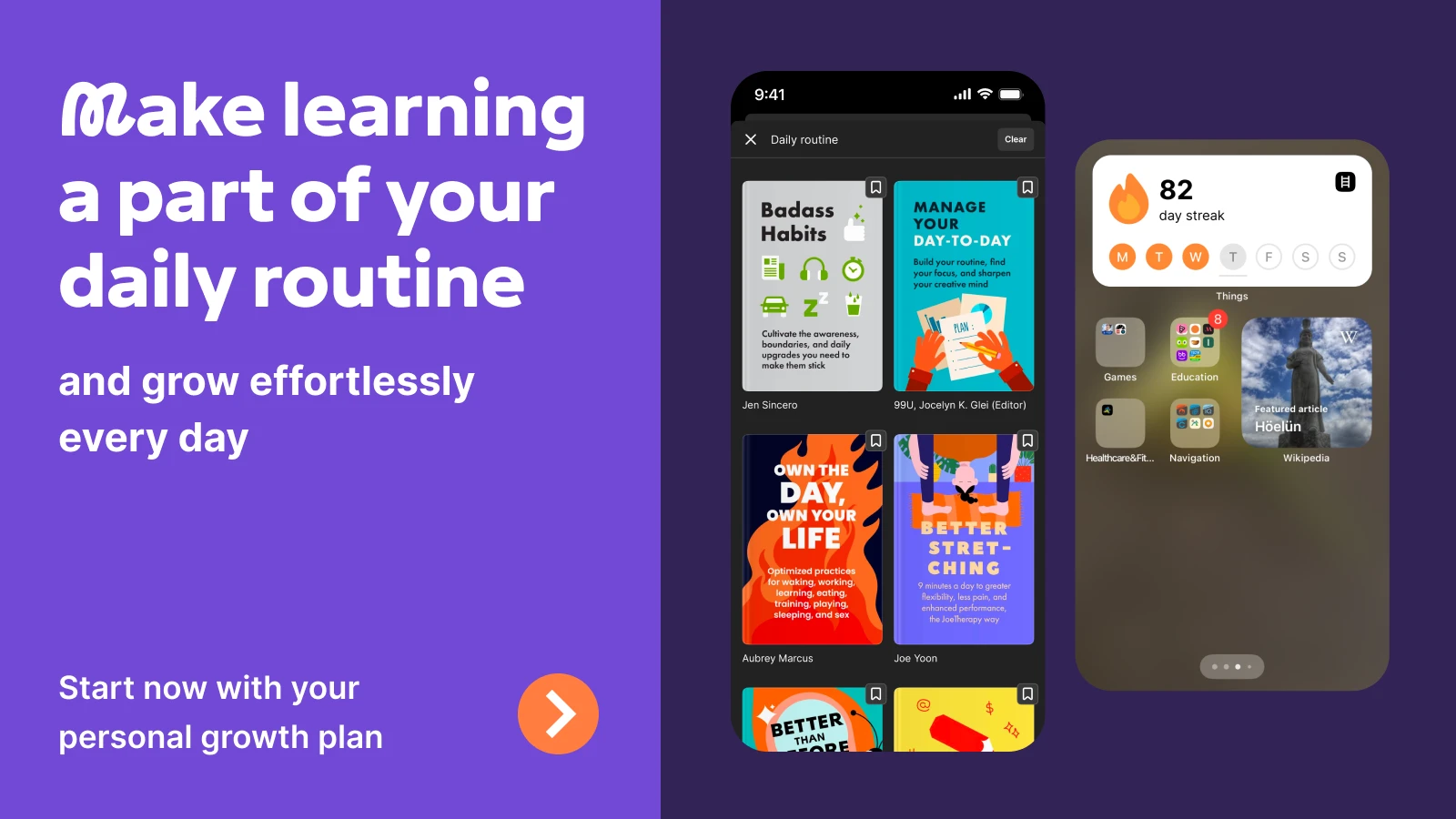
Here's where microlearning fits neatly into your life. By spending just 3–20 minutes a day on the Headway app, you can learn the key ideas from world-class experts. You get the most important insights from a book without spending 10 hours reading it. Plus, it becomes easier to stay informed and inspired while you're on the move.
➡️ So what exactly is the Headway app?
With Headway, you can track your learning just like you track your steps. Make it a goal to finish one summary every morning. Over a year, this adds up to over 300 books' worth of knowledge. That's a massive advantage in any life or career goals. It helps you build better habits by teaching you the science behind them. You're not just doing things because someone said so — you understand why they work.
Want to know the best part? You can apply what you learn immediately. Read a summary about negotiation on Monday morning, then use those tactics in your meeting that afternoon. Learn about productivity on Tuesday, then reorganize your to-do list on Wednesday. Knowledge without application is just trivia. Headway helps you turn information into action.
📘 Turn knowledge into action with Headway.
Start your growth journey right now with Headway
Tracking your habits is the first step toward becoming who you want to be. It provides the clarity and motivation you need to stay on the path. But tracking alone isn't enough. You also need to know what habits are worth building in the first place.
Headway makes this journey easier by giving you the insights you need in just 15 minutes. Instead of guessing how to improve, you can learn proven strategies from the best authors. Whether you want to fix your mental health, build good habits, or hit your work goals, there's a summary for you.
Here's what makes Headway different: it turns what you learn into something you can actually use. You get personalized recommendations based on your interests. You can track your progress and see how much you're learning. The app sends you daily reminders to keep your streak alive. And with both text and audio options, you can learn however works best for you.
Start small today. Choose one habit from this list and add it to your habit tracker. Maybe it's drinking more water. Maybe it's spending 15 minutes learning something new. Maybe it's writing down three things you're grateful for. Whatever you choose, commit to showing up every day. Don't worry about how long it takes to feel automatic. Just focus on today's checkmark.
Your future self will thank you for the effort you put in now. Download the Headway app to turn your phone into a self-care and learning tool. Stop scrolling through social media mindlessly. Start building the life you actually want, one small habit at a time.
📘 Start daily growth with Headway.
Frequently asked questions about daily habits to track
How many habits should I track at once?
Try to focus on tracking only 3–5 habits at any given time. If you try to change every single part of your life at once, you'll likely get overwhelmed and quit within a week. It's much better to master a few positive habits successfully than to fail at tracking 20 different things at once. Start small, build consistency, then add more.
What if I miss a day on my habit tracker?
Follow the "Never Miss Twice" rule. Everyone has bad days when they simply can't stick to their intended daily routine due to stress or travel. The key is to never let that failure happen two days in a row. Check in with yourself immediately and get back to your specific routine as soon as possible. One missed day is a mistake. Two in a row is the start of a new pattern.
Should I use a digital habit tracker app or a printable version?
This answer depends entirely on your personal style and needs. A habit tracker app is great for quick reminders and automated data streaks. It's always with you since you carry your phone everywhere. However, a printable version or a bujo offers more focus and a much-needed break from digital screens. Choose the tool you find most enjoyable to use every day. The best tracker is the one you'll actually use.
Can tracking habits help with bad habits?
Yes, tracking is a powerful tool for change. When you track a bad habit, you become much more aware of when and why you actually do it. For example, if you track every time you check social media, you might notice you do it most when you're bored or avoiding difficult work. Awareness is always the first step toward lasting change. You can then use your data to replace the negative behavior with a healthier, more productive alternative.
How do I choose which daily habits to track?
Start by looking at your long-term vision. If you want more physical energy, track your sleep and water intake. If you want to get a big promotion, track your deep work and daily learning. Always choose habits that directly support the person you want to become and the goals you want to achieve this year. Don't track habits just because someone else does. Make it personal.
Is it okay to track weekly habits instead of daily ones?
Some activities, like deep cleaning your home or going for a long hike, don't happen every day. For those specific tasks, a weekly tracker works best. However, for behaviors that build strong discipline, like meditation or reading, daily tracking is much more effective. It keeps your momentum high and keeps you focused. The tracking frequency should match the habit's frequency.
How do I stay motivated when I don't see results?
Remember the life hack from 'Atomic Habits' where James Clear explains that results often compound invisibly before becoming visible. It's like ice melting. You increase the temperature from 25°F to 31°F, and nothing happens. But at 32°F, the ice finally melts.