Self-growth
 Business & Career
 Success
 Communication
 Healing
 Relationships
 Psychology
 Happiness
Have you ever hit the snooze button five times and then felt behind before your day even started? Yeah, same. And honestly, you're not alone in that struggle. Millions of people wake up every single day already stressed, scrolling social media before their feet even touch the floor.
What's more, a morning routine for success doesn't mean you have to wake up at 5 AM and run a marathon before sunrise. It's really about creating a set of small habits that help you feel focused and ready for the day ahead.
Drawing on ideas from authors like James Clear, Hal Elrod, Robin Sharma, and Tony Robbins, this guide will walk you through a step-by-step process to build a morning ritual that fits your actual life. Not somebody else's life. Yours.
And if you don't have hours to read all their books? That's where microlearning apps like Headway come in. The app turns the world's bestselling books into quick summaries, so you can pick up new ideas while you're still in your pajamas.
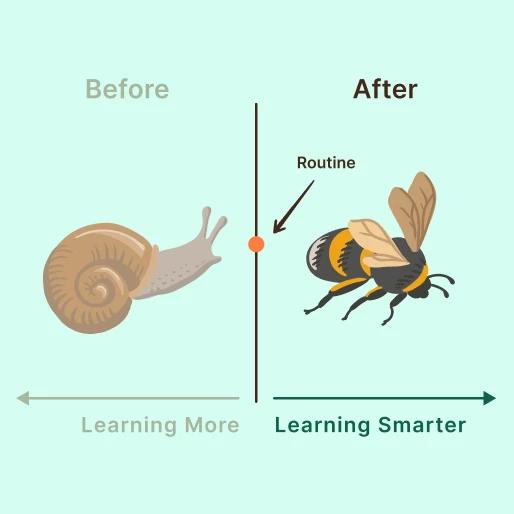
Unlock your daily growth superpower
Transform your routine to fuel continuous learning and effortless improvement.
Let's start📘 Build powerful mornings with Headway.
Quick answer: What is the best morning routine for success?
The best morning routine for success includes a few simple habits that set the tone for a productive day. Here's a quick snapshot:
Prep the night before: Lay out your clothes and write a to-do list so you don't waste time making decisions in the morning.
Drink water first thing: Hydrate your body with a glass of water after a good night's sleep. Your brain needs it.
Skip social media for 30 minutes: Give yourself at least 30 minutes of peace before checking notifications.
Move your body: A short morning workout, light stretching, or even a quick walk can wake up your muscles and boost mental clarity.
Use mental priming: Try affirmations, a gratitude journal, or a few minutes of deep breathing to set a positive tone.
Learn something new: Listen to a 15-minute book summary on the Headway app to kickstart your growth before the rest of your day gets busy.
Why does a daily morning routine for success actually work?
So does having a morning routine actually make a difference? In a nutshell, yes. And there's real science behind it.
The first reason is something called "decision fatigue." You only have so much mental energy every day. Every choice you make — what to wear, what to eat for breakfast, which email to answer first — chips away at that mental fuel. By the time you sit down to do your most important things, your brain is already tired. That's why successful people like Barack Obama and Steve Jobs famously wore the same outfits every day. Fewer decisions in the morning meant more brainpower for the stuff that actually mattered.
When you make your morning routine automatic, you stop burning energy on the small stuff.
The second reason is what scientists call the "winner effect." When you finish a small task early in the day — like making your bed or drinking water — your brain gives you a little dopamine hit. That small win builds momentum, and it carries you through harder tasks later. It's the same idea James Clear talks about in 'Atomic Habits': tiny actions create a ripple that shapes the rest of your day.

And here's one more thing. Research shows that routines help lower cortisol, the hormone that causes stress. Instead of waking up in panic mode, a morning ritual gives your body a signal that everything is under control. You start the day calm instead of chaotic.
📘 Strengthen daily discipline with Headway.
How to create a morning routine for success that fits your life
Look, if the idea of an early morning wake-up call makes you want to crawl back under the covers, don't worry. You don't have to be a morning person to build a successful morning routine. The trick is to actually start the night before.
Here's how to do it, step-by-step:
Plan your next day the evening before: Write down your most important things so you don't waste the morning figuring out what to do.
Set a consistent wake-up time: Try to get up at the same time every day — even on weekends. This cycle keeps your circadian rhythm steady, which means better sleep and easier mornings over time.
Start with a win: Make your bed. Drink a glass of water. These acts take less than a minute, but they count as small victories that get your brain going.
Stack your habits: This idea comes from James Clear's 'Atomic Habits.' Take something you already do and attach a new habit to it. While your coffee is brewing, do two minutes of stretching. After brushing your teeth, write three things you're grateful for in a gratitude journal. Habit stacking is one of the simplest morning routine hacks that actually sticks.
The point is that the perfect morning routine for success isn't about following someone else's schedule. It's about building one around your own life, energy, and goals.
📘 Design winning routines with Headway.
Morning routine ideas for success: What highly successful people actually do
Curious what the mornings of highly successful people look like? You might be surprised — it's not all cold plunges and green juice. Here are some real habits from well-known entrepreneurs and co-founders:
Richard Branson, the founder of Virgin Group, wakes up at about 5 AM every day. He starts with exercise, usually tennis or a bike ride, and says staying active in the early morning is what fuels his energy for the rest of the day. He also makes time for a healthy breakfast with family before diving into work. You can read more about his approach in 'Screw It, Let's Do It.'
Tim Ferriss, the author of 'Tools of Titans,' spent years interviewing top entrepreneurs about their daily routines. A surprising number of them shared the same simple habits: making the bed, drinking water, doing some kind of cardio, and meditating for 10–20 minutes. Nothing fancy. Just consistent.
Tony Robbins is known for his "priming" ritual, which includes cold water exposure, breathing exercises, and a gratitude practice. He says this 10-minute routine gives him mental clarity for the entire day ahead. His book 'Unshakeable' (co-authored with Peter Mallouk) also covers how building a strong personal foundation — starting with your morning — affects everything from finances to relationships.
Hal Elrod nearly died in a car accident and used his recovery to design what he calls the SAVERS method: silence, affirmations, visualization, exercise, reading, and scribing (journaling). This process is the backbone of his book 'The Miracle Morning,' and thousands of people worldwide use some version of it as their morning ritual.
Do you see the common thread? None of these people relies solely on willpower. They all built systems — daily routines that run almost on autopilot.



Five books on morning routine for success to help you own your morning
You don't have to guess which morning routine ideas work best. Many of the world's most successful people have written down exactly what they do. You can find 15-minute summaries of all these books on the Headway app:
'The 5 AM Club' by Robin Sharma: This book introduces the 20/20/20 formula — spend 20 minutes moving, 20 minutes reflecting, and 20 minutes growing. It's built around the idea that an early morning routine for success gives you a head start before the rest of the world wakes up.
'The Miracle Morning' by Hal Elrod: The SAVERS method (silence, affirmations, visualization, exercise, reading, and scribing) gives you a complete morning ritual that covers your body, mind, and spirit — all before 8 AM.
'Atomic Habits' by James Clear: This one isn't specifically about mornings, but it's the best guide to building a daily routine that actually sticks. Clear explains how tiny, 1% changes each day add up to big results over time.
'Tools of Titans' by Tim Ferriss: A huge collection of habits and hacks from over 200 highly successful people, including entrepreneurs, athletes, and co-founders. You'll find specific morning workout routines, hydration tips, and affirmations that real people use every single day.
'Screw It, Let's Do It' by Richard Branson: The Virgin Group founder shares lessons from his life as an entrepreneur. He's a big believer in waking up early, staying active, and saying yes to new ideas — and this book will show you how that mindset starts with your morning.
Bonus: If you're also interested in building a stronger financial foundation alongside your morning habits, check out 'Unshakeable' by Tony Robbins and Peter Mallouk on Headway. It pairs well with a growth-focused startup mindset.
Why busy people choose Headway for their morning routine
So you've got a long list of books to read. When are you supposed to find the time? That's exactly why the Headway app exists. It turns bestselling books into bite-sized summaries you can listen to while you get ready, work out, or commute. Think of it as a podcast, but shorter and packed with the best ideas from real books.
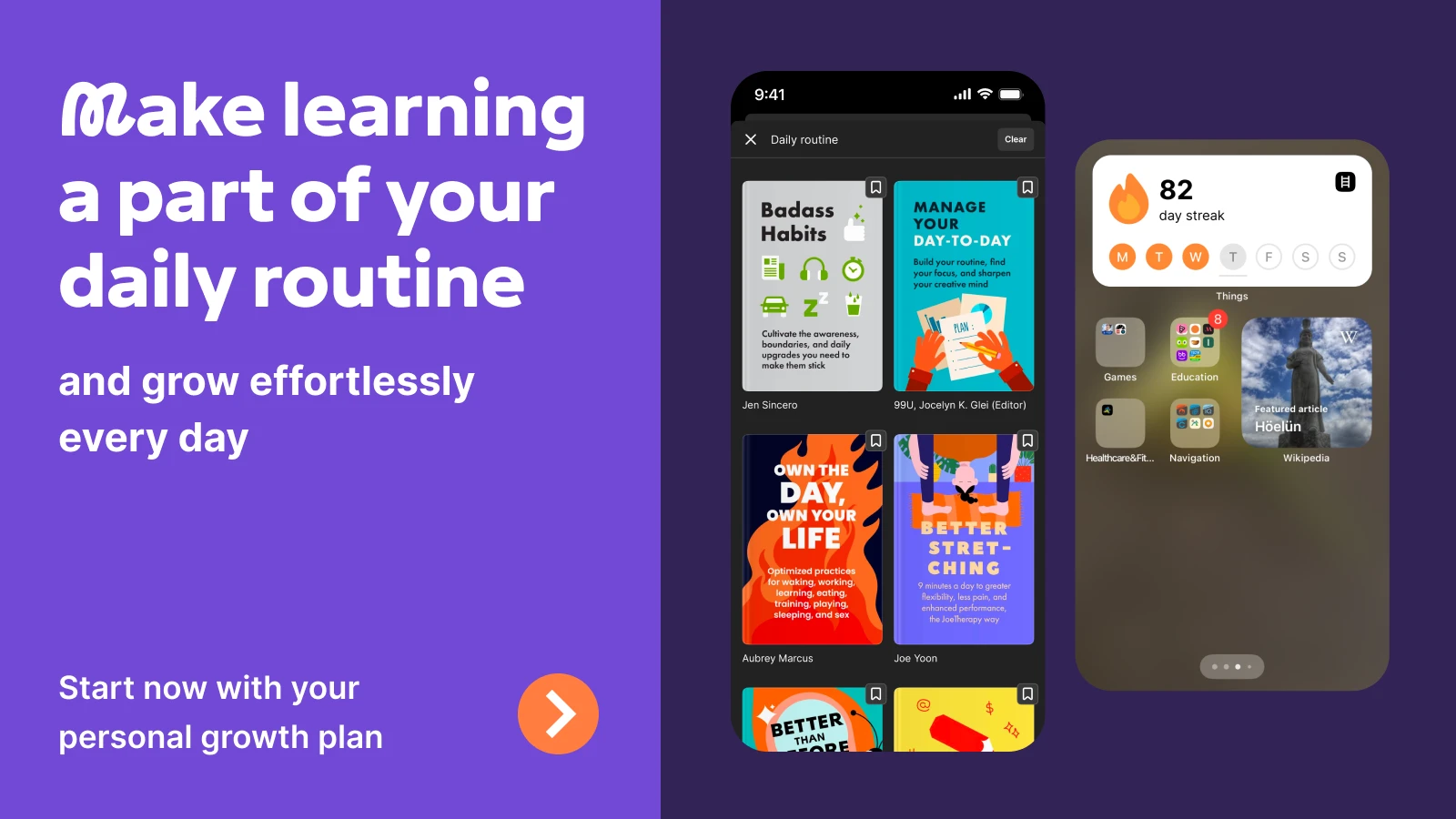
Here's how Headway helps you grow without adding extra pressure:
Personalized growth plans: After a quick quiz, the app creates a plan around your specific goals — whether that's productivity, financial growth, or mental clarity.
Multiple ways to listen: Read or listen to summaries. You can also use focus sounds and binaural beats to help you concentrate during your morning routine.
Audio highlights with Siri: On iOS, just say "Highlight this in Headway" while listening to save a key idea instantly. No need to stop what you're doing.
Daily streaks: The app tracks your progress and keeps you motivated. It's like a mini-challenge that turns learning into a habit.
If your goal is to build a great morning routine for success, Headway makes it easy to squeeze in 3–20 minutes of learning every single day. That's the kind of consistency that adds up over weeks, months, and years.
📘 Start your morning routine with Headway.
Frequently asked questions on morning routine for success
What is the best morning routine for success?
The best morning routine for success is one that leaves you feeling energized and focused — not exhausted. It usually includes hydration, some kind of movement, and a few minutes of learning or reflection. The key is consistency: doing the same small things at the same time each day trains your brain to jump-start into "go mode" faster.
Is waking up at 5 AM necessary for success?
Not at all. Success is about how you use your time, not just when you wake up. Some entrepreneurs and co-founders are early birds, but plenty of successful people prefer later mornings. Robin Sharma's 'The 5 AM Club' is great if you want to try an early morning routine for success, but it's not the only way.
How can I avoid checking social media in the morning?
Keep your phone in another room overnight or use "Do Not Disturb" mode until after your morning ritual is done. Replace scrolling with something that feeds your brain instead — like a book summary on the Headway app or a short podcast. It takes about two weeks to break the habit, so give yourself grace.
How do I start a morning routine if I'm always tired?
Focus on your night-before habits first. A successful day always starts with a good night's sleep. Set a regular bedtime, cut back on screens an hour before bed, and keep your room cool and dark. Once your sleep improves, waking up for a morning routine will feel a lot less painful.
Can a morning routine help with stress and mental clarity?
Yes. Routines lower cortisol (the stress hormone) by removing uncertainty from your morning. When your brain doesn't have to make dozens of small decisions before 9 AM, you free up mental energy for the stuff that matters. Adding affirmations, a gratitude journal, or even a short walk can make a big difference in how clear-headed you feel for the rest of the day.
What if I only have 15 minutes in the morning?
That's plenty. Drink water, move for five minutes (even stretching counts), and listen to a book summary on Headway while you get dressed. A 15-minute routine is still a routine, and it still sets the tone for a successful day. Don't let the idea of a "perfect morning routine for success" stop you from just starting.
What is the 5-5-5-30 morning routine?
The 5-5-5-30 morning routine is a simple framework that breaks your first 45 minutes into four blocks. You spend five minutes making your bed and hydrating, five minutes stretching or doing light movement, five minutes on a mindset practice like affirmations or a gratitude journal, and then 30 minutes on your most important task — whether that's exercise, deep work, or learning something new. It's popular because it's easy to remember and doesn't require you to wake up at 5 AM. You can start it at whatever time works for you.
What are the tips to build a morning routine for success that lasts?
The biggest tip is to keep things realistic. Start small — don't try to overhaul your entire morning on day one. Pick two or three habits and do them at the same time every day until they feel automatic. Use habit stacking (attaching a new habit to one you already have) to make it stick. Track your progress, even if it's just a checkmark on a calendar. And give yourself room to miss a day without quitting entirely. As James Clear writes in 'Atomic Habits,' never miss twice in a row. That's the real secret to building a daily routine that lasts longer than a week.