Self-growth
 Business & Career
 Success
 Communication
 Healing
 Relationships
 Psychology
 Happiness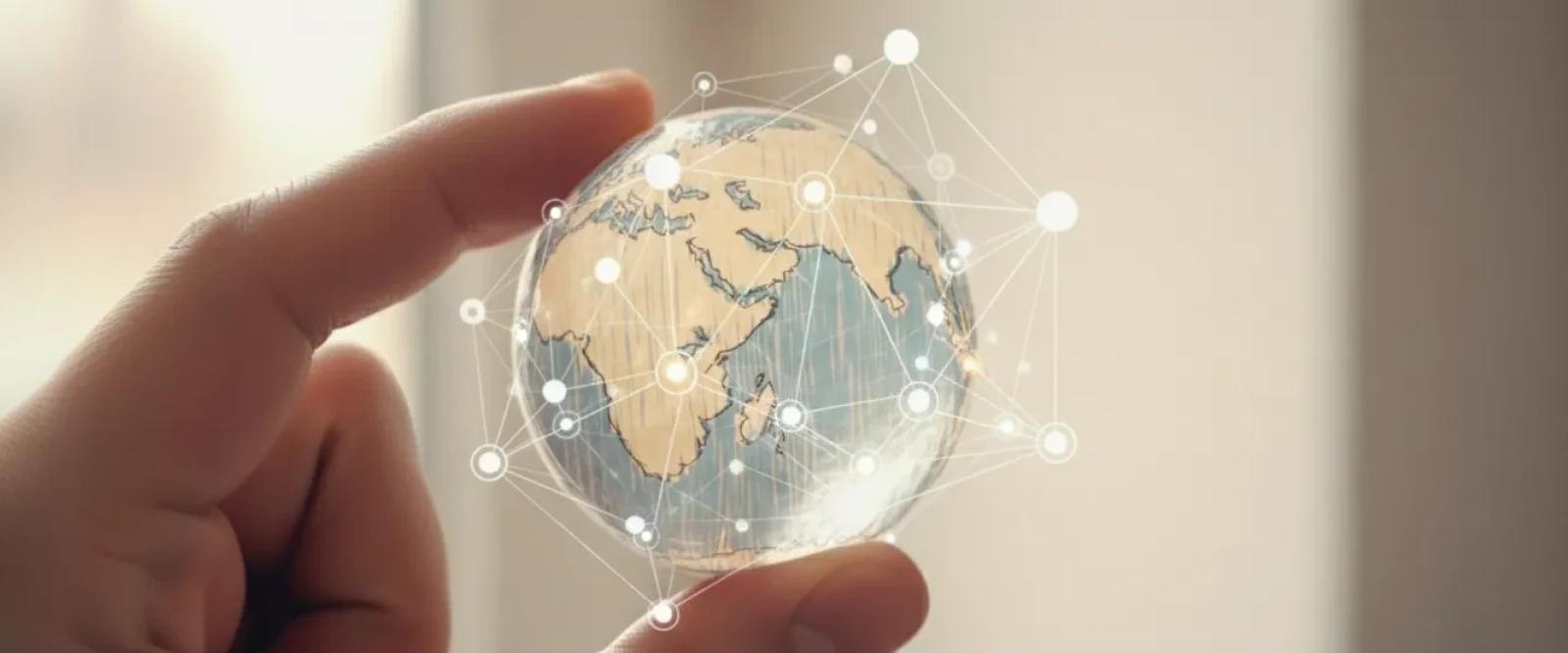
The news cycle feels different now. Not just bad — fundamentally unstable. Record temperatures breaking every month. AI systems making decisions no one fully understands. New viral variants emerging faster than vaccines. Trade wars escalating into actual tensions.
Welcome to 2026, where yesterday's worst-case scenarios became this morning's headlines. The professionals, leaders, and informed citizens who stay ahead aren't ignoring these risks or drowning in doom. They're reading the books that explain how these systems actually work — and what happens when they break.
Headway, a microlearning app trusted by 55 million users worldwide, analyzed reading patterns across its platform. Four books kept appearing together in the libraries of people actively preparing for global instability. Each tackles a different category of existential risk that's accelerating right now.
📘 Prepare for instability with Headway.
'The Uninhabitable Earth' by David Wallace-Wells
'The Uninhabitable Earth' by David Wallace-Wells doesn't waste time on false optimism. Wallace-Wells, a deputy editor at New York Magazine, compiled years of climate research into a book that maps what happens when temperatures rise two, three, or four degrees. The scenarios aren't speculation — they're projections based on physics.
January 2026 just set the record for the warmest January ever recorded globally. Phoenix saw 113-degree heat in October 2025. Insurance companies are withdrawing coverage from coastal Florida. These aren't random weather events — they're preview chapters of Wallace-Wells' book coming true ahead of schedule.
The cascading effects he describes (crop failures triggering mass migration, heat making outdoor work impossible, coastal cities facing permanent flooding) are already beginning in regions most vulnerable to warming.
📘 Think climate consequences with Headway.
'Life 3.0' by Max Tegmark
'Life 3.0' by Max Tegmark breaks down artificial intelligence into three evolutionary stages. Life 1.0 is bacteria — hardware and software both fixed. Life 2.0 is humans — fixed hardware, updatable software through learning. Life 3.0 is AI that can redesign both its hardware and software. Tegmark, a physicist at MIT, explores what happens when that third stage arrives.
OpenAI's latest models are writing code, designing proteins, and passing professional exams at expert levels. Google's DeepMind just announced breakthroughs in materials science that would have taken human researchers decades. The transition Tegmark warned about isn't coming — it's here, unfolding in real time across industries that employ millions.
His framework for thinking about AI alignment (making sure advanced systems actually do what we want) reads less like a theory and more like an instruction manual we should have followed years ago.
'Deadliest Enemy' by Michael T. Osterholm and Mark Olshaker
'Deadliest Enemy' by Michael T. Osterholm and Mark Olshaker reads like it was written with a crystal ball. Published in 2017, the book warned that a respiratory pandemic was inevitable and that most countries were catastrophically unprepared. Then COVID-19 proved every chapter correct.
Osterholm, who directs the Center for Infectious Disease Research and Policy at the University of Minnesota, doesn't stop at COVID. He walks through the biological risks still waiting: antibiotic-resistant bacteria spreading through hospitals, influenza strains with pandemic potential circulating in birds and pigs, and the growing ease with which synthetic biology could create engineered pathogens.
Early 2026 reports of drug-resistant tuberculosis cases in Southeast Asia and a new avian flu variant in Europe demonstrate exactly why his warnings deserve attention. The public health infrastructure he describes as inadequate hasn't improved since COVID — in many regions, it's deteriorated.
📘 Anticipate global health risks with Headway.
'Principles for Dealing with the Changing World Order' by Ray Dalio
'Principles for Dealing with the Changing World Order' by Ray Dalio analyzes 500 years of history to explain why empires rise and fall. Dalio, founder of Bridgewater Associates, identified patterns that repeat: economic dominance shifts, reserve currencies change, military conflicts follow when transitions get messy. His data suggests we're in the middle of one of these transitions now.
The U.S.-China economic competition he describes has intensified through 2025 and into 2026. Semiconductor export restrictions tightened. Taiwan remains a flashpoint. The BRICS nations expanded and announced plans for trade outside the dollar system.
Dalio's framework shows these aren't isolated incidents — they're symptoms of a larger pattern where the established power (currently the U.S.) faces a rising challenger (China) and both sides struggle to manage the transition without conflict. Understanding this pattern doesn't predict the future, but it clarifies what's actually at stake in the news you're reading daily.
📘 Understand power shifts with Headway.
Build your understanding with Headway's complete framework
The global risks shaping 2026 aren't separate problems — they're interconnected systems that amplify each other. Climate stress drives migration. Migration increases geopolitical tension. Tension disrupts supply chains. Disruption creates conditions for disease spread. Disease response depends on technology we're still learning to control.
Reading these four books won't eliminate the risks. But understanding the mechanics behind climate physics, AI development, pandemic response, and power transitions gives you something most people lack: a framework for interpreting what's actually happening instead of just reacting to headlines.
You don't need to read all four books this month. Headway offers 15-minute summaries that capture the core frameworks, data, and insights from each. You can understand Wallace-Wells' climate projections during your morning coffee, absorb Tegmark's AI stages during lunch, grasp Osterholm's pandemic warnings on your commute, and learn Dalio's historical patterns before bed.
The app includes audio versions for listening, quizzes to test retention, and curated development plans that connect related concepts across books. If you need to focus while reading, Headway's built-in sounds help block distractions. When you're ready to sleep after processing heavy material, bedtime mode adjusts the experience.
Start with whichever risk feels most urgent to your life right now. Then build outward. The readers who understand 2026's instability aren't panicking — they're learning the systems fast enough to make informed decisions.
📘 Build informed decision-making with Headway.
Frequently asked questions about global risk books
What makes these books different from typical news coverage of global risks?
News reports individual events, while these books explain the underlying systems that generate those events. Wallace-Wells shows the physics behind each degree of warming, Tegmark maps AI development trajectories, Osterholm details pathogen evolution, and Dalio identifies historical patterns in power transitions. Understanding systems helps you anticipate what's coming instead of just reacting to what already happened.
Are these books too technical for general readers without science backgrounds?
Each author writes for educated non-specialists. Wallace-Wells is a journalist who translates climate science. Tegmark uses thought experiments to explain AI concepts. Osterholm draws on decades of public health experience to make epidemiology accessible. Dalio built his framework for business leaders, not historians. The content is serious but readable for anyone willing to engage with complex topics.
How current is the information in books published before 2026?
The frameworks and systems these books describe operate on longer timescales than news cycles. Climate physics hasn't changed since Wallace-Wells published. Tegmark's AI stages still apply to the newest models. Osterholm's pandemic warnings remain valid. Dalio's historical patterns continue playing out. The specific examples may age, but the core insights stay relevant.
Can reading about global risks actually help, or does it just increase anxiety?
Understanding risks reduces anxiety for most people by replacing vague dread with specific knowledge. When you grasp how climate feedback loops work, AI alignment challenges emerge, pathogens evolve, and empires compete, you can make informed decisions about your career, investments, and life planning. Ignorance amplifies fear.
Should I read these books in a particular order?
Start with whichever risk affects your life most directly. If you work in tech, begin with Tegmark. If extreme weather is hitting your region, start with Wallace-Wells. If you're concerned about health security, Osterholm comes first. For economic and political implications, Dalio provides context. The books address different systems that don't require sequential reading.
How does Headway's summary approach work with complex books like these?
Headway distills each book to its core framework, key data points, and actionable insights in 15-minute summaries. You get the essential mental models and critical information without losing the substance. For these four books specifically, the summaries focus on the mechanisms driving each risk and what those mechanisms predict for the near future.
Besides reading, what practical steps can someone take about these global risks?
Knowledge drives better decisions. Understanding climate risks informs where you live and work. Grasping AI trajectories shapes career choices. Knowing pandemic patterns improves personal preparedness. Recognizing geopolitical shifts affects investment strategy. These books don't just explain problems — they provide frameworks for navigating an unstable world more successfully than people operating on intuition alone.