
 Self-growth
 Apps & Digital Tools
 Business & Career
 Success
 Growth Tools
 Psychology
 Communication
 Relationships

You finished 'Thinking, Fast and Slow' and now you want more of that feeling — where your mental models get dismantled and rebuilt, and you realize your own brain is actively working against your best logic.
Once you get past the surprise of realizing how many cognitive biases shape your thinking, the next question is: what do you do with that knowledge? If you want to better understand human behavior, you'll need a clear path to apply these insights in a way that aligns with your goals.
And if you want to explore these ideas faster, the Headway app gives you 15‑minute book summaries with audio and daily insights.
Download Headway today and start making better choices in less time.
Quick list: Top five books like 'Thinking, Fast and Slow'
'Predictably Irrational' by Dan Ariely: A witty look at hidden forces shaping our choices.
'Nudge' by Richard H. Thaler and Cass Sunstein: Practical tools for better decision‑making through smart design.
'The Black Swan' by Nassim Nicholas Taleb: Why rare, unpredictable outliers reshape the world.
'Blink' by Malcolm Gladwell: The strengths and limits of intuition and real‑life snap judgments.
'Behave' by Robert Sapolsky: A sweeping neuroscience and behavioral science perspective on human nature.
📘 Want all 5 decoded fast? Get Headway for behavioral science insights in 15 minutes each!
Love discovering new reads?
Never get stuck choosing your next book with access to a 2k+ library of summaries.
Try nowThe 13 best books similar to 'Thinking, Fast and Slow'
Below is a carefully selected list of the top 13 books that resonate with the ideas found in 'Thinking, Fast and Slow.' Each of these works builds upon the foundational concepts introduced by Kahneman and his collaborator, Amos Tversky, thereby enhancing our understanding of human behavior.
If you want more behavioral science & experiment-heavy insights
For when you want to dive deeper into data, academic studies, and the explicit mechanics of cognitive shortcuts.
1. 'Influence: The Psychology of Persuasion' by Robert B. Cialdini
Why specifically: It takes Kahneman's concept of automatic responses and maps out the exact six psychological levers that compliance professionals use to trick your fast-thinking brain into making purchases.
Robert Cialdini, PhD's 'Influence' is a classic book on persuasion and the six principles — reciprocity, consistency, social proof, authority, liking, and scarcity — that drive human behavior."
Cialdini shows how everyday techniques tap into human biases. The updated edition adds modern digital contexts, explaining why these principles still work. Readers gain a toolkit for recognizing and ethically applying persuasion in business, leadership, and daily life.
Similarities between the books:
Both study how biases distort decisions
They are based on experiments
Each book has practical applications
📘 Want to persuade ethically? Try Headway for all 6 principles mastered in minutes!
2. 'Predictably Irrational' by Dan Ariely
Why specifically: Shares the same baseline foundation in behavioral economics but uses witty, everyday experiments to systematically expose the hidden forces that distort how we judge value.
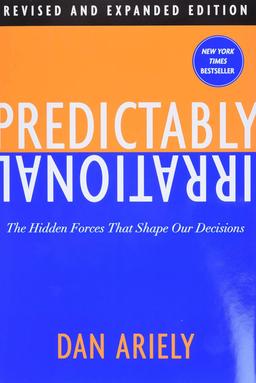
Predictably Irrational
Dan Ariely's 'Predictably Irrational' is an entertaining, experiment‑rich look at irrational behavior and its predictable patterns.
Ariely shows how anchors, free offers (zero price effect), and social norms distort rational choices. He shares memorable experiments, from pricing tricks to honesty studies, that reveal why humans misjudge value.
The lessons apply to marketing, work, and personal life. Ariely helps readers spot when intuition misleads and how to design around it.
Similarities between the books:
Both analyze biases systematically
They are based on experiments
Each book challenges economic rationality
3. 'Freakonomics' by Steven D. Levitt and Stephen J. Dubner
Why specifically: It pairs economic reasoning with data-driven investigation to expose hidden drivers of choice, challenging conventional wisdom much like Kahneman's critique of the purely rational actor.
You'll find a curious yet sharp look at what really motivates people in Steven D. Levitt and Stephen J. Dubner's 'Freakonomics.'
Levitt and Dubner show how incentives shape behavior in ways we rarely recognize. They reveal how data exposes surprising truths, such as the link between real estate agent behavior and self-interest.
Their detective‑style storytelling makes economic reasoning approachable. It challenges assumptions, much like Kahneman's rationality.
Similarities between the books:
Both expose hidden drivers of choice
They challenge conventional wisdom
Each book brings research to life with stories
📘 Love hidden economics? Start Headway for counterintuitive insights from data-driven thinkers!
4. 'Stumbling on Happiness' by Daniel Gilbert
Why specifically: Focuses heavily on Kahneman's exploration of cognitive biases by showing the precise forecasting errors our minds make when trying to predict what will make us happy.
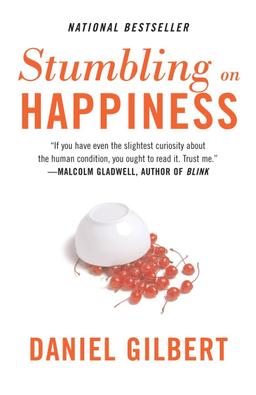
Stumbling on Happiness
'Stumbling on Happiness' is Daniel Gilbert's witty, science‑driven guide to why humans mispredict their future happiness.
Gilbert explains affective forecasting errors — why imagination misleads us about joy and regret. He shows how the "psychological immune system" cushions disappointment.
The book teaches how to use others' experiences as data rather than relying solely on personal intuition. It reframes happiness as a decision‑making process vulnerable to bias.
Similarities between the books:
Both explain forecasting errors
They highlight cognitive biases
Each book links intuition to real‑life choices
📘 Tired of predicting wrong? Get Headway for happiness science from psychology experts!
If you want practical tools for sharper decision-making
For when you are tired of learning why your brain is flawed and want actionable frameworks to build better habits and design better environments.
5. 'Nudge' by Richard H. Thaler (a Nobel Prize winner in Economic Sciences, 2017) and Cass R. Sunstein
Why specifically: It bridges psychology and real-world outcomes by showing how to deliberately design "choice architecture" environments that steer people toward better defaults without restricting their freedom.
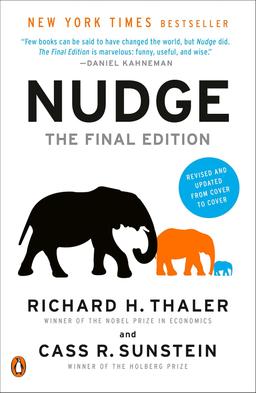
In Richard H. Thaler (a Nobel Prize winner in Economic Sciences, 2017) and Cass R. Sunstein's 'Nudge,' you'll find a guide to choice architecture — designing environments that guide better decisions.
Thaler and Sunstein explain how defaults, incentives, and framing can improve outcomes without limiting freedom. They coined libertarian paternalism, balancing autonomy with support.
The book jumps from health decisions to money habits to policy choices. If you want behavioral economics that actually helps in real life, this is it.
Similarities between the books:
Both put a spotlight on cognitive biases
They offer debiasing strategies
Each book connects psychology with real‑world outcomes
6. 'Atomic Habits' by James Clear
Why specifically: It anchors Kahneman's abstract psychology into an actionable framework, using environmental design and the "habit loop" to make good decisions automatic rather than exhausting.
'Atomic Habits' is James Clear's practical framework for behavior change, grounded in psychology and small, sustainable actions.
Clear introduces the habit loop — cue, craving, response, and reward — and the Four Laws of Behavior Change. He emphasizes systems over goals, showing how environmental design makes good choices by default. His 2‑minute rule and identity‑based habits help turn intention into reality.
Similarities between the books:
Both show how small steps add up
They focus on decision processes
Each book uses psychological insights for real‑world application
7. 'Never Split the Difference' by Chris Voss & Tahl Raz
Why specifically: It demonstrates debiasing in active practice by using tactical empathy to slow down an opponent's emotional, fast-thinking brain and steer high-stakes conversations toward logical collaboration.
Chris Voss' 'Never Split the Difference' adapts the author's experience as an FBI hostage negotiator in a practical guide to developing negotiation tactics.
Voss presents techniques like mirroring, labeling, and expressing tactical empathy to calm emotions and reach better outcomes. His approach highlights how biases and emotions influence conversations.
The lessons apply beyond business, spanning family, partnerships, and daily decision‑making. It demonstrates debiasing in practice by slowing the other party's fast thinking and steering toward collaboration.
Similarities between the books:
Both emphasize emotional intelligence in decisions
They include practical strategies
Each book shows how you can use psychology to improve outcomes
If you want to explore uncertainty, risk, & limits of intuition
For when you want to look at the macro-consequences of human overconfidence and learn how to navigate unpredictable, chaotic systems.
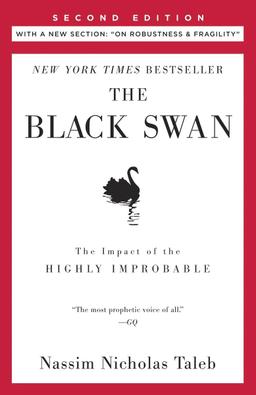
8. 'The Black Swan' by Nassim Nicholas Taleb
Why specifically: It serves as a direct companion to Kahneman's warnings on overconfidence and hindsight bias by critiquing our dangerous reliance on flawed predictive models in high-stakes environments.
The Black Swan
If you want a deep dive into rare, high‑impact events and why our human minds struggle with uncertainty, pick up Nassim Nicholas Taleb's 'The Black Swan.'
Taleb explains the outsized role of unpredictable events in finance, history, and life. He contrasts "Mediocristan" and "Extremistan" to show why averages often mislead.
The book critiques overconfidence in models and prediction. It also pairs with Kahneman's call for humility in order to preserve robustness.
Similarities between the books:
Both examine overconfidence and hindsight bias
They highlight flaws in intuitive reasoning
Each book stresses unpredictability
9. 'Blink' by Malcolm Gladwell
Why specifically: It focuses an entire book on analyzing the strengths and limits of our automatic brain, demonstrating when rapid, split-second intuition outperforms long deliberation.
A lively dive into thin‑slicing, or the ability to make snap judgments quickly and accurately.
Gladwell explores why intuition can sometimes outperform analysis, using cases like art experts spotting forgeries and firefighters sensing danger. He explains how subtle environmental priming cues influence fast decisions.
Similarities between the books:
Both analyze the strengths and weaknesses of System 1
They use real‑world stories to illustrate their arguments
Each book explores intuition vs. deliberation
If you want something more narrative or historical
For when you want a break from instruction manuals and want a grand story about how human cognition shapes history or how the science itself was built.
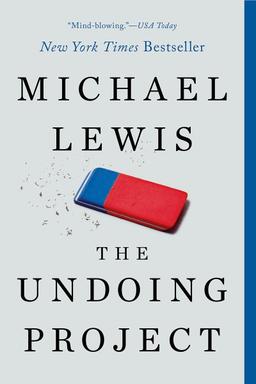
10. 'The Undoing Project' by Michael Lewis
Why specifically: It enriches the context of Thinking, Fast and Slow by telling the intimate, narrative backstory of the intense personal collaboration between Daniel Kahneman and Amos Tversky.
The Undoing Project
Michael Lewis' 'The Undoing Project' is a compelling narrative on the collaboration of Kahneman and Tversky that shaped modern behavioral economics.
Lewis tells the story behind prospect theory, anchoring, and loss aversion. He captures the personalities and debates that birthed behavioral economics. The book explains how their partnership influenced fields from medicine to sports. It enriches the context of 'Thinking, Fast and Slow' by showing the human side of science.
Similarities between the books:
Both share the same authors' research legacy
They highlight biases and heuristics
Each book shows how theory applies to practice
11. 'Behave: The Biology of Humans at Our Best and Worst' by Robert M. Sapolsky
Why specifically: It builds a massive, multi-layered narrative of human action by training you to think in biological systems rather than simple psychological causes.
A multidisciplinary look at human behavior, tracing influences from biology to culture.
In this bestseller, Sapolsky explains choices as the product of layered causes: seconds‑before brain activity, hormonal cascades, childhood development, and evolutionary history. He demonstrates how environment and biology interact in shaping actions.
Similarities between the books:
Both explore human decision‑making with biology and psychology
They emphasize the complexity of behavior
Each book trains you to think in systems, not simple causes
12. Influence: The Psychology of Persuasion' by Robert B. Cialdini
Why specifically: It takes Kahneman's concept of automatic shortcuts and maps out the exact six psychological levers that compliance professionals use to trick your fast-thinking brain into making irrational choices.
Robert Cialdini, PhD's 'Influence' is a classic book on persuasion and the six principles — reciprocity, consistency, social proof, authority, liking, and scarcity — that drive human behavior."
Cialdini shows how everyday techniques tap into human biases. The updated edition adds modern digital contexts, explaining why these principles still work. Readers gain a toolkit for recognizing and ethically applying persuasion in business, leadership, and daily life.
Similarities between the books:
Both study how biases distort decisions
They are based on experiments
Each book has practical applications
📘 Want to persuade ethically? Try Headway for all 6 principles mastered in minutes!
Think fast, slow, and beyond with Headway
The 13 books above expand on the ideas in 'Thinking, Fast and Slow,' while offering new ways to understand cognition, decision-making, and the hidden drivers of human behavior.
While the central concepts remain powerful, it's worth being mindful of these discussions to get a more complete picture.
Whether you're drawn to practical self-help frameworks, cutting-edge behavioral science, or big-picture views of society, these books are worth reading. They provide real-life strategies to recognize biases, improve choices, and embrace uncertainty.
And if you want to absorb these lessons faster, the Headway app can help. With over 2,000 summaries of thought-provoking books, Headway delivers 5–15 minute summaries, audio versions, and daily insights that make learning easy to apply.
Download Headway today and keep building better decisions one idea at a time.
Frequently asked questions about books like 'Thinking, Fast and Slow'
What's the main concept behind 'Thinking, Fast and Slow'?
The book reveals the two systems that drive our thinking. System 1 is your fast, automatic brain — the one that makes quick judgments without you even realizing it. System 2 is the slow, effortful one that handles complex tasks. Understanding how they work together (and against each other) can help you think more clearly and make better decisions.
What type of psychology is 'Thinking, Fast and Slow'?
This concept is a classic of cognitive psychology and behavioral economics. It explores how our brain's shortcuts (System 1) and logical reasoning (System 2) influence everything from our daily choices to major life decisions. The book's insights into our predictable irrationality are game-changers for understanding human behavior.
What are the criticisms of 'Thinking, Fast and Slow'?
Some critics say the book presents a selective narrative rather than a full review of the evidence. A few of the original psychological experiments have also faced challenges in being replicated by other researchers. While the central concepts remain powerful, it's good to remember these discussions to get a more complete picture.
How does 'Predictably Irrational' relate to 'Thinking, Fast and Slow'?
Both books are foundational to behavioral economics, revealing the surprising ways we are not rational. They work together to show how biases and emotional factors, not just logic, drive our choices. Reading them in combination gives you a deeper, more complete understanding of why humans behave the way we do.
How does Kahneman explain happiness?
Kahneman breaks down happiness into two types: the experiencing self and the remembering self. The experiencing self feels joy or pain in the moment, but it's the remembering self that tells our life story based on how it felt at the peak and the end. Understanding this helps us focus on what truly matters.
How can the Headway app benefit me with books like 'Thinking, Fast and Slow'?
Headway gives you the key takeaways from complex books like this in just 15 minutes. You can get the core insights on behavioral economics and cognitive biases in a quick, digestible format. It's perfect for understanding yourself and others better every day without the time commitment of a full read.