Self-growth
 Business & Career
 Success
 Communication
 Healing
 Relationships
 Psychology
 Happiness
Reading is becoming more of a luxury; you have to find time for it. In the past, it was almost always a marker of education and culture. Today, people choose to read something motivational or business-related. We perceive free time for reading as something rare.
People want to combine listening with something else — listening to books while driving or while on public transport on the way to work. Doing household chores and listening to an audiobook is definitely more effective than surfing social media. Are you also tired of the "artificial life" on Instagram?
Great nonfiction audiobooks turn car rides into classrooms and walks into therapy sessions. You get an entire library of nonfiction books with the best knowledge from top authors in one app, where you can listen or stop and read.
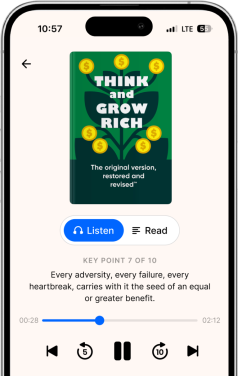
If you love these books but want insights for daily life without the 10-hour commitment, the Headway app offers audio summaries of top nonfiction bestsellers, daily self-growth challenges, and personal book collections to build a learning habit that actually sticks.
Top 5 best nonfiction audiobooks
Here's what you should start with:
'Born a Crime' by Trevor Noah — funny, eye-opening, and read in his own voice
'The Body Keeps the Score' by Bessel van der Kolk — changes how you see trauma
'Say Nothing' by Patrick Radden Keefe — true crime that reads like a thriller
'Greenlights' by Matthew McConaughey — a memoir that feels like a conversation
'The Anthropocene Reviewed' by John Green — essays that make you think differently
These aren't just popular. Each one tells a real story: personal, historical, or cultural. These texts are emotional, easy to listen to, and work best in audio format. Books from this list are the ones people finish and immediately recommend.
Best nonfiction audiobooks by theme
Best memoir and true story audiobooks
People love memoirs and true stories because they are someone's real experience, not a theory. You listen and recognize your fears, mistakes, and moments of growth. Especially in audio, when the author reads in their own voice, the story sounds more honest and closer.
Another reason is emotions. The brain remembers feelings better than facts.
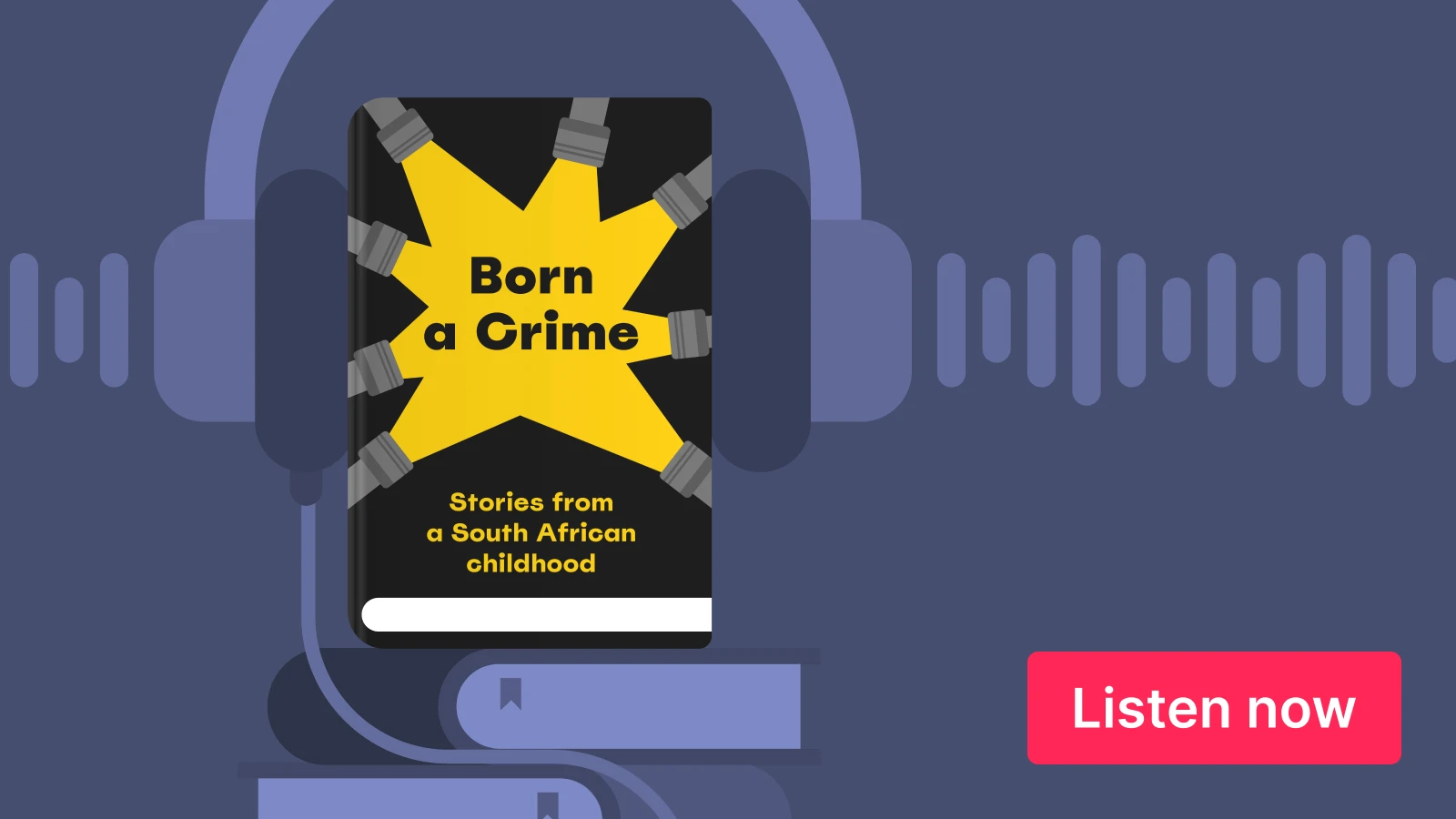
'Born a Crime' by Trevor Noah is the gold standard. He grew up during Apartheid in South Africa, which made his very existence illegal. The audio version turns a heavy topic into something you can't stop listening to. It's funny, then heartbreaking, then funny again. Noah's timing is perfect — he knows exactly when to pause for effect and when to rush through the absurdity.
'Greenlights' by Matthew McConaughey feels like he's sitting across from you at a bar, telling you about the time he got arrested for playing bongos naked. It's part memoir, part life philosophy, and wholly entertaining. His Texas drawl makes even the serious moments feel approachable, like wisdom you'd actually remember.
'I'm Glad My Mom Died' by Jennette McCurdy is brutal and honest. She reads it herself, and you can hear the healing in her voice. It's about child stardom, eating disorders, and finally choosing yourself. McCurdy doesn't sugarcoat anything, and that rawness is exactly why it works.
When you finish a memoir like this, you want to sit with it for a while.
📘 Experience real stories with Headway.
Best true crime and investigative nonfiction audiobooks
True crime has become popular because it offers a real story with suspense like a thriller. People are interested in understanding why someone does terrible things, how psychology works, and where the system has failed. It is about finding control in a world that often seems chaotic.
And in audiobooks, true crime works even better. The narrator's voice, the pauses, and the details of the investigation create the effect of presence — almost like a TV series on headphones.
'Say Nothing' by Patrick Radden Keefe is about Northern Ireland, the IRA, and a murder that haunted a country. It won a Pulitzer Prize. The pacing feels like a thriller, but every word is true. You'll finish it in two days and think about it for months. Keefe weaves together interviews, history, and personal stories so well that you forget you're learning about decades of conflict.
'Killers of the Flower Moon' by David Grann uncovers murders in 1920s Oklahoma that most people never learned about in history class. It's horrifying and meticulously reported. The narrator keeps you hooked without being dramatic. Grann doesn't need to sensationalize — the facts are disturbing enough on their own.
These books feel better than podcasts because they're complete. You're not waiting for the next episode. You're not dealing with ads every ten minutes. You get the whole story in one go.
Best nonfiction audiobooks for self-growth and psychology
Books on psychology and self-development are so popular now because they don't just provide information — they offer self-understanding. People want to live consciously, not on autopilot. These books help you understand emotions, relationships, motivation, and fears, and they do it in a way that you can use the knowledge immediately.
'The Body Keeps the Score' by Bessel van der Kolk explains how trauma lives in your body, not just your mind. It's a must-read for anyone who's ever wondered why they react the way they do. The audio is long, but worth every minute. Van der Kolk uses real patient stories that make complex neuroscience feel human and understandable.
'Dare to Lead' by Brené Brown is not about corporate schemes or "how to be a boss." It's about being truly courageous in every area of your life: at work, in your relationships, and in your own decisions. Brown takes scientific and psychological insights about vulnerability, shame, and courage and translates them into real-world action. She shows that true leadership doesn't start with commands, but with a willingness to be honest, to listen to the truth, to talk about uncertainty, and to take risks.
Brown narrates the audiobook herself, making sure her ideas come across in a conversational, approachable manner without any academic formality.
'All About Love' by bell hooks reframes love as a practice rather than a feeling. It's short, but you'll want to pause and take notes. hooks writes like she's having a conversation with you, not lecturing from a stage.
These books can be overwhelming if you're in the wrong headspace.
📘That's when Headway works best — you can revisit core ideas without the emotional weight of a full re-listen.
Best nonfiction audiobooks for health, longevity, and performance
Books about health and longevity are great to listen to because they get you moving. Just taking a walk, going on a road trip, or exercising at the gym can help you learn how to sleep, eat, or recover better. Now that's the kind of knowledge that you want to apply immediately.
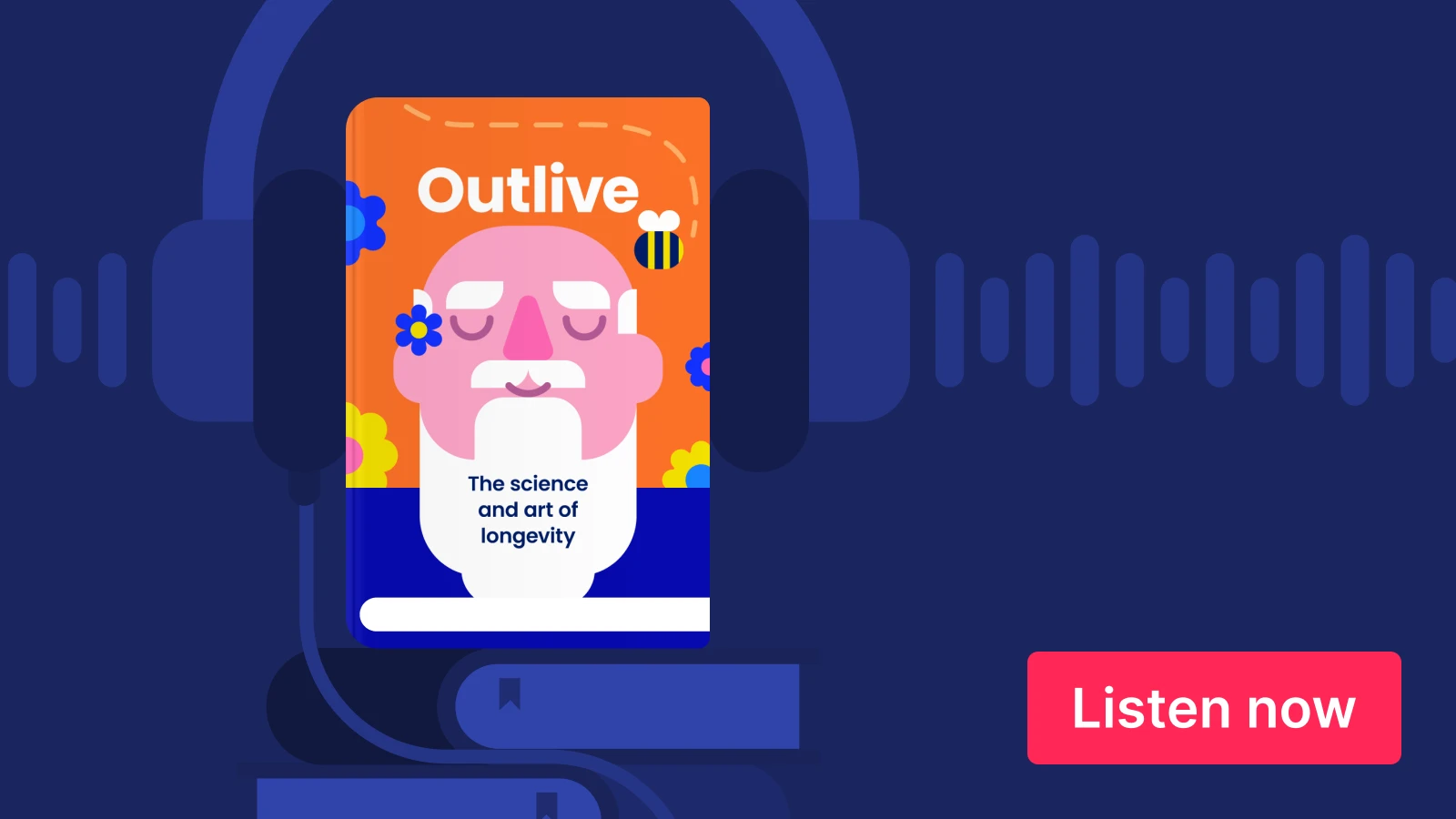
'Outlive' by Peter Attia is about living longer and better. He breaks down the science of aging without making it boring. Perfect for gym sessions or road trips when you want to feel productive. Attia explains why most people focus on the wrong health metrics and what actually matters for longevity.
'Why We Sleep' by Matthew Walker will change the way you think about sleep. When you listen to this book, expect to change your bedtime. Walker's passion for the science of sleep will rub off on you, and he presents a strong argument for why sleep is just as important as a healthy diet or exercise routine.
These books work well on Audible or Amazon because you can speed them up to 1.2x and still absorb everything. They're packed with data, but the narrators keep it interesting.
Best nonfiction audiobooks for curiosity and big ideas
Books like 'Talking to Strangers' by Malcolm Gladwell are valuable because they expand the way you think. Reading or listening to them is good because they train critical thinking and curiosity.
You start to notice little things that you hadn't thought about before, and you see human psychology and social processes from a new angle.
'The Anthropocene Reviewed' by John Green is not a standard scientific work or a dry set of facts. It consists of personal essays, where the author reviews various aspects of our modern era (the Anthropocene). It is not a book about ecology per se. It's more about the human experience and the meaning of things we usually don't notice, about how we affect the world and how the world affects us.
In the audio version, John Green reads these essays himself, making them even more personal and sincere, like a conversation during a walk or a long evening reflection.
'Talking to Strangers' by Malcolm Gladwell explains how we are often misguided in our assumptions and understanding of "strangers." The book has a mix of true-to-life case studies, audio recordings, and a full cast of talented actors who narrate the book. It's not just a casual listening experience; it's also a tool to help stimulate your thoughts. The use of great storytelling techniques has transformed otherwise dull and technical research into a series of exciting riddles that you will want to figure out.
The New York Times and Wall Street Journal love these books because they're smart without being pretentious. You don't need a PhD to enjoy them.
What turns a nonfiction audiobook from good to amazing?
Not all audiobooks are created equal. Some feel like a podcast you can't stop playing. Others sound like someone reading a textbook aloud while half asleep.
The narrator matters more than you think. When Trevor Noah reads 'Born a Crime' in his own voice, you hear his lived humor and pain. When a full cast performs a true story, it feels more like watching a fascinating movie in your imagination.
Great nonfiction audiobooks should share real-life stories rather than simply impart factual information, because a person's memory captures emotional moments better than bullet-pointed information. That's why nonfiction audiobooks written in memoir or true crime formats tend to stay with listeners longer than business books that present lists of strategies.
Other times, you may want something quick to help you reset your mindset, in which case you would choose Headway over full audiobooks.
Audiobooks vs podcasts vs summaries
These are the differences between podcasts and audiobooks.
Podcasts are a way to learn about new topics and people, exposing you to many new ideas, but they often lack depth.
Most podcasts become outdated quickly, while audiobooks provide deep insights into a best-selling book because they represent years of research and editing.
When you listen to an audiobook, you are hearing all of the arguments and reasons for a particular opinion, rather than just a part of it.
Headway is an app for people who want to learn consistently on a daily basis. Not everyone has time to listen to a 10-hour audiobook every day. Sometimes all you need is 15 minutes to refresh your mindset or remind yourself of things you've already learned.
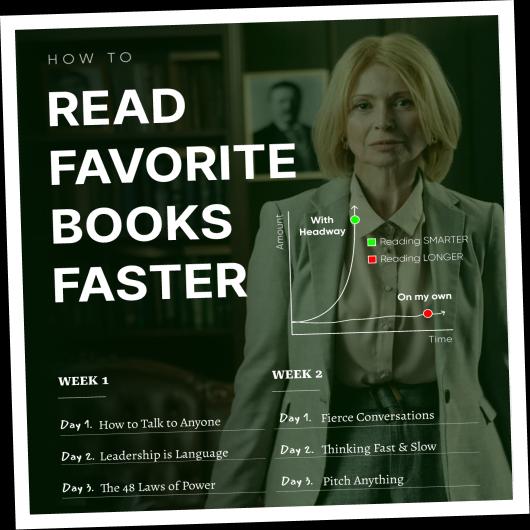
Find your next favorite book faster
• 2K+ bite-size book summaries
• Key ideas in just 15 minutes
• Handy audio highlights
Let's tryMost people don't choose one. They use all three depending on the day.
How to get more value from nonfiction audiobooks
Listening isn't the same as reading, but it can be just as effective if you do it right.
Speed it up: Most people listen at 1.2x or 1.3x without losing comprehension. It keeps your brain engaged and saves time.
Bookmark meaningful moments: Audiobook apps allow you to create bookmarks. If you find that a chapter was really meaningful, listen to that chapter again after a week has passed. The more you listen, the better your chances are of remembering.
Pair full audiobooks with summaries. Read the Headway version first to see if the full book is worth your time. Or use the summary afterward to refresh what you learned.
Don't force dense material. If a book has "dense" or "challenging" material, don't try to finish it all at once. Some books need time to digest.
The best way to get audiobook recommendations is to look at who has finished that particular audiobook, not just listened to a few chapters. These tactics will help you become someone who can provide good audiobook recommendations.
Take audiobook insights off the page and into your life with Headway
If you love nonfiction audiobooks but struggle to stay consistent, Headway bridges the gap. You get 15-minute audio summaries of bestsellers like 'Outlive,' 'Dare to Lead,' and 'The Body Keeps the Score' — the same books you've been meaning to finish for months.
The app doesn't replace full audiobooks. It complements them. Listen to the summary first to see if a book is worth 10 hours of your time. Or use it to refresh ideas from books you finished last year but can't quite remember.
Headway also builds consistency with daily self-growth challenges and personalized book collections based on what you actually want to work on — whether that's better sleep, stronger relationships, or just thinking more clearly.
Download Headway and see why millions of people use it as their go-to alternative when they want the value of great books without sacrificing their entire evening.
Frequently asked questions about the best nonfiction audiobooks
What are the best nonfiction audiobooks for beginners?
Here are the best nonfiction audiobooks for beginners — those that are easy to listen to and hard to forget. Try 'Born a Crime' by Trevor Noah for something funny and instructive, 'Greenlights' by Matthew McConaughey for feeling like a conversation with a friend, or 'Dare to Lead' by Brené Brown for courage. And try 'The Anthropocene Reviewed' by John Green for a reflection on the world and yourself, and 'Why We Sleep' by Matthew Walker for healthy sleep habits.
Are nonfiction audiobooks better than reading?
Yes, audiobooks can be better than reading in certain situations. They provide an emotional experience through the voice, especially when the author is reading (as in 'Born a Crime'). They are great for traveling, walking, or doing chores. But for complex ideas, reading or short Headway summaries can be more effective.
What's the best app for nonfiction audiobooks?
The best app for listening to audiobooks is Audible: a huge library of bestsellers, a convenient player, and professional readers. But if you want to quickly get the main ideas without 10-hour listening sessions, Headway is a great complement to Audible — it's easy to insert an audio summary into your daily rhythm.
Can I learn effectively in short listening sessions?
Yes, short study sessions can be very effective. The brain absorbs information better in small portions when you are focused. Spending 10–15 minutes a day yields better results than infrequent, long marathons. This practice is how microlearning and audio summaries work.
What is the best nonfiction audiobook of 2025?
In 2025, one of the most popular nonfiction audiobooks was 'Everything Is Tuberculosis' by John Green — it topped the list of best-selling audiobooks in the world for its accessible, lively account of the history and impact of tuberculosis. It even became a New York Times bestseller in the nonfiction category.