Self-growth
 Business & Career
 Success
 Communication
 Healing
 Relationships
 Psychology
 Happiness
Key takeaways:
Some 50% of Americans dipped into their savings during the festive season, with 51% admitting it will take them a few months to a year to recover financially.
To improve their finances, 84% plan to cut back in January, with 19% admitting they will have to go without essentials.
Compounding the post-holiday blues, 74% admit they feel indifferent or dread about returning to work, with 55% admitting they wouldn’t mind losing their job.
Some 12% are actively considering looking for a new job, while 12% are contemplating a complete career change.
Yet, recognizing that unhealthy growth mindsets and poor work-life balance are the cause, 24% plan to set clearer work boundaries in 2026 instead, with 16% focusing on sustainability over growth, and 11% determined to log off without feeling guilty.
The gifts are unwrapped, the decorations are down, and the turkey is long gone… All that’s left of the festive season are a few sad chocolates nobody wants and a credit card bill that makes your eyes water.
As work snaps us back to reality, we’re all suffering with the post-holiday blues – a brief spell of low energy and mild gloom, fueled by the desperate urge to rewind time to Thanksgiving.
To find out how people are coping, Headway app surveyed 2,000 Americans about the cost of the holidays, the dreaded return to work, and their plans for the year ahead.
Jingle bills: Counting the cost of the festive season
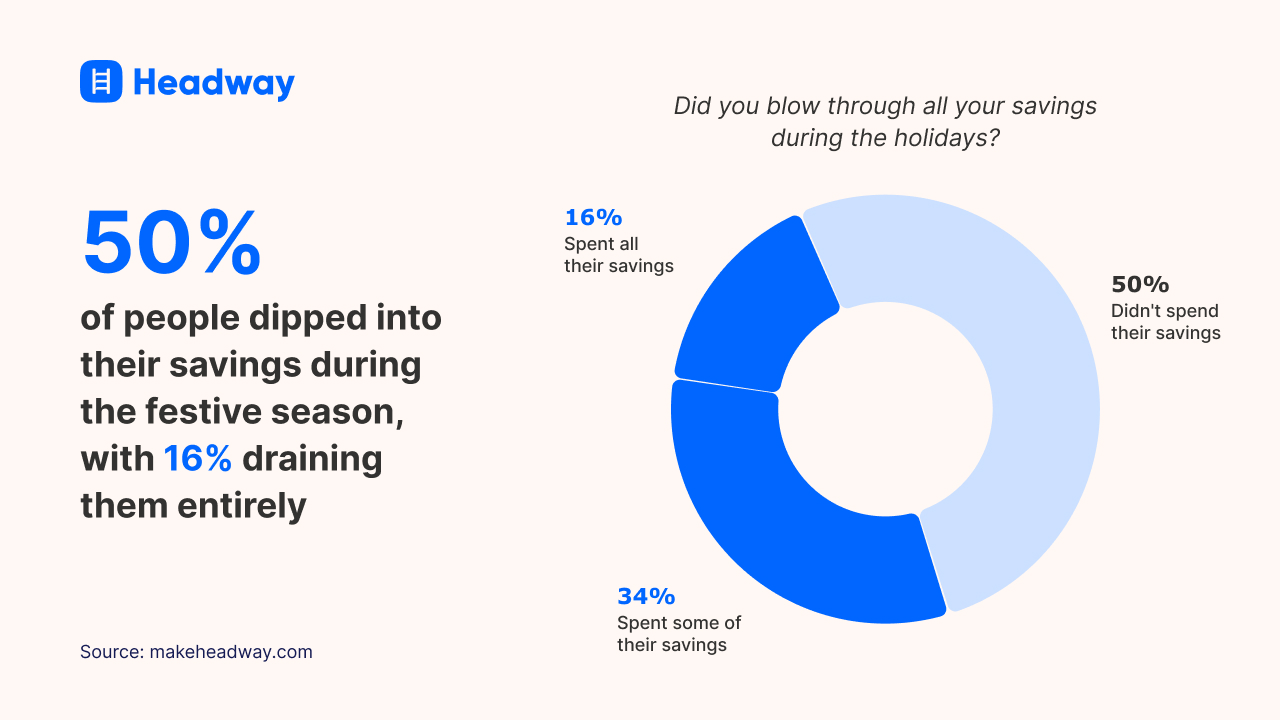
The festive season is a time to indulge and celebrate, but Christmas cheer doesn’t come cheap. Determined not to let the rising cost of living ruin their plans, 50% decided to loosen their financial belts and dip into their savings to fund the festivities, with 16% having spent every last cent.
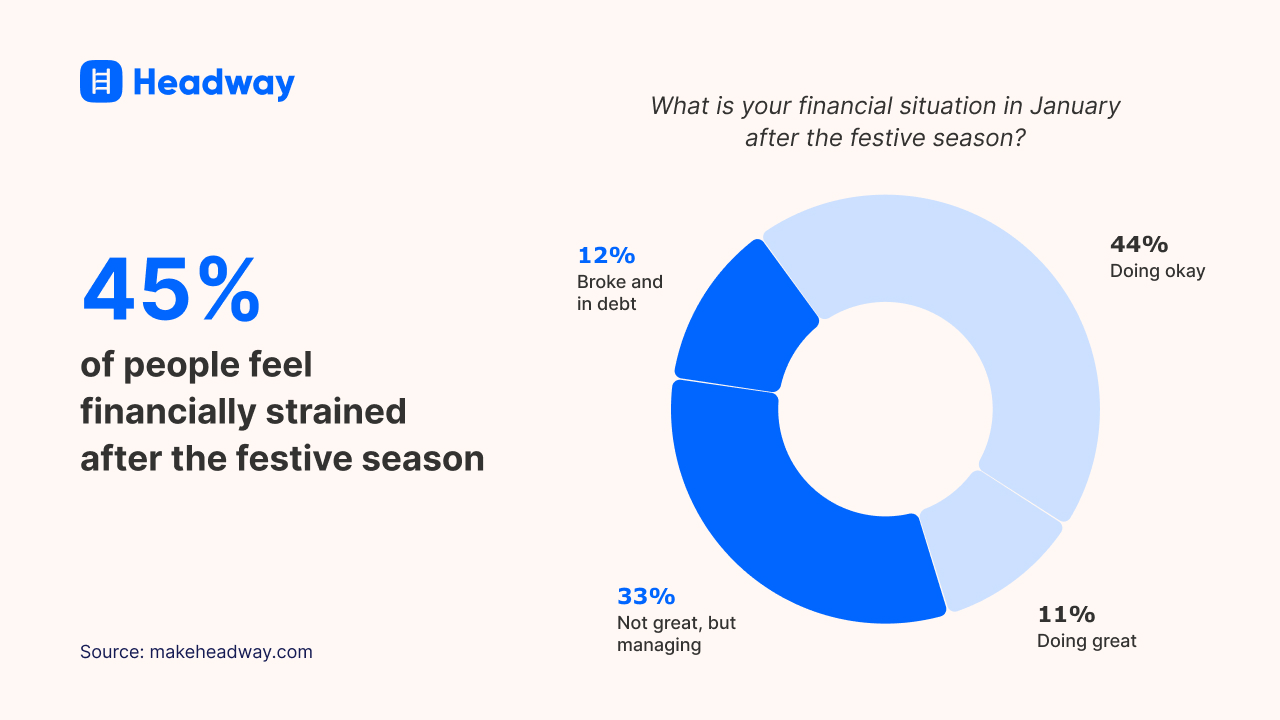
The fun has fizzled out, giving way to plenty of financial anxiety. Without an emergency fund to fall back on, 45% of Americans are feeling the post-holiday pinch, with 12% admitting they’re completely broke or struggling with debt.
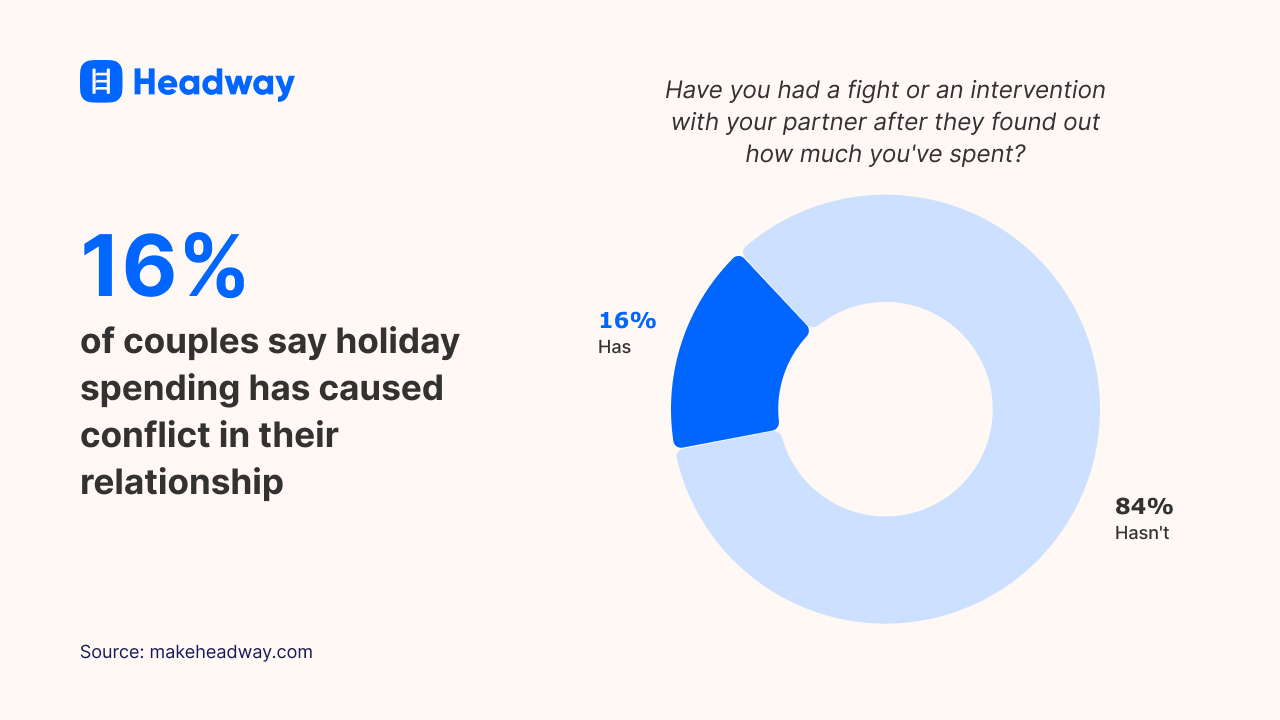
This festive budget overrun has left many partners on the naughty list, with 16% admitting holiday spending has caused conflict.
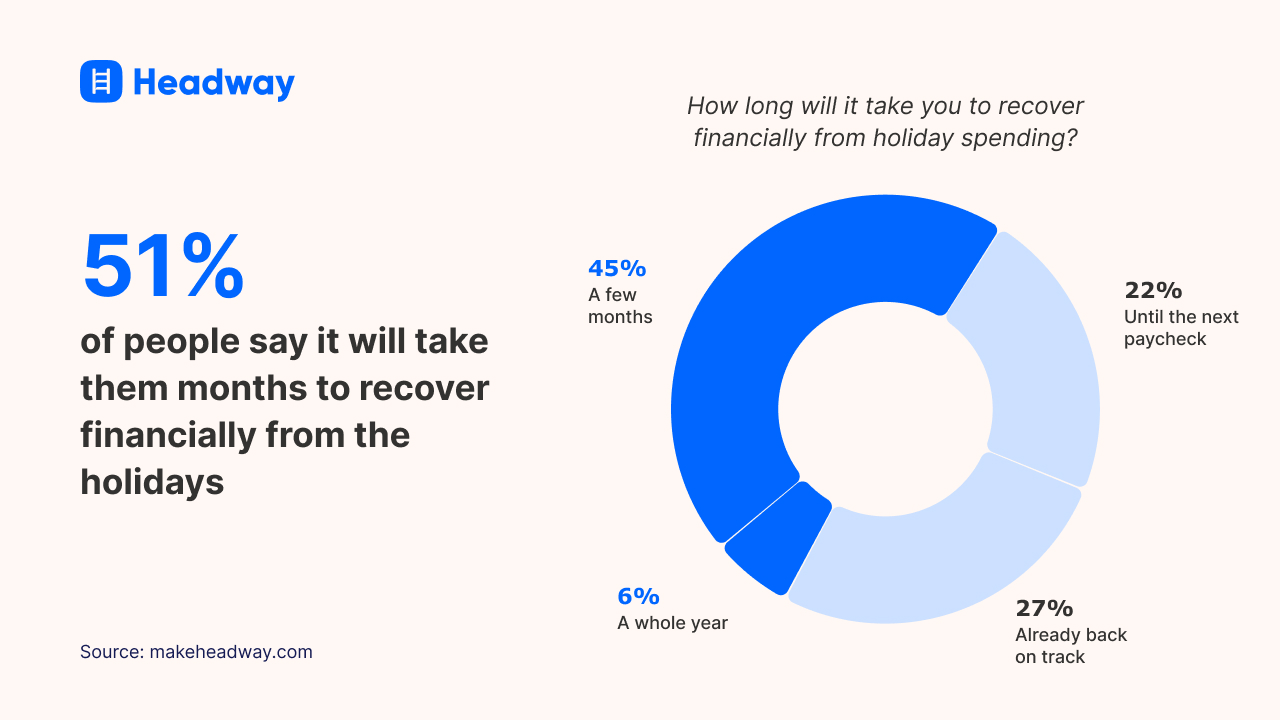
Much like the weather, credit card reliance has left many people’s finances in the minus this winter.
They might hope for a late Christmas miracle, but the reality is that it will take months for many to climb out of the red. In fact, 6% fear it will take the best part of a year to clear their debts – just in time for next year’s festivities.
No-spend January: The post-holiday spending freeze
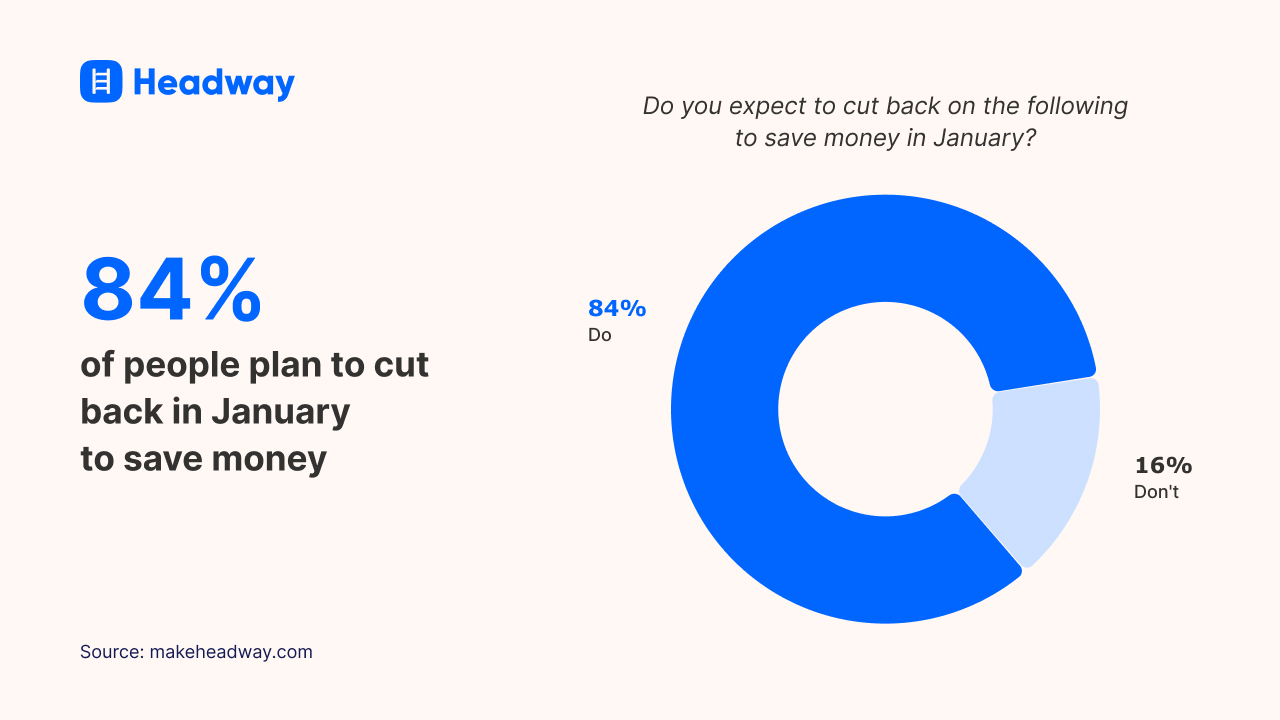
With January’s paycheck already spent, 84% of Americans plan to cut back in January to cure their financial hangover. Coined No-Spend January, the increasingly popular trend encourages people to spend only on essentials, hitting reset on the overindulgence of the holidays.
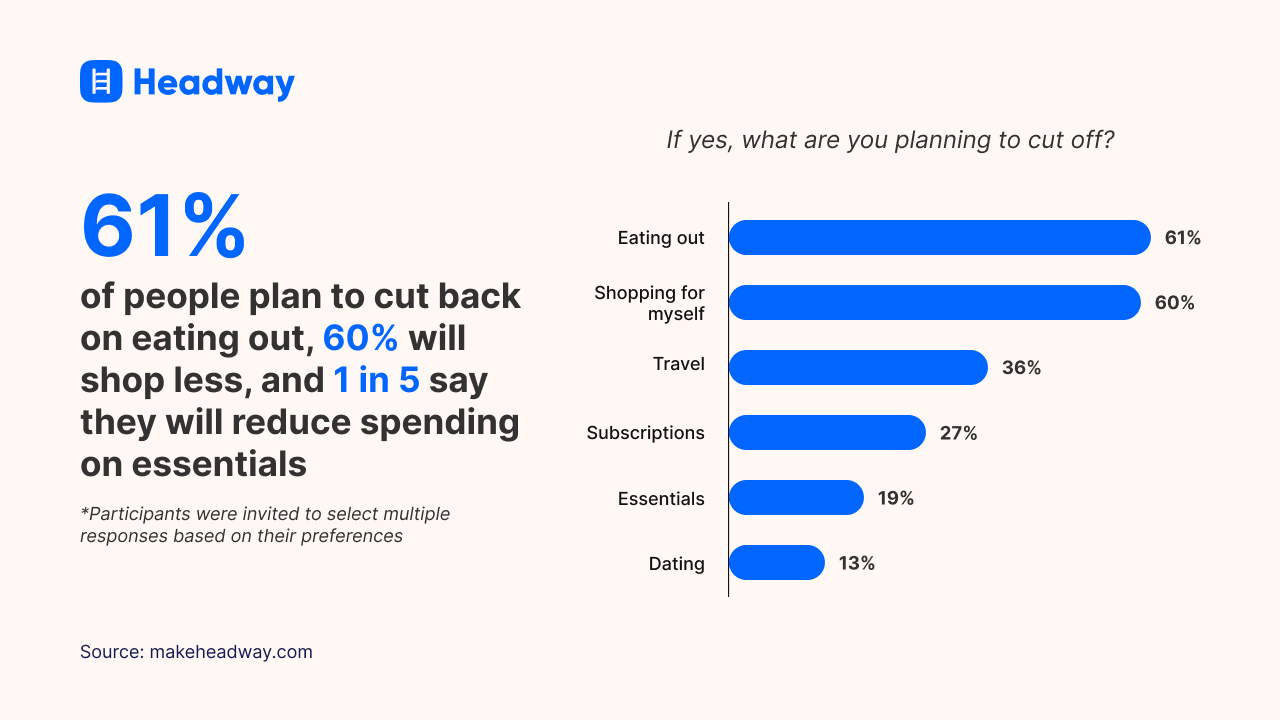
After packing on plenty of pounds over the holidays, 61% plan to cut back on dining out during January. Likewise, having received plenty of gifts, 60% plan to shop less for themselves to save money.
But for 19%, it’s not just indulgences on the chopping block. Rather, getting through the next few months will mean going without essentials.
Silent night, stressful day: The dread of returning to work
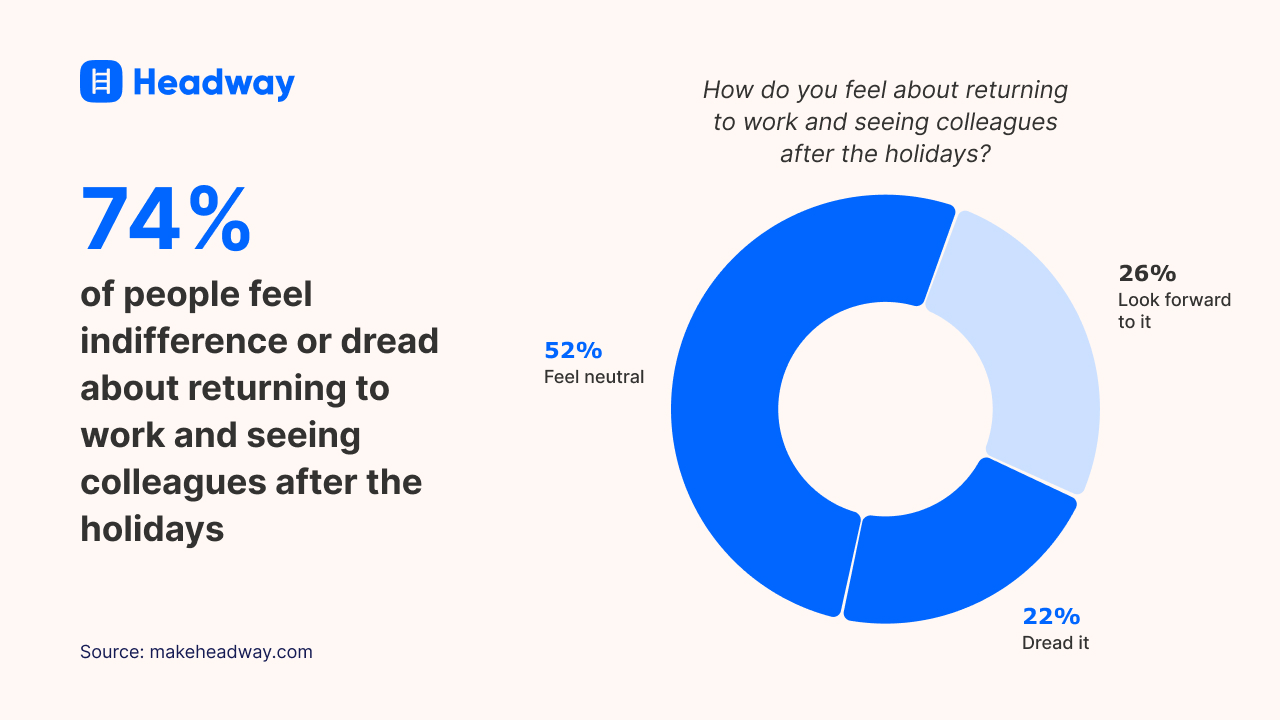
For most, returning to work after the holidays is no cause for celebration. While 52% feel indifferent, 22% say they dread swapping mince pies for meetings and eggnog for emails.
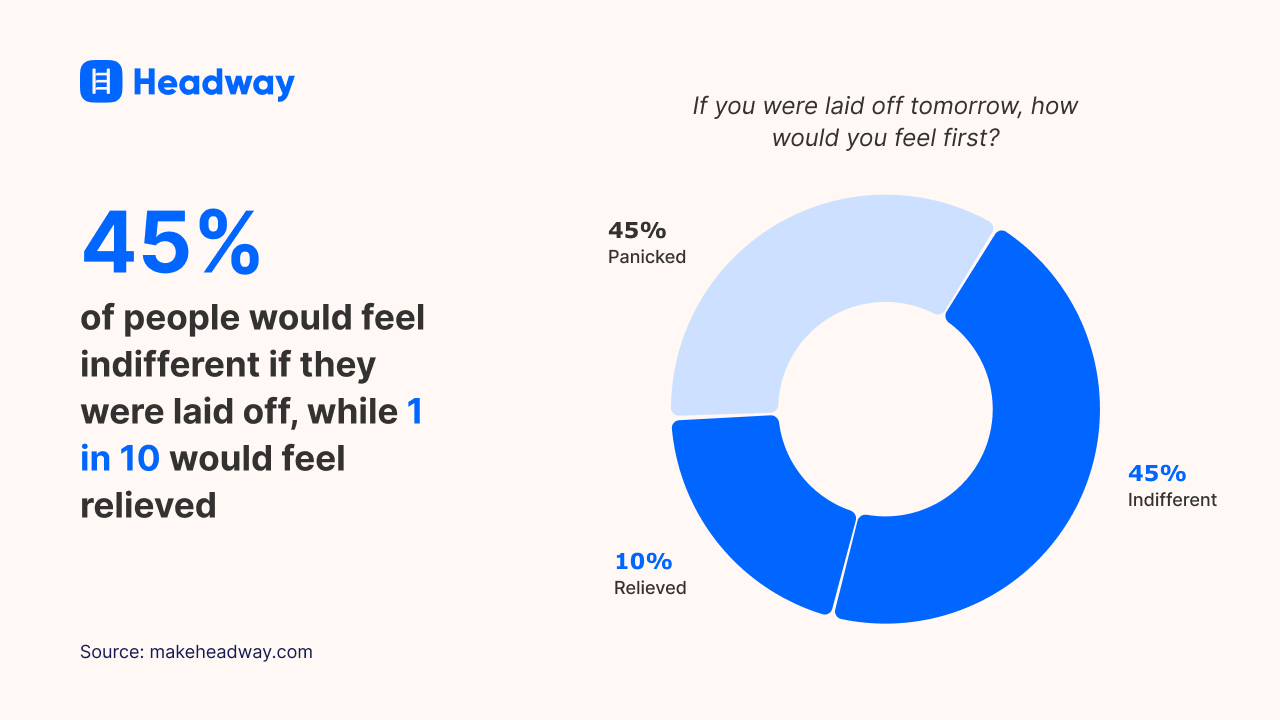
With post-holiday finances tight, you would expect workers to be dreaming of paychecks rather than pink slips. Yet, only 45% say they would panic if laid off tomorrow, while 45% would feel indifferent and 10% would be relieved.
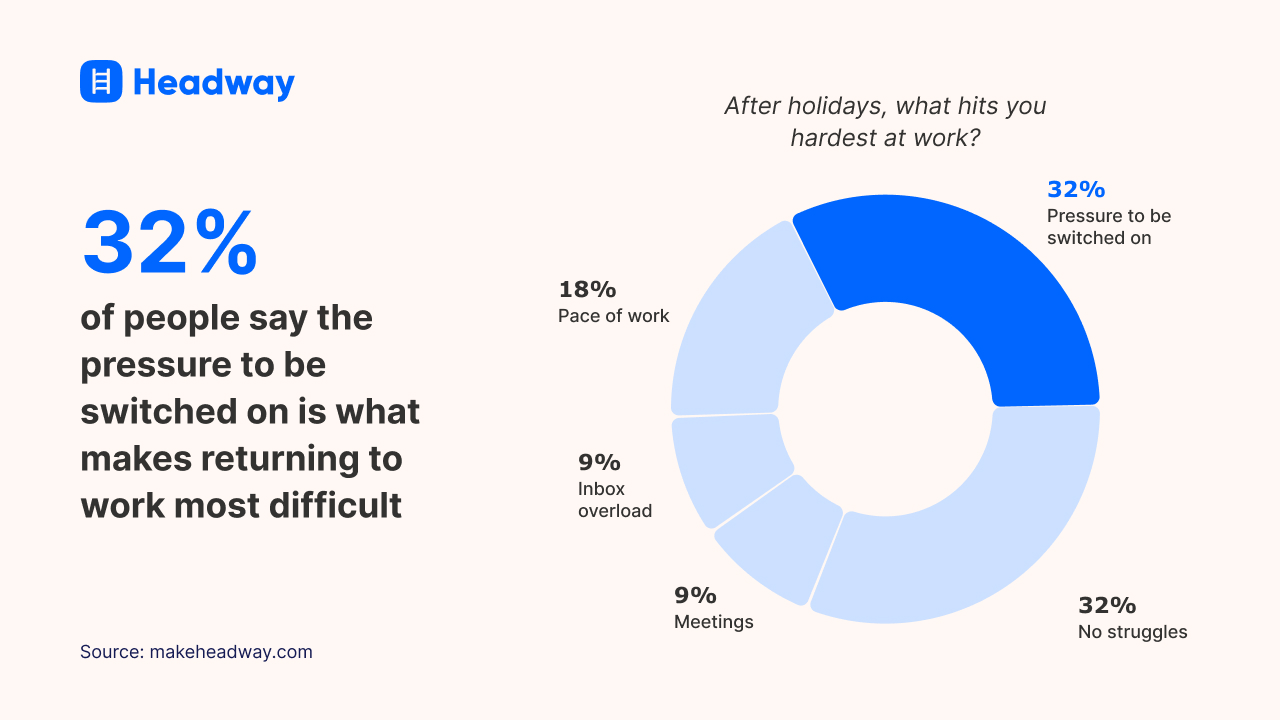
What makes returning to work so difficult? Surprisingly, it’s not the overflowing inboxes (9%) or endless meetings (9%). It’s the pressure to switch on. After weeks of letting their brains hibernate, 32% say flipping the mental switch is January’s toughest task.
Festive fog: The post-holiday productivity slump
Fixing the financial situation seems simple, right? Work hard, improve your leadership skills, climb the ladder, and earn more.
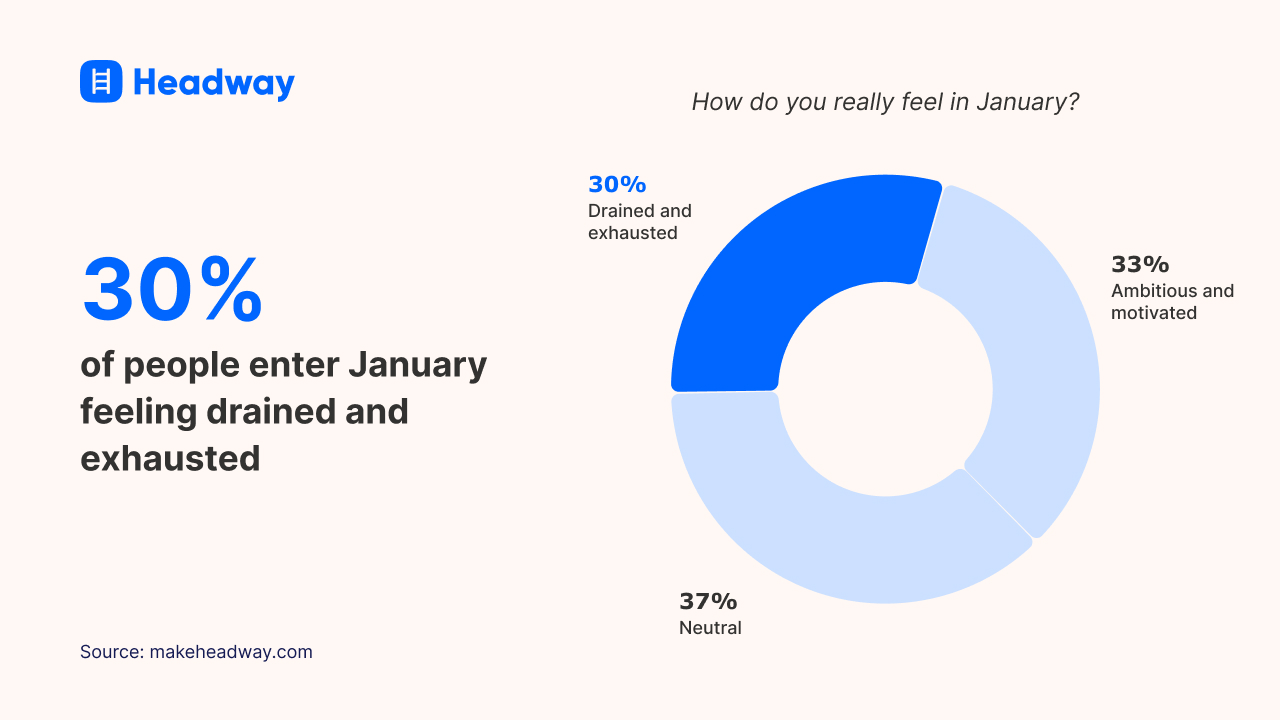
That might work for the 33% who start the year feeling motivated and ambitious, but it’s a big ask for those running on empty. After a busy break filled with travel, socializing, and commitment, many don’t have the energy to grind.
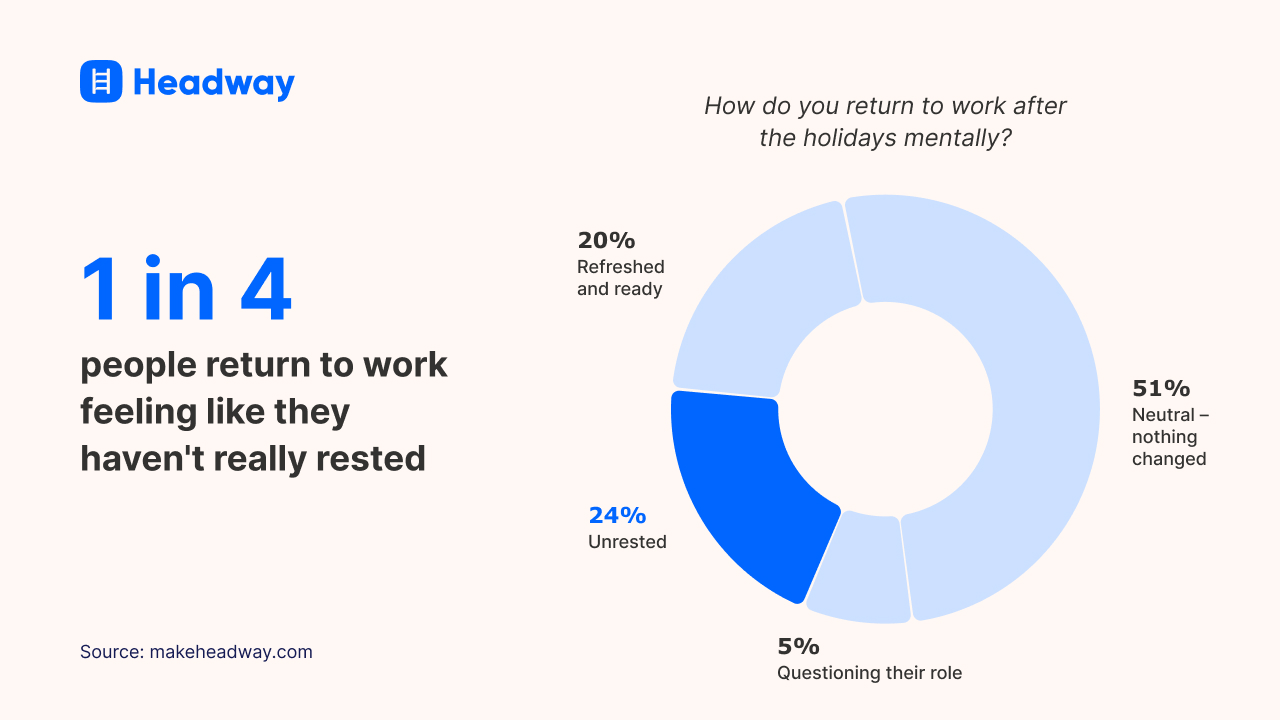
In fact, 24% of Americans return to work feeling like they haven’t rested at all. While most spend January easing back in and waiting for the brain fog to lift, 5% can’t shake the feeling that it’s time to quit – hoping it will finally give them a mental break.
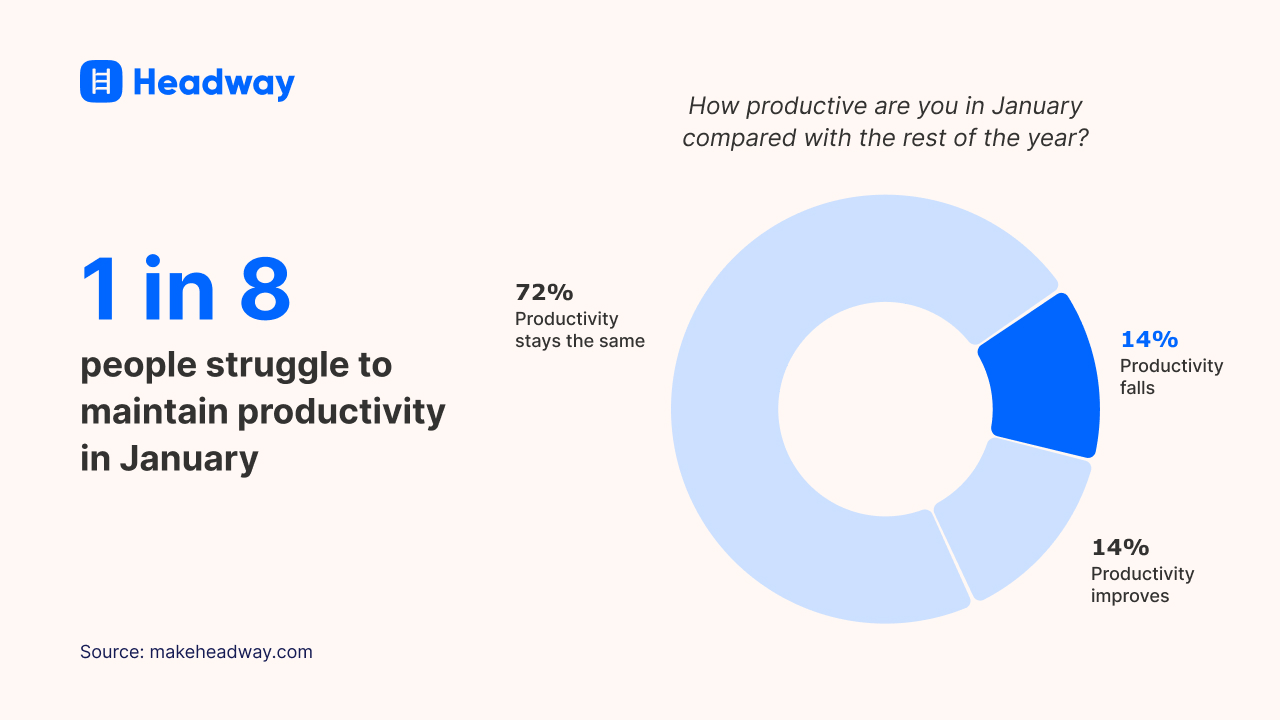
As the holidays end and routines return, workplace motivation takes a hit. With inboxes to clear and to-do lists to get through, many struggle to focus in January, with 14% admitting their productivity dips.
Eggnog and exit plans: The post-holiday urge to quit
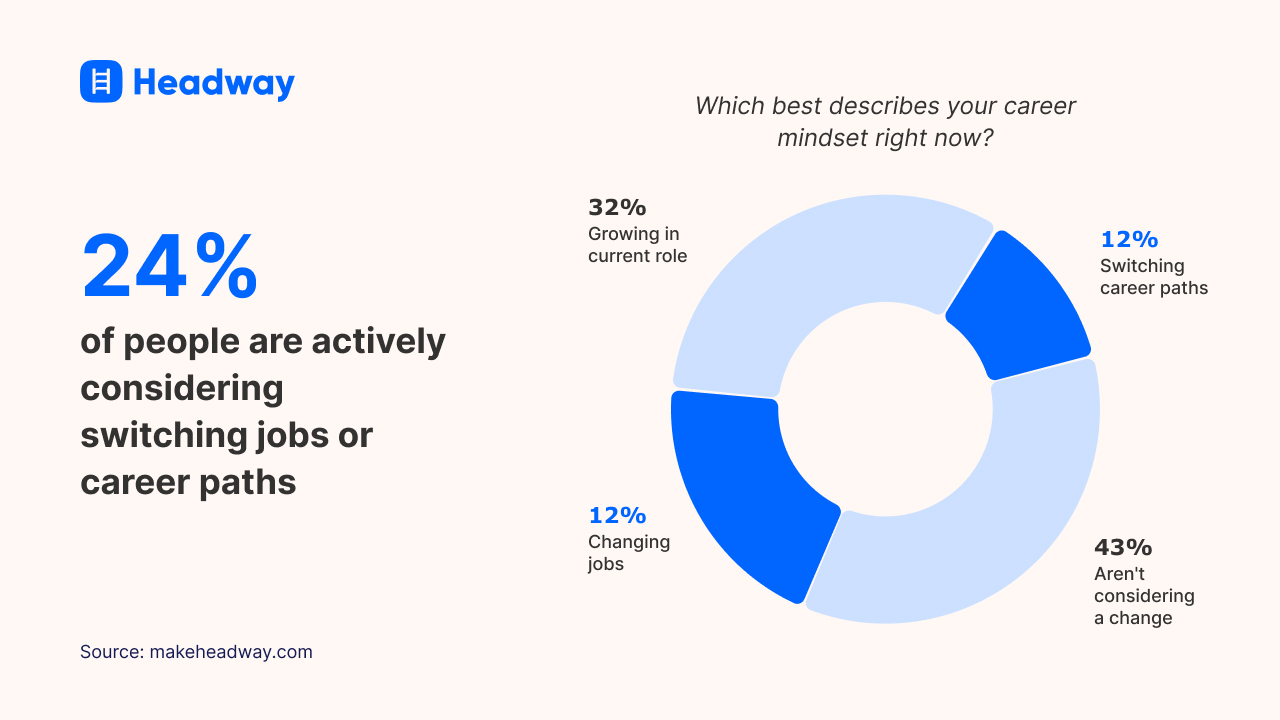
After some time to reflect, many are rethinking what they want from work, and realizing that a fresh start might be the best resolution of all – 12% are actively thinking about switching jobs, while 12% are weighing up a full career pivot.
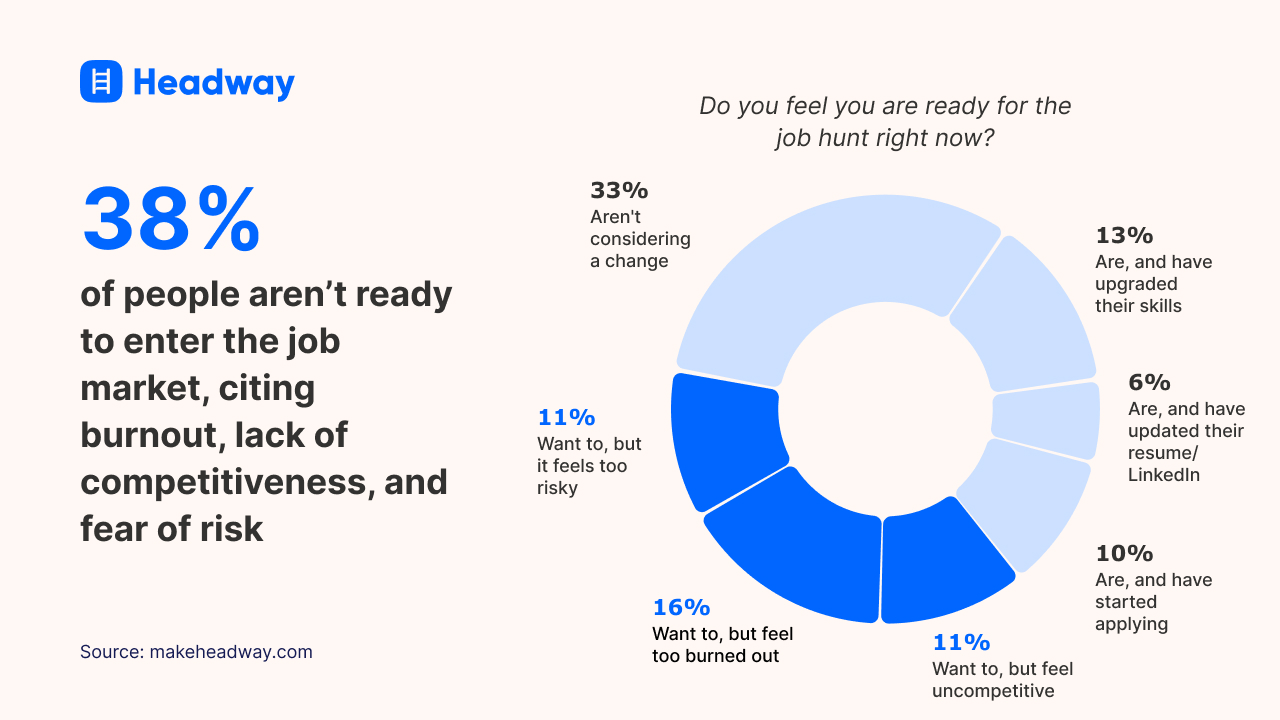
Most aren’t actively seeking a change, but for many, that’s due to circumstance rather than choice. Some 38% want to explore the job market, but 16% feel too burned out, and 11% feel uncompetitive. Likewise, with candidates outnumbering roles and AI to compete against, 11% feel leaving a stable job is just too risky.
2026’s top resolution: Survive first, succeed later
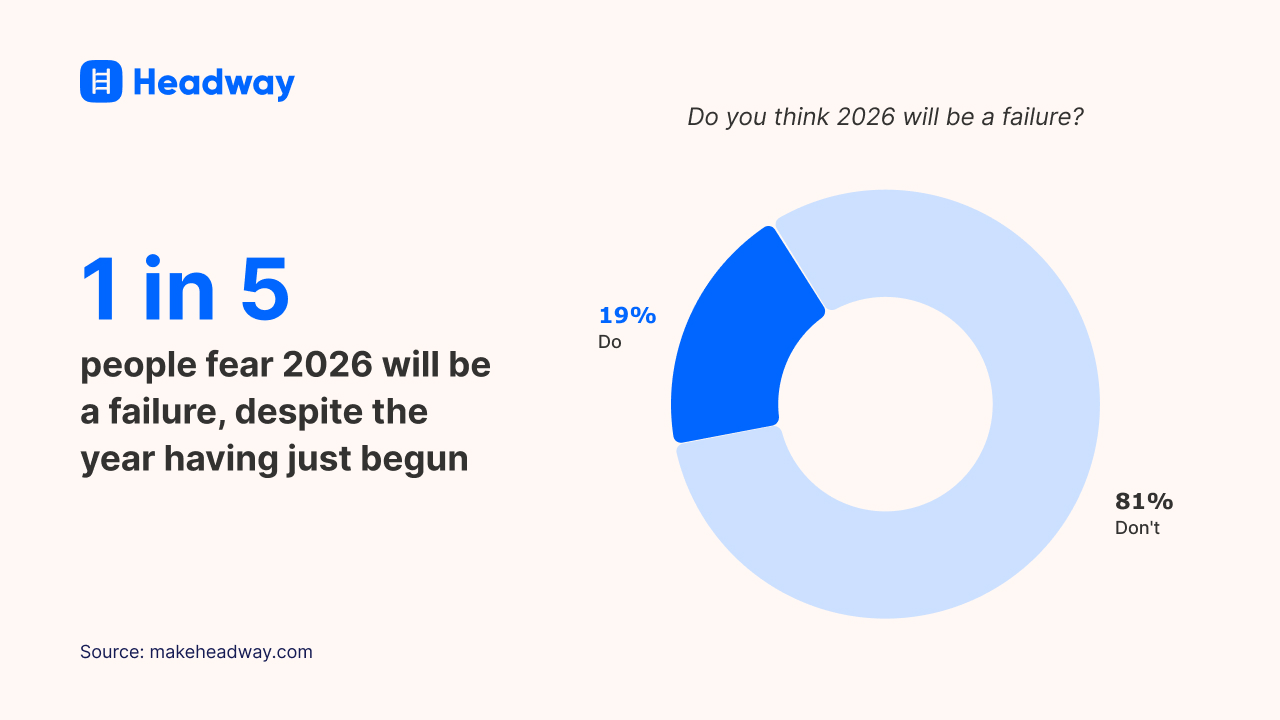
It might be the post-holiday blues talking, but many aren’t feeling optimistic about 2026, with 16% fearing it could be a catastrophic failure.
Yet, despite everything going on in the world, 81% remain hopeful, ready to unwrap whatever the year throws at them.
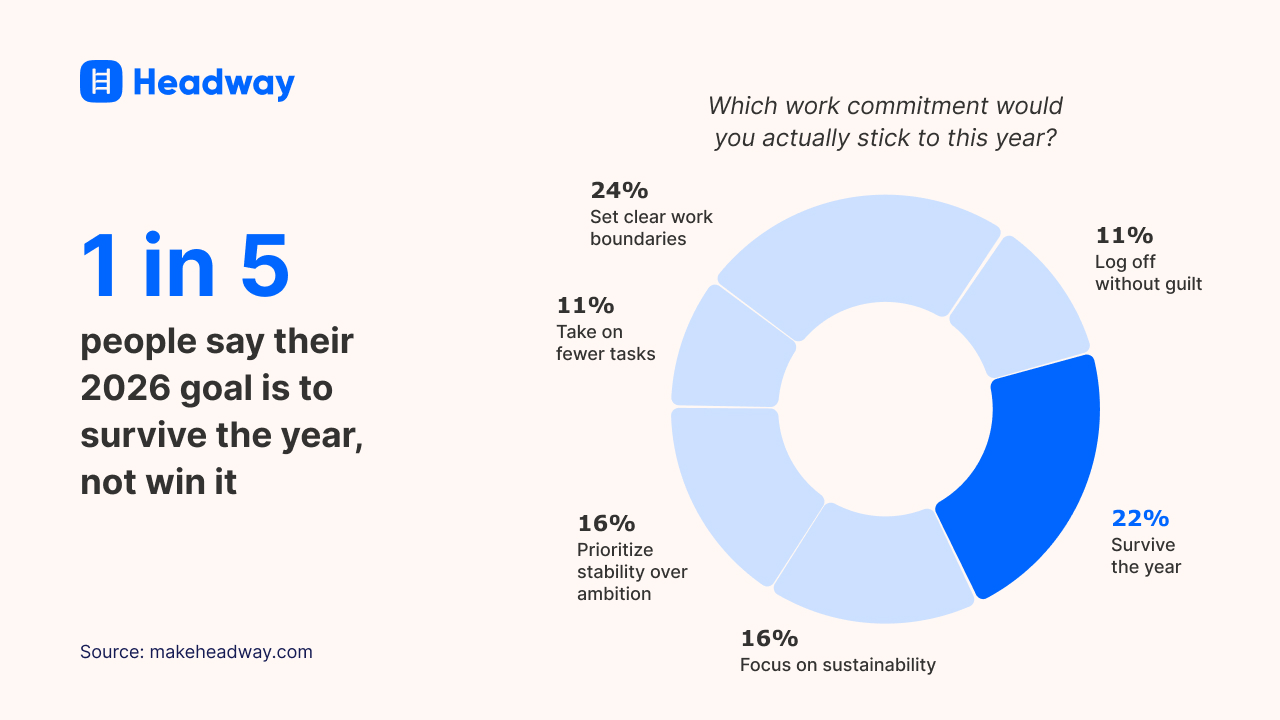
With too much piled on their plates, 22% of Americans admit their goal for 2026 is to survive, rather than win. Yet, quiet quitting and giving up on your goals isn’t the only option.
If returning to work feels all too much, it’s a sure sign that your work-life balance is off. It’s that constant pressure we put on ourselves to do more that fuels January dead and the desire to quit.
You don’t need a new title to have a successful year, and quitting won’t solve all your problems. So put your salary expectations and growth goals aside and focus on addressing what’s really stopping you from enjoying work.
This year, 24% plan to set clearer work boundaries, 16% are focusing on sustainability over rapid growth, and 11% plan to log off at the end of the workday without guilt – healthy steps to stop workdays from feeling like the end of the world.
Combined with short bursts of microlearning as and when time and energy allow, it’s possible to make progress without ending the year feeling drained and demoralized.
About the Headway App
Headway, with over 50 million users in 170+ countries, is the top app for book summaries. It offers 15-minute audio and text summaries of nonfiction bestsellers, along with daily microlearning and gamified challenges to support personal growth.
Recognized as Editor's Choice on the US App Store, it’s consistently featured as App of the Day.