Self-growth
 Business & Career
 Success
 Communication
 Healing
 Relationships
 Psychology
 Happiness
There's a specific kind of magic that happens when you crack open a book written a hundred years ago and realize that the author is describing how you felt yesterday.
That's the "secret sauce" of a truly classic novel. It isn't just a dusty volume sitting on a shelf to make a room look smarter; it's a conversation across time. When we talk about the best classic novels to read, we aren't just talking about old stories. We're talking about the blueprints of the human experience.
What actually qualifies a book as a "classic"? It's more than just surviving the test of time. These are great books that have left an indelible mark on our culture. They offer timeless themes — love, betrayal, ambition, and survival — wrapped in a language that shaped the very way we speak today.
Reading classic literature lets us step into a different new world, or perhaps a very old one, to see how people navigated the same mess of emotions we deal with in 2026. From the epic scale of 'The Odyssey' to the intimate struggles in a short story, these works challenge our perspectives and expand our empathy.
Of course, some of these books are thick. Diving into 'Moby-Dick' or 'Les Misérables' can feel like a part-time job. That's where Headway comes in: think of our app as your literary scout. Our summaries help you grasp the core ideas and the "why" behind the masterpiece before you commit to the full 800 pages, or refresh your insights after you've finished.
Classic novels are... Works of literature that are recognized for having lasting artistic merit, cultural significance, and themes that remain relevant regardless of when they were written.
Quick answer: The 10 best classic novels to read right now
If you're looking for a "starter pack" for your journey into classic books, here's a curated list of the essentials. These titles appear on almost every list of best books for a reason. These texts have changed the world.
| Rank | Title | Author | Year | Why read |
|---|---|---|---|---|
1 | 'To Kill a Mockingbird' | Harper Lee | 1960 | A masterclass in empathy and justice. |
2 | 'Pride and Prejudice' | Jane Austen | 1813 | The ultimate love story and social satire. |
3 | '1984' | George Orwell | 1949 | The definitive dystopian warning on power. |
4 | 'The Great Gatsby' | F. Scott Fitzgerald | 1925 | A haunting look at the American Dream in New York. |
5 | 'Jane Eyre' | Charlotte Brontë | 1847 | A revolutionary tale of female independence. |
6 | 'Frankenstein' | Mary Shelley | 1818 | The birth of sci-fi: a deep look at creation and isolation. |
7 | 'The Grapes of Wrath' | John Steinbeck | 1939 | A powerful testament to human resilience. |
8 | 'The Odyssey' | Homer | 8th century BCE | The foundational epic of adventure and homecoming. |
9 | 'Moby-Dick' | Herman Melville | 1851 | An unparalleled dive into obsession and nature. |
10 | 'Little Women' | Louisa May Alcott | 1868 | A timeless exploration of family and identity. |
The 30 best classic novels to read: A deep dive
Cultural cornerstones (1–10)
These are the heavy-hitting books that basically set the standard. They're the classic books that people reference in movies, songs, and those deep late-night conversations. These texts aren't just old; they're the foundation of classic literature.
1. 'To Kill a Mockingbird' by Harper Lee
This book is usually the one that makes people fall in love with reading in school. It's a gut-punch of a story about a young girl named Scout watching her father, Atticus Finch, defend a Black man wrongly accused of a crime in the American South. It's a masterclass in how to be good in a world that rarely is. Even decades later, it remains a must-read for anyone trying to understand the roots of empathy and justice.
The gist: A child's perspective on a town's moral collapse and the man who stood against it.
Why it sticks: It's one of the most powerful books ever written about the loss of innocence.
Headway's insight: The core themes of justice and moral courage can help you see why Atticus is still a role model today.
2. 'Pride and Prejudice' by Jane Austen
If you think this is just a stuffy love story about tea and dresses, think again. Jane Austen was actually a sharp social critic. The story follows Elizabeth Bennet as she moves through a world where women had to marry for money, while she's holding out for something real. Her enemies-to-lovers dynamic with Mr. Darcy is the blueprint for basically every rom-com you've ever seen.
The gist: A witty battle of the sexes where first impressions are almost always wrong.
Why it sticks: It's the ultimate classic novel for anyone who's ever judged someone too quickly.
Headway's insight: Austen's take on social status helps you navigate modern social hierarchies with a bit more wit.
3. 'The Great Gatsby' by F. Scott Fitzgerald
Step into New York during the Roaring Twenties. Jay Gatsby is throwing the wildest parties on Long Island, all to catch the eye of a girl named Daisy. F. Scott Fitzgerald captures that feeling of wanting something so badly you can almost taste it, only to realize it was never real. It's a short but haunting look at the American Dream.
The gist: A mysterious millionaire tries to buy back a past that's already gone.
Why it sticks: It's a beautiful, tragic look at how we can't actually repeat our glory days.
Headway's insight: The symbol of the green light is a great way to reflect on your own long-term ambitions.
4. 'Jane Eyre' by Charlotte Brontë
This isn't your average "damsel in distress" story. Charlotte Brontë created a protagonist who is "poor, obscure, plain, and little" but has a spine made of absolute steel. Jane's journey from an unloved orphan to a governess at the mysterious Thornfield Hall is legendary. It's dark, gothic, and deeply emotional.
The gist: An independent woman refuses to sacrifice her self-respect for love.
Why it sticks: It's a foundational classic literature piece about a woman demanding to be treated as an equal.
Headway's insight: Jane's resilience is a perfect case study for anyone trying to build self-reliance.



5. 'Moby-Dick' by Herman Melville
Okay, it's a giant book about a guy chasing a whale, but it's really about the madness of obsession. Ishmael joins the crew of the Pequod, led by the fanatical Captain Ahab. It's a heavy lift, filled with philosophy and whale facts, but it's truly one of the great books that challenges how we see nature and fate.
The gist: An obsessive sea captain risks everything to kill the white whale that took his leg.
Why it sticks: It's one of the best classic novels to read if you want to lose yourself in a massive, sprawling epic.
Headway's insight: You don't have to read 800 pages to learn the dangers of "tunnel vision" and toxic obsession.
📘 Don't let 500 pages of old-fashioned prose slow you down; get the Headway app to master the classics in just 15 minutes.
6. 'Les Misérables' by Victor Hugo
Jean Valjean steals a loaf of bread, goes to prison for 19 years, and spends the rest of his life trying to be a better man while being hunted by the relentless Inspector Javert. It's a sweeping love story to humanity, set against the backdrop of the French Revolution and widespread poverty.
The gist: A reformed convict struggles to outrun his past in a world that won't forgive him.
Why it sticks: It's an emotional rollercoaster and a must-read for anyone who believes in redemption.
Headway's insight: Hugo's thoughts on mercy versus law are incredibly relevant for modern social debates.
7. 'Wuthering Heights' by Emily Brontë
This is the dark, messy, and "unhinged" version of a romance. Emily Brontë created Heathcliff and Catherine — two characters who are absolutely toxic for each other but can't stay apart. Set on the wild, windy moors, it's a story of revenge that spans generations.
The gist: Two soulmates destroy everything around them because they can't be together.
Why it sticks: It's the go-to for readers who like their romance with a side of ghosts and vengeance.
Headway's insight: The theme of destructive passion helps you recognize the difference between love and obsession.
8. 'Adventures of Huckleberry Finn' by Mark Twain
Huck Finn and Jim, an enslaved man, float down the Mississippi River on a raft. It's funny, adventurous, and deeply critical of the racism and hypocrisy of the time. Mark Twain basically invented the modern American voice with this one.
The gist: A boy rejects society's rules to help a friend find freedom.
Why it sticks: It's a quintessential classic novel about following your own conscience instead of a broken society.
Headway's insight: Twain's use of satire is a brilliant tool for learning how to critique modern culture.
9. 'Great Expectations' by Charles Dickens
Pip is a poor orphan who receives an anonymous fortune and moves to London to become a "gentleman." Charles Dickens is a master of character, from the convict Magwitch to the decaying Miss Havisham in her wedding dress. At its heart, it's a story about realizing that money doesn't make you a better person.
The gist: An orphan's life is changed by a secret benefactor, but the money comes with a price.
Why it sticks: It's one of those classic books that perfectly balances mystery, humor, and heart.
Headway's insight: Pip's story is a great reminder that character is built by actions, not bank accounts.
10. 'Don Quixote' by Miguel de Cervantes
The original "delusional" hero. Cervantes tells the story of an older man who reads too many books about knights and decides to become one. All while attacking windmills that he believes are giants. It's the first modern novel, and it's still hilarious today.
The gist: A man chooses to live in a fantasy world of chivalry rather than accept a boring reality.
Why it sticks: It's the ultimate classic novel about the power (and danger) of imagination.
Headway's insight: The relationship between Quixote and Sancho Panza says a lot about balancing idealism with pragmatism.
Classics with modern relevance (11–20)
People sometimes assume that classic literature is only about old-fashioned manners and horse-drawn carriages. But some of the best classic novels to read are actually terrifyingly good at predicting the future. These stories tackle themes like surveillance, freedom, and identity — things we're still arguing about every single day.
11. '1984' by George Orwell
If you've ever felt like your phone is watching you, you can thank George Orwell for giving that feeling a name. This dystopian masterpiece introduced us to Big Brother and the Thought Police. It follows Winston Smith, a man who tries to rebel against a government that wants to control not just his actions, but his very mind.
The gist: A man tries to find truth and love in a world where both are illegal.
Why it sticks: It's the ultimate warning about how easily truth can be manipulated.
Headway's insight: The concept of Doublethink is a great way to sharpen your own critical thinking.
12. 'Fahrenheit 451' by Ray Bradbury
In this version of a new world, books are illegal, and firemen start fires instead of putting them out. Guy Montag is a fireman who starts to wonder what's actually inside the books he's burning. It's a chilling look at a society that has traded deep thought for shallow entertainment and constant noise.
The gist: A government burns books to keep people "happy" and easy to control.
Why it sticks: It's a must-read for anyone worried about shrinking attention spans.
Headway's insight: This book is a reminder of why active learning — the kind we do here — is an act of rebellion against shallow culture.
13. 'The Grapes of Wrath' by John Steinbeck
John Steinbeck wrote this during the Great Depression, but the struggle of the Joad family feels incredibly modern. They lose their farm and head west to California, hoping for a better life, only to find a system rigged against them. It's a raw, honest look at human dignity and the power of community.
The gist: A family of "Okies" migrates across the country in a desperate search for work and survival.
Why it sticks: It's a heavy-hitting piece of American literature that champions the working class.
Headway's insight: Steinbeck's focus on collective action is a powerful lesson in leadership and empathy.
14. 'The Catcher in the Rye' by J.D. Salinger
Holden Caulfield is the original angsty teenager. Salinger captured that specific feeling of being stuck between childhood and the "phony" adult world you're not quite ready for. Set in New York, Holden wanders the streets, trying to find someone who isn't a fake.
The gist: A cynical teenager flunks out of prep school and has a minor breakdown in the city.
Why it sticks: It's one of the best books for anyone who's ever felt like an outsider.
Headway's insight: Holden's fear of change translates well to handling your own career or life transitions.
15. 'Brave New World' by Aldous Huxley
While '1984' is about control through fear, Huxley's classic novel is about control through pleasure. In this world, people are genetically engineered and kept in a drug-induced "happiness." It's a haunting look at what happens when we sacrifice our humanity for total comfort.
The gist: A "civilized" society uses science and distraction to eliminate suffering — and soul.
Why it sticks: It's more relevant than ever in an age of instant gratification and bio-hacking.
Headway's insight: Huxley's warnings about "Soma" are a perfect prompt to think about your own digital habits.
16. 'Heart of Darkness' by Joseph Conrad
Joseph Conrad takes us on a boat trip deep into the Congo, where a man named Marlow is sent to find the mysterious Kurtz. It's a dark, swirling look at colonialism and what happens to the human mind when it's removed from civilization. It famously inspired the movie Apocalypse Now.
The gist: A journey upriver reveals the darkness inside the human heart.
Why it sticks: It's a complex, difficult, but essential classic novel about power and corruption.
Headway's insight: Conrad's exploration of the "shadow self" is a deep dive into self-awareness.
📘 Build your internal library today — try Headway and unlock the secrets of the world's best classic novels without the burnout.
17. 'The Picture of Dorian Gray' by Oscar Wilde
What would you give to stay young forever? Dorian Gray makes a deal to stay beautiful, while a portrait of him ages and hides all his sins. It's a sharp, witty, and eventually horrifying look at vanity and the cost of living purely for pleasure.
The gist: A man's soul rots on canvas while he remains perfect on the outside.
Why it sticks: In our era of Instagram filters, this classic novel feels like it was written yesterday.
Headway's insight: Wilde's wit hides some serious lessons about the importance of internal character over external appearance.
18. 'Invisible Man' by Ralph Ellison
It's a pillar of American literature, following an unnamed Black narrator who realizes that people don't actually see him. They only see their own prejudices and stereotypes. It's a profound look at identity and the struggle to be seen for who you truly are.
The gist: A man navigates a society that refuses to acknowledge his existence.
Why it sticks: It's a must-read for understanding the psychological toll of social invisibility.
Headway's insight: Ellison's insights on identity are crucial for anyone interested in social intelligence.
19. 'Slaughterhouse-Five' by Kurt Vonnegut
Vonnegut uses time travel and aliens to talk about the trauma of war. Billy Pilgrim has become "unstuck in time," experiencing his life in a random order. It's funny, weird, and deeply sad all at once. It's the kind of book that changes how you think about time and fate.
The gist: A soldier survives a horrific bombing and finds a strange way to cope with the memory.
Why it sticks: It's a unique classic novel that handles heavy trauma with dry, dark humor.
Headway's insight: Vonnegut's "So it goes" philosophy offers a fascinating perspective on stoicism and acceptance.
20. 'Giovanni's Room' by James Baldwin
James Baldwin was a master of the love story, but his versions are rarely simple. Set in Paris, this book follows an American man struggling with his identity and his feelings for an Italian bartender. It's an intimate, heartbreaking look at the consequences of being afraid of your own truth.
The gist: A man trapped between social expectations and his true heart in 1950s Paris.
Why it sticks: It's a beautifully written exploration of shame, desire, and the human need for connection.
Headway's insight: Baldwin's emotional intelligence is off the charts; his work is a masterclass in understanding the nuances of relationships.
Diverse and global classics (21–30)
If you only stick to the books you were assigned in high school, you're missing out on a massive chunk of the world's best stories. Exploring the best classic novels to read means looking beyond the usual English-class suspects.
These books take us from the ancient battlefields of Greece to the changing landscapes of Nigeria and the quiet, emotional corners of Canada. They remind us that while cultures differ, the things that make us human — like greed, hope, and the need to belong — are universal.
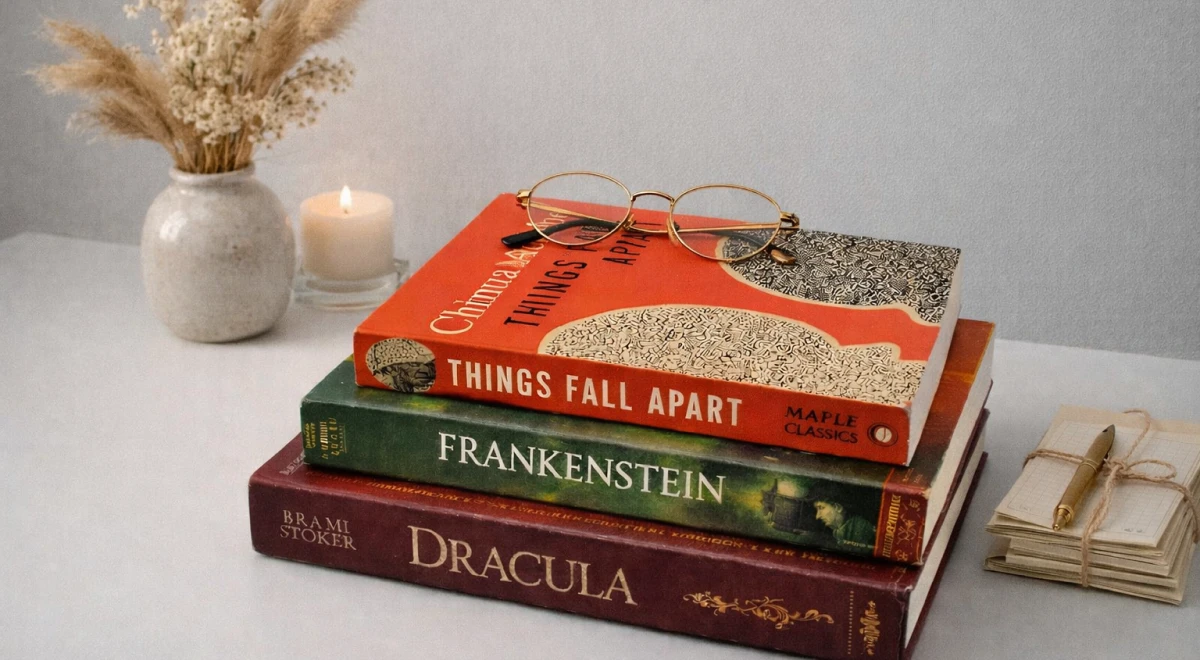
21. 'Things Fall Apart' by Chinua Achebe
Widely considered the most important work of modern African literature. Chinua Achebe tells the story of Okonkwo, a leader in an Igbo community in Nigeria, as his world is turned upside down by the arrival of British missionaries and colonial government. It's not just a history lesson; it's a tragedy about what happens when a person's identity is tied to a culture being forcibly erased.
The gist: A powerful man struggles to maintain his dignity as his traditional society collapses.
Why it sticks: It's a must-read for anyone wanting to see the "other side" of the colonial story.
Headway's insight: Achebe's themes of change and tradition are a great way to understand how cultures evolve — and how people get left behind.
22. 'Madame Bovary' by Gustave Flaubert
Flaubert was obsessed with finding the "perfect word," and it shows. This classic novel follows Emma Bovary, a woman who is bored out of her mind by her provincial life and marriage. She tries to find excitement through affairs and expensive shopping, which leads to her inevitable downfall. It was scandalous when it was first published, mostly because it was so honest about female desire and dissatisfaction.
The gist: A woman ruins her life trying to live out the romantic fantasies she read about in books.
Why it sticks: Emma is one of the most relatable flawed characters in all of classic literature.
Headway's insight: Emma's story is basically a cautionary tale about the gap between expectations and reality.
23. 'The Iliad' by Homer
The granddaddy of all war stories. Set during the final weeks of the Trojan War, it's all about Achilles — the greatest warrior ever — and his legendary temper tantrum. It's filled with gods, heroes, and some of the most intense action scenes ever written. Even though it's thousands of years old, it perfectly captures the messy, tragic nature of conflict and honor.
The gist: An epic poem about the rage of Achilles and the brutal final days of Troy.
Why it sticks: It's one of the best classic novels to read (technically an epic poem) to see how our ideas of heroism started.
Headway's insight: Achilles' pride can teach you a lot about the dangers of ego in leadership.
24. 'Frankenstein' by Mary Shelley
Most people think of a green monster with bolts in its neck, but Mary Shelley actually wrote a deeply sad, philosophical story. Victor Frankenstein is a scientist who plays God by bringing a creature to life, only to abandon it out of fear. The creature isn't born evil; he becomes a monster because of loneliness and rejection. It's the birth of science fiction and still one of the most haunting great books ever written.
The gist: A scientist creates life and then refuses to take responsibility for the consequences.
Why it sticks: It asks the big questions: What makes us human? And who is the real monster?
Headway's insight: Shelley's look at scientific ethics is more relevant than ever as we deal with AI and new tech today.
25. 'Dracula' by Bram Stoker
This is where the modern vampire obsession began. Dracula isn't just a spooky story; it's told through letters, diary entries, and newspaper clippings, which makes it feel incredibly "real" and modern. It follows a group of friends as they try to stop an ancient count from Transylvania who has moved to London to prey on the living.
The gist: A group of people uses modern technology and old-fashioned courage to defeat an ancient evil.
Why it sticks: It's a masterclass in building tension and atmosphere.
Headway's insight: Beyond the fangs, the book is about the fear of the unknown and the strength found in teamwork.
26. 'The Count of Monte Cristo' by Alexandre Dumas
If you love a slow-burn revenge plot, this is it. Edmond Dantès is a young sailor who is framed for a crime he didn't commit and thrown into a dungeon for 14 years. When he finally escapes, he finds a hidden treasure and spends the rest of the book methodically dismantling the people who betrayed him. It's long, but it's a total page-turner.
The gist: A man spends decades crafting the ultimate revenge after being wrongly imprisoned.
Why it sticks: It's arguably the most satisfying love story to justice ever written.
Headway's insight: Dantès's patience and strategic thinking are actually pretty great lessons in long-term planning (even if the goal is revenge!).
📘 Turn "I should read that" into "I just learned that" when you download Headway for your daily dose of literary wisdom.
27. 'Ulysses' by James Joyce
Honestly, this one is famous for being incredibly hard to read. James Joyce wrote the entire book as a "stream of consciousness," following Leopold Bloom as he walks around Dublin for a single day. It's packed with puns, history, and references that require a guidebook. But it's a genius look at how the human mind actually works — messy, distracted, and full of weird associations.
The gist: A day in the life of an ordinary man, told in an extraordinary, experimental way.
Why it sticks: It's a landmark of classic literature that broke every rule of how a story should be told.
Headway's insight: Joyce's focus on the everyday reminds us that a world of complexity lies hidden in our most ordinary moments.
28. 'Middlemarch' by George Eliot
George Eliot (whose real name was Mary Ann Evans) wrote what many consider the greatest English novel. It's about a small town and the interconnected lives of its residents. It tackles everything: marriage, politics, religion, and medical science. It's huge, but it feels incredibly intimate, like you're actually living in that town alongside the characters.
The gist: A sweeping look at how small choices and local politics shape the destinies of a whole community.
Why it sticks: It's one of the most intelligent, best books about how hard it is to actually do good in a messy world.
Headway's insight: Eliot's thoughts on "unhistoric acts" — the small things we do that help people — is a beautiful lesson in finding purpose.
29. 'The Secret Garden' by Frances Hodgson Burnett
Don't let the fact that this is often labeled a "children's book" stop you. It's a beautiful story about Mary Lennox, a sour, unloved girl sent to a lonely house on the moors. She discovers a locked garden and, as she brings it back to life, she heals herself and the people around her. It's a quiet, magical classic novel about the power of nature and positive thinking.
The gist: An unloved orphan finds healing and friendship through a hidden, neglected garden.
Why it sticks: It's a gentle reminder that our environment and our mindsets are deeply connected.
Headway's insight: The theme of emotional growth through physical action shows up in a lot of self-improvement research.
30. 'Anne of Green Gables' by L.M. Montgomery
Anne Shirley is one of the most beloved characters in all of classic literature. She's an orphan with a massive imagination and a vivid personality who is accidentally sent to a farm in Canada. Her journey from an outsider to a cherished member of the community is heartwarming without being cheesy.
The gist: A talkative, imaginative girl wins over a quiet town with her spirit and mistakes.
Why it sticks: It's the ultimate feel-good book for anyone who ever felt like they were too much.
Headway's insight: Anne's resilience and her ability to find beauty in everything are a great lesson in optimism.
How to choose which classic to start with in 2026
Looking at a list of 30 best classic novels to read is a bit like staring at a massive restaurant menu when you're already starving — it's overwhelming. You don't want to pick a 900-page philosophical brick if you're actually in the mood for a fast-paced thriller. The trick is to match the book to your current headspace.
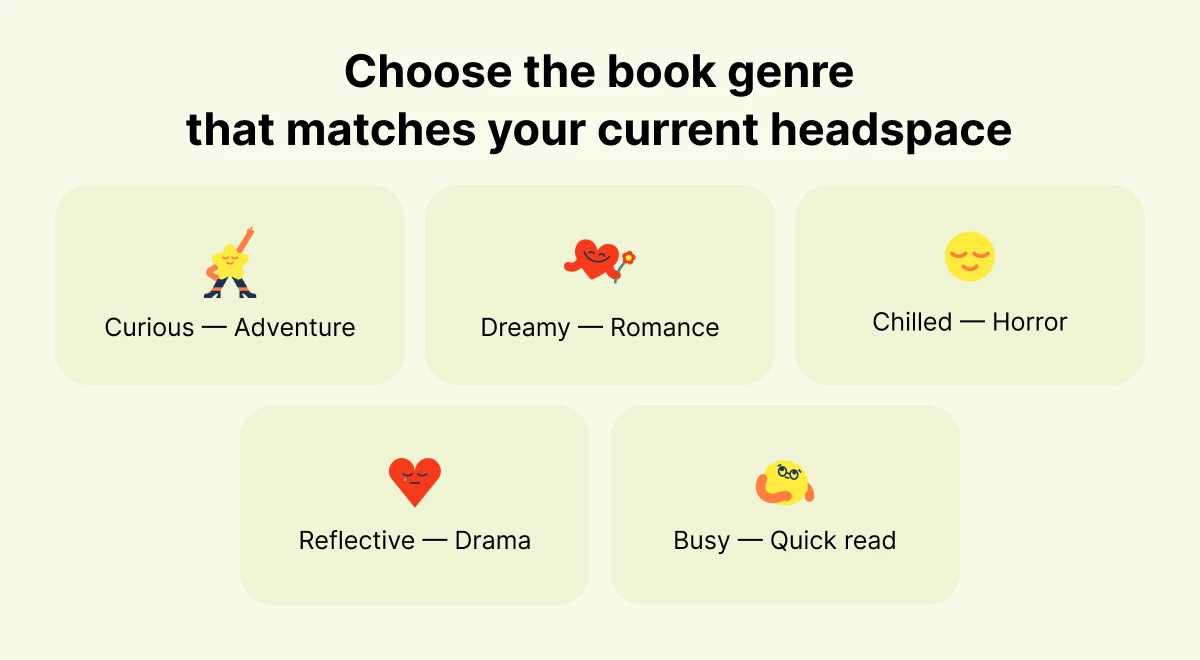
If you're in the mood for a massive adventure → go with the original quest stories: 'The Odyssey' is basically the blueprint for every "journey home" story ever told. If you want something a bit more eccentric and funny, Cervantes and his masterpiece, 'Don Quixote,' are the way to go. For something slightly more modern but still epic, J.R.R. Tolkien is the master of building a new world that feels thoroughly lived-in.
If you want to feel all the emotions (and maybe cry a little) → you can't go wrong with Jane Austen. 'Pride and Prejudice' is the gold standard for a reason — it's witty, romantic, and sharp. If you want something a bit darker and more atmospheric, look up works from Charlotte Brontë or her sister Emily Brontë. Or, if you want a love story that feels more like a gut-punch, 'Giovanni's Room' by James Baldwin is an incredible, intimate read.
If you're a fan of "spooky season" all year round → start with the foundations of horror. Mary Shelley's 'Frankenstein' is essential for seeing how science can go wrong. Then you've got 'Dracula,' which is surprisingly fast-paced for a book of its age. If you like weird and sci-fi, H. G. Wells is your guy — books like 'The Time Machine' basically invented the genres we love today.
If you want to understand "high society" and its messes → check out Edith Wharton or George Eliot. 'Middlemarch' is famous as a "book for adults" — it explores the realities of marriage and money after the honeymoon phase ends. If you want something that feels very Old New York, Wharton's look at the upper class is biting and brilliant.
If you're short on time but want a big impact → start with a short story or a shorter classic novel. 'The Great Gatsby' by F. Scott Fitzgerald is remarkably slim for how much it packs in. Or try Charles Dickens — but instead of a massive tome, go for 'A Christmas Carol.' It's a story everyone knows, but reading the actual text shows you why Dickens was such a genius.
Classic literature can be unappealing sometimes. The sentences are longer, the vocabulary is older, and the pacing is... well, it's not exactly a TikTok video. But you can totally handle it if you adjust your approach:
Don't be a hero. If you're struggling with the language of a 500-page book, start with a short story. It lets you get used to the author's voice without the massive commitment.
Use Headway as your "cheat sheet" for context. Reading a summary of one of these great books before you start gives you the map of the story. When you know where the plot is going, you won't get as frustrated when the author spends three pages describing a tree.
Listen to the audio. A lot of these must-read books were originally meant to be read aloud or published in chapters in newspapers. Charles Dickens wrote 'A Tale of Two Cities' as a serial. Listening to a professional narrator bring the characters to life can completely change the experience.
Google is your friend. If you're reading James Joyce or Flaubert, you're going to hit references you don't get. That's fine. Most people do. Just look it up and move on.
Stop if you hate it. Seriously. Even if it's on every best-of list ever written, if you've given it 50 pages and you're miserable, put it down. American literature has a totally different flavor from British literature — maybe try Steinbeck or Faulkner instead.
Conquer the classics with Headway!
At the end of the day, the best classic novels to read are the ones that make you see your own life a little differently. But you don't have to tackle the entire history of classic literature in one weekend. The goal isn't to check boxes; it's to actually let these great books change how you think.
If the page counts feel intimidating, Headway is here to help you break the ice. The app has summaries of some of the best classic novels alongside the most popular nonfiction titles, designed to give you the core wisdom and those genuine "aha!" moments in about 15 minutes.
So, pick a title that sparks your curiosity, grab a coffee, and start your own "eternal library" today. There is no better time than 2026 to find out why so many people are still talking about these books.
📘 Get the plot, the themes, and the "why" without the sleepiness — try Headway for a fresh, fast take on very old books.
FAQs about the best classic novels to read
What are the top seven classic novels?
If you're looking for the absolute essentials, you can't skip 'To Kill a Mockingbird,' '1984,' or 'Pride and Prejudice.' Add 'The Great Gatsby,' 'Jane Eyre,' 'The Odyssey,' and 'Moby-Dick' to round out the list. These works define the "best classic novels to read" because they've shaped our language and our view of justice, love, and human obsession.
What three classics are actually worth reading?
While many are famous, 'Frankenstein' is genuinely worth your time for its chilling look at creator responsibility. 'The Grapes of Wrath' by John Steinbeck offers an incredibly moving perspective on resilience that feels painfully real today. Finally, 'Jane Eyre' is a total must-read because Charlotte Brontë created a protagonist whose fierce independence and self-respect remain deeply inspiring for modern readers.
Which classic is easiest to read?
If you want to avoid dense, archaic language, 'The Great Gatsby' by F. Scott Fitzgerald is remarkably accessible and fast-paced. Another great entry point is 'Animal Farm' by George Orwell; it's short, punchy, and uses simple prose to deliver a massive punch. Also, consider reading any of Hemingway's books or the Sherlock Holmes stories. These stories prove that classic doesn't have to mean difficult, making them perfect for your first deep dive.
What's a good classic novel to read in 2026?
In 2026, 'Fahrenheit 451' feels like it was written specifically for right now. It tackles our obsession with shallow digital noise and the danger of losing deep, meaningful thought. If you're feeling overwhelmed by the pace of modern life, Montag's struggle to save books is a perfect reminder to slow down and pay attention to what you're actually filling your mind with.