Self-growth
 Business & Career
 Success
 Communication
 Healing
 Relationships
 Psychology
 Happiness
Have you ever looked at your bookshelves in January and felt a mix of excitement and pure dread? You buy what everyone swears are the best books of the year, promise yourself you'll stop scrolling, and yet — by March — those pristine book covers are gathering dust. Does that hit too close to home?
Most people want to be readers. But between packed calendars, family demands, and the bottomless pit of streaming queues, actually finishing books is harder than it sounds. That's why the 2026 reading challenge matters. It's not just about a number. It's about who you become when you decide, on purpose, to keep learning.
Whether you're chasing the PopSugar reading challenge 2026, trying to clear a to-be-read (TBR) pile that's frankly getting out of hand, or just looking for a New Year's reset — this guide covers everything you need to pick the right challenge, track your progress, and actually see it through. And if time is your biggest obstacle, there's a smarter way to read more without sacrificing sleep.
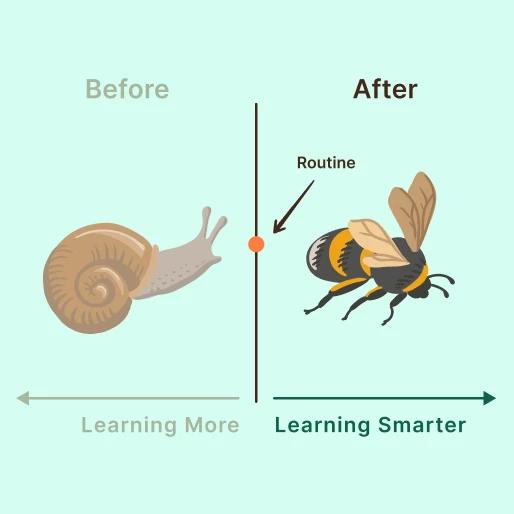
Unlock your daily growth superpower
Transform your routine to fuel continuous learning and effortless improvement.
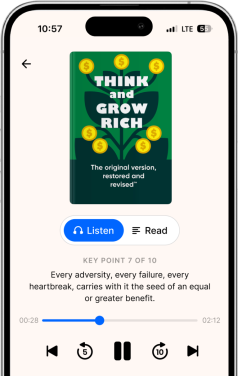
Let's startHeadway is a self-growth app that distills the key ideas from the world's best nonfiction books into 15-minute reads. Join the 55 million people who use it to hit their reading goals and build better habits without blocking out entire weekends.
➡️ How exactly can Headway help me?
Quick answer: How to win the 2026 reading challenge
Here's the short version for anyone who wants to hit the ground running:
Set a realistic pace: One core insight or summary a day beats "I'll catch up on the weekend" every time.
Use digital trackers: Log your progress in the StoryGraph app or download apps like Headway with reading streaks to stay honest with yourself.
Join a book club: Accountability is underrated. The February slump is real, and it hits hard.
Mix your formats: Rotate between full reads, audiobooks, and bite-sized summaries so it never feels like homework.
What exactly is a 2026 reading challenge?
A reading challenge is a goal-oriented system where you use specific prompts or a target number to diversify what you read throughout the year. Instead of defaulting to the same three genres you've loved since college, you get a roadmap.
Maybe your goal is to read 52 books — one for every week of the year. Or maybe you want a year-long challenge that pushes you to read a nonfiction book from every continent. The format matters less than the commitment. When reading has a structure, it stops competing with everything else on your to-do list and becomes part of your routine.
There's also something genuinely motivating about crossing prompts off a list. Ask anyone who's done a book reading challenge 2026 style — by February, checking off that first handful of books feels like a small but real win.
📘 Build a reading habit with Headway.
Most popular 2026 reading challenge prompts and ideas
If you're looking for 2026 reading challenge ideas, you don't need to build your own from scratch. Several well-established communities have already done the work. Here are the main ones worth knowing.
2026 PopSugar reading challenge
The 2026 PopSugar reading challenge is one of the most popular versions of this tradition, and for good reason. It typically features 40–50 prompts ranging from "a book with a color in the title" to "a book recommended by a librarian." The variety is the whole point — it forces you to pick up books you'd never have noticed on your own.
What makes the 2026 PopSugar reading challenge stand out is its community. Thousands of readers share their picks online every year, so when you get stuck on a weird prompt, you've got hundreds of recommendations and a quick search away. It's a great option if you want both structure and the option to crowdsource your book list.
G3 reading challenge 2026
If you want something with more substance, the G3 reading challenge 2026 takes a different direction altogether. This challenge focuses on theology, history, and doxology — deep, foundational texts about how the world works and why. These books can feel dense at first. But they're the kind of reading that genuinely shifts how you think, not just what you know.
It's a good fit if your New Year's goal is less "read more" and more "read better." Pairing a G3 title with a Headway summary of a related nonfiction book can help you build real context around the ideas before you dig in.
Specialized challenges for 2026
Beyond the big names, there are several niche reading challenges worth knowing about:
Bible Reading Challenge 2026: A structured plan to read through the scriptures in 365 days, usually organized chronologically so the story flows in order.
American Cancer Society reading challenge 2026: A readathon format where your reading raises money for a cause. Many participants pick a starter book set to kick things off — a manageable handful of titles you commit to before the event begins. It's a great option if you want your mini-challenge to mean something beyond your own TBR.
Global Reading Challenge 2026: A focus on international authors and translated works. If your current bookshelf skews heavily toward American or British books, this one is a worthwhile shake-up.
📘 Build a personalized challenge for yourself right now with Headway.

The smart reader hack: How Headway increases your book count
Let's be real for a second. If you're trying to read 50 books this year while also holding down a job and a social life, reading every word of every title cover to cover isn't always going to happen. That's not failure — that's math.
Here's where Headway fits in. A typical 300-page book takes somewhere between 8 and 10 hours to finish. A Headway summary gives you the core ideas in 15 minutes. On a normal commute, you can cover two summaries in the time it would take you to get through a single chapter of a denser book.
Say your challenge includes a prompt like "a book about money" or "a book on psychology." Use Headway to nail that prompt on a Tuesday morning before work. Save your slower, savored reads for the fiction titles or the books you genuinely want to linger over. By the end of the week, you've checked off four books in your challenge instead of one — and you've actually absorbed the ideas, not just flipped pages.
This practice works especially well for the "scary" prompts — the ones about investment strategies, behavioral economics, or ancient history that sit in your TBR for six months because they feel like homework. A Headway summary makes them approachable, and sometimes you'll finish one and immediately want the full book.
📘 Read smarter with Headway.
Other digital tools to track your 2026 reading goals
Tracking your reading isn't just about feeling organized — it's what keeps you going when the novelty wears off. And it will wear off, usually around week six.
StoryGraph is the fan favorite for data-driven readers. It gives you charts and breakdowns of your reading habits — which genres you lean toward, your pace, and your mood ratings. If you like seeing your progress in graphs, this is your app.

Build a daily reading habit that sticks with Headway's 15-minute book summaries.
Goodreads is still the dominant platform for social reading. It's ideal for building a digital TBR, seeing what your friends are currently reading, and finding new books based on what you've already rated. It's not as sleek as StoryGraph, but the community is massive.
Many readers also use social media to stay accountable. Posting your book covers on Instagram or joining a BookTok community adds a layer of public commitment that actually helps. You can find templates or even a 2026 reading challenge printable on Canva to create end-of-year "wrapped" graphics of your reading — a surprisingly satisfying way to share your progress and maybe inspire a few friends to start their own book challenge.
Step out of your reading comfort zone with Headway
The best part of any reading challenge is the moment you accidentally fall in love with a genre you used to skip. If you're a thriller reader who's never touched sci-fi, or a nonfiction devotee who hasn't read a novel since high school, this is your year.
A few ways to nudge yourself:
Look at the backlist: Don't limit yourself to new books from the last year. Some of the best nonfiction on habits, leadership, and communication was written decades ago and still holds up. Classics like 'How to Win Friends and Influence People' or 'Man's Search for Meaning' have outlasted every trend for a reason.
Try a scavenger hunt approach: Pick a book based on something oddly specific, like "a cover with a mountain on it" or "a title that includes a number." These mini-challenges often lead to the most unexpected finds — and they make great conversation starters in a book club.
Reread something you loved: Revisiting a book you read five years ago can be its own kind of challenge. You're a different person now. The book will be too, in a way.
Browse new genres via summary: Not sure if you'll like a book on behavioral economics or ancient Roman history? Read the Headway summary first. With more than 2,500 titles across psychology, productivity, business, career, habits, mental health, and relationships, there's enough range to test almost any prompt on your challenge list without committing hours to a book you might not finish.
That last point is worth sitting with for a second. Headway's personalized growth plan builds around your goals from day one — so if you want to read outside your comfort zone, it'll surface titles you'd probably never stumble across on your own. The recommendations update as you go, which means the longer you use it, the better it gets at finding your next unexpected favorite.
There's also a feature called Interactive Shorts — bite-sized stories that ask you questions as you go and adapt based on your answers. They cover real situations like managing conflict, building confidence, or breaking a habit you've been meaning to kick for years. It's not a book exactly, but it's a genuinely different way to learn, and a nice change of pace when you need a break from full summaries.
📘 Explore new authors every day with Headway.
Frequently asked questions about the reading challenge 2026
What is the winter reading challenge 2026?
The winter reading challenge 2026 is a short-term mini-challenge usually running from December through February. It's designed to keep your reading habits going during the cold months when binge-watching is extremely tempting. Think of it as a warm-up lap before the full year-long challenge kicks in — it builds momentum without the pressure of a 12-month commitment.
Is there a reading challenge 2026 printable?
Yes, many bloggers and book communities offer a free 2026 reading challenge printable you can download and pin to your wall. That said, digital tracking tends to be more reliable — a printable freebie is easy to lose or forget.
The Headway app lets you track daily streaks and reading sessions in real time, which is harder to ignore than a piece of paper on the fridge.
How do I join the Global Reading Challenge 2026?
Most Global Reading Challenge 2026 groups are community-led. You can find active groups on Reddit, Amazon book clubs, or specialized reading sites. Search the hashtag on social media like Instagram or TikTok, and you'll find communities organized by genre, geography, or reading pace.
What if I fail my reading goals?
There's no such thing as failing a reading challenge. If you finish five books instead of fifty, that's five more than you would have read otherwise. The point is progress — not a perfect score. Adjust your goal mid-year if you need to. That's allowed.
How do I start a Bible Reading Challenge 2026?
The easiest way to start a Bible Reading Challenge 2026 is to find a chronological reading plan. This style structures the text in the right historical order, which makes it far easier to follow the narrative thread than jumping around between books.
Where can I find 2026 reading challenge ideas for beginners?
Start with a "12 books in 12 months" goal — one book per month, totally manageable for anyone. Use Headway for your bestselling months, so you're building real skills alongside the habit. Once you hit your first few, you'll naturally want to push the number higher.
Can I include audiobooks in my book challenge?
Absolutely. Audiobooks count. Your brain processes the information the same way, and listening while driving or doing chores is a genuinely effective way to get through more books. If you're combining audiobooks with Headway summaries, you can cover a lot of ground without sacrificing sleep.