Self-growth
 Business & Career
 Success
 Communication
 Healing
 Relationships
 Psychology
 Happiness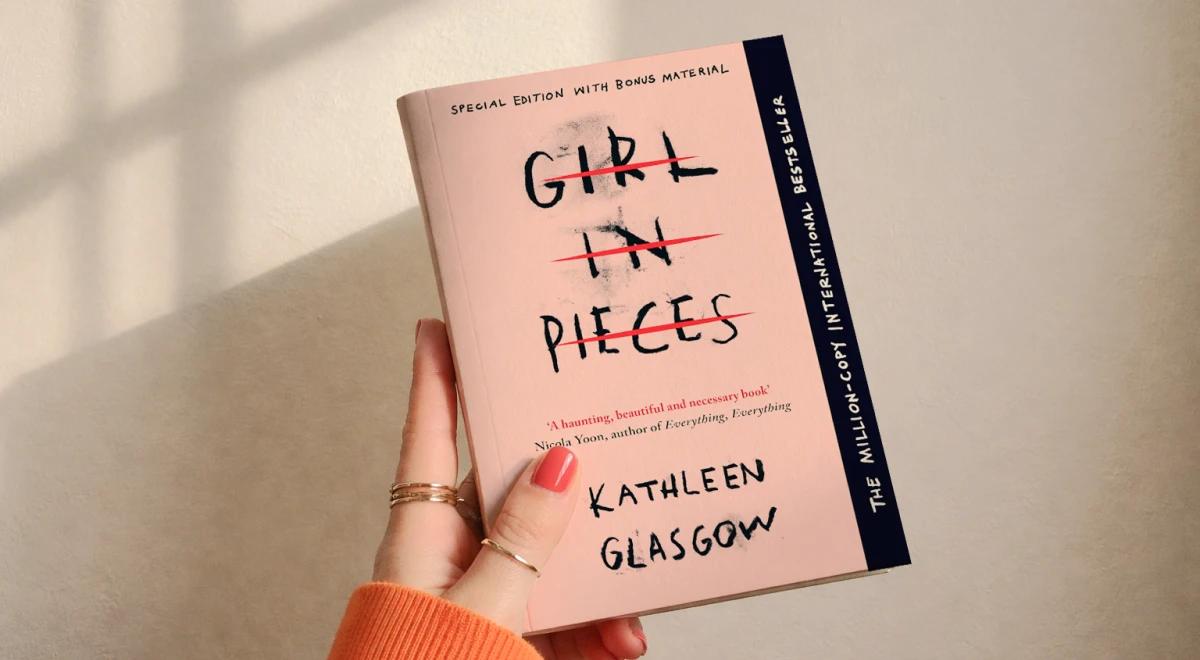
Research in England found that about 1 in 5 young adults aged 18–24 met criteria for "severe distress" by the end of 2022. For many of them, finding stories that truly understand their pain becomes more than comfort — it becomes a lifeline.
Kathleen Glasgow's 'Girl in Pieces' is one of those rare contemporary YA novels that stays with readers long after the last page, offering a raw, intimate portrait of trauma, self-harm, and the messy, nonlinear journey toward healing.
If you're searching for a 'Girl in Pieces' summary, this article gives you everything you need — a comprehensive book review with a full spoiler-filled breakdown, key themes, character analysis, lessons you can apply to your own growth, and guidance on whether this emotionally intense novel belongs on your reading list.
📘 And if you want to explore more powerful stories about resilience and mental health, the Headway app offers 15-minute summaries of similar transformative books that fit into your busy life.

Quick 'Girl in Pieces' summary
Here's what you'll find in this guide:
Complete plot breakdown: Charlie Davis's path from suicide attempt through treatment, toxic relationships, and ultimately toward recovery
Character analysis: A closer look into who Charlie, Riley, Mikey, and Blue are, and how each shapes the protagonist's healing
Key themes and real-life lessons: Trauma recovery, the power of art, building support systems, and recognizing your own resilience
Reader guidance: Who should read this book, and whether it's right for your current emotional state
Author insights: Kathleen Glasgow's background and her other works exploring mental health in young adult fiction
What is 'Girl in Pieces' about? Understanding the story's core
'Girl in Pieces' follows seventeen-year-old Charlotte "Charlie" Davis as she struggles to recover from deep emotional trauma and years of self-harm. After a suicide attempt lands her in a treatment center, she's discharged early due to a lack of insurance and buys a bus ticket to Tucson, Arizona, hoping for a fresh start near her best friend, Mikey.
Self-harm is the deliberate injury to an individual's own body as a coping mechanism for emotional pain. It's often misunderstood but affects millions of young people struggling with trauma, mental illness, and overwhelming feelings they haven't learned healthier ways to process.
Written by Kathleen Glasgow and published in 2016, this New York Times bestseller blends unflinching realism with lyrical introspection. The novel offers a complex, honest portrayal of mental health issues, showing that recovery isn't a straight line. It's a series of small victories, devastating setbacks, and the courage to keep choosing yourself even when it feels impossible.
The story takes us through Charlie's fragile attempts to build a new life in Arizona, her complicated relationship with a self-destructive musician named Riley West, and her gradual rediscovery of art as a healing tool. It's a book that doesn't shy away from the darkness but ultimately leans toward hope.
📘 Build a resilient mindset with Headway.
The complete plot: Charlie's story from beginning to end
⚠️ Disclaimer: If you'd prefer to experience the story without knowing what happens, skip ahead to the themes section and return here after you've finished the book.
Here's how Charlie Davis's journey unfolds across the novel's three major parts:
Part one — Hospital and the Creeley Center: Where healing begins
The novel opens with Charlie waking up in a hospital, her body covered in fresh and old wounds from years of self-harm. After a suicide attempt, this seventeen-year-old girl is transferred to the Creeley Center, a treatment facility for girls dealing with similar struggles. For the first time in a long time, Charlie is surrounded by people who understand her pain without judgment.
Inside Creeley, Charlie forms tentative connections with other girls, especially Blue, who becomes a friend and constant companion. Her therapist, Casper, encourages her to speak, but Charlie's drawings remain her primary form of communication. Slowly, she begins to understand the layers of her trauma — an abusive mother, a father who died, life on the streets, and a violent assault that left her emotionally shattered.
Despite the progress she makes, Charlie's stay is cut short when her insurance runs out. She's discharged abruptly, feeling unprepared to face life outside the safe space Creeley had become. Her mother offers her a modest sum of money and sends her to Tucson, where her friend Mikey has left his apartment available while he's away on a music tour.
Part two — Tucson, new life, and relapse: The toxic relationship
Arriving in Arizona, Charlie finds a cheap room to rent and gets a job washing dishes at a local coffee shop. There she meets Riley West, a charismatic musician who becomes both a romantic interest and a destabilizing force in her fragile recovery.
Riley's charm masks his addictions and emotional volatility. Their relationship quickly becomes unhealthy, mirroring Charlie's own unstable state. Still a teenage girl searching for validation, she looks to him for worth, even as he pulls her into patterns that threaten everything she's trying to build. Meanwhile, Mikey reappears in Charlie's life, representing the contrast between destructive love and a genuine, healthy connection.
As Charlie gets more caught up in Riley's world of drug use and emotional chaos, she begins to relapse. The return of her friend Blue gives her the push she needs to recognize the toxicity. Still, when her relationship with Riley finally collides with reality, she's already at a breaking point. His friends destroy what little she owns, and despair pulls her back to self-harm.
Part three — Recovery, art, and moving forward: Choosing herself
After hitting rock bottom for what feels like the final time, Charlie begins to rebuild, this time with steadier people around her and a clearer understanding of what she needs. She reconnects with her art, using drawing not as an escape but as a way to process her experiences and work through her past traumas.
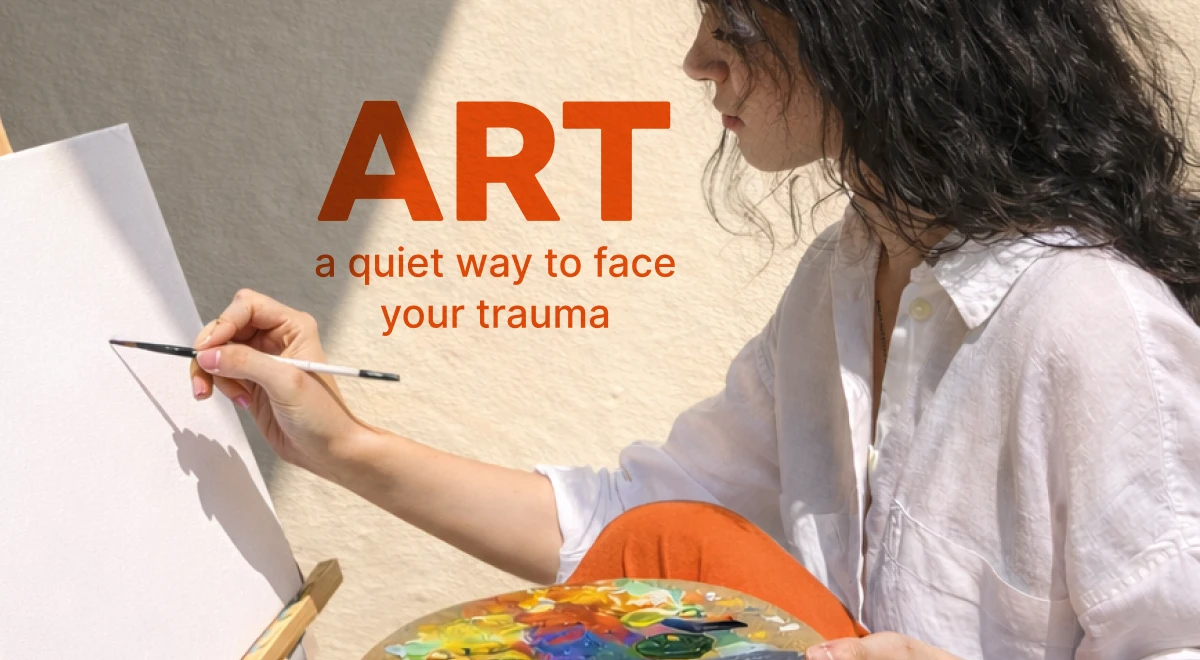
Coping mechanisms are strategies people use to manage stress and emotional pain. Healthy coping mechanisms (like art, exercise, or talking to trusted friends) help process difficult emotions, while unhealthy ones (like self-harm or substance abuse) provide temporary relief but cause long-term harm.
Charlie accepts her trauma and her scars, both visible and invisible, understanding that recovery is a series of conscious choices and small victories, not a single moment of transformation.
The novel ends with Charlie choosing herself, her safety, and her art over the destructive patterns that once defined her. The final chapters offer a realistic portrait of what it means to survive and slowly, imperfectly, rebuild a life worth living.
📘 Strengthen recovery mindset with Headway.
Meet the characters who shape Charlie's journey
Understanding the main characters helps you grasp the different forces pulling at Charlie throughout her recovery:
Charlie Davis: The seventeen-year-old protagonist whose story forms the novel's emotional core. Charlie's character is fragile yet determined to survive. Her growth is slow and painful as she learns to trust others, reconnect with her art, and rebuild a sense of identity beyond her trauma. Her internal voice captures the confusion and hurt of someone trying to piece herself back together.
Riley West: A talented but self-destructive musician who draws Charlie in with charm and brief moments of genuine connection. His addiction and emotional instability make him a painful presence in Charlie's life. Their relationship demonstrates how two wounded people can unintentionally harm each other while thinking they're offering comfort. Riley's presence forces Charlie to eventually confront the difference between intensity and actual healing.
Mikey: Charlie's best friend and one of the few people who cares for her without judgment. Having grown up in an unhealthy environment himself, Mikey understands struggle but has chosen a different path. He represents the possibility of starting over and building a stable life after hardship, and his role highlights the importance of genuine support in recovery.
Blue: Charlie's friend from the Creeley Center, known for her outspoken and brutally honest personality. Blue understands Charlie's pain because she carries her own scars, making their bond feel authentic and comforting. Blue goes through her own recovery process, and her presence underscores the shared struggles of young women in treatment and the value of connection with people who truly get it.
Linus: A co-worker at the coffee shop where Charlie finds her first sense of routine in Tucson. Linus becomes an anchor when Charlie's life starts crumbling again. She introduces Charlie to her family and shows her a glimpse of what healthy relationships and everyday stability could look like.
Together, these characters represent different paths in Charlie's journey, from those that pull her back into chaos to those who offer genuine support and a chance at something better.
Quiz: Which 'Girl in Pieces' character are you?
Discover which character from Kathleen Glasgow's powerful novel reflects your personality, coping style, and approach to life's challenges.
Key themes that make this book resonate with young adults
Several powerful themes make 'Girl in Pieces' a memorable and impactful read:
Trauma and healing: The nonlinear path
'Girl in Pieces' offers an honest portrayal of trauma and how deeply it affects identity and self-worth. The novel shows that healing doesn't happen in a straight line. Setbacks don't erase progress, and recovery is a daily choice. Learning to form the right relationships and differentiate them from harmful ones becomes a crucial part of Charlie's path toward mental wellness.
Art as self-expression: Finding your voice
Art becomes Charlie's lifeline and a way to process pain she can't put into words. Glasgow highlights creativity as a powerful tool for expressing emotions and releasing feelings that might otherwise cause internal damage. Whether it's drawing, writing, music, or another medium, the novel shows how creative expression can be therapeutic.
Community and support: You can't heal alone
The book emphasizes that recovery doesn't happen alone. Friends, mentors, and even imperfect support systems help Charlie move forward. The contrast between the Creeley Center community and Charlie's isolation in Tucson demonstrates how crucial connection is for mental health.
Resilience and identity: Rediscovering who you are
Charlie's journey is ultimately about rediscovering who she is beyond her trauma and past experiences. It's about her willingness to survive and fight for a healthier life, even when everything in her wants to give up. The novel celebrates resilience without romanticizing struggle.
The complexity of mental illness
Glasgow doesn't simplify mental health issues or offer easy answers. The book portrays mental illness as complex, influenced by past traumas, current circumstances, and the ongoing work of managing symptoms and triggers.
📘 Develop emotional resilience with Headway.


Real-life lessons you can apply to your own growth
'Girl in Pieces' offers inspiration and practical wisdom you can implement in your own life:
Recognize that progress isn't linear: Healing and personal growth rarely follow a straight line. Setbacks don't erase your progress or mean you're failing. Every time you choose healing, even after a relapse, you're still moving forward.
Use creativity to process emotions: Whether it's writing, drawing, music, dance, or any form of expression, these mediums can help you process difficult feelings and build self-awareness. You don't have to be "good" at it for it to help.
Build your support circle intentionally: Seek out people who uplift you and encourage your growth. Community is a powerful stabilizer, whether it's friends, family, support groups, or online communities. Quality matters more than quantity.
Reframe your narrative: You are more than your past and your trauma. Learning to accept your story without letting it define your entire identity helps you reclaim your present and move toward a healthier future.
Set realistic next steps: Big transformations start with small, manageable actions. Focus on the next right step instead of trying to fix everything at once. Recovery is built one choice at a time.
Differentiate healthy from toxic relationships: Recognizing the difference between people who genuinely support your healing and those who pull you back into destructive patterns is one of the most important skills Charlie develops across the novel.
Want to dive deeper into books about resilience, mental health, and personal growth? The Headway app offers quick summaries of transformative books that help you build these skills and understand yourself better — perfect for busy schedules and meaningful growth.
Is 'Girl in Pieces' right for you? An honest assessment
If you're wondering whether this book is the right choice for you right now, here's a clear breakdown.
Who is this book for?
Young adult readers, typically ages 17 and up, who appreciate emotionally intense contemporary fiction
Anyone interested in authentic mental health narratives that don't sugarcoat the struggle
Teachers, counselors, therapists, or book clubs looking for discussion-rich material
Readers who value character-driven stories about resilience and recovery
People who have experienced trauma or mental health challenges and want to feel less alone
Those who appreciate the therapeutic power of art and creativity
Important content warnings
Before diving in, you should know that 'Girl in Pieces' includes:
Detailed descriptions of self-harm
Suicide attempt and suicidal ideation
Drug use and addiction
Alcohol abuse
Toxic romantic relationships
References to sexual assault
Emotional and physical abuse
Homelessness
If you're currently struggling with these issues, discussing the book with a trusted friend, therapist, or educator can help you decide whether it's the right time to read it.
What makes this book powerful (The pros)
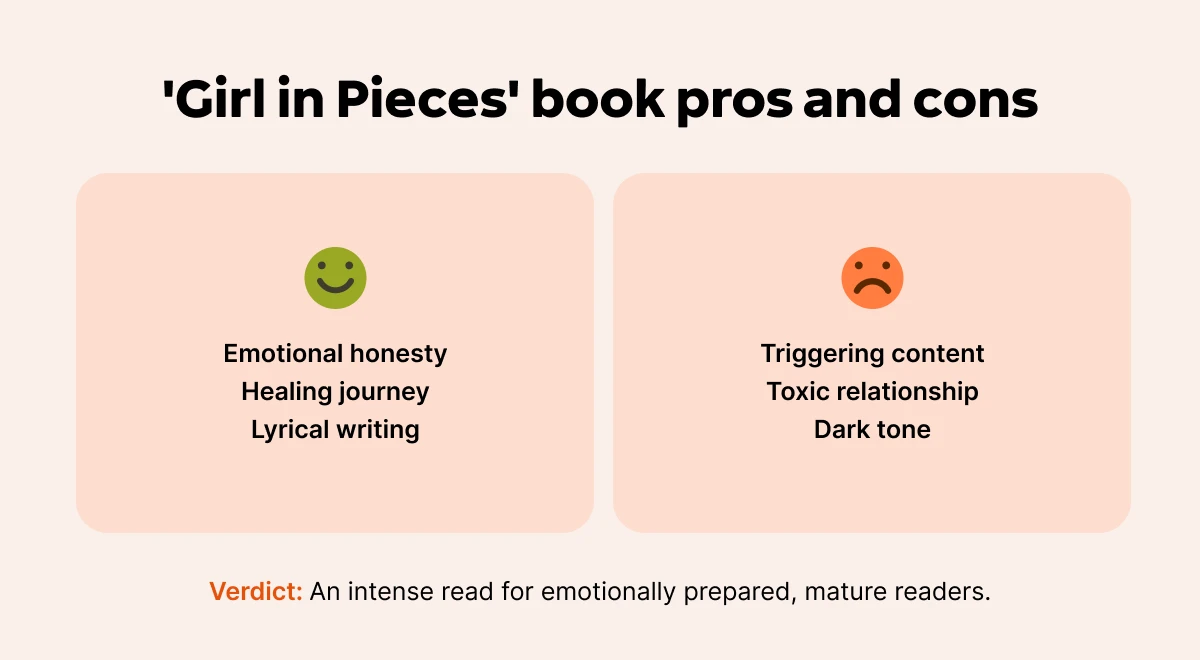
Raw emotional honesty: The novel portrays trauma and healing with brutal authenticity, offering a genuine look at mental health that resonates with readers tired of superficial representations.
Immersive, lyrical writing: Glasgow's prose is poetic yet accessible, pulling you into Charlie's inner world with vivid, emotional situations that feel real and immediate.
Complex, memorable characters: Every character feels layered and human, reflecting the messy, imperfect nature of real relationships and the different ways people cope with pain.
Powerful focus on healing: Despite the darkness, the story emphasizes strength and growth, showing the process of rebuilding one's identity in a way that feels meaningful and hopeful.
Rich discussion potential: Ideal for book clubs, classroom discussions, or therapeutic conversations, the novel invites space for nuanced dialogue about mental illness, recovery, and support systems.
What might be challenging (The cons)
Heavy triggering content: The detailed portrayals of self-harm, addiction, and trauma may be overwhelming for sensitive readers or those currently struggling with similar mental health issues.
Emotionally intense tone: This isn't light reading. The atmosphere is heavy and requires emotional readiness and the right mindset to engage with the material fully.
Painful relationship dynamics: Charlie and Riley's toxic relationship can be difficult to witness, especially for readers who've experienced similar unhealthy patterns.
Slow, introspective pacing: The narrative focuses heavily on internal struggle rather than plot-driven action, which may feel slow for readers who prefer fast-moving stories.
Limited closure: The ending offers hope but not a neat resolution, which may leave some readers wanting more definitive answers and complete emotional closure.
The verdict
'Girl in Pieces' is best suited for mature young adults and adult readers who are emotionally prepared for difficult content and seeking an authentic representation of mental health struggles. If you're in a fragile state yourself, consider waiting until you're in a more stable place or reading alongside a support system.
About Kathleen Glasgow: The author behind the story
Kathleen Glasgow is an American New York Times bestseller author known for her emotionally raw young adult fiction that fearlessly explores mental health. 'Girl in Pieces' was inspired in part by her own experiences and by stories of young people she encountered while working in community outreach programs.
Her writing blends poetic language with unfiltered honesty, making her a standout voice in contemporary YA fiction. Many readers discover Kathleen Glasgow through community spaces like Goodreads, where her novels consistently spark deep discussions among teens and young women navigating similar issues.
Glasgow has also written 'How to Make Friends with the Dark,' which explores grief and loss, and co-authored 'You'd Be Home Now,' continuing her exploration of addiction and family dynamics. Her work has resonated particularly strongly with young women seeking books that don't minimize their pain or offer false hope.
The audiobook version of 'Girl in Pieces' is also available for those who prefer listening, bringing even more emotional depth to Glasgow's already powerful prose.
Never get stuck picking your next book
With over 2K book summaries, you’ll always have a fresh pick at your fingertips!
Get startedExplore more transformative stories with Headway
If 'Girl in Pieces' resonates with you and you want to explore more books about resilience, mental health, personal growth, and overcoming adversity, the Headway app makes it easy. Get full, in-depth summaries and key insights from thousands of powerful books in just 15 minutes. It's perfect for busy schedules and meaningful self-development.
Whether you're looking for book lists focused on mental wellness, stories about young adults overcoming challenges, or practical guides for building emotional resilience, Headway helps you crush your reading and personal growth goals in a format that fits your lifestyle.
'Girl in Pieces' is a powerful and ultimately hopeful novel that presents the messy truth of healing. Its emotional depth and authentic portrayal of mental illness have left a lasting impact on readers since its first publication, and it continues to offer comfort and understanding to young people struggling with trauma, self-harm, and the difficult journey toward recovery.
📘 Turn healing into growth with Headway.
Frequently asked questions about the 'Girl in Pieces' summary
Is Girl in Pieces based on a true story?
No, 'Girl in Pieces' is a work of fiction, but Kathleen Glasgow drew inspiration from real experiences — both her own and stories shared with her during community outreach work with young people facing mental health challenges. The emotional authenticity comes from that foundation, even though Charlie Davis and the specific events are fictional.
What age group is 'Girl in Pieces' appropriate for?
The book is marketed as young adult fiction and is typically recommended for ages 14 and up. Due to heavy themes including self-harm, suicide attempts, drug use, and sexual assault, many educators and parents suggest it's better suited for mature teens or young adults aged 17 and older. Parental guidance or discussion with a trusted adult can help younger readers determine if they're ready.
Does 'Girl in Pieces' have a hopeful ending?
Yes. While the ending isn't tied up neatly with all problems resolved, it leans definitively toward healing and growth. Charlie makes the conscious choice to prioritize her recovery, her art, and her wellbeing. The conclusion is realistic about the ongoing nature of recovery, but hopeful about Charlie's future.
Is there romance in 'Girl in Pieces,' and is it healthy?
Yes, there's romance, but it's portrayed realistically rather than romantically. Charlie's relationship with Riley West is toxic and unhealthy, reflecting her emotional vulnerability and his own struggles with addiction. The book doesn't glamorize this relationship but shows it as part of Charlie's journey — a mistake she learns from. The contrast with Mikey's supportive friendship highlights the difference between destructive attachment and genuine care.
What genre is 'Girl in Pieces'?
'Girl in Pieces' is contemporary young adult fiction with strong psychological and emotional themes. It fits into the realistic YA category, with particular focus on mental health, trauma recovery, and coming-of-age through adversity.
How does 'Girl in Pieces' portray self-harm, and is it triggering?
The book portrays self-harm honestly and in detail, including descriptions of Charlie's wounds and the emotional states that lead to cutting. While Glasgow doesn't glorify self-harm, she also doesn't shy away from it. For readers currently struggling with self-harm or in early recovery, the detailed descriptions could be triggering. It's important to assess your current mental state before reading.
Are there other books similar to 'Girl in Pieces'?
Yes! If you connected with 'Girl in Pieces,' you might also appreciate Kathleen Glasgow's other works, like 'How to Make Friends with the Dark' and 'You'd Be Home Now.' Other similar books include 'All the Bright Places' by Jennifer Niven, 'Wintergirls' by Laurie Halse Anderson, 'The Perks of Being a Wallflower' by Stephen Chbosky, and 'Speak' by Laurie Halse Anderson. The Headway app offers summaries of many powerful books exploring similar themes of mental health, trauma, and resilience.