Self-growth
 Apps & Digital Tools
 Business & Career
 Success
 Growth Tools
 Psychology
 Communication
 Relationships
You’ll learn
- Why empowering each member leads to innovation
- How the right leadership boosts performance
- The secret to resilient and adaptive organizations
- How to align goals without micromanaging
first KEY POINT
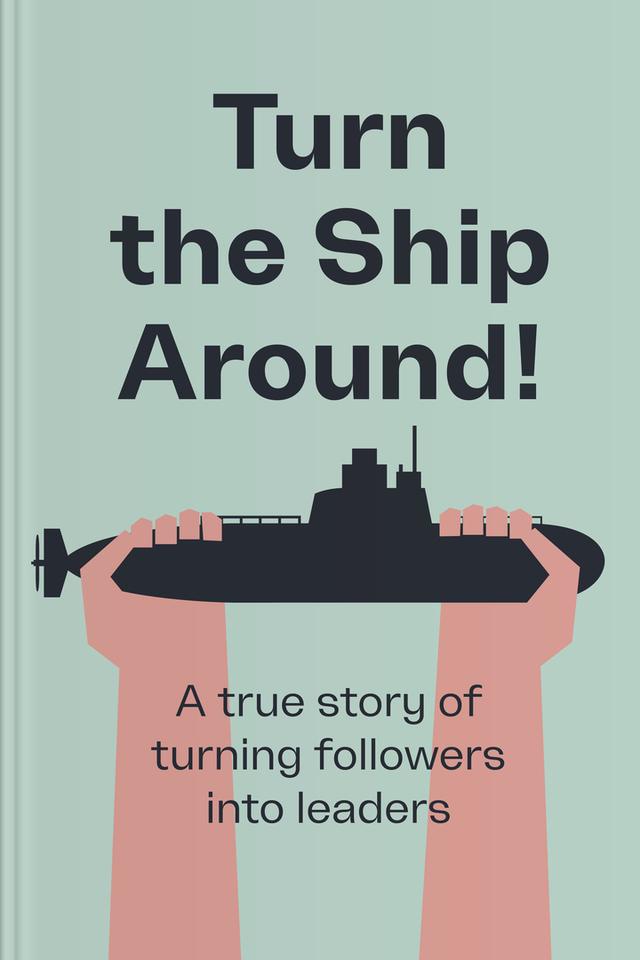
Every leader needs to understand the importance of using the right approach to achieve the desired results. Leadership is more than being in charge — it’s a role reserved for those willing to lead and learn. The three major things a leader is supposed to know are competence, control, and clarity. A leader must be competent enough to realize his role and also delegate responsibilities to other people. He must understand that he is in control and that to achieve clarity, he must create an atmosphere of trust and accountability.David Marquet’s experience aboard the USS Santa Fe shaped how he viewed leadership. With an approach that made every member accountable for their various departments, he was able to change the submarine status from the worst to the best in the fleet.As leaders, we must respect the importance of experience and adopt the will to be flexible. One of the most important characteristics of any leader is realizing when a plan is not working and the willingness to accept it when he’s wrong.We can all become great leaders in our various organizations; all we have to do is find the right approach and be willing to learn at all times.
second KEY POINT
The way to hierarchical achievement is to adopt a leader-leader approach. This approach puts you in charge without making the people under you feel inferior because you’ve given them the capacity to act as leaders in their respective spaces. Sometimes, your team needs you to identify the problems and tell them what to do, but the smartest choice in making a fulfilled, engaged workforce is to go for a totally extraordinary administration style: a leader-leader framework. This methodology shows that initiative isn’t an out of reach quality that a chosen few are brought into the world with. Or maybe, this methodology perceives that we are, for the most part, leaders, here and there. The distinction between this methodology and the leader-follower approach is the means by which our choices are made. As it’s typical with the leader-follower structure, all data is sent up the hierarchy of leadership, and a decision is made distinctly by the individual at the head of this chain.Interestingly, in a system of leader-leader framework, dynamic power is equally dispersed all through the levels of leadership. This permits people to follow up on recently developed data without having to take the matter up to the overall person in charge. For instance, in a situation where a pilot discovers that his submarine is off course and is in hazardously shallow water, he gets to make crucial decisions. Instead of alarming his leader, he takes decisive action and tackles this problem securely and successfully.However, it must be noted that this model isn’t entirely theoretical. As experienced by the author, the application of this model depends on how the leader executes it.During one of their underwater expenditures, the USS Santa Fe, an atomic controlled submarine with the US Naval Force, had a terrible showing. Despite passing a lot of checks, the submarine failed important ones, prompting a change in leadership. It likewise had the most exceedingly awful group consistency standard of all the other submarines in the fleet. This all changed when Marquet turned into its officer and established a leader-leader style of administration. He tried to take this sub from one of the most exceedingly awful vehicles in the fleet to truly outstanding. The submarine’s strategic viability developed from average and better-than-expected to incredible in assessments. The success of this approach prompted around 36 crew members to re-enroll, and the USS Santa Fe was granted the Arleigh Burke trophy for the most-improved boat in the armada simply because they changed authority and leadership style.
Continue reading with Headway app
Continue readingfirst KEY POINT
second KEY POINT
third KEY POINT
fourth KEY POINT
fifth KEY POINT
sixth KEY POINT
seventh KEY POINT
eighth KEY POINT
Related blog articles

Elevate the way you learn with Headway — the smart, streamlin...

Discover top apps that help you learn in just 10 minutes a da...

Curious about the Deepstash app? Find out if this app offers ...

The answer to the question "Is Blinkist worth it?" depends on...

Discover practical tips, expert insights, and book-powered to...