Self-growth
 Apps & Digital Tools
 Business & Career
 Success
 Growth Tools
 Psychology
 Communication
 Relationships

When you select a trip that appears to be perfect online but turns out to be challenging in practice or accept a position that offers advancement but leads to fatigue, you are facing unrealistic expectations.
We constantly build mental images of how a perfect relationship should feel or how a successful career should progress. A 2024 peer-reviewed study of married couples found that scrolling through other people's carefully curated relationships fuels social comparison and unrealistic expectations.
It serves as a sharp reminder that the flawless partnerships filling your feed are simply highlight reels, rather than actual, messy reality. In this article, you'll learn more about the definition of unrealistic expectations, the reasons behind the formation of impossible standards, and the most common scenarios where it occurs.
You will learn how to spot them in your own life and, more importantly, how to reset them so you can stop feeling disappointed by a reality that was never meant to be perfect.
📘 Stop holding yourself to impossible standards and get Headway to learn healthy boundary setting from experts.
*This article is based on research, and it is meant for informational purposes. But if burnout or disappointment feels like too much, turning to a mental health professional is always a good idea.
Set smarter standards in just 15 minutes
Get actionable ways to drop pressure and keep growing.
Start growing smarterQuick summary: What unrealistic expectations are
The quick version before the details.
Unrealistic expectations are standards for yourself or others that reality rarely meets.
They show up constantly in relationships, marriage, work, and personal self-image.
Common causes include perfectionism, social media comparison, and past experiences.
The usual result is deep disappointment, frustration, and highly strained relationships.
Setting realistic expectations protects your peace without lowering your actual standards.
What are unrealistic expectations? A simple definition
An unrealistic expectation is a rigid belief about how things should go that completely ignores real-world limits. It fails to account for basic human constraints like time, another person's autonomy, or natural imperfection.
On the flip side, realistic expectations leave plenty of room for effort, compromise, and the inevitable moments when things do not go to plan.
The core issue is not the expectation itself. Having standards is entirely healthy. The true problem is the massive gap between what you expect to happen and what is actually possible.
Realistic vs unrealistic expectations: Quick comparison table
| Area | Unrealistic expectation | Realistic expectation |
|---|---|---|
Relationships | "My partner should always know what I need without me saying it." | "I will communicate my needs clearly, and we will work through misunderstandings." |
Marriage | "A good marriage means we never argue or disagree." | "We will disagree sometimes and focus on repairing the connection afterward." |
Work | "If I work hard enough, I will never feel stressed or make mistakes." | "Effort helps tremendously, but setbacks and learning curves are perfectly normal." |
Self | "I should get it right the first time, every single time." | "I will improve with practice and treat my mistakes as helpful feedback." |
Where unrealistic expectations show up (with examples)
Impossible standards do not just stay in your head. They bleed into your daily routines and interact with the people around you.
1) In relationships and marriage
When it comes to romance, unrealistic expectations in relationships usually look like expecting your partner to read your mind.
You assume they should always know exactly why you are upset without you saying a single word. Some clear examples of unrealistic expectations in relationships include believing the intense honeymoon phase will last forever or expecting your partner to never have a bad day.
If you hold onto an unrealistic expectations relationship fantasy, resentment builds incredibly fast. The same rules apply to unrealistic expectations in marriage.
Expecting endless romance without putting in the boring, daily effort sets you up for failure. In fact, chronic dissatisfaction from these unmet demands is a major reason why people develop deep commitment issues.
They keep waiting for a flawless, unrealistic relationship expectations ideal that simply does not exist in the real world.
2) At work
Your career is another trap for bad standards. Unrealistic expectations at work often involve expecting constant praise from your boss or assuming you will get a promotion just for showing up and trying hard.
Other examples of unrealistic expectations at work include believing you should never make a mistake or feeling pressured to be available on email around the clock.
These unrealistic work expectations are a fast track to physical exhaustion. When you constantly try to meet unrealistic job expectations, you eventually hit a massive wall of burnout and heavy frustration.
3) From social media
Talking about the digital world is vital when it comes to expectations. Social media unrealistic expectations warp how we view our everyday lives. You see someone's edited vacation photos or perfectly clean house and suddenly feel like your own life is a disaster.
These are prime unrealistic expectations examples because you are actively comparing your behind-the-scenes reality to someone else's carefully produced highlight reel.
📘 Learn how to stop comparing your life to social media feeds by listening to expert summaries on Headway.
Why we set unrealistic expectations
Why do we do this to ourselves? For most of us, it starts with a genuine desire for things to be good. Setting high expectations is often driven by an intense fear of failure.
We create impossibly high standards because we think they will protect us from getting hurt or looking foolish. If we aim for absolute perfection, we falsely believe we can control the outcome and avoid any pain.
What unrealistic expectations do to us
Living with these impossible standards takes a massive toll on your mental health. The most common result is repeated disappointment when reality refuses to match the picture in your head. Over time, this gap creates chronic stress and severe emotional distress.
You start dealing with heavy self-doubt and loud self-criticism. Your inner voice constantly tells you that you are not good enough, leading to toxic self-judgment. If left completely unchecked, this endless cycle of falling short can even contribute to feelings of depression.
How to set realistic expectations without giving up on what you want
Fixing this issue does not mean giving up on what you want. Many people confuse setting healthy boundaries with lowering their expectations, but they are very different concepts. Here is how to adjust your approach:
Name the expectation out loud to see if it actually sounds reasonable.
Separate your personal hopes from absolute demands.
Communicate your needs directly instead of assuming others will guess them.
Leave plenty of room for human error and bad days.
This approach helps you build realistic goals that you can actually achieve without losing your peace of mind.



Practical tips from book summaries: From expectation to acceptance
Resetting how you view the world is a learned skill. If you want to practice better self-reflection and build a more balanced life, looking at expert frameworks helps.
With Headway book summaries, you can explore the core ideas from these popular titles in a few minutes each, then decide which full book is worth a deeper read.
1. Choose what's worth your energy
Based on 'The Subtle Art of Not Giving a F*ck' by Mark Manson
Tip: Much of our disappointment comes from expecting to feel good all the time. Reserve your energy for what truly matters.
Exercise: List three things you are frustrated about today. Cross out the ones you cannot control, and act only on what is left.
2. Trade the fixed ideal for a growth view
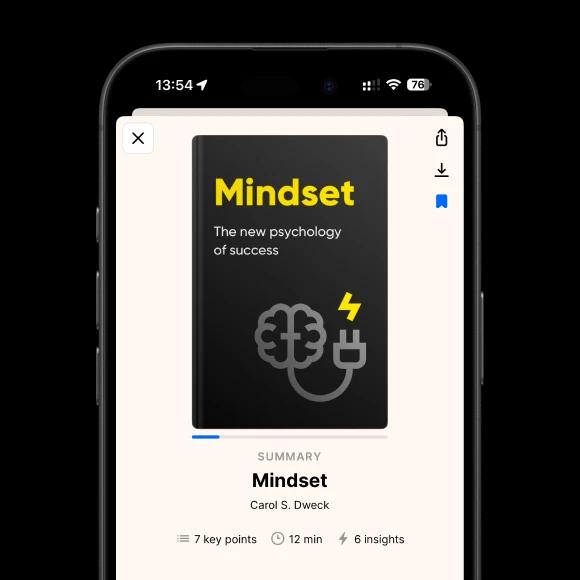
Based on 'Mindset' by Carol S. Dweck
Tip: A fixed mindset expects instant success and treats any setback as a total failure. A growth mindset expects a messy learning curve.
Exercise: Change your self-talk. Instead of saying "I should already be good at this," practice some self-compassion and say, "I am still learning how this works."
3. Expect progress to compound, not to happen overnight
Based on 'Atomic Habits' by James Clear
Tip: We tend to overestimate single big moments and demand instant results. True change actually comes from small actions repeated over time.
Exercise: Pick one goal where you want fast results. Identify the smallest daily action you could sustain for a month, and just start there.
4. Stop assuming and start asking
Based on 'The Four Agreements' by Don Miguel Ruiz
Tip: The rule to never make assumptions is the ultimate fix for bad relationship habits. Use empathy and ask direct questions instead of expecting people to read your mind.
Exercise: The next time you feel let down, ask yourself if you clearly voiced what you wanted, or if you just hoped they would figure it out on their own.
5. Let go of the imagined future
Based on 'The Power of Now' by Eckhart Tolle
Tip: Most of our stress lives in a fake, imagined future. Pulling your attention back to the present moment stops the cycle. Clinical methods like cognitive behavioral therapy (or CBT) also rely heavily on grounding yourself in what is true right now.
Exercise: When you catch yourself rehearsing how an event should go, pause and name one physical thing that is actually real in your current environment.
Swap the highlight reel for real growth with Headway!
Unrealistic standards are not an intrinsic fault that is difficult to overcome and can be replaced by methods such as mindset changes, which allow for a different experience in day-to-day living. It is possible to turn constant annoyance into acceptance and proper self-care using such an advanced tool as Headway.
Listen to brief summaries related to the topic of mindset, relationships, and self-awareness.
Choose between audio or text format for busier days.
Keep yourself organized and plan your day in order to develop calmer behavior patterns.
Explore interesting topics at first before buying an extensive book.
📘 Swap your unrealistic expectations for actionable self-growth when you try the Headway app today.
FAQs about unrealistic expectations
What are unrealistic expectations?
Unrealistic expectations refer to the strict belief regarding the conduct of people, happenings, and circumstances that have no basis in reality. These expectations do not allow for any failure. Since reality cannot meet the standards set by such distorted beliefs, a person is left feeling disappointed, frustrated, and stressed out all the time.
What are examples of unrealistic expectations in relationships?
The most common examples of this kind include the expectation that a partner will be able to read one's mind. There is a misconception that a relationship is defined by pure harmony without any disagreements whatsoever. Finally, expecting to maintain the same level of emotional intensity without any effort after the initial stage of a relationship is a common mistake that leads to mistrust.
What are unrealistic expectations at work?
Unrealistic work standards usually involve expecting a major promotion or a significant raise simply for showing up and trying hard. Believing you should never make a mistake on the job is a fast track to severe burnout. Feeling pressured to answer emails late at night or sacrificing your weekends for the company are also highly toxic examples.
How do I stop having unrealistic expectations?
Start by saying your expectations out loud to see if they actually sound reasonable. Separate your personal hopes from absolute, non-negotiable demands. Instead of quietly assuming people know what you want, communicate your needs clearly and directly. Leaving plenty of room for mistakes and bad days prevents you from feeling constantly frustrated by normal human behavior.
Does social media create unrealistic expectations?
Social media serves as a contributor to the expectations that cannot become a reality for a person, as the lives of others are continuously compared to one's own life. This creates an impression that everyone is enjoying perfect vacations, is in good shape, and has good relationships without any effort.