Self-growth
 Apps & Digital Tools
 Business & Career
 Success
 Growth Tools
 Psychology
 Communication
 Relationships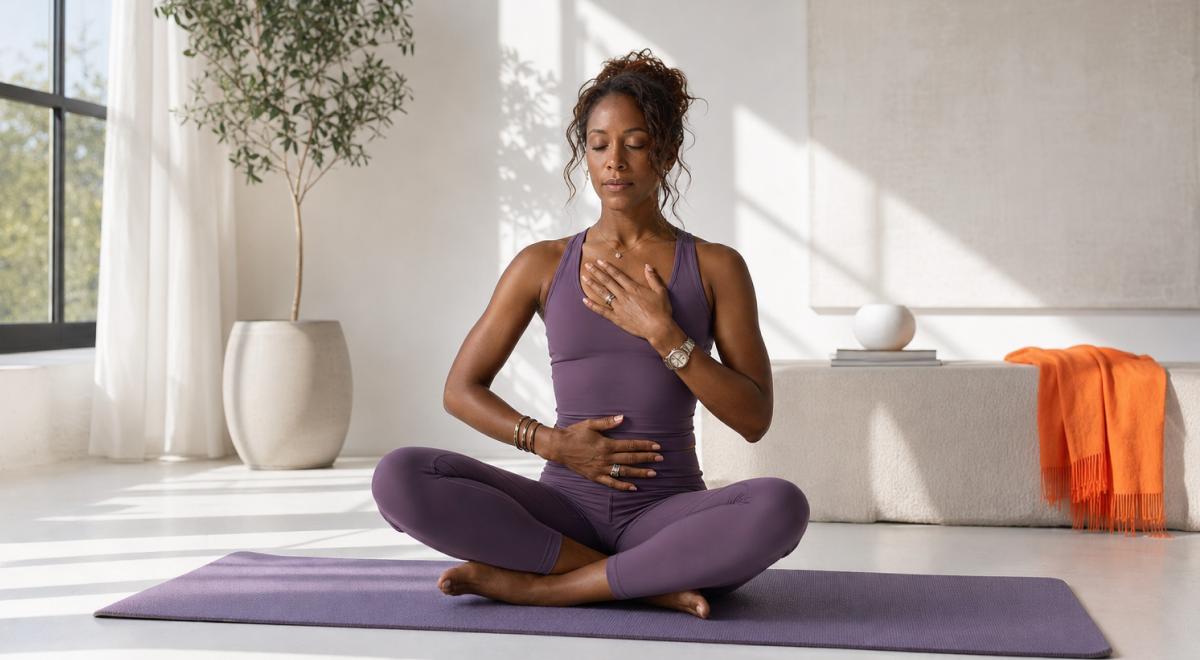

Stress and pain don't just live in your mind — they settle into your muscles, your breath, and your nervous system. If you've ever noticed your shoulders creeping up toward your ears during a hard week, or your chest tightening at a memory you thought you'd moved past, you already know this. Trauma release exercises offer a way back into your body, gently and on your own terms.
The science is clear: unresolved experiences can contribute to persistent patterns of muscle tension, autonomic activation, and bodily symptoms — and the path to healing often runs straight through the body. As a somatic practitioner who works with people's nervous systems daily, I see that somatic practices have become a cornerstone of modern trauma recovery.
This guide breaks down how trauma release exercises work, walks you through ten you can try today, and weaves in practical insights from five respected healing books available on Headway. Whether you're managing symptoms of anxiety, recovering from past experiences, or simply looking to build more resilience, this is your starting point.
Download Headway and access key insights from every book in this guide in minutes!
Disclaimer: The Headway app is not a medical or diagnostic tool but an educational platform.

Ease your body and mind in 15 minutes
Get key insights from top books on inner balance.
Read the insightsQuick summary
Here's what you'll learn:
Trauma release exercises help regulate the nervous system by working directly with the body rather than the thinking mind.
TRE® activates neurogenic tremors — the body's natural mechanism for discharging accumulated stress.
Benefits include reduced anxiety symptoms, improved sleep, reduced chronic tension, and greater emotional resilience.
A consistent daily routine produces better results than occasional intensive sessions.
Pairing somatic exercises with book insights from researchers and clinicians deepens the healing process.
A ready-to-use seven-day plan is included to help you build your practice from the ground up.
📘Want to master these concepts? Explore our curated book collection on Headway. Start your journey with Headway!
What are trauma release exercises?
Trauma release exercises are body-based practices designed to help your nervous system process and discharge accumulated stress. The term is most closely associated with TRE® (Tension and Trauma Releasing Exercises), a method developed by Dr. David Berceli that uses a sequence of movements to activate the body's natural neurogenic tremor response.
The core idea draws on how mammals instinctively recover from threat. After a frightening experience, animals will literally shake, trembling through residual stress until their nervous systems return to baseline.
Peter Levine, PhD, whose somatic experiencing framework helped bring this observation into clinical practice, called this the body's innate ability to "thaw" a frozen stress response. Humans have the same built-in capacity, but most of us have learned to suppress it.
Trauma release exercises give the body permission to do what it already knows how to do. If you're new to this territory, Headway's overview of childhood trauma offers helpful context on how early experiences shape the nervous system.
From a neuroscience perspective, when the brain experiences overwhelming stress, the threat-detection system can remain active long after the original event has passed. This leads to patterns of chronic tension, persistent anxiety, and somatic symptoms.
Somatic therapy approaches like TRE® work by interrupting that loop at the body level — a different entry point than traditional talk therapy, and a complementary one.
📘Interested in the science of healing? Get key takeaways from somatic experts. Explore Headway!
Exercises, targeted body areas, and benefits
Use this table to quickly identify which exercises are most relevant to your current needs:
| Exercise | Primary Body Area | Key Benefit |
|---|---|---|
TRE® (neurogenic tremors) | Hips, thighs, lower back | Activates natural stress-release mechanism |
Diaphragmatic breathing | Chest, abdomen, vagus nerve | Shifts the nervous system toward rest-and-digest |
Body scan meditation | Full body awareness | Rebuilds the mind-body connection |
Hip flexor stretches | Hip flexors, pelvis | Releases deeply held tension patterns |
Therapeutic shaking | Full body | Resets nervous system activation |
Rhythmic movement | Core, limbs | Regulates the nervous system through repetition |
Expressive movement | Full body, emotional body | Completes interrupted emotional movement arcs |
Somatic yoga poses | Spine, hips, shoulders | Integrates breath and body awareness |
Conscious movement meditation | Whole body, interoception | Builds felt-sense and present-moment contact |
Cool-down breathing | Respiratory system | Signals safety and integrates the session |
📘Want to personalize your practice? Find expert guidance in our app. Try Headway!
Top 10 trauma release exercises you can try
Below you'll find ten practices, ranging from structured techniques to gentle movement explorations. I recommend starting with whatever feels most accessible. Later, your body can set its own pace.
1. Release tension with TRE® exercises
TRE® is the original trauma release method developed by Dr. David Berceli and the most extensively researched approach in this space. A 2024 review published in the National Library of Medicine found that TRE® was associated with improvements in anxiety, depression, stress, and quality-of-life outcomes — making it one of the better-evidenced mind-body therapeutic approaches currently available for somatic healing.
The tremor mechanism at the heart of TRE® is rooted in polyvagal theory, which describes how the autonomic nervous system shifts among states of safety, mobilization, and shutdown. When the body activates neurogenic tremors, it's essentially completing a stress-response cycle that was interrupted — allowing the nervous system to return from a mobilized or defensive state toward one of calm and connection.
The technique involves a series of simple movements that fatigue the leg muscles just enough to trigger this involuntary tremor response. You lie on your back, bring your feet together with knees bent and open, and allow whatever shaking arises to move through you without forcing or suppressing it.
Sessions typically last fifteen to thirty minutes. If you have a history of complex trauma or post-traumatic stress disorder (PTSD), starting with a certified practitioner is recommended before practicing independently.
2. Activate diaphragmatic breathing
Many of us know: breathing is one of the fastest routes into your nervous system. If shallow chest-based breathing keeps the body in a low-grade state of stress, you ought to practice the opposite of it: diaphragmatic breathing. It signals the opposite: you are safe.
By breathing deeply into the belly, you activate the vagus nerve and help shift the body from sympathetic (fight-or-flight) toward parasympathetic dominance — a prerequisite for any meaningful somatic release.
Try this: place one hand on your chest and one on your belly. Inhale slowly through your nose for four counts, directing the breath so your belly rises while your chest stays relatively still.
Exhale through your mouth for six counts. Even five minutes of this can produce a noticeable shift in anxiety levels and general tension. The extended exhale is the key part — it's what most strongly activates the relaxation response.
3. Ground your body with a body scan
A body scan is a slow, deliberate practice of bringing attention to different parts of your body. Then, all you have to do is notice sensations without trying to change them. There is a reason why Bodyscan is so loved in mindfulness-based trauma therapy. It gently rebuilds the mind-body connection that overwhelming experiences tend to fracture.
Lie down comfortably and begin at your feet. Notice temperature, pressure, tingling, numbness — whatever is present. Move slowly upward through your legs, pelvis, abdomen, chest, arms, and head.
When you encounter areas of tightness or restriction, simply breathe into them. The goal isn't to fix anything; it's to make contact. This practice is especially useful as a starting point before more active trauma-release exercises.
4. Stretch hips to ease trauma-related tension
The hip flexors are among the first muscle groups to contract during a fear response. The psoas, in particular — running from the lower spine through the pelvis to the thigh — is closely associated with the body's protective curl in response to threat.
Chronic stress can leave it chronically shortened, contributing to lower back pain, restricted breathing, and a persistent sense of guardedness. Headway's article on childhood trauma in adults explores how early experiences can shape these long-term patterns of tension in the body.
A low lunge (anjaneyasana) is one of the most effective hip flexor releases available without equipment. Step one foot forward, lower the back knee to the ground, and sink the hips forward and down.
Hold for sixty to ninety seconds per side, breathing slowly and deeply. Some people notice emotion arising during this stretch — that's not unusual, and it may be a sign that the nervous system is beginning to settle and discharge accumulated activation.
5. Shake out stress with therapeutic shaking
Therapeutic shaking is one of the simplest trauma release exercises there is, and one of the most underestimated. Stand with feet hip-width apart and begin gently bouncing on your knees, letting movement travel up through your legs, hips, and torso.
Gradually allow your arms and shoulders to join in. Let the shaking be loose and uncontrolled rather than performed.
You'd be surprised, but even three to five minutes of this can produce warmth, tingling, or a clear sense of release. The thing is, the underlying mechanism is quite similar to TRE®: therapeutic shaking allows the body's natural tremor response to discharge the residual activation of the stress response.
It's particularly useful during periods of acute anxiety or after stressful events, when the body needs a physical outlet.
6. Move rhythmically to reset your nervous system
Rhythmic, repetitive movement is deeply regulating for the nervous system. Think of how soothing it felt while rocking, or how a long walk helped you settled an anxious mind.
Activities like walking, swimming, or simply swaying from side to side engage bilateral movement patterns similar to those used in EMDR therapy, and may offer some of the same regulating benefits.
A simple practice: stand or sit and begin rocking gently forward and backward, or side to side. Sync your breath with the movement. Do this for five to ten minutes while staying curious about what you notice in your body.
This works especially well as a low-intensity entry point when you're feeling overwhelmed, frozen, or too depleted for more active trauma release exercises.
7. Express emotions through movement
Sometimes the body needs to move in a way that has nothing to do with technique. Expressive movement invites emotion to drive physical expression — whether that's slow, heavy gestures or fast, forceful stamping. Put on music that matches what you're carrying and permit yourself to move without choreography.
This practice is rooted in dance-movement therapy and somatic experiencing. Many emotions — anger, grief, fear — have a natural movement arc that gets interrupted when we suppress them. Allowing that arc to complete through the body, rather than holding it in the mind, is one of the most direct forms of stress relief available without a therapist in the room.
8. Practice somatic yoga poses
Somatic yoga ia very different from athletic yoga. It focuses entirely on internal sensation rather than external alignment. Poses are held longer, breath is central, and the emphasis is on listening to your body rather than achieving a shape.
Particularly helpful trauma release poses include child's pose for the lower back and hips, legs-up-the-wall for nervous system regulation, and reclined butterfly for opening the hip flexors.
Hold each for 2 to 5 minutes, with an emphasis on slow exhales. If you find yourself holding your breath or gripping, that's a signal to back off slightly and return to the breath first.
9. Meditate with conscious movement
Conscious movement meditation — sometimes called somatic meditation — combines slow, deliberate movement with moment-to-moment awareness of sensation. Unlike still meditation, it meets people who struggle to sit quietly by giving the body a gentle task.
Begin standing. Slowly shift your weight from one foot to the other, noticing every micro-sensation — pressure through the sole, engagement in the ankle and calf, the subtle balance adjustments your body makes automatically.
I suggest that you move at a pace slow enough that your attention can keep up. Ten minutes of this kind of presence is powerfully grounding, particularly before sleep or after a stressful day.
10. Calm yourself with cool-down breathing
Every good trauma release practice ends with a return to regulation. Cool-down breathing signals to your nervous system that the work is complete and it's safe to rest. The 4-7-8 breathing technique works well here: inhale for four counts, hold for seven, exhale slowly for 8.
The extended hold and exhale help integrate the physical release you've just moved through. Three to five rounds are usually enough. Follow with two to three minutes of stillness — lying down with eyes closed, noticing whatever has shifted in your body. This step is often skipped, but it's where much of the actual processing happens.
📘Dive deeper into these techniques with summarized expert insights. Get started!
Book-based healing insights and practical exercises
These five books, all available as summaries on Headway, approach healing from different angles — but each one points back to the body as central to the recovery process. Here's what each offers, and one exercise you can apply directly.
Maté argues that much of what we call illness — physical and mental — is the body's adaptive response to a culture that consistently asks people to override their authentic experience.
His central insight is that chronic disconnection from the self, driven by early environments that punished genuine feeling, creates the conditions for both physical and psychological symptoms. Healing means returning to authenticity.
Apply it: After a body scan or TRE® session, spend five minutes journaling on the question: "What was I not allowed to feel growing up?" Write without editing. This integrates somatic release with the kind of honest self-inquiry Maté considers foundational to healing.
Yalom's guide to the therapeutic relationship offers something unexpectedly useful for self-directed healing: a deep respect for present-moment awareness.
He emphasizes the importance of staying with what's happening right now in your experience — raw sensation, immediate feeling — rather than retreating into narrative about the past or future. In somatic terms, this is exactly what makes trauma release exercises work.
Apply it: During your next rhythmic movement or conscious movement practice, keep your attention anchored to the here and now. When your mind drifts into a story about what you're feeling, gently return to raw sensation. Yalom's emphasis on present contact translates directly into more effective somatic practice.
Lyubomirsky's research-backed approach to well-being finds that roughly 40% of happiness is within our intentional control — shaped by our choices and consistent practices. She identifies physical activity, gratitude, and deliberate attention as among the most impactful levers available to us.
For someone building a trauma release routine, that's genuinely encouraging: consistency changes your baseline over time, and the body keeps the score in both directions.
Apply it: After each week of your seven-day trauma release plan, write down three specific things that felt different in your body or emotional experience. Lyubomirsky's research suggests that intentionally noticing positive change amplifies its effects — essentially training the brain to register healing as it happens.
Amen maps specific brain regions to emotional and behavioral patterns, showing how anxiety, panic attacks, impulsivity, and low mood often have identifiable physiological roots.
His most important contribution to trauma recovery is the evidence that the brain is changeable: lifestyle interventions, including physical movement and targeted breathing exercises, produce measurable shifts in brain function over time.
Apply it: Amen recommends diaphragmatic breathing as a direct intervention for an overactive limbic system — the brain's emotional processing center.
Practice the diaphragmatic breathing exercise from Step Two whenever you notice anxiety symptoms, ruminative thinking, or a sudden sense of dread. When done consistently, it supports the kind of nervous system change that Amen describes at the neurological level.
One of the subtler effects of unresolved stress is its impact on your thinking. When the nervous system remains in a state of chronic activation, attention narrows, threat perception increases, and the brain becomes more likely to seek out information that confirms its fears.
Dobelli's catalog of cognitive biases — confirmation bias, availability bias, catastrophizing — maps almost precisely onto what happens when a dysregulated nervous system takes the reins. Understanding these patterns creates just enough distance to make a different choice. Headway's article on how to deal with childhood trauma as an adult explores how these thought patterns develop and shift over time.
Apply it: After an expressive movement or therapeutic shaking session — when the nervous system is relatively settled — spend five minutes noticing what thoughts arise. Ask yourself: "Is this a fact, or is this an interpretation shaped by how my body has been holding stress?" Dobelli's framework turns you into a more discerning observer of your own mind, which becomes significantly easier once the body is out of fight-or-flight.
📘Apply these insights to your daily routine with Headway. Read more!



Quiz: Test your trauma-release knowledge
How much do you know about trauma release and the science behind it? Take this quick quiz.
📘Keep testing your knowledge with our learning tools. See more!
How trauma affects the body and nervous system
Understanding the physiology of trauma makes the case for body-based healing more than intuitive — it makes it obvious. Whether the threat is real or perceived, the hypothalamus triggers a cascade of stress hormones.
Heart rate spikes, muscles tighten, digestion slows, and activity in the prefrontal cortex — the one that makes you an intelligent and rational human being in other situations — may decrease, making clear thought significantly harder.
For most acute stressors, the body resolves this activation once the threat passes. But when stress is chronic, or the original event is overwhelming, the nervous system can become stuck in patterns of persistent activation.
This is the physiological foundation of post-traumatic stress disorder and many related conditions — and it's why talk therapy alone is sometimes not enough. Chronic pain, too, often has a nervous system component: when the body remains in a state of threat-readiness, pain signals can become amplified and self-reinforcing.
This is one reason trauma release exercises are increasingly used with first responders, veterans, and others who carry a heavy load of accumulated stress. The Headway article on what a trauma bonds also explores how these nervous system patterns show up in relationships.
| Body system | Response to unresolved stress | Outcome |
|---|---|---|
Nervous system | Stuck in sympathetic activation | Chronic anxiety, hypervigilance |
Musculoskeletal | Chronic muscle tension | Headaches, back pain, jaw clenching |
Digestive | Slowed or disrupted function | IBS, appetite changes |
Immune | Elevated inflammatory response | Increased illness susceptibility |
Respiratory | Shallow, restricted breathing | Reduced oxygen, panic attacks |
Hormonal | Elevated stress hormones over time | Fatigue, mood instability |
📘Understand your nervous system better with expert-backed guides. Discover Headway!
How to build your own trauma release routine
Consistency matters more than intensity. A short daily practice produces better results than occasional long sessions, because the nervous system learns through repetition. Start gently — ten to fifteen minutes is enough in the first week — and pay attention to any impulse to stop or rest. That impulse is information.
Safety guidance: Somatic practices can occasionally bring up strong emotion or unfamiliar physical sensations. This doesn't necessarily mean something is wrong — it may indicate you're becoming aware of experiences your body has been carrying.
If you experience dissociation, panic, or feel unsafe at any point, stop and return to grounding: feel your feet on the floor, look around the room, name five things you can see. If symptoms are severe or persistent, work with a qualified somatic therapist. Headway's article on trauma dumping is also worth reading for guidance on pacing emotional processing carefully.
📘Create a sustainable practice with personalized insights. Join Headway!
Your seven-day trauma release checklist
A ready-to-use plan to get you started. Each day builds gently on the last — rest when you need it, and don't skip the cool-down.
| Day | Exercise focus | Duration | Book tie-in |
|---|---|---|---|
One | Diaphragmatic breathing + body scan | 15 min | Amen — activate the parasympathetic response |
Two | Hip flexor stretches + cool-down breathing | 20 min | Maté — journal after: what did you feel? |
Three | Therapeutic shaking + rhythmic movement | 20 min | Yalom — stay present to raw sensation |
Four | Rest day: somatic yoga only | 15 min | Lyubomirsky — note three shifts you noticed |
Five | Full TRE® sequence | 25 min | Berceli — allow tremors without forcing or stopping |
Six | Expressive movement + conscious movement meditation | 25 min | Dobelli — observe thought patterns after settling |
Seven | Full sequence of your choice + cool-down breathing | 30 min | Review: What changed in your body this week? |
📘Ready to track your progress? Let us guide your growth. Start now!
Repeat the seven-day cycle, gradually increasing duration as your tolerance builds. Most people begin to notice meaningful shifts — better sleep, reduced reactivity, more capacity for difficult feelings — within two to four weeks of consistent practice. Healing process timelines vary, and that's normal.
Start your healing journey with Headway book summaries
"As you can see, there are many trauma release exercises available, each offering a unique way to reconnect with your body and nervous system. The body is part of the process, and working with it directly can be a valuable part of recovery.
Headway distills the most actionable insights from the top wellness and healing books into focused summaries you can absorb in fifteen minutes, and immediately apply to your own practice. You don't need to read hundreds of pages before you take a single step.
Explore these insights and exercises on the Headway app to start your healing journey today.
FAQs about trauma release exercises
Are trauma release exercises safe for me?
For most people, yes — trauma release exercises are gentle, self-directed, and can be paced entirely to your comfort level. That said, if you have a history of severe trauma, post-traumatic stress disorder, or are currently in a mental health crisis, it's wise to start with guidance from a qualified somatic therapist.
How long before I notice results?
Most clients I work with notice a shift after just one or two sessions. Change shows up in their body – as a sense of warmth, heaviness, or ease - so you should pay attention to that, not the actual language of a nervous system. More sustained changes in anxiety symptoms, sleep quality, and emotional resilience emerge later. After two to four weeks of consistent practice, usually. I'll never get tired of reminding people that the healing process is not linear, and individual timelines vary considerably.
Can TRE® help with anxiety?
Research backs what many people discover through experience: TRE® can meaningfully reduce anxiety. My favorite thing about it is that it does so by working with the body rather than around it. TRE speaks the language of your nervous system, where anxiety resides. There was a review published in the National Library of Medicine in 2024 that found real improvements in anxiety, depression, and overall quality of life in people who practiced regularly. That said, I see that in my clients it works best alongside other things — therapy, breathwork, movement — rather than as a standalone fix for anxiety disorder symptoms.
What if I feel emotional while doing these exercises?
Strong emotions can emerge during somatic practices — this doesn't necessarily mean something is wrong. It may indicate you're becoming aware of experiences your body has been carrying. Allow what arises without trying to direct or suppress it. If the intensity feels too high, return to grounding: slow your breath, feel the floor beneath you, open your eyes, and look around.
How often should I practice trauma release exercises?
I always tell my clients that daily practice — even just ten to fifteen minutes — can go a long way. The thing is, the nervous system learns through repetition, and consistency is what creates lasting change. Rest days are important, too: somatic yoga or cool-down breathing on recovery days helps keep the practice sustainable without overloading your system.
Can trauma release exercises be combined with other therapies or self-care routines?
Absolutely — and they often work best that way. Trauma release exercises pair well with talk therapy, EMDR, mindfulness-based stress reduction, and other somatic therapy approaches. They're also used as a complement to recovery programs for addiction, where unresolved stress and emotional dysregulation often underlie the patterns people are trying to change.