Self-growth
 Apps & Digital Tools
 Business & Career
 Success
 Growth Tools
 Psychology
 Communication
 Relationships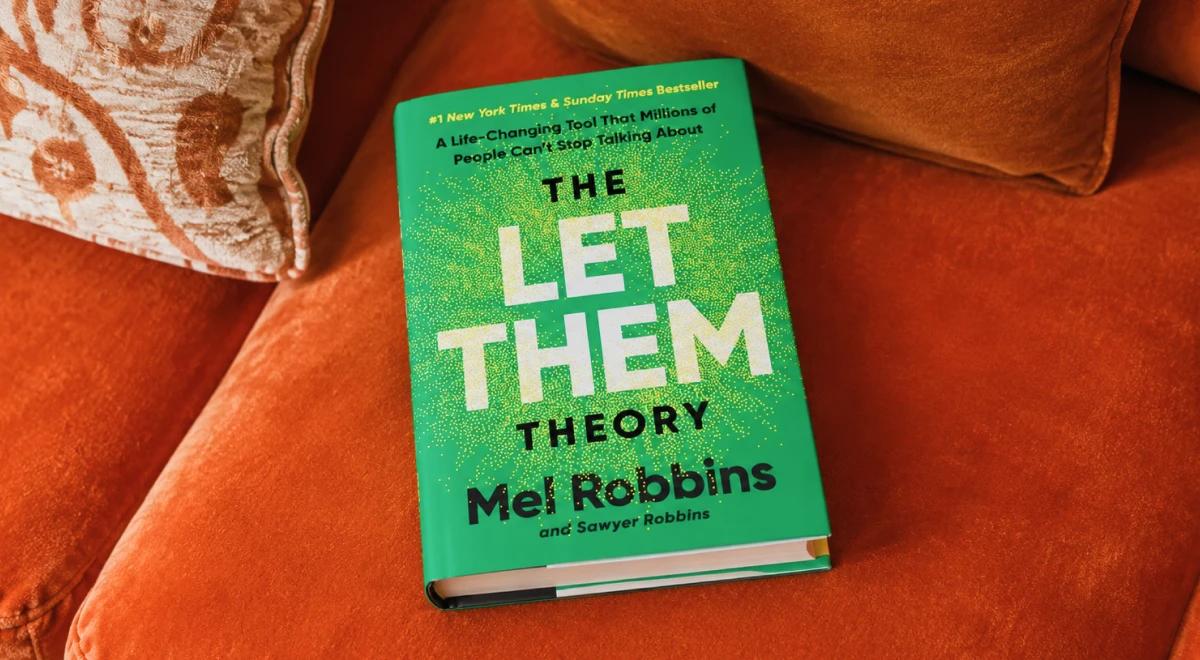

If you spend any time scrolling online, you have probably already encountered the core premise of 'The Let Them Theory' book.
What started as a viral social media clip turned into a cultural phenomenon, quickly becoming a #1 New York Times, Amazon, Audible, and Sunday Times bestseller, and famously earning the crown as the top-selling nonfiction book of 2025.
'The Let Them Theory' is a 2024 self-help book by Mel Robbins built around the idea of releasing control over other people's choices and reactions. Instead of wasting energy trying to dictate how your partner, friends, or coworkers behave, you simply "let them" be who they are.
By stopping the exhausting cycle of trying to manage everything around you, you finally get to focus on the one thing you can actually control: your own response.
📘 Want to deep dive into more topics like this? Get Headway and check out the summaries on psychology, focus, and self-help.
Quick answer: What is the book 'The Let Them Theory' about
If you are short on time and need to grasp the basics quickly, here is what the book covers.
The book centers entirely on a simple, two-part phrase: "Let Them" and "Let Me."
"Let Them" means releasing control over other people's choices, opinions, and reactions.
"Let Me" means taking full, radical responsibility for your own response and next move.
Robbins applies the idea across eight areas, including relationships, work, parenting, and self-worth.
It became the top-selling nonfiction book of 2025 after going viral on social media.

'The Let Them Theory' book at a glance
'The Let Them Theory' is a practical guide to dropping the emotional baggage of micromanagement and finding genuine peace in your daily life.
Feature | Detail |
Author | Mel Robbins |
Co-author | Sawyer Robbins |
Publisher | Hay House LLC |
Publication date | Late 2024 |
Genre | Personal development / Psychology |
Pages | 288 |
Notable format | Audiobook (Audible bestseller) |
Bestseller status | #1 New York Times bestseller, Sunday Times, Amazon bestseller |
*Note: If you are wondering how many chapters are in 'The Let Them Theory' book there are, the book is broken into eight distinct sections corresponding to different life areas, making it incredibly easy to digest over a few reading sessions.
Who is Mel Robbins, and why did this book take off the way it did
Mel Robbins is a former criminal defense attorney who successfully pivoted into becoming one of the most recognizable voices in the self-help space.
She is the host of The Mel Robbins Podcast and the author of massive hits like 'The 5 Second Rule' and 'The High 5 Habit'. Interestingly, 'The Let Them Theory' book cover, Mel Robbins shares with a surprising co-author: her son, Sawyer Robbins, who helped shape the generational appeal of the advice.
The concept took off primarily because people are exhausted. We are living through an epidemic of burnout, and Robbins offered a free, immediate mindset shift that didn't require waking up at 5:00 am or buying an expensive planner.
📘 Need a break from trying to manage everyone else? Try the Headway app to discover bite-sized nonfiction summaries that help you focus entirely on your own personal growth.
The core idea: What "Let Them" and "Let Me" mean
The entire framework of 'The Let Them Theory' by Mel Robbins book hinges on two tiny phrases. "Let Them" means actively choosing not to fight to control what other people think, feel, or do. If your friends want to go out without you, let them.
If your coworker wants to complain endlessly instead of fixing a problem, let them. The necessary second half of the equation is "Let Me." This means redirecting all that frantic, micromanaging energy toward your own choices.
Robbins frequently uses a brilliant seesaw metaphor. When you are on a seesaw, you cannot control the person on the other end, no matter how hard you bounce. You can only control whether you stay on the ride or get off.
This realization forces a massive behavior change, allowing you to stop letting everything affect you and step off the emotional seesaw entirely.
The psychology and neuroscience behind the theory
Robbins doesn't just rely on folksy wisdom; she anchors her claims in solid psychology and neuroscience. Our brains are hardwired to seek safety through control. When things feel unpredictable, we often try to micromanage the people around us to soothe our own anxiety.
However, this backfires horribly. A peer-reviewed study of over 800 university students found that an external locus of control — believing your life is driven by other people, chance, or fate rather than your own actions — was consistently tied to higher rates of anxiety, depression, and stress.
This is essentially the psychological trap Mel Robbins is describing when she says most of us waste our energy trying to control other people. Reclaiming an internal locus of control (the "Let Me" phase) actively lowers cortisol levels and boosts your overall well-being.

What critics and readers are saying about 'The Let Them Theory'
When a book reaches the top of the "best books of the year" lists, it inevitably draws a mix of intense praise and sharp critique. Fans of the book credit Robbins with saving their relationships.
Readers point out that the two-word mantra is incredibly sticky: it works perfectly in the heat of an argument when you don't have the mental capacity to remember a complex therapy technique.
Critics, however, argue that the book stretches a very simple concept across too many pages. Some reviewers feel that the theory is just a clever repackaging of established psychological concepts, like setting boundaries or practicing radical acceptance.
While this critique is fair, it somewhat misses the point. Robbins isn't claiming to have invented a new branch of psychology; she is simply making existing therapeutic concepts highly accessible for the average person struggling with daily self-doubt and relationship fatigue.
📘 Want to learn more about the science of behavior change? Grab the Headway app to read or listen to quick summaries on neuroscience and psychology that you can apply immediately.
'The Let Them Theory' vs. Other mindset and boundaries books
If you are comparing this title against other staples in the personal development space, here is how it stacks up.
Core concept | Best for | Format | Complexity |
'The Let Them Theory' (Mel Robbins) | Releasing control over others' actions | Chronic over-thinkers and people-pleasers | Conversational, practical |
'Boundaries' (Cloud & Townsend) | Structuring healthy limits with others | People dealing with toxic family or friends | Clinical, faith-based undertones |
'Atomic Habits' (James Clear) | Building systems to change your own behavior | Goal-oriented readers wanting daily routines | Analytical, structured |
If you have already read about how to build atomic habits and want something focused purely on interpersonal dynamics rather than personal productivity, Robbins' book is a natural next step.
The eight areas of life to which Robbins applies the theory
One of the reasons the book resonates so deeply is that Robbins shows you exactly how to apply the mantra across different facets of life.
Romantic relationships: Stop nagging your partner to load the dishwasher a specific way. Let them do it their way, or let yourself do it if you want it done differently.
Friendships: If a friend doesn't invite you to a dinner party, let them. Stop agonizing over the perceived slight and focus on friends who do show up.
Parenting: Allow your teenagers to make safe mistakes. Let them fail a minor assignment rather than doing their homework for them.
The workplace: Stop trying to micromanage your colleagues. If they want to do the bare minimum, let them. You focus on your own output.
Dating: If someone tells you they aren't ready for a commitment, let them. Do not treat them like a project to be fixed.
Family dynamics: You cannot control a highly critical in-law. Let them have their opinion, but let yourself set a firm boundary about visiting.
Dealing with strangers: If someone cuts you off in traffic, let them rush ahead. Engaging in road rage only ruins your own day.
Self-worth: Let people misunderstand you. Trying to constantly manage your reputation is exhausting and ultimately futile.
Learning to step back in these scenarios requires the kind of strategic discipline you might find in 'The Art of War' — picking your battles carefully to preserve your own energy.
'The Let Them Theory' book club questions to start the conversation
If you are reading this as a group, these questions will quickly get to the heart of the matter.
Which of the eight life areas do you struggle to apply the "Let Them" mindset to the most?
Robbins uses a seesaw metaphor to describe relationships. When was the last time you refused to get off a seesaw with someone?
How does trying to control other people secretly act as a way to avoid dealing with our own problems?
Discuss a time when you tried to micromanage a situation out of love. Did it work?
How does the "Let Me" half of the equation change the concept from passive acceptance to active boundary-setting?
Does the "Let Them" theory feel empowering to you, or does it feel like you are giving up?
In what ways do we lie to ourselves about how much control we actually have over our adult children or spouses?
How can you apply this theory in a toxic workplace without simply letting people walk all over you?
Robbins co-wrote this book with her son, Sawyer. How do you think generational differences impact our need for control?
If you truly adopted this mindset today, what is the first thing you would stop worrying about?
Is 'The Let Them Theory' worth reading in 2026?
If you are a chronic people-pleaser, a burned-out manager, or someone who constantly over-functions in your relationships, this book is absolutely worth your time. Its biggest strength lies in its profound accessibility.
The subtitle 'The Let Them Theory: A Life-Changing Tool That Millions of People Can't Stop Talking About' is accurate because the tool is just so easy to remember.
However, you should temper your expectations if you are looking for deep, clinical psychology. It simplifies complex relationship dynamics in a way that might not apply to cases of severe emotional abuse or trauma.
But for everyday annoyances, workplace drama, and standard relationship friction, it acts as a brilliant, immediate pressure release valve. It forces you to stop pretending that you can fix everyone else, recognizing that the first lie wins when we deceive ourselves about our own influence over others.
📘 Ready to dive deeper into the mechanics of boundary-setting? Download the Headway app to access actionable summaries on emotional intelligence and mental health.

If The Let Them Theory's ideas stuck with you, here's where to go next
This book opens the door to much deeper conversations about control, confidence, and our relationship with the world.
While Headway's library is strictly nonfiction and does not currently feature the exact summary for 'The Let Them Theory', the app is packed with the foundational books that explore these same psychological concepts in greater detail.
If you want the practical mechanics of how to say no after you "let them" do what they want, 'Boundaries' by Henry Cloud and John Townsend is essential reading.
If you want to build the confidence to stop caring about other people's opinions, 'You Are a Badass' by Jen Sincero is a phenomenal companion.
To explore the vulnerability underneath the "Let Me" mindset, 'Daring Greatly' and 'The Gifts of Imperfection' by Brené Brown are absolute classics.
And if you want the deepest philosophical root of choosing your own response regardless of what others do, 'Man's Search for Meaning' by Viktor E. Frankl is a masterpiece.
You don't have to carry the emotional baggage of your past or the weight of the life you bury when you constantly try to manage others.
Even public figures like Malala Yousafzai have spoken at length about the power of focusing on your own mission rather than seeking universal approval.
Letting go of control doesn't have to mean facing the great alone; it means finally building relationships based on reality rather than manipulation.



Try the Headway app and learn more about boundary setting!
You do not need to commit to reading hundreds of full-length books to drastically improve your mindset. Headway provides bite-sized, 15-minute text and audio summaries of the best nonfiction books in the world, allowing you to go deeper into topics like boundaries, happiness, and motivation on your morning commute or during your lunch break.
📘 Start reclaiming your time and energy today by downloading the Headway app.
FAQs about the 'Let Them Theory' book
What is 'The Let Them Theory' book about?
It is a personal development book focused on reducing stress and burnout by teaching you how to stop micromanaging the people around you. It argues that by saying "let them" to other people's choices and "let me" to your own actions, you can reclaim your peace of mind and drastically improve your relationships.
Who wrote 'The Let Them Theory' book?
The book was written by Mel Robbins, a former lawyer, renowned podcaster, and bestselling author of 'The 5 Second Rule', alongside her son, Sawyer Robbins, who served as her co-author.
How many chapters are in 'The Let Them Theory' book?
The book is structured around eight main sections or chapters, each dedicated to a specific area of life where the theory can be applied, such as romantic relationships, parenting, the workplace, and personal self-worth.
Is 'The Let Them Theory' based on real psychology or neuroscience?
Yes. While the tone of the book is conversational and highly accessible, the core concept is deeply rooted in clinical psychology, specifically the research surrounding the "locus of control." Letting go of external factors and focusing on internal choices is a proven method for reducing anxiety and cortisol levels.
What are good discussion questions for 'The Let Them Theory' book club?
Great questions focus on personal application. You can ask your group to share a specific instance where trying to control someone else backfired, or discuss which of the eight life areas is the hardest for them to step back from and simply say, "Let them."
Is 'The Let Them Theory' worth reading if I've already read books on boundaries?
Yes, because it serves a slightly different purpose. While traditional boundary books are often clinical and focused on deep relational trauma or toxic environments, Robbins' book serves as a fast, highly memorable mental shortcut for everyday annoyances and minor conflicts.