Self-growth
 Apps & Digital Tools
 Business & Career
 Success
 Growth Tools
 Psychology
 Communication
 Relationships

Your eyes reached the end of the page, but did anything actually land?
You close the book, or maybe just finish a chapter, and realize almost none of it stayed with you. That's passive reading, and it costs more than it feels like it should.
In a well-known learning study by Karpicke and Roediger, people who actively tested themselves recalled about 80% of the material a week later. In comparison, those who simply reread it kept only 36%. That gap is the main difference between active and passive reading.
Passive reading is moving your eyes over words without engaging your mind. It feels effortless, which is exactly why it fools us.
This article gives you a plain definition, a clear active-vs-passive comparison, and simple ways to read actively without turning every book into homework. You'll pick up ideas from writers like Benedict Carey, Adam Grant, and James Clear along the way.
📘 If you'd rather practice with short, expert-backed summaries, you can get started with Headway.
Quick summary: Passive reading in a nutshell
Why passive reading doesn't work, and why active reading works? Here's a quick answer:
Passive reading means moving your eyes over text without engaging your mind.
It feels easy, but it leads to poor recall and shallow understanding.
Active reading, meaning questioning, annotating, and summarizing, keeps far more.
Active recall beats plain rereading for long-term memory.
You can switch on active reading with a few small habits.
Keep reading for the full breakdown, a comparison table, reading strategies, and book-backed tips you can try this week.
What is passive reading? A plain definition
Passive reading is taking in text without actively thinking about it: no questions, no connections, no checking that you actually understood. That's the short passive reading definition.
The fuller passive reading meaning is a mode where the words go in and slide right back out. Picture the difference between two readers:
A passive reader skims on autopilot, eyes gliding while the mind wanders.
An active reader works with the text, asking questions and marking what matters.
Reading passively isn't always a mistake, since it's perfectly fine for a beach novel. It only fails when the goal is to learn and remember, which is where the same habit that fuels endless scrolling can quietly drain your focus.
📘 Turn autopilot reading into real learning with Headway!
Active vs passive reading: The key differences
Here's a difference between active and passive reading.
Aspect | Passive reading | Active reading |
Mindset | Consuming words | Working with ideas |
Attention | Drifts easily | Focused and directed |
Questions | None | Constant (who, why, so what) |
Notes | Rarely any | Annotates, summarizes, and takes notes |
Recall later | Low | High |
Best for | Light reading, leisure | Learning, dense nonfiction |
Once you see active and passive reading side by side, the fix gets obvious. The active reader isn't smarter; they're simply doing more with the same page.
However you frame it, active reading vs passive reading or passive vs active reading, the winner is the same. Passive reading vs active reading really comes down to how much of your attention is devoted.
Why active reading wins: Active recall vs passive reading
Rereading feels productive. You glide over familiar lines, nod along, and walk away, sure you know the material. Then a week later, it's gone. That's the trap in the active recall vs passive reading effectiveness question, and the research is blunt about it.
Pulling an idea back out of memory, which is active recall, does the heavy lifting that rereading only pretends to do. Every time you retrieve a point without looking, you strengthen it.
The takeaway here is simple: the goal isn't to read more but to retrieve. That single shift does more for your reading comprehension than any amount of passive review.
How to become an active reader
If you want to stop just staring at pages and actually absorb what you read, try these simple habits:
Go in with questions: Ask yourself what you want to figure out before you even start, and keep asking as you read. It gives your brain a specific goal.
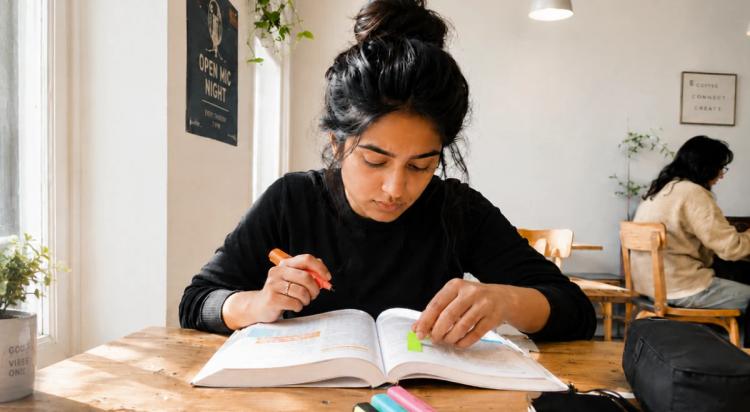
Go easy on the highlighter: Don't paint the whole page yellow. Only mark the exact sentences that truly matter.
Use your own words: When taking notes, write them down like you're explaining the topic to a friend. Avoid just copying what the author said.
Sum things up: Finished a section? Stop for a second and try to summarize what you just read to make sure you actually get it.
Test your memory: Look away from the book or screen and see if you can remember the main idea.
Honestly, those last two tips are the secret sauce. Putting things into your own words makes your brain do the heavy lifting, and testing your memory right away shows you exactly what you might have missed.
This kind of summarizing sections also sharpens your critical thinking skills, since you have to decide what actually mattered.
📘 Build active reading into your next chapter with Headway!
Adjust how you read the material
You don't need to slowly read every single page. Sometimes, it's actually better to read faster.
Try skimming first, then reading closer later. Just look over the headings and the start of each paragraph to get a general idea of the text. Then, slow down for the heavy parts where the main points are actually explained.
Reading speed should match the material. Fly through light articles, and drop into a slower gear for the sections that reward it. Skimming headings is an active choice when you do it on purpose.
The trouble isn't fast reading, it's drifting. If you want to move quickly without losing the thread, these skimming headings techniques help you adjust how you read to fit any text.
Five practical tips from book summaries
Active reading takes practice, and the right ideas make it easier to learn. Headway gives you the main takeaways from non-fiction books in short summaries.
This way, you can test out a new technique right away, and figure out later which full books are actually worth reading from cover to cover.
1. Test yourself instead of rereading
Based on 'How We Learn' by Benedict Carey.
Carey found that quizzing yourself and spacing out your study time work much better than just reading the same thing over and over. Forcing your brain to try to remember the information is what actually makes it stick.
2. Turn ideas into images you can recall
Based on 'Moonwalking with Einstein' by Joshua Foer.
Foer shows that memory improves when you make information vivid and visual instead of reading it flatly. Pick one key concept, attach it to a strange mental image, then recall that image an hour later.
3. Question the author as you read
Based on 'Think Again' by Adam Grant.
Grant's case for rethinking maps neatly onto active reading: challenge the author's claims rather than nodding along. In the margin of one section, write one or two guiding questions that push back on the point you just read.
4. Build one small active reading habit
Based on 'Atomic Habits' by James Clear.
Clear points out that doing something tiny every single day works way better than one giant burst of effort. Setting up a small routine makes active reading happen almost automatically.
Try linking a new habit to something you already do, like writing down a quick, one-sentence summary right after you finish your morning coffee.
5. Protect the attention active reading needs
Based on 'Indistractable' by Nir Eyal.
Eyal explains that ignoring distractions is actually a skill you can learn. If your mind is split between your book and your phone, you end up just passively staring at the words.
Try reading just one section with your notifications completely off and your phone in another room. You'll likely be surprised by how much more information actually sticks in your head.
📘 Put these book-backed tips to work with Headway!



Active reading habits for you to try
The trick is making active reading sustainable, not a chore you dread. Keep a running notes doc so your note-taking lives in one place. Review those notes once a week to bring the ideas back before they fade.
And match your effort to the material, going hard on dense nonfiction and easy on the light stuff, so you don't burn out. A simple loop keeps it repeatable: cue, read, summarize. Same trigger, same tiny payoff, every time.
Habits like these build the deeper engagement that separates an active reader from a passive one, and they work even better for anyone who finds focus tricky, as these active reading habits for busy or distractible minds show.
Why the Headway app works for active reading
Headway is built around the same moves this guide teaches, which makes it a handy place to practice them daily.
Audio and text summaries let you read or listen, so a session fits a commute, a walk, or a coffee break.
Personalized growth plans point you toward the right summaries based on your goals.
Spaced repetition cards and saved highlights bring key ideas back a day or two later, which is active recall in action.
Daily streaks give you gentle motivation to keep the habit going without pressure.
Offline mode downloads summaries for flights and dead zones, and CarPlay and Android Auto support keep you learning hands-free while you drive.
Together, those features turn questioning, summarizing, and spaced recall into a routine you can keep.

One insight a day. That's where it starts.
Headway delivers key ideas from the world's best books — in the time you already have.
Start todayMake reading part of your day with Headway!
Passive reading feels easy and leaves you empty-handed, while active reading asks for a little intention and pays you back with ideas you keep.
The whole shift comes down to questioning, summarizing, and pulling points back from memory instead of gliding over the page.
Reading is one of the smartest ways to train your brain, but time is short, and the shelf keeps growing. Headway helps by giving you the key points in 15-minute text or audio summaries and personalized recommendations.
Make it a habit of reading every day, even for a few minutes, and passive reading slowly loses its grip.
📘 Try the Headway app and turn spare minutes into knowledge that stays.
FAQs about passive reading
What is passive reading?
Passive reading can be explained as a process of absorbing the information from the text – you are reading the text, but your mind is not processing the information. You might actively scan the words, but do not ask any questions, nor make any connections, and you do not even try to verify whether you have understood the text.
What is the difference between active and passive reading?
The difference between the two lies in whether the reader is engaged in the reading process. While a passive reader reads passively, active reading means that the reader questions the information, summarizes, and makes notes. Thus, while a passive reader finishes a page and forgets it, active reading allows the reader to comprehend the information.
Is passive reading bad?
Not really. It is important to keep in mind that passive reading is good if you are consuming the information for leisure, but it becomes a problem when you need to learn something.
Why do I forget what I read?
Generally, the answer lies within passive reading and being distracted. When you read the text without keeping your mind focused on it, the information cannot reach the long-term memory. Active recall is a solution to the problem: take a short break, create a summary of the materials, and try to remember the key ideas without looking at the text.
Is skimming considered passive reading?
Not really. Skimming is passive only if you do it without any purpose. In case you skim through the headings and topic sentences, it will be an active process that helps you in reading the materials closely. The problem has never been speed; it's simply a matter of attention. Skimming, purposefully followed by active reading, is the best solution.
How do I stop reading passively?
You should start small. One piece of good advice before reading any text is to ask yourself a question and take short notes. After that, make a summary of it and recall the main point. These habits pull you out of passive reading fast, and they get easier the more you practice them each day.
Is active recall better than rereading?
Yes. Studies on retrieval practice indicate that self-testing locks memories in better than rereading, which results in fleeting recall. Rereading appears effective because the content is already known, but familiarity is not the same as memory. The process of "retrieving" information from the memory, although it causes discomfort, is what creates persistent memory in the long term.