Self-growth
 Apps & Digital Tools
 Business & Career
 Success
 Growth Tools
 Psychology
 Communication
 Relationships

Research on visual learning suggests that mapping ideas and studying actively can support comprehension and recall more than reading in one long, linear pass. LitCharts uses this exact concept to break down complex literary texts into visual, easily digestible charts. If you want to know what LitCharts is used for, it's an online educational database built to help students and ELA teachers analyze dense literature.
When literature feels dense, complex, and time-consuming, picking apart themes or historical context becomes a challenge. LitCharts was built by the original creators of SparkNotes to fix this exact issue with modern visual tools. In this objective LitCharts review, we look at how the platform works, its features, pricing plans, and whether it fits your daily reading goals.
LitCharts helps you analyze academic classics for school or teaching, but you might also want to apply key ideas from modern books to your everyday life. For readers who want to build a consistent daily learning routine, downloading Headway offers a quick way to turn key insights into practical personal growth.
Quick summary: LitCharts review at a glance
Here is a quick snapshot of what you need to know about the platform before reading the full analysis.
LitCharts provides over 3,400 study guides for literature, poetry, literary terms, and Shakespeare translations.
The platform features color-coded Theme Wheels and side-by-side text analysis for close reading.
LitCharts A+ costs $10.95 per month or $5.95 per month when billed annually.
Members can download printable PDF guides and use AI tools to generate custom study prompts.
LitCharts focuses on academic literature analysis rather than daily self-improvement or habit building.
Keep reading for the complete breakdown of features, pricing options, and user feedback.
What is LitCharts and how does it work?
LitCharts is an online literature study guide platform created by Ben and Justin, two Harvard graduates who were also the original editors of SparkNotes.
After building SparkNotes into a major web property, they realized traditional study guides still relied on long, uninterrupted blocks of text.
In 2008, they launched litcharts.com to modernize how people study literature by introducing visual charts and side-by-side explanations. (You may also see the name typed as 'litchart' or 'lithcarts' when searching — the correct spelling is LitCharts, with a capital C.)
If you are asking how does LitCharts work, the process is straightforward. Users search the library for a specific title, poem, author, or literary term.
Once you select a guide, you get immediate access to detailed plot overviews, character lists, symbol breakdowns, and chapter-by-chapter summaries. The platform organizes key information using color tags, making it simple to trace how specific themes develop across a book.
The platform serves millions of high school students, college undergraduates, and English language arts teachers every year. Anyone can access standard web summaries for free, but advanced features like PDF downloads and AI study generators require a paid subscription.
📘 That covers analyzing set texts — to turn non-fiction ideas into daily habits, try Headway.
LitCharts key features: Theme Wheels, quotes, and Shakescleare
The platform offers several visual and analytical tools designed to help readers analyze texts faster. Here is a breakdown of the core LitCharts features you will find on the site.
Side-by-side summary and analysis
Traditional study guides print several pages of summary followed by separate analysis paragraphs. LitCharts changes this setup by placing bulleted plot points directly next to thematic commentary. Each bullet point links to specific color tags, showing you exactly which themes appear in that moment of the story.
Visual Theme Wheels
If you ask what is the LitCharts Theme Wheel, it's an interactive visual wheel that maps out a book's themes on a single page. Each theme receives a distinct color and icon. Clicking on different sections of the wheel lets you see how themes overlap across specific chapters or acts.
Sortable quote database
Finding a specific quote for an essay or class presentation can take hours of flipping through pages. LitCharts includes a sortable quote database that allows you to filter quotes by chapter, character, and theme. You can quickly view every quote spoken by a character regarding a specific topic.
Shakescleare translations
Reading early modern English is a common barrier for readers. The Shakescleare section provides line-by-line modern English translations alongside original Shakespeare plays and sonnets. It covers major plays like 'Hamlet', 'Macbeth', and 'Romeo and Juliet' with side-by-side color mapping.
Ask LitCharts AI and teacher tools
The platform includes AI-powered tools that answer specific questions about literary texts. For educators asking does LitCharts have resources for teachers, the platform offers LitCharts for teachers, complete with printable classroom guides, essay prompt generators, quiz creators, and discussion questions.
Poetry and literary terms guides
Many users wonder does LitCharts cover poetry and Shakespeare alongside standard novels.
The platform includes over 1,000 poetry guides with line-by-line analysis, meter explanations, and rhyme scheme breakdowns. It also features a full dictionary of literary terms with color-coded examples.
📘 Love visual, skimmable learning? Headway condenses non-fiction into quick summaries.
LitCharts pricing: Free vs LitCharts A+ plans
Understanding LitCharts pricing helps you decide whether to stick with free online content or pay for a monthly plan.
Anyone can view basic chapter summaries and character lists on the website for free. However, downloading PDF guides, sorting quote databases, or using AI tools requires a paid subscription.
When looking at how much does LitCharts cost, the platform offers two main tiers: A+ for individual students and readers, and A+ Teacher for educators. Here is what LitCharts A+ includes across both subscription levels.
Note: All pricing details mentioned below are current as of July 2026 and are subject to change based on geographic region, seasonal offers, active promotions, and other factors.
| Feature | LitCharts Free | LitCharts A+ ($10.95/mo or $5.95/mo annual) | LitCharts A+ Teacher ($14.95/mo or $7.95/mo annual) |
|---|---|---|---|
Online Chapter Summaries | Yes | ||
Visual Theme Wheels | Limited | Yes | |
Sortable Quote Finder | No | Yes | |
Printable PDF Guides | No | Yes | |
Ask LitCharts AI | No | Unlimited | |
Teacher Editions | No | No | Yes |
Quiz & Essay Prompt Generators
| No | Yes | |
If you select an annual billing option, the LitCharts cost drops significantly compared to paying month-to-month. Subscriptions renew automatically, so you must manage your billing settings if you only need access during a specific school semester.
Note: This evaluation is current as of July 2026. Because features, pricing models, and app specifications can change over time, readers should consult LitCharts' official website or respective app store listings before making a final purchase decision.
📘 Prefer paying for practical daily growth over academic guides? Headway focuses on non-fiction you can use.
The main benefits of using LitCharts
LitCharts stands out from older study guide websites due to its visual layout and academic focus. Here are the main advantages of using the platform.
Clear side-by-side layout: Placing plot summaries next to analysis helps readers understand literary devices without jumping between pages.
High editorial standards: Readers often ask who writes LitCharts study guides. The content is written by vetted literary researchers, Harvard graduates, and literature experts rather than unverified online contributors.
Visual theme tracking: Color-coded tags and Theme Wheels make abstract literary concepts visual and simple to grasp.
Broad literary coverage: The library includes over 3,400 titles, covering classic novels, modern bestsellers, non-traditional classroom texts, and poetry.
Offline PDF downloads: Paid users can download printable PDF guides formatted like visual charts for quick test review.
For students preparing for AP English exams or teachers building lesson plans, these visual tools save time and clarify complex texts.
📘 LitCharts saves time on set texts — Headway turns spare minutes into non-fiction learning.
Drawbacks and limitations to consider before buying
While the platform excels at academic text analysis, there are a few drawbacks to consider before subscribing.
Strict academic focus: LitCharts is designed for school literature analysis. It does not provide practical self-growth frameworks or day-to-day personal-growth guidance.
Key tools behind a paywall: Downloading PDF guides, sorting quotes, and viewing full Theme Wheels require an active LitCharts A+ subscription.
No audio options: The platform relies entirely on written text. There are no built-in audio narrations for listening while walking or commuting.
Dense interface on mobile: Some users find the side-by-side analysis screens visually busy on smaller mobile screens.
Auto-renewing payments: Monthly and annual accounts renew automatically, which can lead to unexpected charges if you forget to cancel after your classes end.
If you want non-fiction summaries, audio formats, or daily self-improvement habits, an academic study site may feel too restrictive.
📘 Discover key insights from non-fiction bestsellers on Headway!

What users are saying: Real LitCharts user reviews
Feedback from students and educators across public review platforms shows praise for the visual layout, along with occasional critiques about paywalls.
Many high school and college students note that the color-coded theme tags saved their English grades during exam season.
Teachers frequently highlight the value of printable PDF charts for classroom handouts. Negative feedback usually comes from users who were surprised by the paywall when trying to download a PDF guide.
These are selected Trustpilot user comments reflecting general experiences:
"Daughter signed up for what she believed was a month but they took a whole year subscription. She contacted them and they did refund her the year which was way more than I’d expected after reading other reviews, so hopefully they honour this with other customers too. I think they should make the monthly rate clearer, but overall it could have been much worse." — J Poree in April 2026.
"Comprehensive and detailed." — Carmel Tobin in May 2025
"The website made it easy to get a book summarized quickly, it thoroughly helped me get exactly what i was looking for, and i was provided with an amazing experience. I would highly recommend using this website for summaries and other book-related things." — Gregory Hammonds on March 2025
"If I could give it a zero I would. No at all helpful. Other similar sites are much more helpful, not as expensive, and give you a heads up before charging. This company relies on its annual fee and language in the contract that says it automatically renews without notice. Who remembers a year out what subscripton is about to renew. I cancelled while the payment was still pending and they refused to issue a refund. Totally unethical! Stay away." — Sher G in October 2025
Note: Reviews reflect individual experiences and are not guaranteed outcomes. Results vary from person to person.
📘 If you want more than exam prep, Headway builds a daily learning routine.



Who should use LitCharts (and who should look elsewhere)
Deciding if LitCharts is worth it depends on your current reading goals and learning style.
LitCharts is a good fit for:
High school and college students studying for ELA exams, AP Literature tests, or essay assignments.
English teachers who need printable classroom resources, discussion prompts, and quiz generators.
Book club members looking for thematic analysis of classic or modern fiction.
Readers who prefer visual data charts and color-coded theme tracking over long text blocks.
LitCharts is not a good fit for:
Busy professionals looking for quick non-fiction book summaries to improve career skills.
Audio-first learners who want to listen to book summaries during daily commutes or workouts.
Individuals focused on practical habit-building, emotional intelligence, or leadership growth.
Readers who want a mobile-first app designed for daily microlearning streaks.
If you fall into the second group, pairing your reading with a daily growth app will better serve your personal goals.
Turn reading into a daily habit with the Headway app
LitCharts helps you analyze fictional classics for academic credit, but building a continuous learning routine requires a different set of tools.
If your primary goal is practical self-improvement, career growth, or habit building, non-fiction book summaries offer a more direct path.
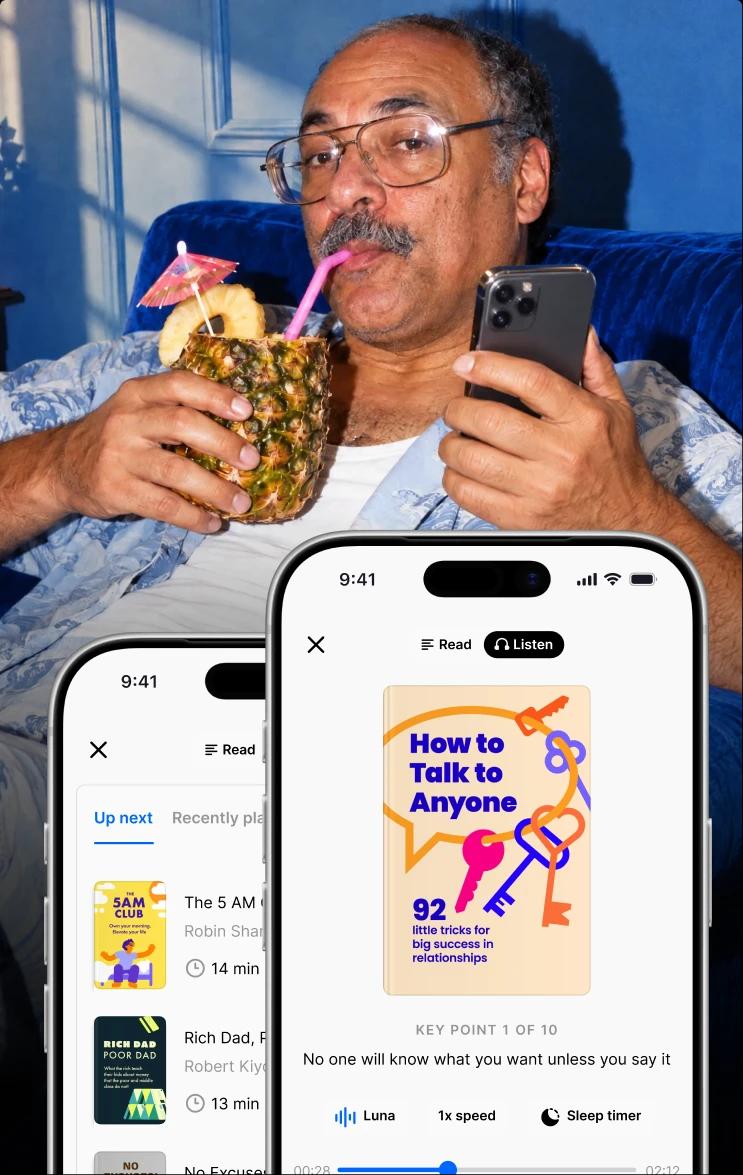
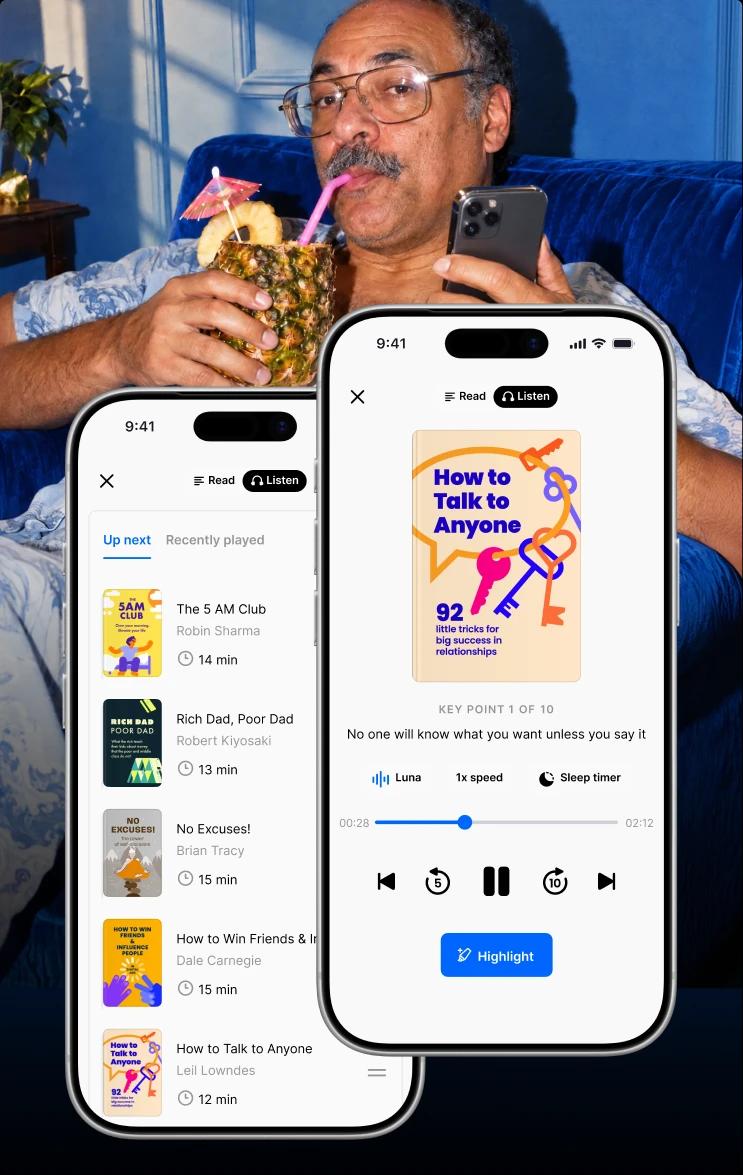
Instead of analyzing literary symbolism, the Headway app distills core insights from popular non-fiction bestsellers into 15-minute text and audio summaries.
You can listen while commuting, doing household chores, or exercising at the gym. If you are comparing platforms, reading an is Blinkist worth it guide or checking out a Shortform review can help you evaluate longer text formats. Reviewing an Imprint app review shows how visual cards stack up against other summary formats.
Why Headway works for daily learners:
Audio and text formats: Switch between reading on screen and listening on the go, including Apple CarPlay and Android Auto support.
Personalized growth plans: Complete a quick onboarding quiz to receive tailored daily recommendations matching your career and wellness goals.
Spaced repetition and highlights: Save key ideas as digital flashcards to ensure important insights stick in your long-term memory.
Daily streaks: Stay motivated with gentle gamification that makes spending 15 minutes on growth a rewarding daily habit.
Offline mode: Download audio summaries to keep learning during flights, travel, or areas without cellular signal.
If you are deciding between top learning tools, reading a Headway vs Blinkist comparison or an is Audible worth it breakdown will clarify which format fits your schedule. For a broader list of options, explore our guide to the best apps for self-improvement to build a complete learning toolkit.
📘 Download Headway today and turn 15 minutes of spare time into lifelong knowledge!

Real stories: How people fit daily learning into busy lives
Academic guides help you unpack a set text, but building a daily non-fiction habit looks different in practice.
Here's how six Headway users have folded 15–20 minutes of learning into full schedules — each story lives on our blog if you want the full version.
Software engineer and PhD researcher Enrique García Galán redirected the 20 minutes he used to spend scrolling each morning into book summaries, working through 58 of them over a year.
Fellow developer Ivan Karačić — who also trains for triathlons and parents three kids — built a 15-minute morning-walk habit and used summaries to decide which books were worth reading in full.
For professionals, the draw is often using small pockets of time with intention. Jessica Teitelbaum, a Revenue Operations Specialist, swapped her morning social-media scroll for a summary and a walk to start the day with focus.
Cost control manager Abdelrahman Mohamed Soliman uses a 20-minute early-morning session to absorb one idea a day, which he credits with helping him pause and think strategically instead of reacting under pressure.
Executive coach Deyvis Bebicaci does something similar before client sessions, pulling one or two principles from each summary to bring into his coaching.
And for committed readers, summaries can be a filter rather than a replacement. Leadership mentor Herbert S. Burt has used the app nearly every day for a year — missing only two days — sampling a wide range of books and buying the ones that resonate enough to read cover to cover.
📘 Find a routine that fits your day — start with Headway!
FAQs about LitCharts
Is LitCharts free to use?
Yes, basic online content on LitCharts is free to access. Anyone can read standard web summaries, character breakdowns, and plot overviews without paying. However, advanced features like downloading printable PDF guides, sorting quote databases, viewing complete visual Theme Wheels, and using AI study tools require a paid LitCharts A+ membership.
How much does LitCharts A+ cost per month?
LitCharts A+ costs $10.95 per month when billed on a monthly basis. If you choose an annual subscription, the cost drops to $5.95 per month, billed as a single annual charge of $71.40. The educator plan, LitCharts A+ Teacher, costs $14.95 monthly or $7.95 per month billed annually.
What is the difference between LitCharts and SparkNotes?
LitCharts was created by the original co-founders of SparkNotes to improve upon traditional study guide layouts. While SparkNotes uses long blocks of narrative text followed by separate analysis sections, LitCharts places bulleted plot summaries directly side-by-side with thematic commentary and visual color-coded tags for close reading.
Can you download LitCharts study guides as PDFs?
Yes, you can download LitCharts study guides as PDFs if you have an active LitCharts A+ or LitCharts A+ Teacher subscription. The PDF versions are formatted as visual charts that are easy to print or view offline, making them popular among students reviewing for exams and teachers creating classroom handouts.
Does LitCharts offer resources specifically for ELA teachers?
Yes, LitCharts offers an A+ Teacher subscription tier built specifically for English language arts educators. This tier includes teacher editions of literature guides, printable classroom resources, discussion question generators, essay prompt creators, and quiz question generators to streamline lesson preparation and test creation.
Who writes the study guides on LitCharts?
The study guides on LitCharts are written by a selective team of literary researchers, academics, and writers. Many contributors are graduates of top universities, including Harvard. The founders personally wrote the first series of guides to establish high standards for close reading, analysis, and thematic precision.
How does the LitCharts Theme Wheel work?
The LitCharts Theme Wheel is a visual data graphic that maps out a book's themes chapter by chapter. Each theme receives a distinct color and icon. Clicking on different wheel segments reveals how themes develop over time and where multiple themes intersect across key moments in the narrative.
Can I cancel my LitCharts A+ subscription at any time?
Yes, you can cancel your LitCharts A+ subscription at any time through your online account settings. Once canceled, your paid membership will remain active until the end of your current billing cycle, preventing future automatic renewals while allowing full access until the expiration date.