Self-growth
 Apps & Digital Tools
 Business & Career
 Success
 Growth Tools
 Psychology
 Communication
 Relationships


You come back from two weeks off feeling like yourself. By week two, the 7 p.m. emails are back, and so is the knot in your stomach. That's when burnout relapse prevention matters most. Research from Antwerp Management School found that about one in four people who return to work after burnout relapse, and roughly half of them fear it will happen.
Most advice covers how to recover. Very little covers how to stay recovered. This article is a practical plan for that second part, built on ideas from Emily and Amelia Nagoski, Alex Soojung-Kim Pang, Greg McKeown, W. Chris Winter, and BJ Fogg. Book summaries can also fill the evening hours you used to spend catching up on work.
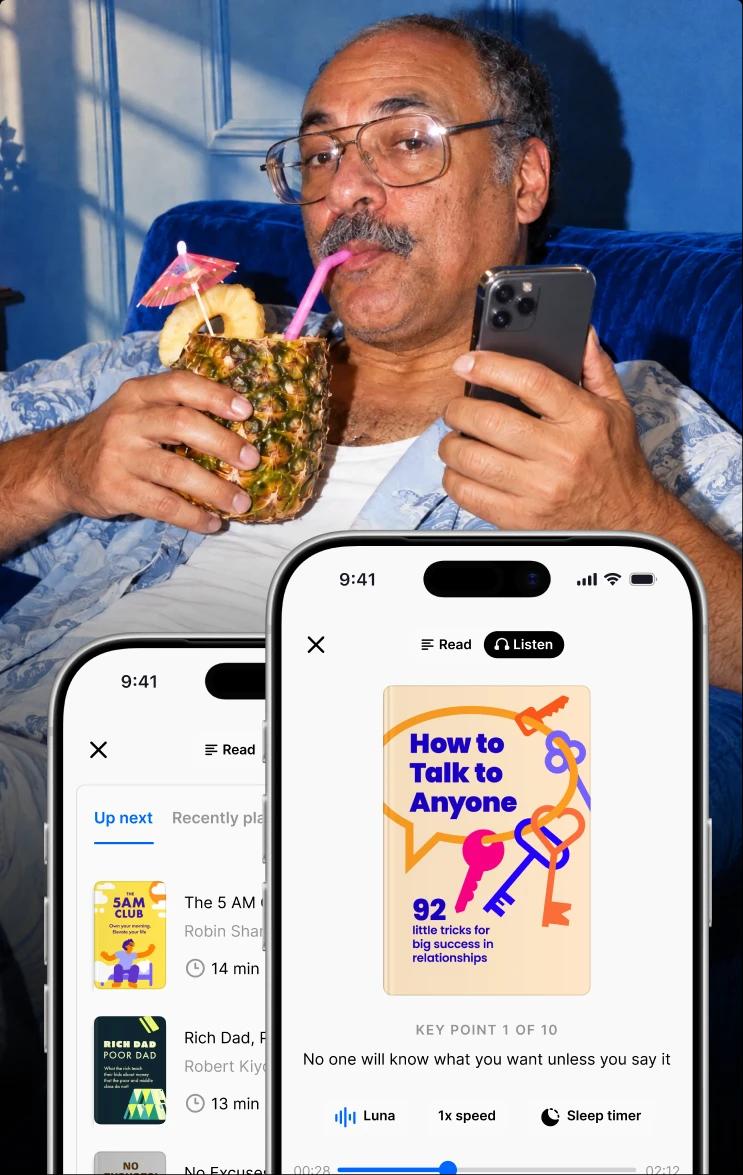
If you want to try that, download Headway and pick one summary from the list below to start with.
Disclaimer: If you notice symptoms of burnout, talk to a qualified specialist, such as a doctor or licensed therapist. This article is for education only, and results vary from person to person. Headway is not a diagnostic or medical tool. It's a microlearning and daily growth app.

Quick summary: Burnout relapse prevention in five moves
Here's the fast version first.
Burnout relapse prevention means addressing the conditions behind burnout while building coping skills.
Chronic fatigue, irritability, and sleep problems are the earliest warning signs.
Triggers can be internal or external, and a trigger journal shows your patterns.
Firm boundaries between work and personal time protect your energy.
A small daily routine and real downtime keep recovery going.
Keep reading for the full plan.
What is burnout relapse? How burnout comes back after you feel better
Burnout relapse is when burnout symptoms return after a period of recovery. It usually shows up the same way it did before: constant exhaustion, growing mental distance from your work, and the feeling that nothing you do makes a dent. It can happen weeks or months after you felt better.
The World Health Organization describes burnout as a syndrome tied to chronic workplace stress that hasn't been managed well. It lists three parts: energy depletion or exhaustion, mental distance from the job (or cynicism about it), and reduced efficacy at work. WHO classifies it as an occupational phenomenon and does not list it as a medical condition.
That definition covers work. If your stress comes from caregiving or school, similar patterns can still show up, and the steps below still apply. Burnout can affect your mental health and your physical health, and it can pass for plain tiredness or mental exhaustion.
So why does it come back? Look at what people return to: the same workload, the same habits, the same inbox. Unchecked stress can lead to burnout again. To manage burnout long term, you have to address the conditions that caused it, not just individual coping strategies. If you want to prevent burnout, the job itself has to change a little.
A relapse tells you the plan needs a tweak. It says nothing about your character.
📘 Get expert ideas on staying recovered with Headway!
Early warning signs that burnout is creeping back
Burnout relapse prevention gets easier when you catch the first signs, because spotting them costs far less than recovering from a full relapse. Chronic fatigue, irritability, and sleep disturbances are the three earliest warning signs of burnout.
Sleep deserves a closer look. In a meta-analysis of nurses, burnout and sleep problems correlated at 0.39. That's nurse data so it won't map neatly onto every job. Still, it's a good reason to treat a run of bad nights as a warning sign.
| Early warning sign | What it can look like | First small response |
|---|---|---|
Chronic fatigue | Waking up tired, needing extra caffeine to start | Protect one real break and move bedtime earlier |
Irritability | Snapping at a small request | Pause, name the feeling, note what set it off |
Sleep disturbances | Trouble falling asleep, work thoughts at 3 a.m. | Set a no-email hour before bed and a short wind-down |
Cynicism | "What's the point?" about tasks you used to like | Tell someone you trust and review your workload |
Sunday dread | Stomach knots about Monday | Plan one small thing to look forward to |
Here's how the first three look in real life. Fatigue is waking up tired after a full night, or needing a third coffee just to open your laptop. Irritability is snapping at a coworker over a small request, then replaying it in the shower. If you're struggling to fall asleep, it's often because you're rehearsing tomorrow's meeting at 3 a.m.
Cynicism and Sunday dread belong on the list too. Cynicism sounds like "What's the point?" about work you used to enjoy. Sunday dread is the stomach knot that shows up around 6 p.m. and stays until Monday afternoon. These emotional shifts are easy to miss, so start by noticing how your mornings feel.
One rough week can come from a deadline. A pattern that lasts two or three weeks, especially alongside high levels of stress, is the part to act on. If you're experiencing burnout signs, our guide on the symptoms of burnout covers the full picture, and signs of burnout at work shows what it looks like on a shift or in an office.
The table's right-hand column is small on purpose. A first response should take under five minutes, like moving bedtime up by 20 minutes or telling one person you trust how the week is going. Small moves are easier to repeat when you're tired, and tired is when you need them most.
1. Know your triggers: Internal vs. external burnout triggers
A burnout trigger is anything that pushes your stress up and drains your energy. Triggers can be internal or external factors. Anxiety and low self-esteem are common internal triggers. Specific people and places are common external triggers, like a manager who messages at 9 p.m. or a desk where you once worked 14-hour days.
| Trigger type | Examples | What to try |
|---|---|---|
Internal | Anxiety, low self-esteem, negative self-talk, negative emotions | Write the thought down, then ask what else could be true |
External | A manager who sends late messages, a noisy open-plan office, the home desk where you worked 14-hour days | Change the setting, set a reply window, or ask for a different arrangement |
Keeping a trigger journal is one of the simplest relapse prevention techniques, because it reveals patterns over time. One bad Tuesday looks random. Six bad Tuesdays that all start with the same meeting look like a trigger. The point is to become self-aware of those patterns.
Here's how to keep a trigger journal:
Note the time and place when your stress spikes.
Note who was involved, even if the answer is "nobody."
Rate your stress from 1 to 5.
Write down what you did next.
Review the journal once a week. You'll start to see which triggers push you toward behaviors like overworking or late-night email checks.
Awareness of triggers also helps you manage cravings. Here, cravings mean urges: to overwork, to check email one more time, or to reach for alcohol or other drugs to take the edge off. When you can name the trigger, you can pause before the urge takes over.
If substance use is part of how you cope, the specialist section below is the better next step. The same goes for trauma anxiety, which a licensed therapist can help you work through.
📘 Try a 15-minute summary on stress and triggers with Headway!
2. Work-life boundaries that hold: How to separate work from personal time
Strict boundaries between work and personal time are one of the strongest protections against burnout relapse. A review by Sonnentag and Fritz found that failing to detach from work psychologically predicts higher strain and burnout. Psychological detachment simply means your mind leaves work when you do.
"Set healthy boundaries" is easy to say and hard to do, so here are five you can copy:
A fixed shutdown time with a closing ritual, like writing tomorrow's top three tasks and closing every tab.
Notifications off after a set hour, such as 7 p.m.
One "no" per week to a request that doesn't need you.
A separate work profile on your phone, so email lives behind an extra tap.
A reply window you share with your manager, like "I answer messages by 10 a.m. the next day."
That last one takes a short conversation. Try: "To keep my work sharp, I'm going to stop checking messages after 6. If something's urgent, call me." Clear rules give you a sense of control, and they're easier on a manager than a surprise sick week.
Protecting your personal time gives your body a real chance to recover. A balanced life doesn't need a perfect work-life split. It needs a clear edge. For more day-to-day ideas, see our guide on how to prevent burnout.
3. Real downtime vs. scrolling: How to recharge without productivity pressure
Genuine downtime means recharging without pressure to be productive. For burnout relapse prevention, the question is simple: does this rest actually restore you?
Rest that restores looks like a walk with no podcast, a hobby with no goal, cooking dinner, or spending time with friends. Rest that feels like more work looks like turning a hobby into a side hustle, optimizing every break, or doomscrolling until midnight.
The benefits show up when your mind is off the job too. A meta-analysis of 316 samples and 99,329 participants linked psychological detachment during time off with lower exhaustion. Try a quick test after any break: "Do I feel more or less tired after this?" If the answer is more, it wasn't rest.
Six downtime ideas with no productivity angle:
A 30-minute walk, phone in your pocket.
Cooking something you've never made, with no photo.
An evening with friends or family, no work talk.
Gentle exercise you enjoy, like swimming or a bike ride.
Ten minutes of meditation or slow breathing, to practice mindfulness without a score.
A self-care evening: a bath, a book, early bedtime.
Still early in your recovery? Our guide to burnout recovery stages shows where downtime fits.
📘 Test a screen-free evening with an audio summary on Headway!
4. Build a daily routine that supports recovery
A sustainable daily routine for burnout relapse prevention is made of manageable habits that support recovery. Start with three, one for each part of the day:
Morning: eat something real and get outside or take a short walk before you open email.
Workday: take one real break away from your screen, and stop at your shutdown time.
Evening: start a 30-minute wind-down with no work messages, so you get enough sleep.
Your body carries stress, so the basics matter. That means getting enough sleep, eating a balanced diet, moving regularly, and doing a short mindfulness practice. Your physical health and stress levels are connected. A 20-minute walk counts as exercise, and five minutes of slow breathing counts as meditation. Find a healthy way to wind down that you actually like.
Add a weekly 10-minute check-in. Rate your energy from 1 to 5, review your trigger journal, and adjust one thing. Pick a day and time, like Sunday at 5 p.m. Recovery is a process, so start with the smallest version of each habit. A five-minute walk takes little effort and beats a gym plan you'll drop by Thursday.
5. Change the conditions behind burnout: Workload, support, and who's in your corner
Burnout relapse prevention must address the conditions that caused burnout in the first place. Coping skills help. But if the workload, role, or culture stays the same, your risk stays high. Burnout factors usually live in the job, so start there.
The Antwerp Management School research on returning to work points to four levers. They are adjustments to job tasks and working relationships, more resources like feedback and coaching, a coordinated plan with room for customization, and more awareness on the work floor.
In practice, that means a direct conversation about workload, redefining part of your role, asking for a phased return, and checking if it feels safe to speak up. Questions to bring to your manager:
Which of my tasks matter most this quarter, and which can wait?
Can we agree on reply times for messages after hours?
Can I hand off or pause one recurring task for 30 days?
What would a phased workload look like for the next month?
Who can I go to if my workload spikes again?
Your support network matters just as much. That can include friends, family members, support groups, and a therapist. Family therapy is also an option if home strain is part of the picture. To combat burnout, you need people who notice early when you're slipping. Want to see how burnout builds? The 12 stages of burnout map it out.
📘 Start with one summary on workload and boundaries on Headway!
Five practical tips you can test this week
If you can't fit five full books on stress, rest, and habits into your month, summaries help. Headway book summaries give you the main ideas in about 15 minutes, and they're a handy way to preview a book before deciding it deserves a full read. Here are five ideas for burnout relapse prevention, each with one exercise.
1. 'Burnout': finish the stress cycle before it piles up
Emily and Amelia Nagoski separate the stressor from the stress your body carries. Fixing the stressor doesn't clear the stress, so your body needs a way to finish the cycle. Movement, a long breath, laughter, and a hug all count. Exercise to try: after work, spend 10–20 minutes moving, calling a friend, or watching something funny before you open the laptop again.
2. 'Rest': treat rest as something you do on purpose
Alex Soojung-Kim Pang argues that rest is active and deliberate, and it works better when you schedule it like anything else that matters. Exercise to try: block one weekly rest window, such as a long walk, a hobby, or a nap. Keep your phone out of it.
3. 'Essentialism': say no more often to protect your energy
Greg McKeown's core idea is to choose fewer commitments on purpose. Fewer commitments mean fewer triggers. Exercise to try: run a 15-minute Friday audit. List your commitments and mark each one "keep," "reduce," or "drop."
4. 'The Sleep Solution': calm your sleep without making it a project
W. Chris Winter, M.D., a sleep specialist, points to steady habits and a calm attitude as better tools than fighting every bad night. Exercise to try: set a consistent wake-up time and add a 30-minute wind-down with no work messages.
5. 'Tiny Habits': build the routine from the smallest possible step
BJ Fogg, Ph.D., suggests anchoring a tiny habit to something you already do. Exercise to try: "After I close my laptop, I take three slow breaths." Practice that one sentence for a week before you add anything else.
Start with one of these ideas. Pick the one that matches your top trigger from the journal, run it for a week, and keep it if it helps. Then add the next one. Give each idea a full week before you judge it. An evening summary also gives your attention a calmer place to land than the inbox.
Your burnout relapse prevention checklist
Here's a one-page burnout relapse prevention checklist you can copy into your notes app. Save it, and revisit it during your weekly check-in.
[ ] I can name my top 3 triggers, internal and external.
[ ] I know my own early warning signs.
[ ] I have two quick coping moves for a rough day.
[ ] My work and personal time have clear edges.
[ ] I have one real downtime block in my week.
[ ] I have a daily routine with no more than 3 habits.
[ ] I have at least 3 people or contacts I can call.
[ ] I've booked a weekly 10-minute check-in with myself.
[ ] I know when I'd talk to a specialist.
Print it, or pin it where you'll see it on Monday morning. A checklist you can see beats one buried in a folder, and ticking boxes at your weekly check-in shows you what's holding and what's slipping.
When to talk to a specialist about burnout
If you have symptoms of burnout, consult a specialist. Headway is not a diagnostic tool.
Burnout relapse prevention works best alongside professional help when symptoms hang on. Consider reaching out if any of these sound familiar:
Your symptoms have lasted for weeks despite rest.
Daily life and work feel hard to manage.
You notice signs of depression or anxiety.
You rely on alcohol or other drugs to cope.
Your sleep, appetite, or mood has changed a lot.
Any of these may be a sign that you'd benefit from an assessment. A doctor, psychologist, or licensed therapist can look at what's going on and recommend treatment. Burnout is not a formal diagnosis, but it can overlap with anxiety disorders and depression, and only a professional can tell them apart.
For anyone in immediate distress, contact local emergency services or a crisis line right away. In the US, you can call or text 988. If cost is a worry, check what your insurance plan covers before you book.

Why Headway works as a daily habit after burnout
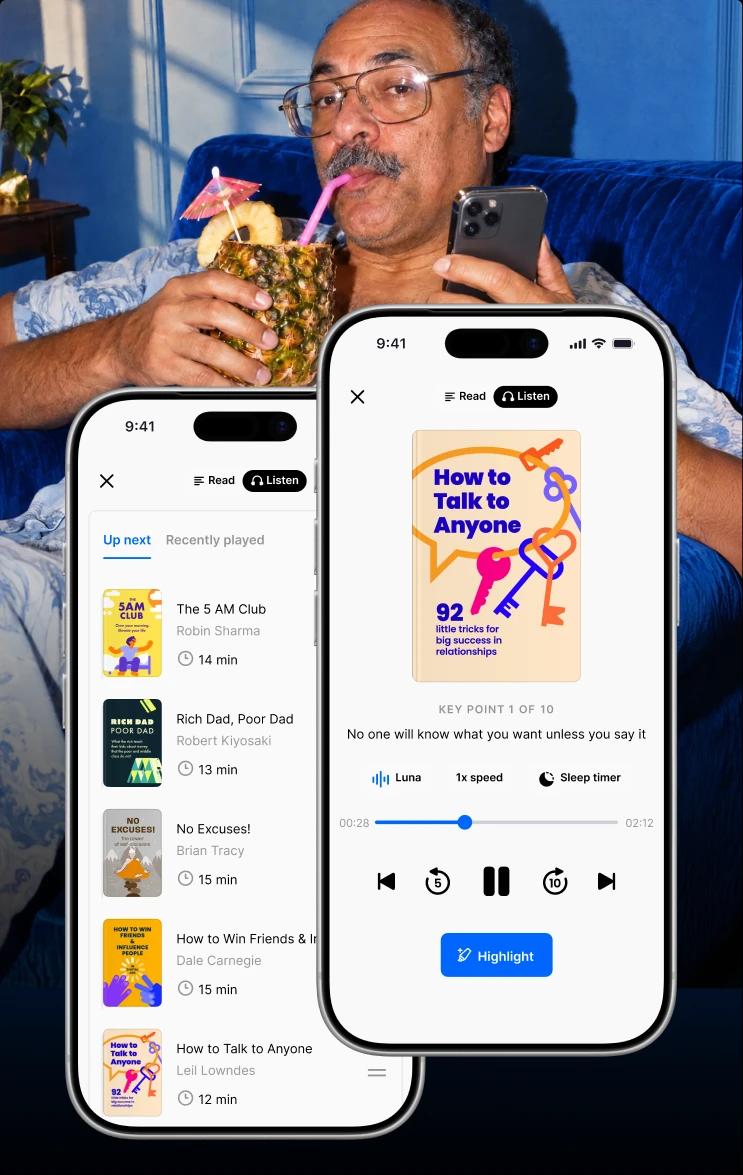
Headway doesn't treat burnout. It's a microlearning app, and some people use it to fill spare minutes with expert nonfiction ideas on stress, sleep, habits, and rest. Here's what it offers:
Audio and text summaries, so you can read at lunch or listen on a walk.
Personalized growth plans, built from a short quiz about your goals.
Spaced-repetition cards and highlights that bring key ideas back so they stick.
Offline mode, so a summary is there on a flight or a bad signal.
Apple CarPlay and Android Auto support for hands-free listening on your commute.
Daily streaks, and a single session can take as little as 3 minutes.
📘 Pick your first rest-and-recovery read on Headway!

Make staying recovered easier with the Headway app
To recap the burnout relapse-prevention plan: know your early signs, track your triggers, keep clear boundaries, protect real downtime, and build a small routine. Then change what you can about the workload and ask for help when you need it. Headway can sit alongside that plan as one more tool for learning what experts say about stress, sleep, habits, and rest.
Each summary takes about 15 minutes, in text and audio. Personalized recommendations point you to the next summary, and streaks and spaced repetition cards keep the habit going. Summaries also help you pick which full books deserve your time. Headway is not a replacement for professional support.
If an evening hour keeps disappearing into work, try Headway and use a few spare minutes on one summary tonight.
FAQs about burnout relapse prevention
Can you relapse after burnout?
Yes. Burnout relapse is when burnout symptoms return after a period of recovery. It happens to a real share of people who go back to the same workload and habits. Burnout relapse prevention starts with catching early signs and changing the conditions that caused burnout, along with building coping skills.
How do you prevent burnout from coming back?
Start with the conditions: workload, role, and expectations. Then add daily habits that protect your energy, such as a fixed shutdown time, real downtime, enough sleep, and a weekly 10-minute check-in. Track your triggers in a journal, and reach out to a professional if symptoms linger. Burnout relapse prevention works best as a routine you repeat.
How long does it take to recover from burnout?
It varies a lot. Some people feel better in weeks, while others need many months, especially when the workload stays the same. There's no fixed timeline. A phased return to work can help, and a doctor or therapist can tell you what's realistic for you. Track your energy week by week to protect your well-being.
Can burnout come back after a long break or vacation?
Yes. A break eases exhaustion, but it doesn't change what's waiting for you at work. If the workload, inbox, and habits are still the same, symptoms can return within weeks. Pair time off with real changes: clearer boundaries, a lighter load, and a plan for your first two weeks back.
Is burnout the same as depression?
No, but they can overlap. WHO describes burnout as an occupational phenomenon tied to chronic work stress, while depression is a mental health condition that can affect many areas of life. Both can bring fatigue and poor sleep. Only a doctor or licensed therapist can tell them apart, so get an assessment to protect your overall well-being.
Does insurance cover burnout treatment?
Often it covers the care itself, but burnout isn't a formal diagnosis, so coverage usually depends on what a clinician records, such as anxiety or depression. Rules vary by plan and country. Call your insurer before booking and ask for a list of in-network providers. Some employers also offer free short-term counseling.
What are the early signs that burnout is returning?
Chronic fatigue, irritability, and sleep disturbances come first for many people. You may also notice cynicism about tasks you used to like, or Sunday dread that starts early. A pattern that lasts two to three weeks is worth acting on. Start with simple self-care basics, and talk to a professional if the pattern sticks.
When should I see a doctor or therapist for burnout?
See one if symptoms last for weeks despite rest, daily life feels hard to manage, you notice signs of depression or anxiety, or you rely on alcohol or other drugs to cope. A doctor or licensed therapist can assess what's going on. If you're in immediate distress, contact local emergency services or a crisis line. Burnout relapse prevention is easier with that support.