Self-growth
 Apps & Digital Tools
 Business & Career
 Success
 Growth Tools
 Psychology
 Communication
 Relationships


The best books for college students solve a problem you have right now, like scattered focus or a lonely first month. Reading for fun is getting rarer, too. A 2025 iScience study of more than 236,000 Americans found that 28% read for pleasure on an average day in 2004. By 2023, it was 16%.
A college week doesn't leave much room for a book nobody assigned. Between lectures and a part-time shift, there's barely a free hour. So this list follows your situation: the first month, midterms, a rough patch, the last year.
Reading beyond your syllabus builds career clarity and mental resilience, because books show you how other people solved problems you haven't met yet.
You'll get 16 titles, a table that matches a book to a problem, a four-week plan, and a way to test any book in 15 minutes before you commit to it. Skip around if you like. Nobody's grading the order.
📘 Test a book in 15 minutes before you buy it. Try Headway.
A quick note: results vary from person to person, and a book can't promise a specific outcome. Headway is a microlearning and daily growth app, not a medical tool, so it doesn't replace advice from a doctor or counselor.
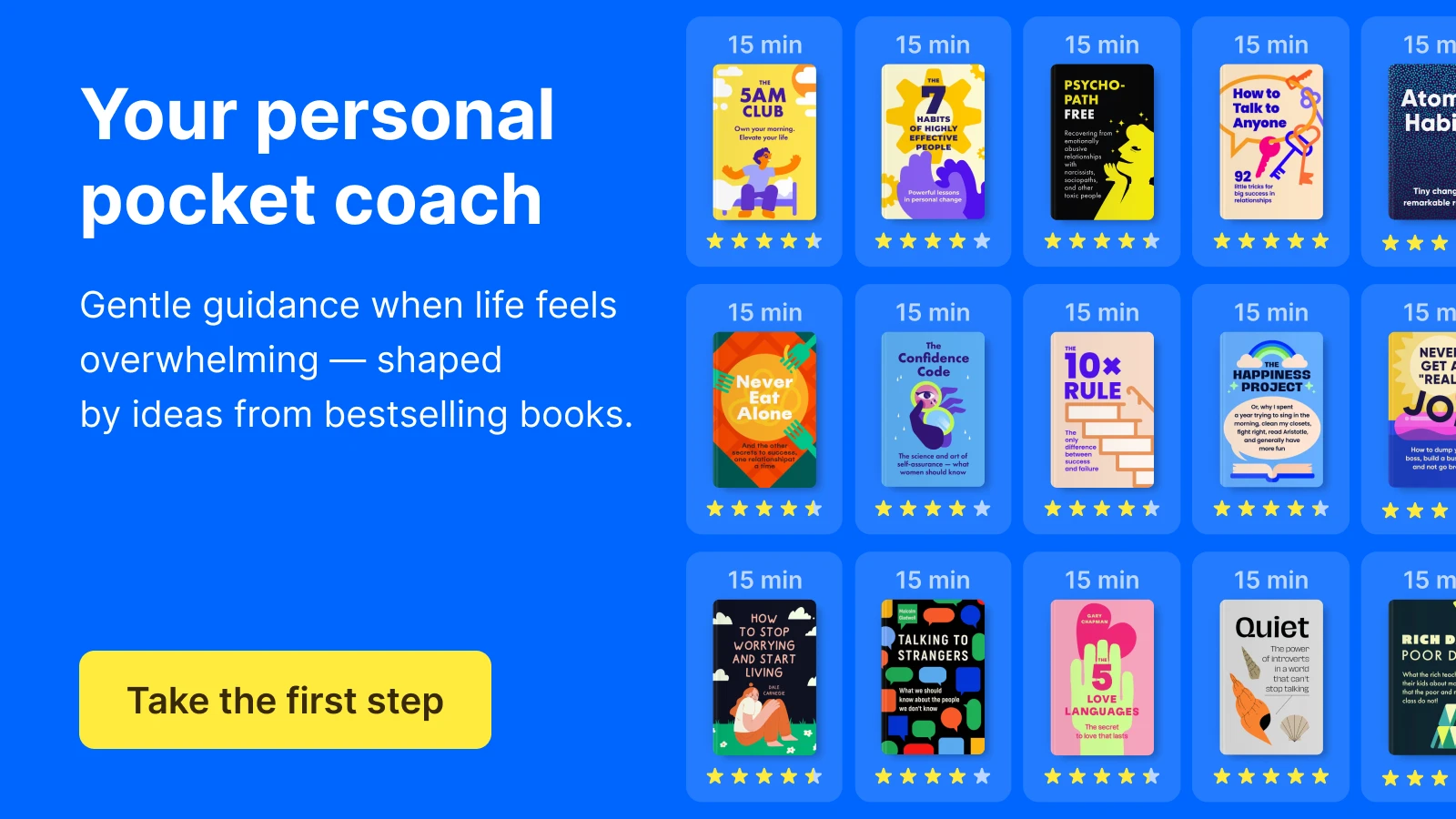
Quick answer: Five reads that cover most college problems
If you only have room for five of the best books for college students, these cover the most ground. They're ordered by when in the semester each one is most helpful.
'Atomic Habits' fixes the routines that collapse by week three.
'How to Win Friends and Influence People' builds interpersonal skills.
Keep your phone out of study time with 'Deep Work'.
Learn to prioritize with 'The Subtle Art of Not Giving a F*ck'.
'The Psychology of Money' covers money habits before your first loan payment.
Pick by problem: A 10-second guide
Not sure where to start? Find your situation in the table and read the title next to it.
| Your situation | Start with | Why it fits |
|---|
You start routines and drop them by week three | 'Atomic Habits' | Tiny changes that stack |
You think you're "just not a math person" | 'Mindset' | Fixed versus growth mindset |
You're new on campus and want friends | 'How to Win Friends and Influence People' | Interpersonal skills |
Your phone eats your study hours | 'Deep Work' | A blueprint for focus |
You say yes to everything | 'The Subtle Art of Not Giving a F*ck' | Prioritizing and responsibility |
A paper feels impossible | 'On Writing' | Craft and habits of a working writer |
Life got heavy | 'Being Heumann', 'Know My Name', 'Persepolis' | True stories of resilience |
You want to read people better | 'The Great Gatsby', 'Normal People', 'Things Fall Apart' | Perspective across cultures |
Money stress | 'The Psychology of Money' | Financial literacy basics |
Graduation is close | 'Sapiens', '21 Lessons for the 21st Century', 'How to Avoid a Climate Disaster' | The big picture |
First month: Build the base before the workload arrives
Some of the best books for college students are short on theory and long on things you can try in week one. Systems and people matter more than grades in the first month, especially for anyone entering college for the first time. These three start there.
1) 'Atomic Habits' by James Clear
Clear's big idea is that tiny changes look boring on day one and add up like interest over a semester. The tool most students grab first is habit stacking, where you hang a new habit on one you already have.
A college version: after your first coffee, you spend ten minutes with your notes before you open any app. That example is ours, not Clear's, but it follows his pattern.
Read this if you begin every semester with a color-coded plan and drop it by week three. Try this week: pick one tiny habit and tie it to something you already do every day.
Habits also keep your drive from fading once the first-week energy wears off, and this guide to motivation reading lists more books for that.
2) 'Mindset' by Carol Dweck
Dweck, a Stanford psychologist, describes two ways of reading your own ability. With a fixed mindset, a bad first exam grade means you're just not a chemistry person. With a growth mindset, the same grade tells you your study method needs work, and methods can change. Same grade, different next move.
Read this if one rough result in September made you doubt your major. Try this week: when your next graded assignment comes back, write down one thing you'd change about how you prepared.
If the psychology angle grabs you, these psychology books for beginners make a gentle next step.
3) 'How to Win Friends and Influence People' by Dale Carnegie
Carnegie's book came out in 1936, and a few of the examples show it. The core advice still holds up. Show real interest in other people and use their names. Ask questions that get them talking.
Those are interpersonal skills, and they're also the start of emotional intelligence, which is the habit of noticing how the person across from you feels. First-year friendships run on it. So do group projects, internships, and later jobs.
Read this if you dread the first club meeting. Try this week: learn two names there and ask each person one follow-up question. People skills are also what most leadership books come back to, so if this one clicks, leadership books worth reading are a natural next stop.
Midterm season: Protect your focus and learn to say no
When time is short, focus and priorities beat extra hours. Midterm week makes that obvious, because every hour you spend on the wrong thing comes straight out of the right one. The three books below deal with attention first, then with choosing what deserves it, and finally with getting words onto a page.
4) 'Deep Work' by Cal Newport
Newport defines deep work as distraction-free effort on something hard, and he argues most of us get very little of it. His fix is scheduling. You pick when the block happens, where, and for how long, then you protect it like a class.
This title shows up on most college lists, so here's the angle those lists skip: the dorm. A phone-free block is easy to plan and hard to keep when your roommate is playing a game two feet away.
Book a library room or carrel ahead of time, tell your roommate the hours the day before, and leave your phone in a bag across the room. Headphones work as a "do not disturb" sign. Those tips are ours, not Newport's.
Read this if you sit down to study at 7 pm and look up at midnight with one page done.
5) 'The Subtle Art of Not Giving a F*ck' by Mark Manson
Manson's argument is that you only have so much attention to give, so you should choose what gets it. He also pulls apart fault and responsibility. A problem may not be your fault, but how you respond is still yours. That's personal responsibility without the guilt trip.
A college example: you drop one club to protect a hard class. It feels like quitting for about a week. By finals, it looks like a decision. Manson also argues that chasing happiness all the time tends to backfire, which is a relief to hear in the middle of midterms.
Read this if your calendar is full and you still say yes to everything. Heads up: the title has a swear word, and the book has plenty more.
6) 'On Writing' by Stephen King
Half memoir, half writing advice, this one helps anyone with a paper due. King tells his own story first, from odd jobs to selling his first novel, then opens his toolbox.
Two habits stick: cut the adverbs, and get a rough draft down before you start fixing it. Treat it as a study-skills book. You don't need to be a writing major.
Read this if a blank document gives you a stomachache. Try this week: write the ugly first draft of one paper section without editing, then hunt adverbs in the second pass.
📘 Short on time between midterms? Try a 15-minute book summary on Headway!
When it gets heavy: True stories of people who kept going
This section is for the week when classes feel like the smaller problem. Each book here is a true story, told by the person who lived it. Two of these books deal with serious subjects: sexual assault in 'Know My Name' and war in 'Persepolis'. Skip either one if it's not the right week.
Reading about resilience doesn't replace campus counseling. Most colleges have a counseling center or student health service, and it's worth knowing where yours is before you need it.
7) 'Being Heumann' by Judith Heumann
The subtitle says it plainly: an unrepentant memoir of a disability rights activist. Heumann got polio as a baby, and as a kid in New York she was turned away from school over her wheelchair.
In 1977, she helped organize the 504 sit-in in San Francisco, a weeks-long occupation of a federal building that pushed the government to sign rules protecting disabled people.
She didn't do it alone, and the book shows how much of her persistence was organizing with others. For many readers, it's an untold story, since it rarely shows up in a history class.
Read this if you've been fighting something by yourself and haven't asked for help.
8) 'Know My Name' by Chanel Miller
In 2016, a woman known only as Emily Doe read a statement in a California courtroom, and it spread across the internet. Millions read it. In 2019, she published her full story under her own name, Chanel Miller.
It's the untold story behind the statement: the assault and the trial, then the slow work of getting her voice back. The book is about being believed and about refusing to shrink into a case number.
Read this if you want to see how someone rebuilds after something awful. If that's too close to home right now, it'll keep.
9) 'Persepolis' by Marjane Satrapi
This graphic memoir follows a young girl growing up in Tehran during the Islamic Revolution and the war with Iraq. Satrapi starts at age ten, when the government changes the rules at her school, and she tells it in black-and-white panels that are funny in places and hard to look at in others.
Politics reaches her through her classroom, her family's living room, and her country changes around her faster than a ten-year-old can follow. The format makes it a quick read for a crowded week, since you can finish a long stretch in one sitting.
Read this if you want a book that fits between two deadlines.


Fiction that teaches you to read people
Fiction helps students understand different cultures and perspectives because, for a few hundred pages, you sit inside someone else's head. A good novel also teaches you what a lecture can't: how people hide what they want.
10) 'The Great Gatsby' by F. Scott Fitzgerald
Published in 1925, it's about ambition and self-invention in America. Jay Gatsby was born James Gatz and rebuilt himself as a rich man to win back a woman he loved. Young people do a small version of this at orientation, when nobody on campus knows your past, and you can rebrand in a week.
Most of that is healthy. Gatsby shows what happens when the new version is built to impress one person. The narrator, Nick Carraway, is a useful character for students. He watches, judges later, and learns what the parties actually cost. It's short enough for a weekend.
Read this if you're about to reinvent yourself for a new school or a new city.
11) 'Normal People' by Sally Rooney
Connell and Marianne go to the same school in a small town in western Ireland, then to Trinity College Dublin. At school, Connell is popular, and Marianne isn't, and his mother cleans her family's house.
At college, the positions flip. Rooney writes about two friends whose closeness never gets easy, because neither says the plain thing out loud. Class and silence run through every chapter. You'll finish it wanting to text someone back.
Read this if you've ever replayed a conversation for an hour trying to work out what the other person meant.
12) 'Things Fall Apart' by Chinua Achebe
Achebe published this in 1958 and wrote it from the inside. Okonkwo is a respected man in Umuofia, an Igbo village in what's now Nigeria, and he's driven by fear of ending up weak like his father.
The book shows Igbo society on its own terms first, with its customs and its courts. Then missionaries and a colonial government arrive. Okonkwo's story also asks how one man's fear shapes every choice he makes, which is a fair question for anyone twenty years old. Treat it as the cross-cultural pick on this list.
Keep a novel going next to the nonfiction. When you finish these three, the list of good books to read for adults has more.
Before graduation: Zoom out and get your money straight
The last year is for the big picture and the next decade. Financial literacy matters here, because budgets and debt show up right after the cap and gown. These four cover money first, then the wider world.
13) 'The Psychology of Money' by Morgan Housel
Housel's claim is that doing well with money has less to do with how smart you are than with how you behave. The book is short chapters, each built on a story. One follows Ronald Read, a janitor and gas station attendant who left an estate of about $8 million after decades of patient investing.
It isn't a budgeting workbook, so don't expect spreadsheets. You get a way to think about debt and saving, and about the meaning of "enough."
Read this if you understand compound interest but still can't stop the impulse buys. Try this week: add up your likely monthly bills after graduation, then compare them with a salary you'd actually accept.
14) 'Sapiens' by Yuval Noah Harari
The subtitle is 'A Brief History of Humankind', and the book covers early humans up to the present. Harari argues that large groups cooperate because they share stories, like money and nations.
That matters when you're choosing a major or a career, because economics and law both study those shared stories from different angles. A wide frame helps you see what each field is actually about.
Try this week: pick one thing you take for granted, like money or a company's logo, and ask what shared story makes it work.
15) ‘21 Lessons for the 21st Century’ by Yuval Noah Harari
Where 'Sapiens' looks back, this one looks at the present. It has 21 short chapters on work, technology, truth, and education. Harari doesn't forecast.
He asks the twenty-first-century questions a new graduate runs into, like what to trust online and how to keep learning when your field keeps shifting. Good for a train ride home.
Read this if you're a few months from graduation and the job market feels like fog.
16) 'How to Avoid a Climate Disaster' by Bill Gates
You might wonder why a climate book belongs on a college list. Gates frames climate change in numbers: the world adds about 51 billion tons of greenhouse gases a year, and he wants that figure at zero.
He also introduces the "green premium," the extra cost of a clean option compared with a fossil one. Nearly every career touches this, from engineering to finance. It's a practical read for anyone unsure how their major connects to what's happening in the world.
Read this if you want a hard problem explained in plain numbers instead of headlines.
How to read a book that nobody assigned
Even the best books for college students do nothing on the shelf. A book summary is a short version of a book that covers its main ideas in minutes. Here's how to fit either one into a real week.
Fix a 15-minute block. Create a routine by choosing the same slot every day: between classes or right before bed. A chapter fits, and so does a short poetry collection. Consistency beats ambition here.
Let your ears help. Audiobooks turn walks and laundry into reading time.
Test before you buy. Read a summary first. You'll discover within a page or two if the main idea grabs you, and if it does, you get the full book. If it doesn't, you've lost 15 minutes instead of 400 pages.
Find a reading partner. Swap books with a friend or join a club. The researchers behind the iScience study suggested book groups as a way to make reading more social, and a campus community is a good place to start one.
Reading beyond your syllabus pays off later as a clearer sense of what work you want and a steadier head when things get hard. You don't need to finish many books to feel it. Four in a month is plenty. Great reading doesn't have to be long or hard, and a single chapter you actually finish beats a whole shelf you meant to get to.
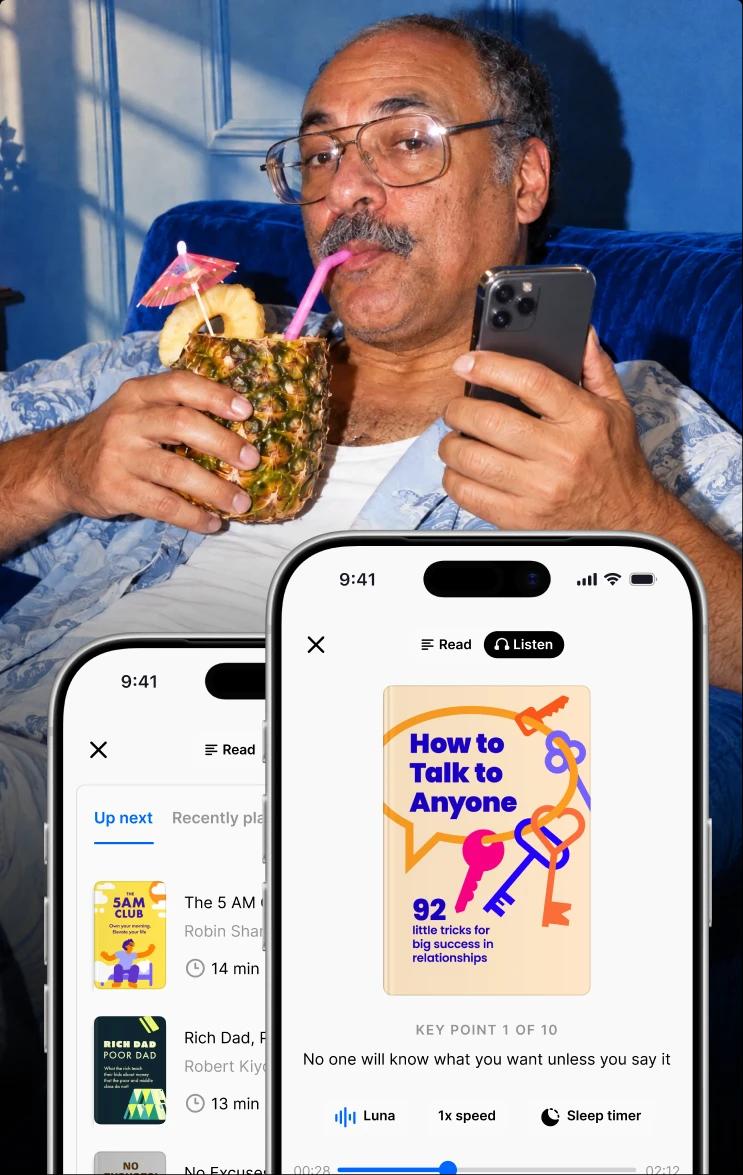
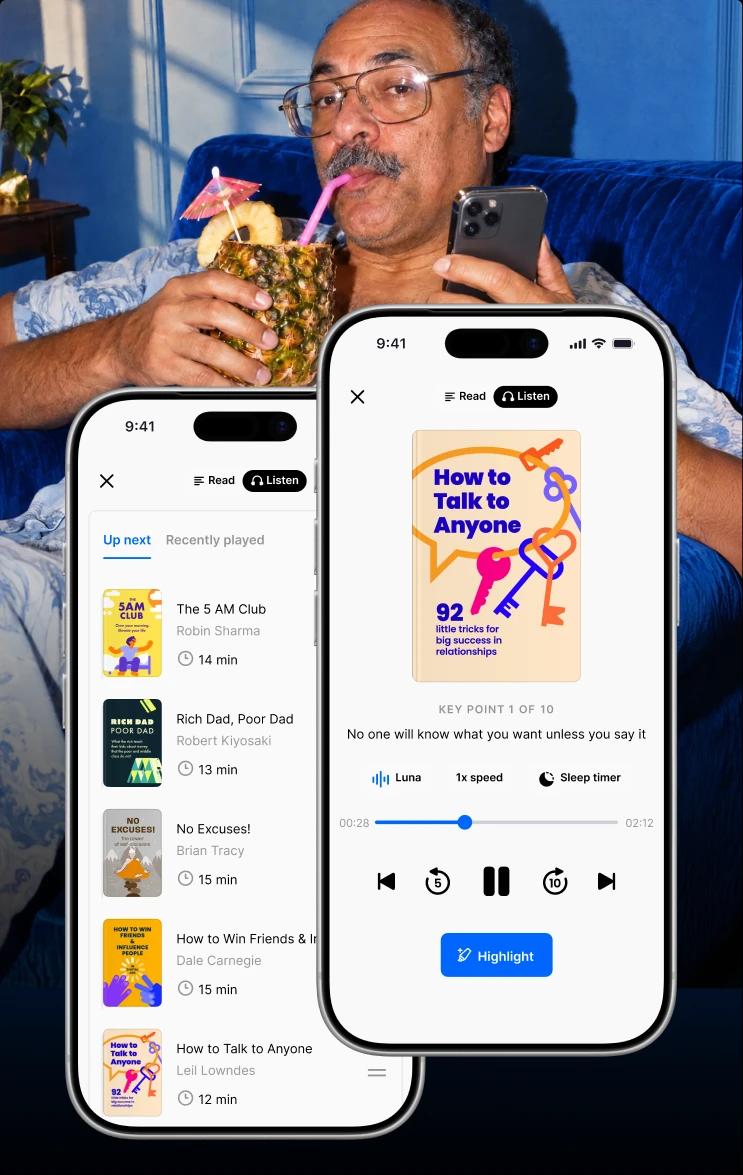
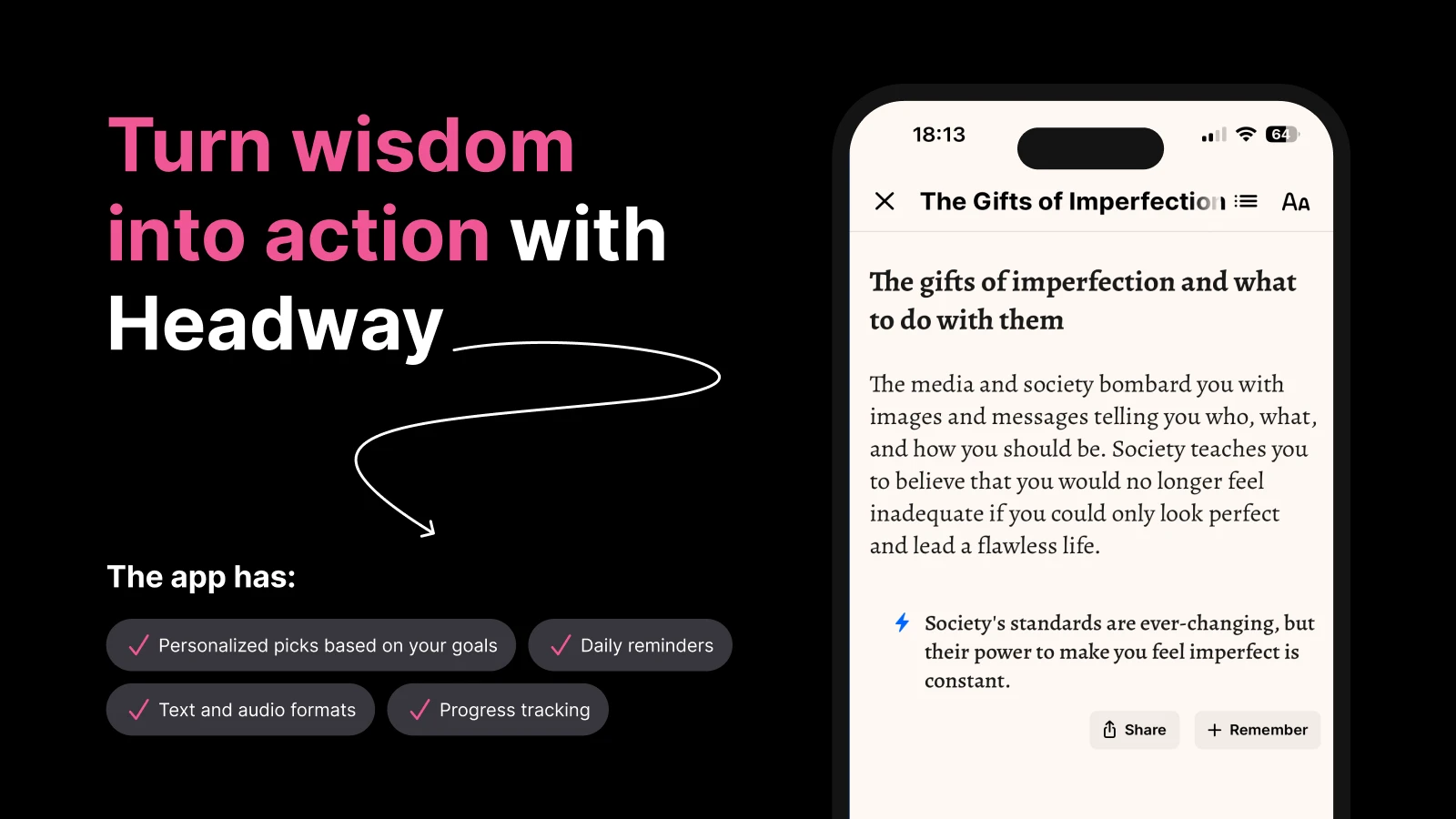
Headway turns 2,500+ nonfiction bestsellers into summaries you can read or listen to in about 15 minutes, and 'Atomic Habits' is in the library. The free plan includes one summary a day, which is enough for a test run. Search for the title you're eyeing, skim it, then decide.
📘 Start with one free daily summary on Headway!
Here's a four-week plan that pairs one book per week with a daily target.
| Week | Book | Daily target |
|---|---|---|
Week 1 | 'Atomic Habits' | 15 minutes before checking social media |
Week 2 | 'Deep Work' | 15 minutes plus one phone-free study block |
Week 3 | 'The Subtle Art of Not Giving a F*ck' | 10 pages a day |
Week 4 | A novel of your choice | 15 minutes before bed |
Summer break | Easy summer reads or 'Sapiens' | One chapter a day |
Summer is the easy slot, since nobody's grading you. Pick easy summer reads you'd read anyway, or take on 'Sapiens' at one chapter a day, which finishes it in about three weeks.
Try a 15-minute Headway summary before you buy the next 400 pages!
Pick the one row in the table that matches this week. Read a summary of that book and see if it earns a full read. If it does, buy it or borrow it from the library. If it doesn't, you spent one coffee break finding out.
 The best books for college students are the ones you finish, so add the next title only when the last one is done. Plenty of great books run 400 pages, and a summary tells you quickly if yours is one of them. Happy reading.
📘 Download Headway and test your next pick in 15 minutes!
FAQs about the best books for college students
What are the top 5 best books for college students?
The five from the quick summary are 'Atomic Habits', 'How to Win Friends and Influence People', 'Deep Work', 'The Subtle Art of Not Giving a F*ck', and 'The Psychology of Money'. None needs background knowledge, so you can start on page one in week one. Add a novel like 'Normal People' if you want fiction in the rotation.
What are some good books to read as a college student?
Check what your school already picked. Many colleges run a common reading program and hand incoming students one shared book, which is a free way to meet people who've read the same thing. After that, build a small mix: one habit or focus book and one people book, plus a novel. Recommended books from friends count too, so ask for their favorite books.
What does Gen Z like to read?
Fiction comes first. A 2019 Library Journal survey found Gen Z readers prefer fiction nearly two to one over nonfiction, led by romance, fantasy, and young adult titles. Researchers in 2024 added that comics, manga, and graphic novels often go uncounted. Among young adults who like nonfiction, memoirs and history rank high, so a title like 'Persepolis' fits right in.
What 100 books should I read before college?
No official list exists, and 100 is a steep target. At one book a week, that's nearly two years of nothing else. A better plan is 10 to 15 books over a few summers: some nonfiction on habits and money, several novels, and one or two memoirs. Ask your admissions office or first-year program for a summer reading list, too.
What is the most life-changing book to read?
No single book wins, because the label depends on timing. Most life-changing books earn it by changing something you do within a week of finishing. Test any title that way: read it, pick one action, and repeat it for seven days. If a book inspired you but nothing changed, swap it for one that matches this season.
What books should a 25-year-old read?
Most 25-year-olds are juggling a first real job and a budget. 'The Psychology of Money' still applies. Two more fit: 'Designing Your Life' by Bill Burnett and Dave Evans for career choices, and 'Four Thousand Weeks' by Oliver Burkeman for time. Add 'Normal People' if you want a novel about relationships in your twenties.
Why should college students read beyond the syllabus?
College asks you to move from memorizing facts to processing and applying them, and reading outside class is practice for that. Reading an author's argument closely trains you to weigh information and make informed decisions, which is critical thinking at work. Reading beyond your syllabus also builds career clarity and mental resilience, because you see how other people handled problems.
What are the best memoirs for college students?
Memoirs work for college readers because they show real people figuring things out. 'Educated' by Tara Westover, a New York Times bestseller, follows her from rural Idaho to a college classroom at 17. 'Tiny Beautiful Things' by Cheryl Strayed collects advice-column essays on feeling lost in your twenties. 'Everything I Know About Love' by Dolly Alderton covers love and identity.
Is 'The Defining Decade' worth reading in college?
Yes, if you want a push to think ahead. Meg Jay, a clinical psychologist, argues that your twenties carry more weight than they seem to, and that intentional choices about work, relationships, and habits have long-term effects. It pairs well with 'Mindset': you treat the decade as something you shape. The book leans on stories from her own clients.
What should college students read about money and debt?
Financial literacy is what makes budgets and debt manageable after college. 'The Psychology of Money' argues that behavior matters more than intelligence for financial success, so start there. Then add a how-to like 'I Will Teach You to Be Rich' by Ramit Sethi for mechanics such as automating savings. Before graduation, write down each loan, its balance, and its interest rate.