Crece cada día con un plan personalizado. Empieza aquí

11 Best Books On Prioritization

Looking for the best books on prioritization? Prioritization isn't just about doing more; it's about doing what actually matters. The best books on prioritization help you understand why you struggle with priorities in the first place. Whether you're drowning in tasks, unsure where to start, or constantly distracted by urgency, the right book can shift your entire approach to work and life. 

This curated selection of books gives real examples and tips about focusing on priorities, along with the things that matter most to you. It will help you cultivate psychological resilience. You'll be able to focus on what you can control, allowing you to spend your resources more efficiently and make more beneficial decisions about your life.

Best books on prioritization: Solve the urgency trap

Books on prioritization address most people's core problem: Confusing urgency with importance. Your inbox floods with emails, your to-do list grows longer by the hour, and suddenly you're spending your entire day reacting to what others think is critical, while your actual goals fade into the background. 

This trap doesn't reflect a lack of effort. It reflects a lack of framework. Without clear prioritization principles, even the most organized person can get stuck on low-impact tasks. 

Some focus on time management methods, others on decision-making psychology, and some on ruthless elimination of distractions. And who are you among them? David Allen's 'Getting Things Done' teaches you to capture everything in your head and organize it into actionable steps. Rob and Steve Shallenberger's 'Do What Matters Most' helps you identify what truly aligns with your values, not just what feels urgent. 

Yet, they share this: Prioritization is a skill you can learn and refine. When you master it, you stop feeling like you're always behind and start feeling like you're always progressing. That's the transformation these books deliver: Not just better productivity, but genuine progress on the work that defines your success.

Books about prioritization 

Reading books about prioritization does more than fill your bookshelf; it rewires your thoughts about your responsibilities. As you encounter different frameworks, whether the Eisenhower Matrix, the Pareto Principle, or modern approaches to deep work, you start seeing patterns in your behavior. 

You realize which meetings are energy drains, which tasks could be delegated, and which only you can do. Books on this topic also address the psychological side: Why we procrastinate on meaningful work, how perfectionism sabotages prioritization, and how to build confidence in your decisions.

These insights stick with you. After reading, you'll naturally ask better questions: "Will this move me closer to my goal?" and "Is this the best use of my limited time?" 

Ultimately, you can make quicker and more thoughtful decisions, feel less overwhelmed, and complete tasks that really matter for you. In addition to increasing your productivity when setting priorities, knowledge and techniques on prioritization will change your approach to relationships and personal growth as well. 

It's the foundation for every other productivity system you might adopt, which is why books about prioritization are so transformative.

Find your next read with a short quiz

All the best books on topic

What is 168 horas - Tienes más tiempo del que crees about?

Este libro ofrece una perspectiva innovadora sobre la gestión del tiempo, desafiando la idea de que siempre estamos demasiado ocupados. A través de historias inspiradoras y ejercicios prácticos, la autora muestra cómo maximizar nuestras 168 horas semanales. Su enfoque permite descubrir prioridades personales, fomentar la productividad y encontrar espacios para lo que realmente importa, transformando así la forma en que vivimos y trabajamos.

Who should read 168 horas - Tienes más tiempo del que crees

  • Lectores que desean mejorar su gestión del tiempo.
  • Profesionales en busca de equilibrio entre trabajo y vida.
  • Estudiantes que quieren maximizar su productividad diaria.
book

What is En tu mejor momento - Cómo conseguir que el tiempo, la energía y las prioridades trabajen a tu favor about?

Este libro ofrece estrategias prácticas para gestionar el tiempo, optimizar la energía y establecer prioridades efectivas. A través de enfoques inspiradores, el autor ayuda a los lectores a alcanzar su máximo potencial, convirtiendo cada día en una oportunidad para crecer y lograr un equilibrio entre la vida personal y profesional. Proporciona herramientas para hacer más productivas las horas del día y enfocarse en lo que verdaderamente importa.

Who should read En tu mejor momento - Cómo conseguir que el tiempo, la energía y las prioridades trabajen a tu favor

  • Líderes que desean maximizar su tiempo y energía.
  • Personas que buscan mejorar su productividad personal.
  • Profesionales que gestionan múltiples prioridades en su vida.
book

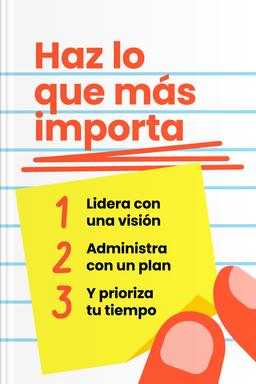
What is Haz lo que más importa - Lidera con una visión, administra con un plan y prioriza tu tiempo about?

Este libro ofrece un enfoque práctico para liderar y gestionar con eficacia. A través de estrategias concretas, los autores enseñan a priorizar el tiempo y centrar los esfuerzos en lo que realmente importa. Con ejemplos inspiradores y un marco claro, el lector aprenderá a establecer una visión sólida, a desarrollar planes estratégicos y a maximizar su productividad, tanto en el ámbito personal como profesional.

Who should read Haz lo que más importa - Lidera con una visión, administra con un plan y prioriza tu tiempo

  • Líderes empresariales que buscan mejorar su gestión.
  • Estudiantes de negocios interesados en liderazgo efectivo.
  • Profesionales que desean priorizar su tiempo eficientemente.
book

What is Cuatro mil semanas - Gestión del tiempo para mortales about?

Este libro explora la realidad de la limitada cantidad de tiempo que tenemos en la vida, enfatizando la importancia de priorizar lo significativo. A través de reflexiones profundas y consejos prácticos, el autor invita a replantear nuestra relación con el tiempo, dejando de lado la obsesión por la productividad. Proporciona herramientas para gestionar mejor el tiempo y vivir de manera más plena, consciente y auténtica.

Who should read Cuatro mil semanas - Gestión del tiempo para mortales

  • Profesionales que buscan mejorar su gestión del tiempo.
  • Estudiantes que desean optimizar su productividad diaria.
  • Personas interesadas en la filosofía del tiempo y la vida.
book

What is Organízate con eficacia - El arte de la productividad sin estrés about?

Este libro ofrece un enfoque práctico para mejorar la productividad personal y profesional a través de la gestión efectiva del tiempo y las tareas. Presenta técnicas que ayudan a reducir el estrés y aumentar la eficiencia, enseñando a los lectores a organizar su trabajo y sus vidas de manera efectiva. La metodología propuesta permite alcanzar objetivos de forma ordenada y sin agobios, fomentando un equilibrio entre el trabajo y la vida personal.

Who should read Organízate con eficacia - El arte de la productividad sin estrés

  • Profesionales que buscan mejorar su productividad diaria.
  • Estudiantes que desean gestionar mejor su tiempo y tareas.
  • Emprendedores que necesitan estrategias para organizar sus proyectos.
book

What is Cuidado personal para personas con TDAH about?

Este libro ofrece estrategias y consejos prácticos para gestionar el cuidado personal de las personas con TDAH. A través de una guía accesible, el texto aborda temas como la organización, la regulación emocional y la creación de rutinas efectivas, todo diseñado para ayudar a los lectores a mejorar su bienestar y calidad de vida. Es una herramienta valiosa para quienes buscan comprender y manejar mejor su condición.

Who should read Cuidado personal para personas con TDAH

  • Adultos con TDAH que buscan mejorar su bienestar.
  • Padres de niños con TDAH en búsqueda de estrategias.
  • Profesionales de la salud mental que trabajan con TDAH.
book

What is El arte de decir NO - Cómo mantenerte firme, recuperar tu tiempo y energía y negarte a que no te valoren (¡sin sentirte culpable!) about?

Este libro ofrece estrategias prácticas para aprender a decir "no" de manera efectiva, permitiendo a los lectores establecer límites saludables en sus vidas. A través de consejos útiles, se enseña a recuperar el tiempo y la energía, así como a evitar el sentimiento de culpa al rechazar demandas que no se alinean con sus prioridades. Es una guía para potenciar la autoestima y el respeto personal.

Who should read El arte de decir NO - Cómo mantenerte firme, recuperar tu tiempo y energía y negarte a que no te valoren (¡sin sentirte culpable!)

  • Personas que desean establecer límites saludables.
  • Profesionales abrumados que luchan por decir no.
  • Aquellos que buscan mejorar su autoestima y asertividad.
book

What is La alegría de perderse cosas - Vive más haciendo menos about?

Este libro ofrece una perspectiva transformadora sobre cómo la sobrecarga de tareas y la búsqueda constante de productividad pueden afectar nuestro bienestar. A través de anécdotas y estrategias prácticas, la autora anima a los lectores a liberarse de la presión de hacer más y, en su lugar, enfocarse en lo que verdaderamente importa en sus vidas. Descubre cómo encontrar la felicidad y la satisfacción al simplificar tu día a día.

Who should read La alegría de perderse cosas - Vive más haciendo menos

  • Personas que buscan simplificar su vida.
  • Lectores interesados en el minimalismo y la productividad.
  • Aquellos que desean encontrar felicidad en la sencillez.
book

FAQs about books on prioritization

What are the four P's of prioritization?

The Four Ps of Prioritization are:

  • Problem – Does the task solve a significant problem?

  • Profit – What benefit or value will it bring?

  • Priority – How urgent or essential is it right now?

  • Potential — What opportunities does it open up in the future?

What is the rule of 3 of prioritization?

The Rule of 3 in prioritization most often refers to choosing the three most important daily tasks to increase productivity. Other popular Rules of 3 involve making decisions about tasks (delegate, delete, do). 

Oliver Berkman has a method for working effectively known as the 3-3-3 model. First, dedicate three hours to focused, intensive work. Next, tackle three urgent tasks that need to be completed. Finally, spend time on three additional functions, like cleaning and responding to emails.

What is the 1-3-9 prioritization technique?

The 1-3-9 technique is a simple way to prioritize tasks. It helps you focus on what's important and prevents you from overloading yourself.

How it works:

  • 1 is the most important task of the day that will have the biggest impact or result.

  • 3 is three medium-importance tasks that also move you forward.

  • 9 is nine small or ancillary tasks that you can do if you have time.

What are the four levels of prioritization?

Use tools like the Eisenhower Matrix to divide tasks into four levels of prioritization: Urgent and important, important but not urgent, urgent but not important, and neither urgent nor important. First, focus on getting important and urgent things done.

What is the 3x3 matrix of prioritization?

The 3x3 Priority Matrix is ​​a visual tool for prioritizing tasks by importance and urgency. It allows you to prioritize tasks based on two criteria: Importance and urgency. Do the important and urgent things first — these are the key tasks that can’t be postponed. Then move on to the important but not urgent things — these are the ones that lead to growth and long-term goals.

What is the prioritization matrix for ADHD?

For people with ADHD, the usual priority matrix (like Eisenhower or 3×3) often doesn’t work because it requires long-term focus and complex analysis. Here’s an optimal choice in 4 zones:

  • Things that move me forward (Important + Understandable)

  • Things that can be done quickly (≤15 min)

  • Things that need help or structure

  • Things that are exhausting or not helpful

What is the pyramid of prioritization?

The priority pyramid is a model that helps you organize tasks or goals according to their importance and impact. It resembles Maslow’s pyramid of needs: What’s at the bottom is the foundation; what’s at the top is the superstructure.

The bottom level is basic things (health, sleep, living, essential work tasks). The middle level is growth goals (skill development, learning, relationships). The top level is the meaning of life and strategic priorities.