Rusia ha iniciado una guerra a gran escala en Ucrania. Haz un donativo a un fondo benéfico para apoyar a Ucrania y proteger la paz mundial.

Apoya a Ucrania

387 Best Psychology Books

Books on psychology: A lighthouse in the storm of your mind

Books on psychology are like unmarked land discovery maps for your brain — except instead of an "X" marking the spot, it's more like, "Surprise! Here's where your quirks, random fears, and inexplicable midnight snack habits live." 

From cognitive psychology to emotional intelligence, psychology books give you a "backstage pass" into the VIP lounge of other people's minds. Yes, even that coworker who hums like a caffeinated hummingbird or your pet casually judging your life choices. 

Want to improve your habits without turning into a self-help chatbot? 'High Performance Habits' by Brendon Burchard offers practical strategies to level up your life quality. In 'The Code of the Extraordinary Mind,' Vishen Lakhiani encourages us to rethink our limits. 

Do you feel emotionally tangled? 'Feeling Good' by David D. Burns, MD, uses cognitive behavioral techniques to lift your mood. At the same time, 'Codependent No More' by Melody Beattie shows you how to ditch toxic relationships and reclaim your personal freedom.

For a spiritual-meets-practical journey, M. Scott Peck's 'The Road Less Traveled' explores life's challenges from a fresh perspective. With 'The 5 Elements of Effective Thinking,' Edward B. Burger and Michael Starbird show how small shifts in thinking can grow into extraordinary problem-solving skills.

Diane Tavenner's 'Prepared' is especially recommended to parents and educators to nurture adaptability and resilience in children. Whatever your goal is, psychology books will remake brain science into applicable life hacks.

Understanding humans — yourself included — doesn't require genius, just curiosity, patience, and a notebook to track your "aha" moments.

Good psychology books that don't require a PhD

Looking for a good psychology book is like wandering through an orchard — except these "apples" can teach you how your brain tricks you instead of simply keeping you full. A truly life-changing psychology book equips you with relevant tools to survive the whirlwind of life. 

'Dare' by Barry McDonagh is a popular tactical manual for fighting anxiety and panic. 'Psychopath Free' by Jackson MacKenzie can be your guide if you ever need to recover from abuse. Barbara Oakley and Terrence Sejnowski's 'Learning How to Learn' reveals mental hacks for anything from advanced calculus to social media dancing challenges. 

'Think Straight' by Darius Foroux proves that simple mindset shifts can revive your lost focus. 'Make It Stick' by Peter C. Brown, Mark A. McDaniel, and Henry L. Roediger introduces evidence-based techniques to make learning work without endless cramming.

For a twist of espionage flair, 'A Spy's Guide to Thinking' by former intelligence officer John Braddock teaches data interpretation skills from the spy world, useful for work, school, or judging your in-laws. 

If you're interested in honest, genuine relationships, Mark Manson's 'Models: Attract Women Through Honesty' can show you the ropes on how to discern between pure manipulation and a sincere desire to connect with someone. 

Reading psychology books makes the mind less mysterious, all while helping you chuckle at the chaos of being human. No lab coat is needed — just a sense of humor and self-kindness while you keep finding your or your housemate's socks in strange places.

Top books among Headway users

Find your next read with a short quiz

All the best books on topic

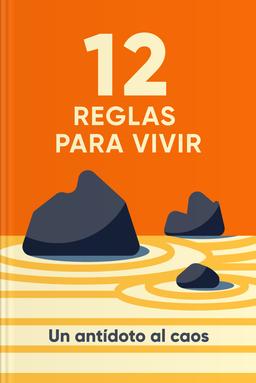
What is 12 reglas para vivir - Un antídoto contra el caos about?

Este libro ofrece principios prácticos para encontrar significado y orden en un mundo caótico. A través de reflexiones sobre la responsabilidad personal, la moralidad y la psicología, el autor presenta doce reglas que buscan guiar al lector hacia una vida más auténtica y plena. Con un enfoque en la disciplina y la auto-mejora, se convierte en una herramienta para enfrentar los desafíos de la existencia.

Who should read 12 reglas para vivir - Un antídoto contra el caos

  • Estudiantes que buscan orientación en la vida.
  • Profesionales en busca de desarrollo personal.
  • Lectores interesados en filosofía y psicología.
book

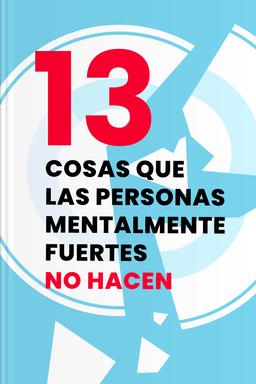
What is 13 cosas que las personas mentalmente fuertes no hacen - Recupera tu poder, acepta el cambio, enfrenta tus miedos y entrena tu cerebro para la felicidad y el éxito about?

Este libro ofrece estrategias para desarrollar fortaleza mental y superar los obstáculos emocionales. A través de 13 conceptos clave, se guía al lector en el proceso de dejar atrás hábitos autolimitantes, aceptar el cambio y enfrentar los miedos. La autora proporciona herramientas prácticas para entrenar la mente hacia un estado de felicidad y éxito, fomentando el crecimiento personal y una vida más plena.

Who should read 13 cosas que las personas mentalmente fuertes no hacen - Recupera tu poder, acepta el cambio, enfrenta tus miedos y entrena tu cerebro para la felicidad y el éxito

  • Personas que buscan mejorar su fortaleza mental.
  • Lectores interesados en el desarrollo personal y emocional.
  • Cualquiera que desee enfrentar sus miedos y desafíos.
book

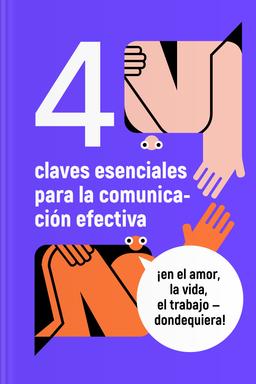
What is 4 claves esenciales para la comunicación efectiva ¡en el amor, la vida, el trabajo - dondequiera! about?

Este libro ofrece estrategias prácticas para mejorar la comunicación en diferentes áreas de la vida. A través de cuatro claves esenciales, los lectores aprenderán a expresarse de manera clara y efectiva, fortaleciendo sus relaciones amorosas, laborales y personales. Con un enfoque accesible y directo, el autor guía a los lectores hacia un entendimiento más profundo y una mayor conexión con los demás.

Who should read 4 claves esenciales para la comunicación efectiva ¡en el amor, la vida, el trabajo - dondequiera!

  • Parejas que buscan mejorar su comunicación.
  • Profesionales que desean fomentar un mejor ambiente laboral.
  • Estudiantes interesados en relaciones interpersonales efectivas.
book

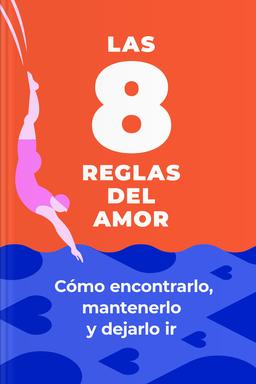
What is Las 8 reglas del amor - Cómo encontrarlo, mantenerlo y dejarlo ir about?

Este libro ofrece una guía práctica sobre el amor, abordando su búsqueda, mantenimiento y la difícil tarea de dejarlo ir. A través de consejos claros y reflexiones profundas, el autor invita a los lectores a comprender sus propias emociones y a construir relaciones saludables. Con un enfoque en la autoexploración y el crecimiento personal, se convierte en una herramienta esencial para aquellos que desean mejorar su vida amorosa.

Who should read Las 8 reglas del amor - Cómo encontrarlo, mantenerlo y dejarlo ir

  • Jóvenes en busca del amor verdadero.
  • Parejas que desean fortalecer su relación.
  • Personas que quieren entender el desamor.
book

What is Breve historia de todas las cosas about?

Este libro presenta un recorrido integral por la evolución del conocimiento humano, combinando conceptos de filosofía, ciencia y espiritualidad. El autor explora cómo las diferentes disciplinas han contribuido a nuestra comprensión del mundo, ofreciendo un marco que conecta tanto lo material como lo espiritual. A través de un enfoque holístico, se invita al lector a reflexionar sobre la interconexión de todas las cosas y el desarrollo de la conciencia a lo largo del tiempo.

Who should read Breve historia de todas las cosas

  • Estudiantes de filosofía y pensamiento integral.
  • Interesados en la espiritualidad y la conciencia.
  • Lectores de desarrollo personal y autoconocimiento.
book

Frequently asked questions about books on psychology

What's the best book to read on psychology?

It depends on what tickles your brain, but 'The Road Less Traveled' by M. Scott Peck, MD, is a classic. It combines psychology, love, and spiritual growth into one read — perfect for anyone in search of practical wisdom. Basically, you'll go on a mental adventure that reveals just how fascinating and quirky your brain and human behavior can be.

How do I teach myself psychology?

Start with foundational books that explain concepts clearly. 'Learning How to Learn' by Barbara Oakley acts like a GPS for your mind, offering practical strategies for retaining information and mastering skills. 

Pair it with curiosity and a notebook, and suddenly self-teaching psychology feels doable, fun, and surprisingly rewarding instead of a daunting, brain-melting challenge.

What are the 7 psychology types?

The 7 psychology types are: Clinical (therapy time), Cognitive (brain puzzles), Developmental (life stages), Social (peer pressure explained), Forensic (CSI but with feelings), Abnormal (why weird is fascinating), and Biological (your brain on science). 

Basically, psychology covers everything from awkward small talk to full-on crime dramas!

What books do Harvard psychology students read?

Harvard's syllabus for psychology students includes titles that mix theory and its real-world application. 'Modern Man in Search of a Soul' by Carl G. Jung is an analytical psychology classic. 'The Fearless Organization' by Amy Edmondson helps students learn the basics of psychological safety in corporate settings. 

These and other titles on "The Harvard List of Books in Psychology" can be your exclusive pass to psychology knowledge without tuition fees or mandatory exams.

Can I learn psychology by reading books?

Yes, you can learn psychology by reading books like 'Make It Stick' and 'The 5 Elements of Effective Thinking.' These books teach readers memory, problem-solving, and critical thinking techniques they can use daily. 

These titles are like going to the brain gym to strengthen mental muscles, learn practical skills, and develop an understanding of human behavior without needing formal training.

Are psychology books worth reading?

Yes! They boost self-awareness, improve relationships, and enhance problem-solving skills, all while making your brain happier. Beyond understanding yourself better, they help you decode why other people act the way they do — even that coworker who microwaves fish. 

Psychology books can make life a little easier and a lot more interesting, in addition to being enjoyable, enlightening, and practical.

What book should I read if I want to study psychology?

Start with 'A Spy's Guide to Thinking' written by John Braddock. This reading evokes the feeling of a special agent academy, where students upgrade their critical thinking capabilities and acquire the essential knowledge for efficient analytical reasoning. 

It's an ideal choice if you plan to pursue a psychology degree. The author's style makes you feel like a sleuth while sharpening your brain to face the real-world emotional giants.