Crece cada día con un plan personalizado. Empieza aquí

15 Efficiency Books that Cut Through the Productivity Noise

You've probably tried every app, planner, and motivation hack out there, but nothing sticks. Every productivity guru on TikTok swears by a different system, and you're exhausted from saving them all — only to never go back. Efficiency books strip away the fluff and show you what actually works. They don't promise magic — they promise methods. From tackling your hardest task first to building systems that think for you, these books address the real problem: you're working hard but not smart. The right book doesn't add more to your plate. It helps you clear it.

Efficiency books that teach systems over motivation

Efficiency books worth reading don't rely on temporary motivation. David Allen's 'Getting Things Done' created an entire movement around getting everything out of your head and into a trusted external system. The GTD method works because your brain isn't designed to hold dozens of commitments — it's designed to process them. When you capture every task, idea, and responsibility in one place and organize it properly, your mind finally relaxes. You stop forgetting things and start completing them.

Brian Tracy's 'Eat That Frog' takes a different but equally practical approach. The title comes from Mark Twain's idea that if you eat a live frog first thing in the morning, nothing worse will happen to you all day. Your "frog" is your biggest, hardest, most important task. Most people avoid it all day, which creates stress and guilt. Tracy argues that tackling it first thing creates momentum and makes everything else feel easier. 

'The Pomodoro Technique' by Francesco Cirillo breaks work into focused 25-minute intervals. This simple timer-based method prevents burnout and makes daunting projects feel manageable. You're not trying to work for eight hours straight — just 25 minutes at a time. 

These aren't motivational speeches. They're frameworks that work when you're tired, distracted, or completely unmotivated.

Books on efficiency for people who can't do it all

Books on efficiency stop pretending you can do everything. Oliver Burkeman's 'Four Thousand Weeks' calculates the average human lifespan — about 4,000 weeks — and argues that time management advice based on cramming more in is fundamentally broken. You can't do it all, so stop trying. Instead, choose what matters. 

Laura Vanderkam's '168 Hours' challenges the "I don't have time" excuse by breaking down where your weekly hours actually go. Most people waste far more time than they realize, not because they're lazy but because they haven't examined their patterns.

Carey Nieuwhof's 'At Your Best' addresses energy management instead of time management. Working more hours doesn't help if you're exhausted. He shows how to align your most important work with your peak energy times. 

Marie Kondo and Scott Sonenshein's 'Joy at Work' applies decluttering principles to your professional life. Physical and digital clutter drain mental energy. When your workspace and systems are organized, decisions become easier and workflow is better. 

Michael Hyatt's 'Free to Focus' helps you eliminate, automate, or delegate tasks that don't require your unique skills. Your time is limited, so protect it fiercely. 

Top books among Headway users

Find your next read with a short quiz

All the best books on topic

What is 168 horas - Tienes más tiempo del que crees about?

Este libro ofrece una perspectiva innovadora sobre la gestión del tiempo, desafiando la idea de que siempre estamos demasiado ocupados. A través de historias inspiradoras y ejercicios prácticos, la autora muestra cómo maximizar nuestras 168 horas semanales. Su enfoque permite descubrir prioridades personales, fomentar la productividad y encontrar espacios para lo que realmente importa, transformando así la forma en que vivimos y trabajamos.

Who should read 168 horas - Tienes más tiempo del que crees

  • Lectores que desean mejorar su gestión del tiempo.
  • Profesionales en busca de equilibrio entre trabajo y vida.
  • Estudiantes que quieren maximizar su productividad diaria.
book

What is En tu mejor momento - Cómo conseguir que el tiempo, la energía y las prioridades trabajen a tu favor about?

Este libro ofrece estrategias prácticas para gestionar el tiempo, optimizar la energía y establecer prioridades efectivas. A través de enfoques inspiradores, el autor ayuda a los lectores a alcanzar su máximo potencial, convirtiendo cada día en una oportunidad para crecer y lograr un equilibrio entre la vida personal y profesional. Proporciona herramientas para hacer más productivas las horas del día y enfocarse en lo que verdaderamente importa.

Who should read En tu mejor momento - Cómo conseguir que el tiempo, la energía y las prioridades trabajen a tu favor

  • Líderes que desean maximizar su tiempo y energía.
  • Personas que buscan mejorar su productividad personal.
  • Profesionales que gestionan múltiples prioridades en su vida.
book

What is ¡Tráguese ese sapo! - 21 estrategias para tomar decisiones rápidas y mejorar la eficacia profesional about?

Este libro ofrece 21 estrategias efectivas para mejorar la toma de decisiones y aumentar la eficacia en el ámbito profesional. A través de consejos prácticos y técnicas aplicables, se enseña a los lectores a enfrentar y resolver problemas con rapidez, eliminando la procrastinación. La obra motiva a adoptar un enfoque proactivo en la vida laboral, transformando desafíos en oportunidades de crecimiento personal y profesional.

Who should read ¡Tráguese ese sapo! - 21 estrategias para tomar decisiones rápidas y mejorar la eficacia profesional

  • Profesionales buscando mejorar su productividad diaria.
  • Estudiantes que desean tomar decisiones más efectivas.
  • Emprendedores en busca de estrategias para el éxito.
book

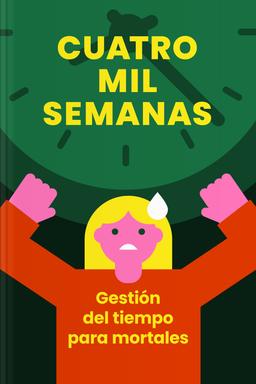
What is Cuatro mil semanas - Gestión del tiempo para mortales about?

Este libro explora la realidad de la limitada cantidad de tiempo que tenemos en la vida, enfatizando la importancia de priorizar lo significativo. A través de reflexiones profundas y consejos prácticos, el autor invita a replantear nuestra relación con el tiempo, dejando de lado la obsesión por la productividad. Proporciona herramientas para gestionar mejor el tiempo y vivir de manera más plena, consciente y auténtica.

Who should read Cuatro mil semanas - Gestión del tiempo para mortales

  • Profesionales que buscan mejorar su gestión del tiempo.
  • Estudiantes que desean optimizar su productividad diaria.
  • Personas interesadas en la filosofía del tiempo y la vida.
book

Frequently asked questions on efficiency books

What is the best efficiency book?

'Getting Things Done' by David Allen remains the gold standard for efficiency systems. It provides a comprehensive framework for capturing, organizing, and executing tasks without relying on memory or motivation. However, 'Eat That Frog' by Brian Tracy offers a simpler approach for people who just need to start doing their most important work first. It depends on whether you want a complete system or a single powerful habit.

What is the best book on productivity?

'Atomic Habits' by James Clear tops most lists, though it focuses more on habit formation than daily productivity systems. For pure productivity, David Allen's 'Getting Things Done' offers the most thorough methodology. 'Deep Work' by Cal Newport addresses focus in a distraction-filled world. The best book depends on your specific challenge — scattered attention, poor habits, or lack of systems.

What is the most life-changing book to read?

This varies wildly by person and life stage. 'Man's Search for Meaning' by Viktor Frankl, 'The Power of Now' by Eckhart Tolle, and 'Atomic Habits' by James Clear consistently appear on life-changing lists. For efficiency specifically, many people credit 'Getting Things Done' with transforming how they work. The most life-changing book is whichever one addresses your biggest current struggle.

What is the #1 most-read book of all time?

The Bible holds this distinction, with over 5 billion copies distributed. Among secular books, 'Don Quixote' and Dickens' 'A Tale of Two Cities' compete for the title, each with hundreds of millions of copies sold. In modern productivity literature, 'The 7 Habits of Highly Effective People' has sold over 40 million copies since 1989, making it one of the bestselling self-help books ever.

How can I improve my efficiency?

Start by tracking how you actually spend time for one week. Most people are shocked by the gaps between perception and reality. Then implement one system: capture all tasks in one place, tackle your hardest task first thing, or use the Pomodoro Technique for focus. Don't try multiple systems simultaneously. Master one approach, measure results, then adjust or add as needed.